
Lemongrass Seitan Pho
This lemongrass seitan pho is bold, fragrant and absolutely packed with the good stuff.
You get savoury seitan, tender greens and a punchy lemongrass broth that somehow tastes even better once the rice starts soaking it all up.
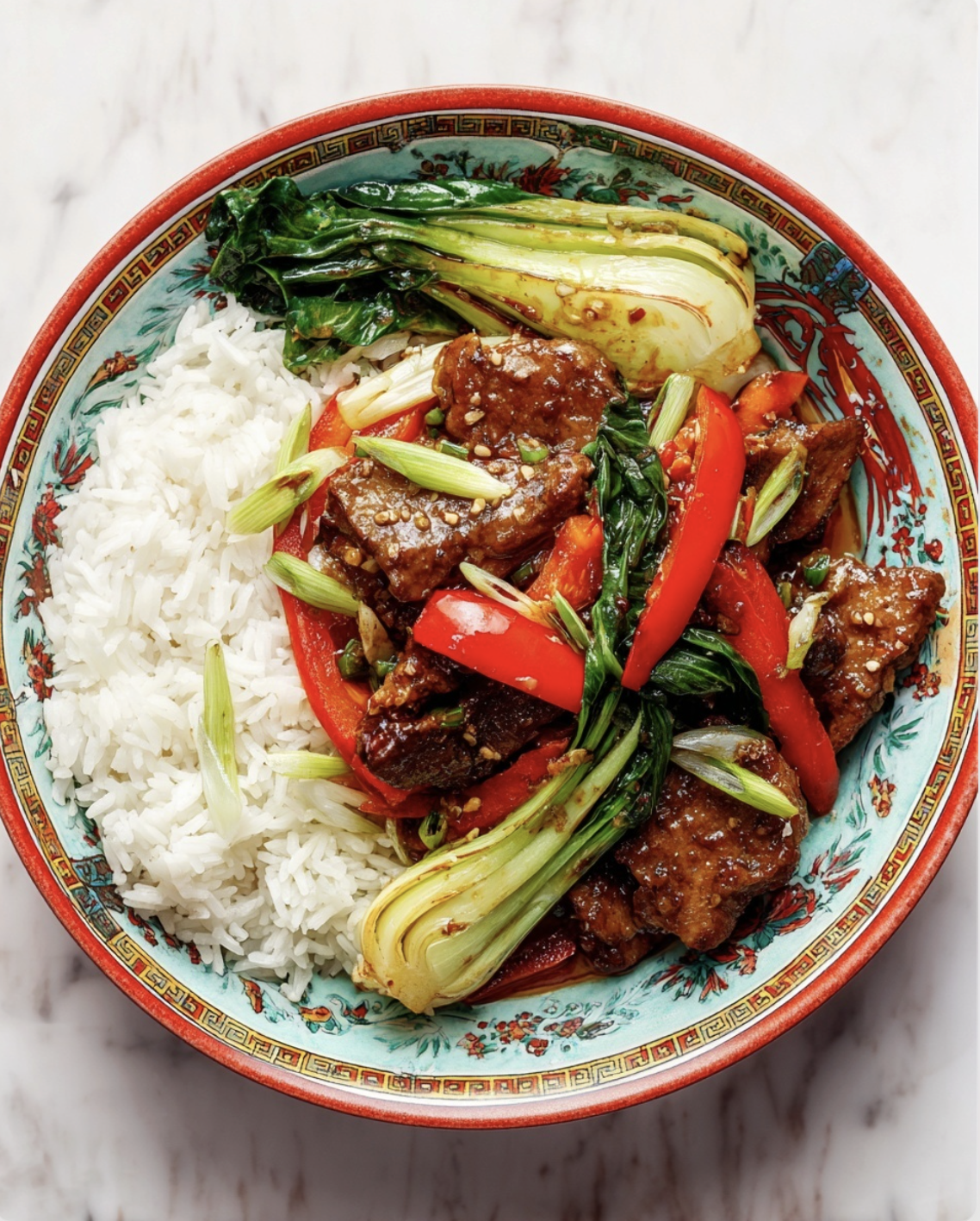
There are some dinners where the broth is basically an afterthought, and then there’s this.
The lemongrass broth is the part that pulls the whole bowl together, soaking into the seitan and picking up all those savoury, slightly spicy flavours along the way.
The seitan works especially well here because it doesn’t just sit there tasting like, well, seitan.
I like to get it properly browned first, until the edges are dark and a little crisp, then let it finish in the sauce so it absorbs plenty of flavour without losing all of that texture.
That little bit of extra cooking makes a huge difference.
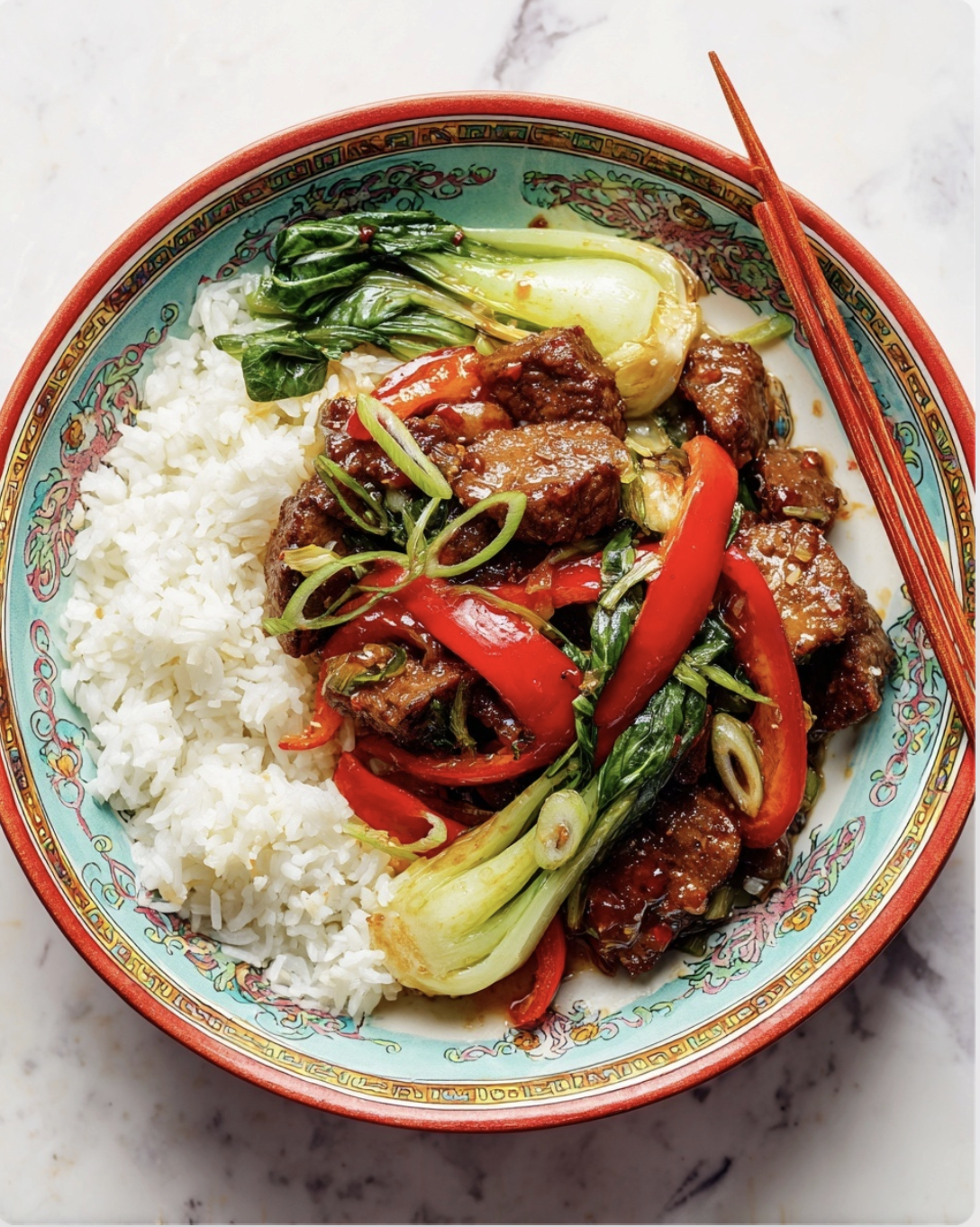
Then there are the vegetables. Bok choy goes wonderfully soft at the leafy ends while the stalks keep a bit of bite, and red peppers bring sweetness and colour.
I usually scatter sliced spring onions and sesame seeds over the top right before serving rather than cooking them into everything.
And yes, this version is served with rice rather than the noodles you might expect with traditional Vietnamese pho.
It’s very much my own spin on the idea rather than an authentic pho recipe, but the combination is seriously good.
Page Contents
ToggleWhy You’ll Love This Recipe
- The seitan gets browned and slightly crisp around the edges before going into the broth.
- Lemongrass keeps the broth bright and fragrant rather than overly heavy.
- Gochujang adds warmth, savouriness and just enough sweetness.
- Baby bok choy cooks quickly and still keeps some bite.
- Red bell pepper brings sweetness and colour.
- It’s hearty enough for dinner without feeling ridiculously heavy.
- You can easily make it spicier if that’s your thing.
Ingredients
For The Lemongrass Seitan
- 400g seitan, cut into chunky pieces
- 1 tablespoon neutral oil
- 1 tablespoon soy sauce
- 1 tablespoon maple syrup or brown sugar
- 1 tablespoon gochujang
- 2 garlic cloves, finely minced
- 1 teaspoon grated fresh ginger
- 1 stalk lemongrass, very finely minced
- 1 teaspoon sesame oil
For The Broth
- 1 tablespoon neutral oil
- 1 small onion, sliced
- 3 garlic cloves, minced
- 1 tablespoon fresh ginger, grated
- 1 stalk lemongrass, bruised and cut into large pieces
- 1 tablespoon gochujang
- 1 litre vegetable stock
- 2 tablespoons soy sauce
- 1 teaspoon brown sugar
- 1 teaspoon sesame oil
- 1 tablespoon rice vinegar
- Salt, if needed
For The Bowl
- 200g flat rice noodles
- 2 baby bok choy, halved
- 1 red bell pepper, thinly sliced
- 3 spring onions, sliced
- Fresh red chillies, sliced
- Fresh coriander, optional
- Lime wedges, for serving
How To Make Lemongrass Seitan Pho
Start With The Seitan
- Pat the seitan dry with kitchen paper. This helps it brown rather than immediately steaming in the pan.
- Cut it into fairly chunky, irregular pieces. No need to make every piece identical.
- Mix the soy sauce, maple syrup, gochujang, garlic, ginger, finely chopped lemongrass and sesame oil in a bowl.
- Add the seitan and toss until every piece is coated.
- Leave it for around 10 minutes while you start preparing the broth.
You can leave it longer if you have time, but this isn’t one of those marinades that needs an entire afternoon to do something useful.
Get Those Edges Brown
- Heat the neutral oil in a large frying pan over medium-high heat.
- Add the seitan in a single layer.
- Leave it alone for a couple of minutes before turning it. Seriously, leave it. Constant stirring is how you end up with pale seitan.
- Turn the pieces and cook until several sides are deeply browned.
- Pour any marinade remaining in the bowl into the pan.
- Cook for another minute or two until it becomes sticky and clings to the seitan.
- Remove from the heat and set aside.
Don’t worry if a few edges look quite dark. Those are usually the pieces everyone starts stealing before dinner reaches the table.
Make The Broth
- Heat the oil in a large saucepan over medium heat.
- Add the sliced onion and cook for about 5 minutes until softened.
- Add the garlic and ginger and cook for another minute.
- Bash the lemongrass stalk with the side of a knife to release its fragrance, then add it to the pan.
- Stir in the gochujang and cook for around 30 seconds.
- Pour in the vegetable stock.
- Add the soy sauce and brown sugar.
- Bring everything to a gentle simmer.
- Leave the broth to simmer for about 15 minutes so the lemongrass, ginger and garlic have time to properly flavour it.
- Stir in the sesame oil and rice vinegar.
- Taste before adding salt because the stock and soy sauce may already provide plenty.
You want the broth to taste savoury first, with some heat and sweetness sitting behind it. If it tastes a little flat, another splash of rice vinegar can often fix it faster than adding more salt.
Cook The Noodles
- Prepare the rice noodles according to the packet instructions.
- Drain them as soon as they’re tender.
- Rinse briefly if the packet recommends it.
- Divide the noodles between serving bowls.
Try not to cook the noodles directly in the broth. Rice noodles can release starch and make a lovely clear-ish broth surprisingly cloudy.
Cook The Vegetables
The vegetables really don’t need long.
- Bring the broth back to a gentle simmer.
- Add the sliced red bell pepper.
- Cook for about 2 minutes so it softens slightly while keeping some crunch.
- Add the halved baby bok choy.
- Cook for another 2 to 3 minutes.
- Remove the large pieces of lemongrass from the broth.
That’s it.
Baby bok choy can go from beautifully tender to completely defeated surprisingly quickly, so don’t wander off at this point.
Build Your Bowls
- Divide the cooked rice noodles between deep bowls.
- Ladle plenty of hot broth over the noodles.
- Add the red bell pepper and baby bok choy.
- Spoon the sticky lemongrass seitan over the top.
- Scatter over sliced spring onions.
- Add sliced fresh red chillies if you want more heat.
- Finish with coriander if using.
- Serve with lime wedges on the side.
I like keeping some of the seitan sitting above the broth rather than completely submerging it.
That way, you keep those browned, slightly sticky edges for longer.
Don’t Skip The Lemongrass
Lemongrass is doing a surprising amount of work here.
The easiest way to use it in the broth is to remove the tough outer layer, trim the ends and then give the stalk a good bash with the side of your knife.
You’re not trying to chop it finely because you’ll remove it before serving.
For the seitan marinade, though, chop the tender inner portion very finely. Nobody wants to bite into a woody piece of lemongrass halfway through dinner.
If you can only find lemongrass paste, you can use that too. Start with a smaller amount and add more after tasting.
How Spicy Is It?
As written, I’d call it pleasantly spicy rather than blow-your-head-off spicy.
Gochujang isn’t just about heat. It’s fermented, slightly sweet and deeply savoury, so adding loads of it purely to make the soup hotter can eventually change the entire flavour of the broth.
If you want serious heat, keep the gochujang roughly the same and add:
- Fresh sliced red chilli
- Korean chilli flakes
- Chilli oil
- A little extra chilli paste at the table
That gives everyone control over their own bowl too.
Can I Use Tofu Instead?
Absolutely.
Use extra-firm tofu and press out as much water as possible before cooking. Tear it into rough chunks rather than cutting perfect cubes, then follow roughly the same marinade and pan-frying method.
Those rough edges catch the sauce beautifully.
Tempeh would also work, although I’d steam it briefly before marinating if you find its natural flavour slightly bitter.
What Else Can I Add?
This is a very forgiving bowl, so use what you’ve got.
Mushrooms are particularly good. Shiitake would be my first choice, but chestnut mushrooms work perfectly well too.
You could also add:
- Bean sprouts
- Shredded carrots
- Sugar snap peas
- Spinach
- Tenderstem broccoli
- Edamame
- Napa cabbage
Just don’t add everything at once or suddenly you’ll need a mixing bowl instead of a soup bowl.
Make It Ahead
The broth is actually brilliant made ahead because the flavours have more time to settle.
Prepare it up to two days in advance, cool completely and refrigerate in a sealed container.
The seitan can also be marinated ahead of time.
I’d leave the noodles and bok choy until you’re ready to eat.
Cooked rice noodles sitting around in broth have an unfortunate habit of drinking half of it and becoming very soft.
Storing Leftovers
Keep the broth, noodles and toppings separately if possible.
The broth and cooked seitan will keep in the refrigerator for around 3 days in airtight containers.
When you’re ready to eat:
- Reheat the broth until piping hot.
- Add the bok choy or other vegetables.
- Warm the seitan separately in a frying pan if you want to bring back some of those caramelised edges.
- Add the noodles to your bowl.
- Pour everything hot over the top.
Then pile on your spring onions, chillies and whatever else you’ve got.
A final squeeze of lime right before eating makes the whole bowl taste fresh again, especially the next day.