Miso Butter Noodles
There are noodle recipes you make because you have a proper dinner plan, and then there are the ones that happen because you’re hungry.
It’s getting late, and the idea of chopping twelve different vegetables feels wildly ambitious.
These miso butter noodles are firmly in the second camp.
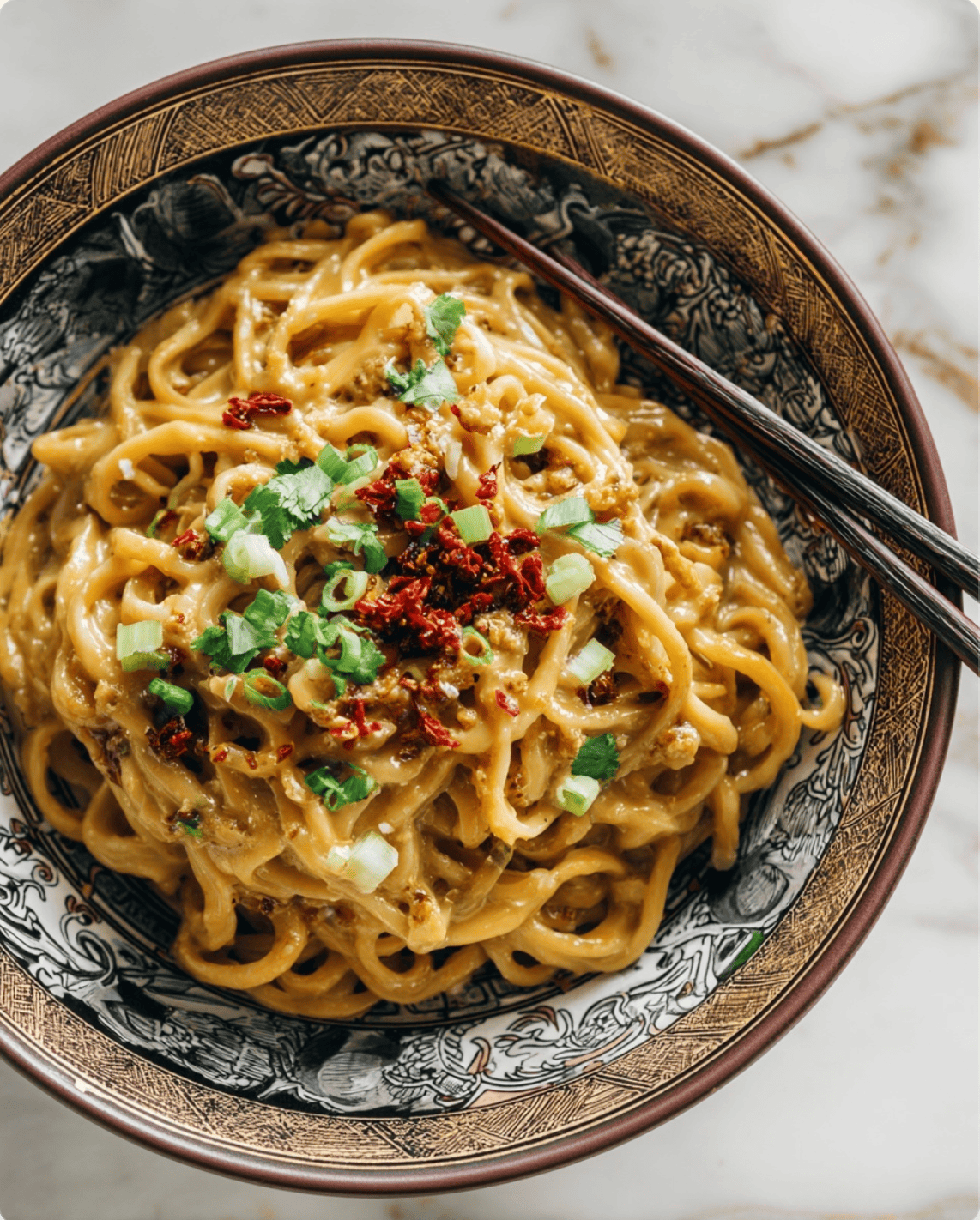
The sauce is ridiculously simple, but it doesn’t taste simple.
White miso brings that salty, savoury depth, butter makes everything glossy and rich, and chili crisp cuts straight through with heat, crunch and those lovely toasted bits hiding at the bottom of the jar.
A little soy sauce, garlic and noodle water pull the whole thing together.
The important bit is getting the sauce properly tangled through the noodles.
You don’t want butter sitting underneath and miso clumped somewhere in the middle. Give everything a good toss in the pan until the noodles look almost creamy.
Then chili crisp on top. Quite a lot, preferably.
Page Contents
ToggleWhy You’ll Love These Noodles
- Fast. They’re genuinely doable in about 20 minutes.
- The sauce is creamy without needing actual cream.
- Miso gives you loads of flavour without a long ingredient list.
- Chili crisp brings heat, crunch and a slightly smoky edge.
- You can make the sauce while the noodles cook.
- They’re easy to bulk out with tofu, mushrooms, greens or whatever needs using.
- The whole thing uses one pan and one pot, which is always appreciated.
Ingredients
For The Noodles
- 250g udon noodles or other thick wheat noodles
- 3 tablespoons unsalted butter
- 2 tablespoons white miso paste
- 2 garlic cloves, finely grated or minced
- 1 tablespoon soy sauce
- 1 teaspoon rice vinegar
- 1 teaspoon brown sugar or honey
- 2 to 3 tablespoons chili crisp, plus more for serving
- 4 to 6 tablespoons reserved noodle water
- 2 spring onions, finely sliced
- Small handful fresh coriander, roughly chopped
Optional Extras
- Toasted sesame seeds
- Extra sliced red chilli
- Crispy fried onions
- Soft-boiled egg
- Pan-fried tofu
- Sautéed mushrooms
- Steamed bok choy
How To Make Miso Butter Noodles
Cook The Noodles
- Bring a large pan of water to the boil.
- Add your noodles and cook according to the packet instructions.
- Just before draining them, scoop out about ½ cup of the noodle water and keep it nearby.
- Drain the noodles, but don’t rinse them.
That cloudy noodle water looks completely uninteresting, but it’s one of the things that makes this sauce work. The starch helps the butter, miso and soy turn into an actual sauce rather than a collection of ingredients sliding around the pan.
Start The Miso Butter Sauce
- Put a large frying pan over medium-low heat.
- Add 2 tablespoons of the butter and let it melt gently.
- Add the garlic.
- Cook for around 30 seconds, stirring constantly. You want fragrant garlic, not little bitter brown pieces.
- Add the miso paste and stir it into the melted butter.
- Pour in the soy sauce, rice vinegar and brown sugar.
- Add about 3 tablespoons of your reserved noodle water.
- Stir everything together until the miso has completely dissolved.
It might look slightly thin at this point. That’s fine.
The noodles are about to sort that out.
Toss Everything Together
- Add the drained noodles straight into the pan.
- Turn the heat up slightly.
- Use tongs to toss the noodles through the sauce.
- Add the remaining tablespoon of butter.
- Keep tossing for another minute or two.
- Add another splash of noodle water if the sauce looks too thick.
You’ll actually see the sauce change as you toss it. It goes from slightly watery and separate to glossy, silky and almost creamy.
That’s when you know you’re there.
The noodles should be thoroughly coated, but there shouldn’t be a puddle of sauce underneath them.
Bring In The Chili Crisp
- Spoon 1 to 2 tablespoons of chili crisp into the noodles.
- Toss briefly so some of that chilli oil runs through the sauce.
- Taste.
- Add another little spoonful if you want more heat.
- Take the pan off the heat.
I don’t mix all of the chili crisp into the sauce because you lose some of the contrast. Keeping a good spoonful for the top means you still get those crispy chilli pieces rather than softening every last one in the pan.
Finish The Noodles
Divide the hot noodles between bowls and then go in with the toppings.
I usually add:
- A generous spoonful of chili crisp
- Sliced spring onions
- Roughly chopped coriander
- A few sliced red chillies
- Crispy fried onions if they’re hanging around in the cupboard
And that’s pretty much dinner.
The noodles should be slippery and glossy, with enough sauce clinging to them that you get miso and butter in every bite. Then every so often you hit a crunchy piece of chilli or fried garlic from the chili crisp.
So good.
What Does Miso Butter Sauce Taste Like?
Rich, salty, slightly sweet and deeply savoury.
Butter softens some of miso’s sharper salty flavour and gives the sauce that smooth finish, while miso stops the butter from making everything taste overly rich.
Then chili crisp comes crashing through all of that richness.
Depending on the brand you’re using, you’ll get chilli, garlic, onion, sesame, fermented beans or various crispy bits in there too. That’s why I wouldn’t go too wild adding loads of other seasonings before you’ve tasted the finished noodles.
There’s already plenty happening.
Which Miso Should You Use?
White miso is my favourite here.
It’s milder and slightly sweeter than darker varieties, which makes it particularly good with butter.
Yellow miso also works nicely.
Red miso is much stronger and saltier, so if that’s what you’ve got, start with less. You can always add another teaspoon after tasting the sauce.
And definitely taste before adding salt.
Between the miso, soy sauce and chili crisp, there’s usually absolutely no need for it.
Which Noodles Work Best?
Thick noodles are brilliant because they really grab onto the sauce.
Udon would be my first pick. Fresh or vacuum-packed udon are especially good because they’re chewy and take hardly any time to cook.
But honestly, use what you’ve got.
You can make this with:
- Udon
- Ramen noodles
- Wheat noodles
- Egg noodles
- Soba
- Rice noodles
- Even spaghetti
Spaghetti might upset the noodle purists, but butter, miso and chili crisp don’t suddenly stop tasting good because they’re wrapped around Italian pasta.
Don’t Burn The Butter
You don’t need browned butter here.
Actually, I prefer not to brown it because I want the miso and chili crisp to be the strongest flavours.
Keep the heat around medium-low when you first melt the butter. Once the garlic goes in, watch it closely because finely grated garlic can go from pale to burnt surprisingly fast.
If the pan feels too hot, just pull it off the heat for a few seconds.
Very technical stuff.
Make Them Extra Creamy
The trick isn’t adding loads more butter.
It’s emulsifying the sauce.
Add your noodle water gradually while tossing everything vigorously. The starch from the water mixes with the butter and seasonings and creates that creamy-looking coating.
If your noodles seem dry, add another tablespoon of water.
Toss.
Check again.
It’s much easier to loosen a thick sauce than rescue noodles swimming in half a cup of water.
Add Some Vegetables
These noodles are pretty rich, so something green alongside them is particularly good.
Baby bok choy is probably my favourite. Slice it lengthways and quickly pan-fry it before making the sauce, then pile it alongside the noodles.
You could also use:
- Spinach
- Tenderstem broccoli
- Mushrooms
- Sugar snap peas
- Shredded cabbage
- Edamame
- Spring greens
Mushrooms are especially good because they soak up all that miso butter.
Cook them first until properly browned, remove them from the pan, make your sauce and then throw them back in with the noodles.
Add Some Protein
For something more substantial, crispy tofu works brilliantly.
Cut firm tofu into chunks and fry it separately until golden before tossing it through at the end. Tempeh works too, especially if you like something with a little more chew.
A soft-boiled egg is another very easy option.
And if you’re not keeping the recipe vegetarian, shredded chicken or crispy minced pork would work nicely with these flavours.
How Much Chili Crisp Should You Add?
This one really depends on the jar.
Some chili crisps are fairly gentle and mostly savoury. Others have you reconsidering your decisions after half a teaspoon.
Start with a tablespoon.
Taste it.
Then proceed accordingly.
I usually prefer having a moderate amount mixed through the noodles and putting the jar on the table. That way everyone can add as much as they want, and you get that lovely fresh chilli oil sitting right on top.
Can You Make Them Ahead?
You can, although they’re at their absolute best straight from the pan.
As the noodles sit, they continue absorbing the sauce and lose some of that silky texture.
If you do have leftovers, keep them in an airtight container in the fridge for up to 3 days.
When reheating, add the noodles to a frying pan with a tablespoon or two of water. Heat gently while tossing until the sauce loosens again.
Then add fresh chili crisp after reheating.
That last bit matters. It brings the crunch back.
A Few Little Things That Make Them Better
Don’t rinse the noodles unless the particular noodles you’re using specifically require it. That surface starch is useful here.
Keep the heat relatively gentle when making the miso sauce. Miso doesn’t need aggressive cooking.
And don’t dump all your noodle water in at once. Add a splash, toss, then decide whether you need more.
Most importantly, taste as you go.
Miso varies. Soy sauces vary. Chili crisps vary massively. Two tablespoons of one brand can taste completely different from two tablespoons of another.
Treat the measurements as the starting point rather than some sacred noodle law.
Once you’ve got that balance of salty miso, rich butter, a little tang and enough chilli to make things interesting, you’re done.
Into a bowl it goes.
Extra chili crisp over the top.
Eat immediately while everything is hot, glossy and gloriously tangled.