Steak Frites with Roasted Potatoes
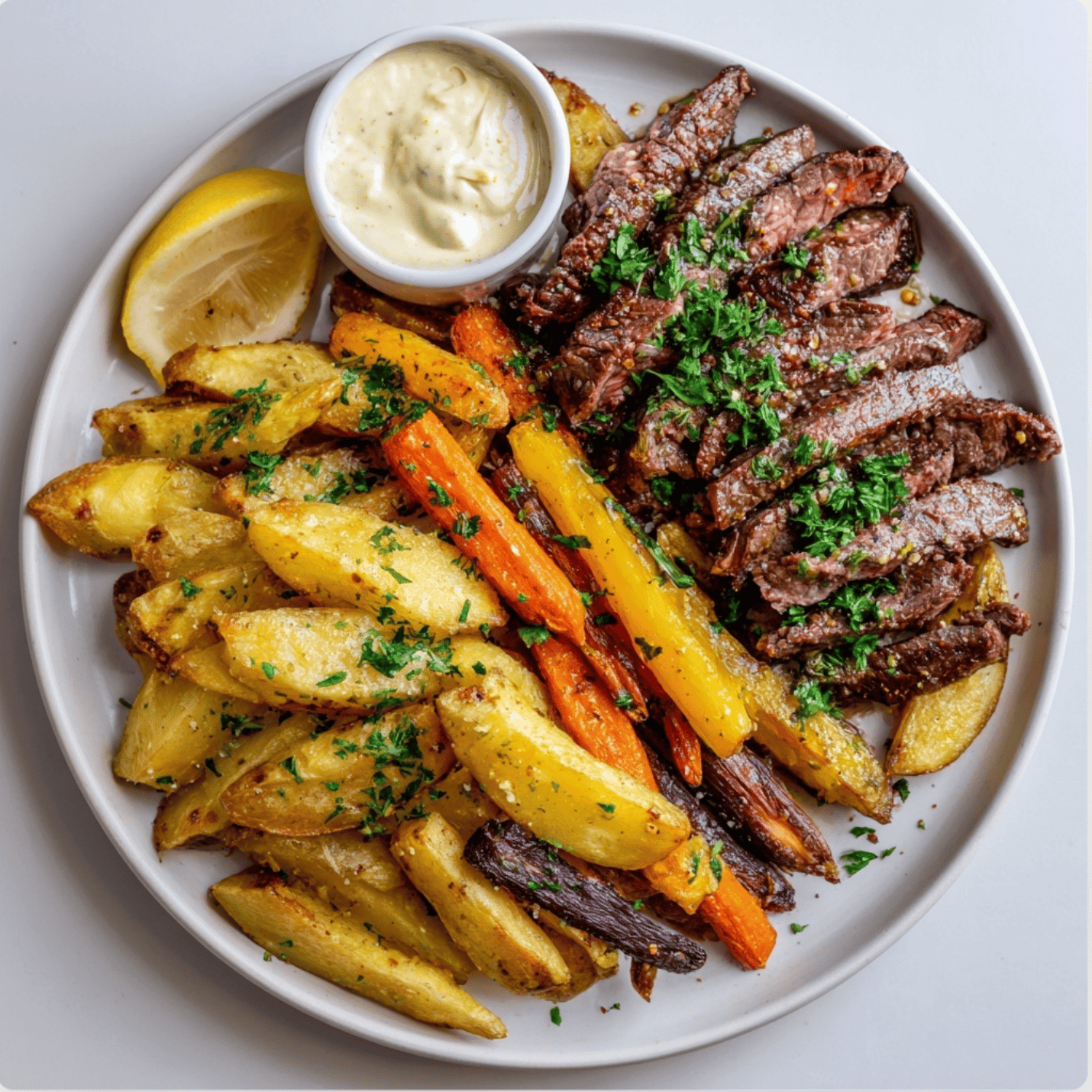
This is steak frites with a slightly more relaxed attitude: juicy sliced steak, properly golden potato wedges, sweet roasted carrots and a pot of garlicky aioli for dipping absolutely everything into.
It looks like a special-occasion dinner, but there’s nothing particularly complicated hiding on that plate.
I love classic steak frites, but I’m not convinced the potato always has to be a skinny French fry.
These chunky roasted yellow potato wedges get beautifully crisp around the edges while staying soft and almost buttery inside.
They also happen to be much easier to make at home because nobody needs to stand over a pan of bubbling oil.
The steak is cooked whole, rested properly, then sliced just before serving.
That part matters more than any fancy seasoning.
A good dark sear on the outside, a juicy pink centre and a little garlic butter spooned over the top will beat an overcomplicated marinade every time.
Then we have the rainbow carrots.
They roast right alongside everything else until their edges caramelise and their natural sweetness really comes through.
Finish the whole plate with fresh parsley, lemon wedges and roasted garlic aioli, and you’ve got the sort of dinner I would happily pay far too much for at a restaurant.
Page Contents
ToggleIngredients
This serves 4 people.
For the steak
- 2 large sirloin, ribeye or rump steaks, around 250g to 300g each
- 1 tablespoon olive oil
- 1 teaspoon fine sea salt
- ½ teaspoon freshly ground black pepper
- 1 teaspoon garlic powder
- 1 tablespoon butter
- 2 garlic cloves, lightly crushed
- 2 sprigs fresh thyme or rosemary
For the roasted potato wedges
- 800g yellow potatoes, such as Yukon Gold or another waxy all-purpose potato
- 2 tablespoons olive oil
- 1 teaspoon garlic powder
- ½ teaspoon dried thyme
- ¾ teaspoon sea salt
- ¼ teaspoon black pepper
For the roasted rainbow carrots
- 500g rainbow carrots
- 1 tablespoon olive oil
- ½ teaspoon dried thyme
- ½ teaspoon sea salt
- ¼ teaspoon black pepper
For the roasted garlic aioli
- 1 whole garlic bulb
- 1 teaspoon olive oil
- 120g mayonnaise
- 1 teaspoon Dijon mustard
- 1 tablespoon fresh lemon juice
- Pinch of sea salt
- Black pepper, to taste
To serve
- Small handful fresh parsley, finely chopped
- Lemon wedges
Make the Roasted Garlic Aioli First
The garlic needs time to roast and cool, so get this going before anything else.
Roasting completely changes garlic.
Instead of that sharp raw bite, you get something sweet, mellow and almost buttery.
- Heat the oven to 200°C fan.
- Slice the very top off the garlic bulb so the cloves are slightly exposed.
- Drizzle with 1 teaspoon olive oil.
- Wrap loosely in foil.
- Roast for 30 to 35 minutes, until the cloves are completely soft.
- Leave the garlic to cool enough to handle.
- Squeeze 4 to 6 roasted cloves into a small bowl.
- Mash them into a smooth paste with a fork.
- Add the mayonnaise, Dijon mustard and lemon juice.
- Season with a small pinch of salt and some black pepper.
- Stir until smooth and creamy.
Taste it.
If you want stronger garlic flavour, squeeze another roasted clove into the bowl.
I tend to start cautiously because roasted garlic is sweet, but six cloves can still make their presence known.
Pop the aioli into the fridge while you get on with everything else.
Get the Potato Wedges Extra Golden
The potatoes in the photo are thick, rustic wedges rather than traditional skinny frites.
That means we want two things happening at once.
Crispy edges and fluffy middles.
Parboiling them briefly before roasting gives you both.
- Scrub the potatoes and leave the skins on.
- Cut them into thick wedges.
- Add them to a saucepan of well-salted water.
- Bring to the boil and cook for 6 to 7 minutes.
They shouldn’t be fully tender.
You’re just giving the insides a head start.
- Drain the potatoes thoroughly.
- Leave them in the colander for 2 minutes so excess steam can escape.
- Transfer them to a large baking tray.
- Add the olive oil, garlic powder, thyme, salt and black pepper.
- Toss everything together.
- Spread the wedges out in a single layer.
Try to leave some space between them.
A crowded tray traps steam, and steam is the enemy of the crispy potato situation we’re after.
- Roast at 220°C fan for 35 to 45 minutes.
- Turn them after around 25 minutes.
They’re ready when the cut edges are deeply golden and a knife slips easily through the middle.
Roast the Rainbow Carrots
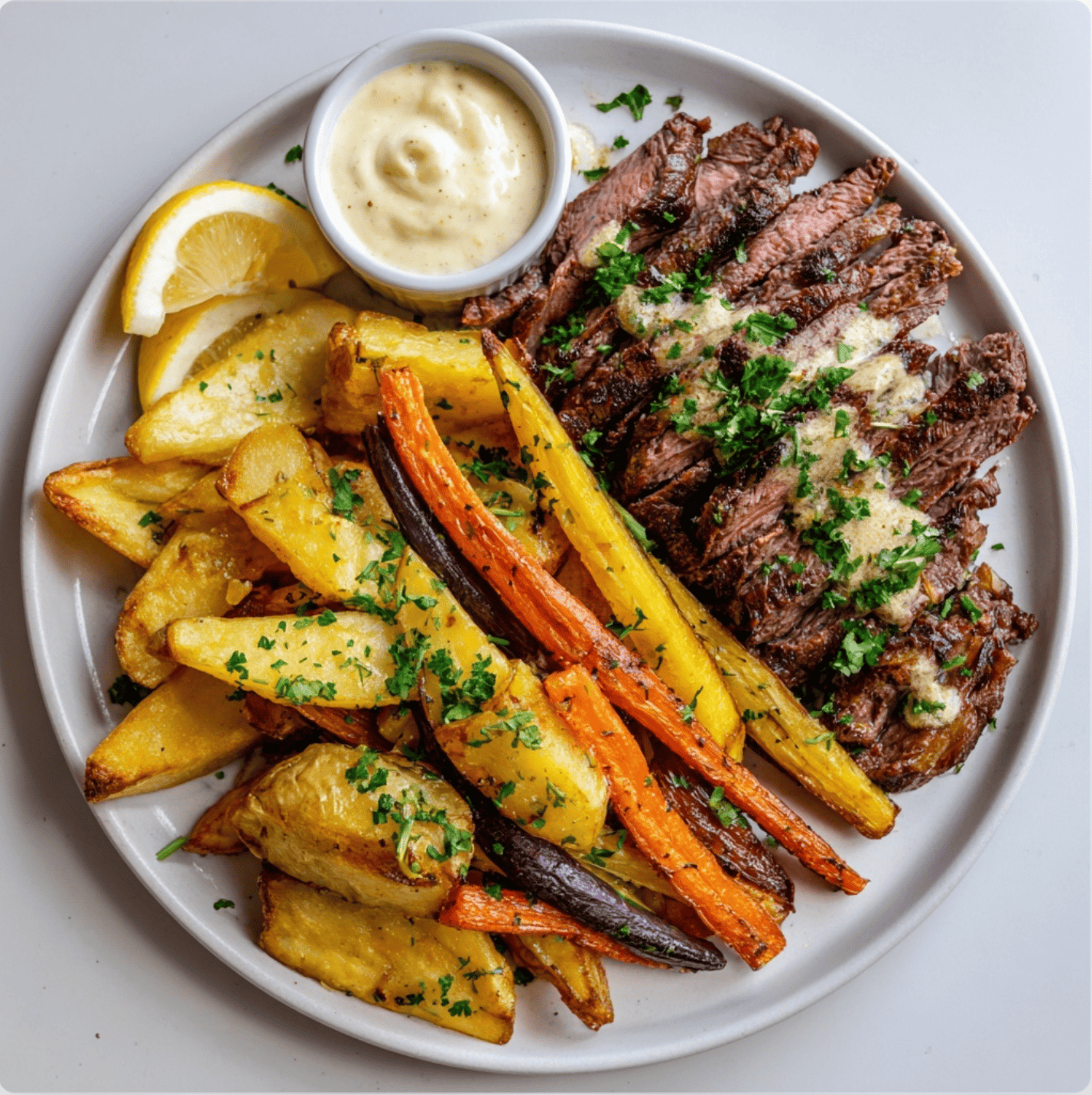
The carrots in the photo are long, slightly rustic pieces with plenty of colour left in them.
Keep smaller carrots whole.
Cut very large ones lengthways so everything cooks at roughly the same speed.
- Place the carrots on a separate baking tray.
- Drizzle with olive oil.
- Sprinkle over the thyme, salt and black pepper.
- Toss well.
- Roast alongside the potatoes for 25 to 30 minutes.
Turn them once halfway through.
Don’t roast them until they completely collapse.
They should be tender, but you still want enough structure that you can pick one up without it bending in half.
Those slightly darker caramelised edges are the best bits.
Choose the Right Steak
Sirloin works really well for this because it gives you a good balance of tenderness and flavour.
Ribeye is richer and fattier.
Rump is usually cheaper and has fantastic beefy flavour, although it benefits from being sliced fairly thinly.
Whatever you choose, look for steaks at least 2.5cm thick.
Thin steaks cook so quickly that getting a dark crust without overcooking the middle becomes unnecessarily stressful.
Take the steaks out of the fridge around 20 to 30 minutes before cooking.
Pat them very dry with kitchen paper.
That dry surface is what helps you get the dark, caramelised crust visible in the photo.
How to Cook the Steak
You can cook the steak while the potatoes and carrots finish roasting.
- Season both sides generously with salt, black pepper and garlic powder.
- Heat a heavy frying pan or cast-iron skillet over high heat.
- Add 1 tablespoon olive oil.
- Once the pan is properly hot, add the steaks.
You should hear an immediate sizzle.
If you don’t, the pan probably wasn’t ready.
- Cook without moving for around 2½ to 3 minutes.
- Flip and cook the second side for another 2 to 3 minutes.
- Reduce the heat slightly.
- Add the butter, crushed garlic and herbs.
- Tilt the pan carefully and spoon the melted garlicky butter over the steaks for another minute.
The exact cooking time depends on the thickness of your steak and how you like it cooked.
For a pink, medium-rare to medium centre like the steak in the photo, aim for an internal temperature of around 54 to 57°C before resting.
The temperature will rise slightly while it rests.
Rest the Steak Before Slicing
Please don’t take a beautiful steak out of the pan and immediately attack it with a knife.
Give it 8 to 10 minutes.
Resting lets the juices settle back through the meat.
Slice too soon and half of them end up running across the chopping board instead.
Transfer the steaks to a board or warm plate.
Loosely cover them with foil.
Once rested, slice across the grain into strips.
The slices don’t need to be paper thin.
The photo has fairly generous strips, which keeps the steak looking juicy rather than shredded.
Add a Little Butter to the Steak
This is optional, but it gets you much closer to the finished look.
There’s a light buttery sauce sitting over the sliced steak in the photo.
You can make a quick version using the butter left in the steak pan.
- Remove any burnt herb stems from the skillet.
- Add another teaspoon of butter if the pan looks dry.
- Squeeze in a little lemon juice.
- Swirl everything together over low heat.
- Spoon a small amount over the sliced steak.
Don’t turn it into a full sauce.
You only need enough to give the surface that glossy finish.
How to Plate Steak Frites
This is a generous plate.
I wouldn’t try to make it overly neat.
- Pile the roasted potato wedges onto one side of the plate.
- Add several rainbow carrots among the potatoes.
- Arrange the sliced steak alongside them.
- Spoon a little garlic butter over the steak.
- Sprinkle chopped parsley over the steak, potatoes and carrots.
- Add a small ramekin of roasted garlic aioli.
- Tuck a couple of lemon wedges alongside it.
Then take one potato and immediately put it in the aioli.
Quality control.
How to Tell When Steak Is Done
A meat thermometer is genuinely useful here.
Guessing doneness by poking the steak with your finger sounds impressive until dinner is involved.
For a general guide:
- Rare: 50 to 52°C
- Medium rare: 54 to 57°C
- Medium: 60 to 63°C
- Medium well: 65 to 68°C
Take the steak off the heat a couple of degrees before your final target temperature.
It continues cooking while it rests.
Can I Make the Aioli Ahead?
Yes.
In fact, I’d recommend it.
Make the roasted garlic aioli earlier in the day and keep it covered in the fridge.
The flavour gets even better once the garlic has had a little time to mingle with the lemon and mayonnaise.
It will keep well for around 3 days refrigerated.
The roasted garlic itself can also be made ahead.
Keep any extra cloves in a sealed container in the fridge and use them in mashed potatoes, pasta or spread over toast.
A Few Things Worth Getting Right
Give the potatoes room on the tray.
I will keep saying this because crowded potatoes are the reason so many homemade roast potatoes come out pale.
Get the steak pan seriously hot too.
The rich brown crust develops before the centre has time to overcook.
And rest the steak.
That one really is non-negotiable.
Finally, serve everything while the potatoes are still hot.
The aioli can be cool.
The lemon can sit there looking pretty.
But roast potatoes have a very short window between crispy perfection and “still fine, I suppose.”
This is a dinner worth eating immediately.