Garlic Parmesan Potatoes
I always end up eating a few of these straight off the tray, which is probably the best sign they’re worth making.
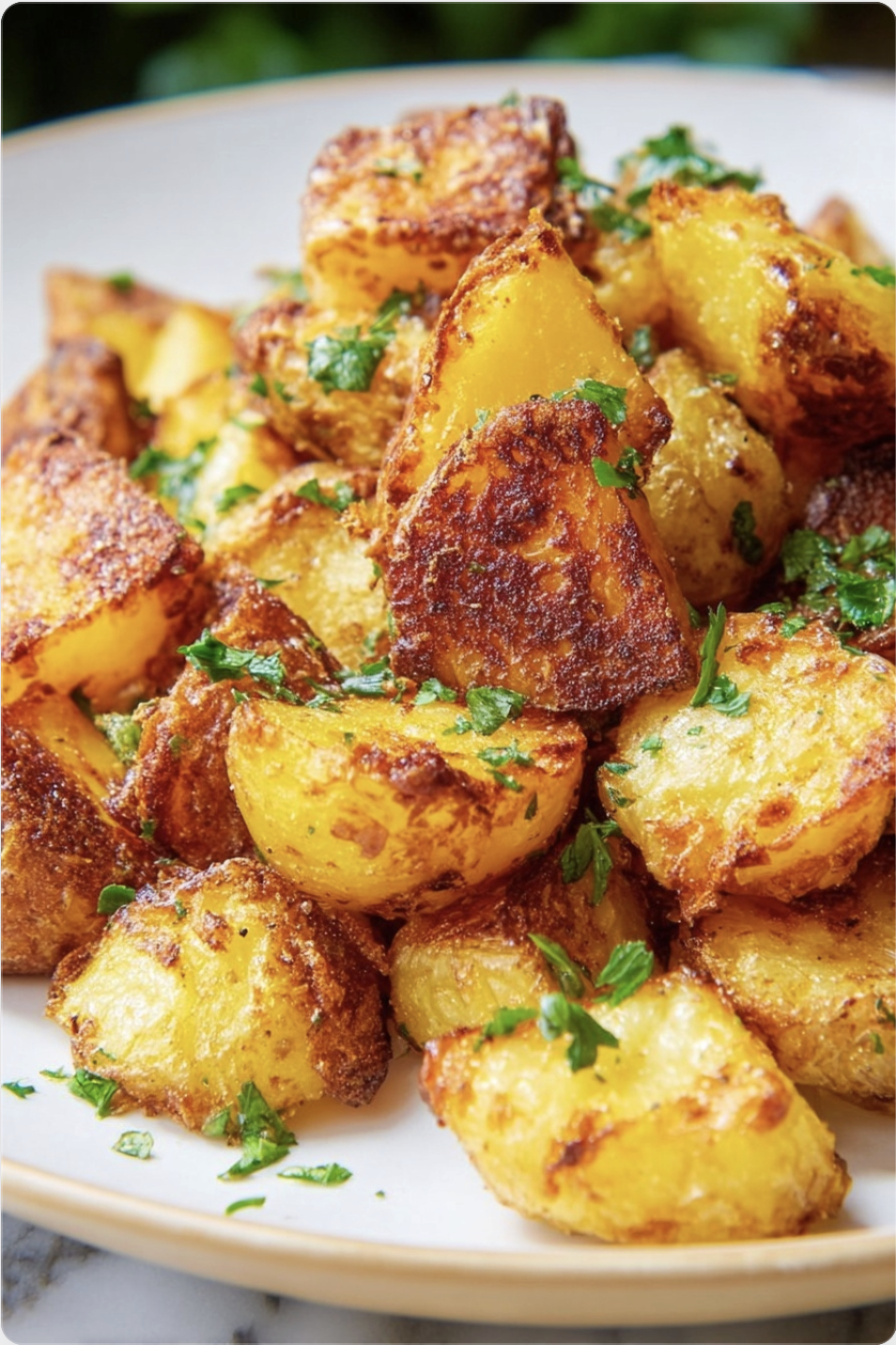
They’re crisp, garlicky, cheesy, and the insides stay soft enough that you get that proper roast potato contrast.
These are the potatoes I make when I want the side dish to get almost as much attention as the main.
I cut them into chunky pieces, rough them up a little, then coat them well so the garlic and Parmesan have plenty to cling to.
That’s what gives you those craggy, browned edges instead of smooth little potato cubes that taste a bit sad.
The Parmesan catches in places and goes almost crunchy, the garlic works its way into everything, and the middle stays soft and fluffy.
I usually finish them with parsley and eat at least one before they leave the tray.
They’re brilliant next to steak, chicken, fish, or honestly anything that needs a very good pile of potatoes beside it.
Page Contents
ToggleWhy You’ll Love This Recipe
- The potatoes turn beautifully crisp on the outside while staying soft and fluffy in the middle.
- The rough, craggy edges create all those extra crunchy bits everyone fights over.
- You only need a handful of basic ingredients.
- They pair especially well with steak, but they work with almost any dinner.
- The method is straightforward and very reliable once you know the little tricks.
- They look rustic and generous, not stiff or overstyled.
Ingredients
- 1.5 kg floury potatoes, such as Maris Piper, Yukon Gold, or King Edward
- 2 teaspoons salt, plus more for the boiling water
- 1/2 teaspoon baking soda
- 5 tablespoons extra-virgin olive oil
- 3 garlic cloves, finely grated or very finely minced
- 1/2 teaspoon black pepper
- 2 tablespoons chopped fresh parsley
Ingredient Notes
Floury potatoes are your best friend here.
They break up a little around the edges after boiling, and that is exactly what gives you those crispy golden ridges once they roast.
The baking soda might look like a strange little addition, but it really helps rough up the outside of the potatoes.
That rough surface is what turns into all those crunchy bits.
I like olive oil for this batch because it gives the potatoes a lovely golden finish and fits the simple, savoury flavour here.
Garlic is best added toward the end or mixed through after roasting, because burnt garlic has a way of ruining everybody’s mood.
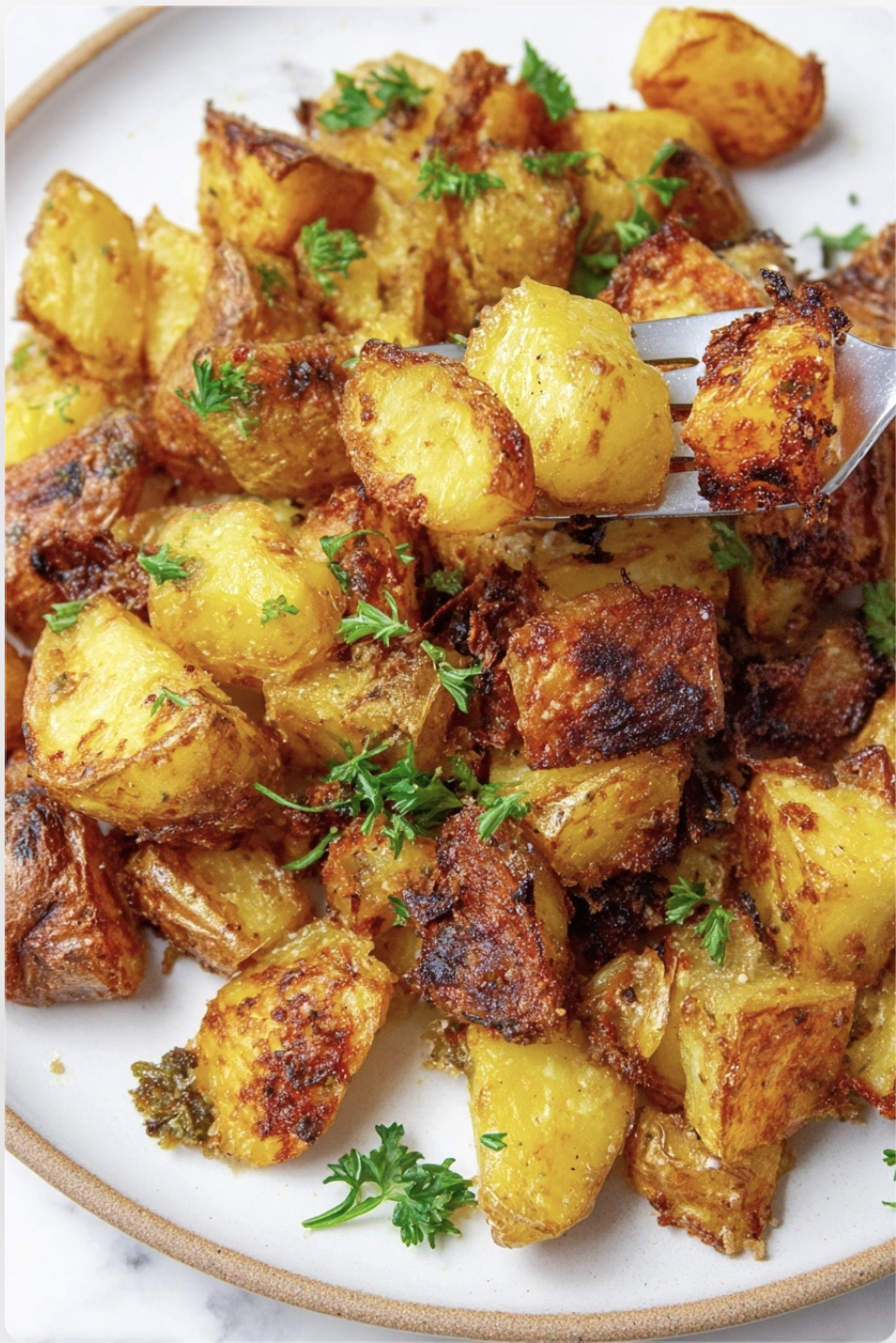
How to Make the Potatoes Extra Crispy
A good roast potato is never just about throwing chopped potatoes into the oven and hoping for the best.
The parboil matters.
The roughing-up step matters.
Giving the tray enough space matters.
All those little things are what take the potatoes from decent to the kind that vanish suspiciously fast.
The biggest trick is to let the outside go shaggy before roasting.
When the edges look slightly scruffy, you are on the right path.
That messiness is where the crunch lives.
Instructions
1. Prep the potatoes
- Peel the potatoes, but do not worry about getting every last bit of skin off if you like a more rustic finish.
- Cut them into rough chunks, keeping the pieces fairly similar in size so they roast evenly.
- Some smaller pieces are fine, and in fact they usually turn into the crispiest little bites on the tray.
2. Parboil them
- Bring a large pot of well-salted water to the boil.
- Add the baking soda, then carefully add the potatoes.
- Boil them for about 8 to 10 minutes, or until the outsides are tender but the centres still hold their shape.
- You want the edges to look softened, not collapsing.
3. Drain and rough them up
- Drain the potatoes really well and leave them in the colander for a minute so excess steam can escape.
- Tip them back into the pot.
- Drizzle in 2 tablespoons of the olive oil, then season with the salt and black pepper.
- Put the lid on and give the pot a few confident shakes.
- The potatoes should look fluffy and roughed up around the edges.
4. Roast them
- Preheat the oven to 220°C, or 200°C fan.
- Pour the remaining olive oil into a roasting tray and place it in the oven for a few minutes so it gets hot.
- Carefully add the potatoes to the hot tray and spread them out in a single layer.
- Roast for 25 minutes.
- Turn the potatoes, then roast for another 20 to 30 minutes until they are deeply golden and crisp.
5. Finish with garlic and parsley
- In the last 5 minutes of roasting, scatter over the garlic or toss it with a tiny spoonful of oil first and then add it.
- Roast just long enough for the garlic to mellow and become fragrant.
- Transfer the potatoes to a serving dish or leave them in the tray if everyone is the type to pick at them immediately.
- Sprinkle over the chopped parsley and serve hot.
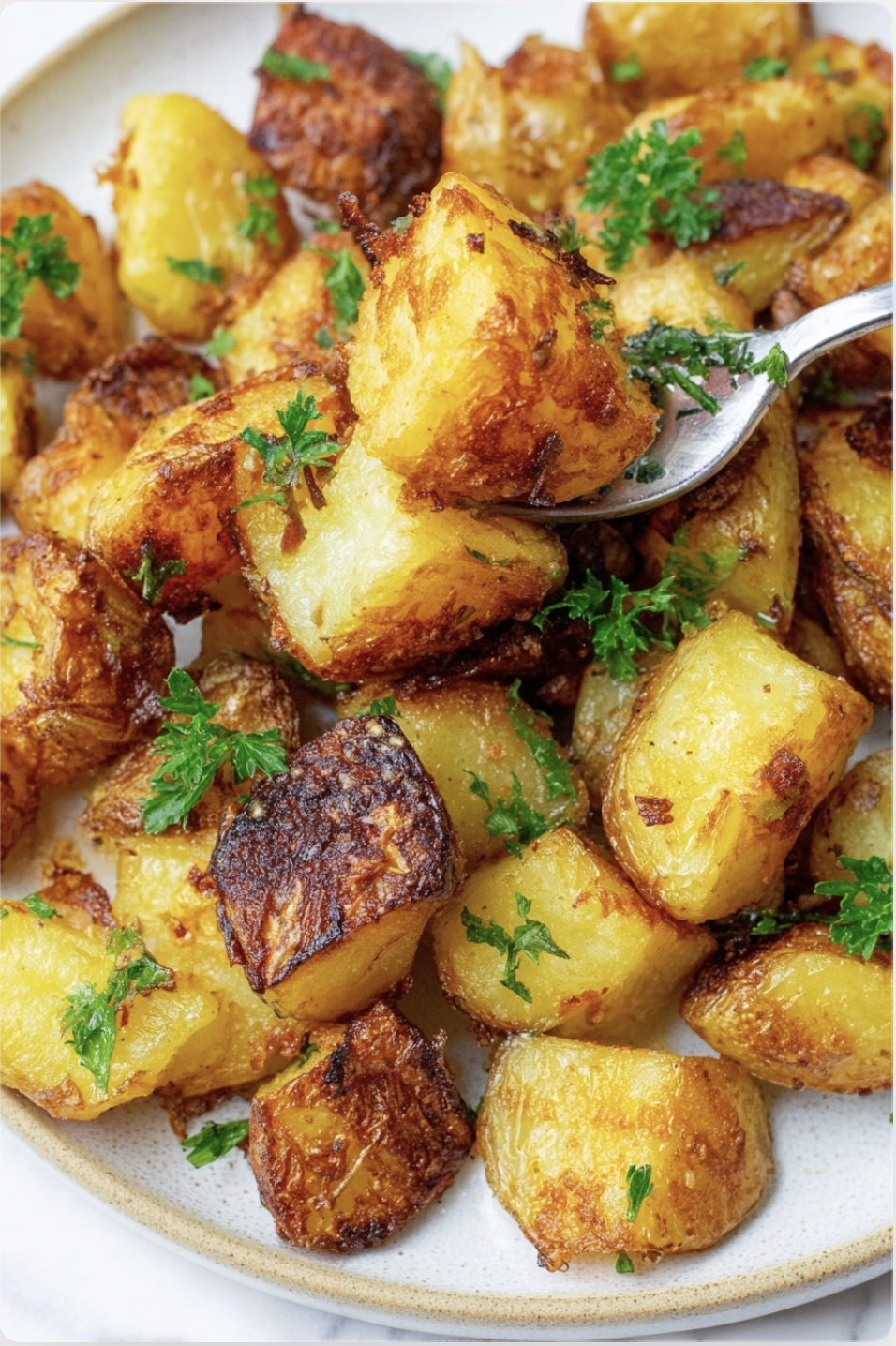
What They Should Look Like
When they are done, the potatoes should not look smooth or pale.
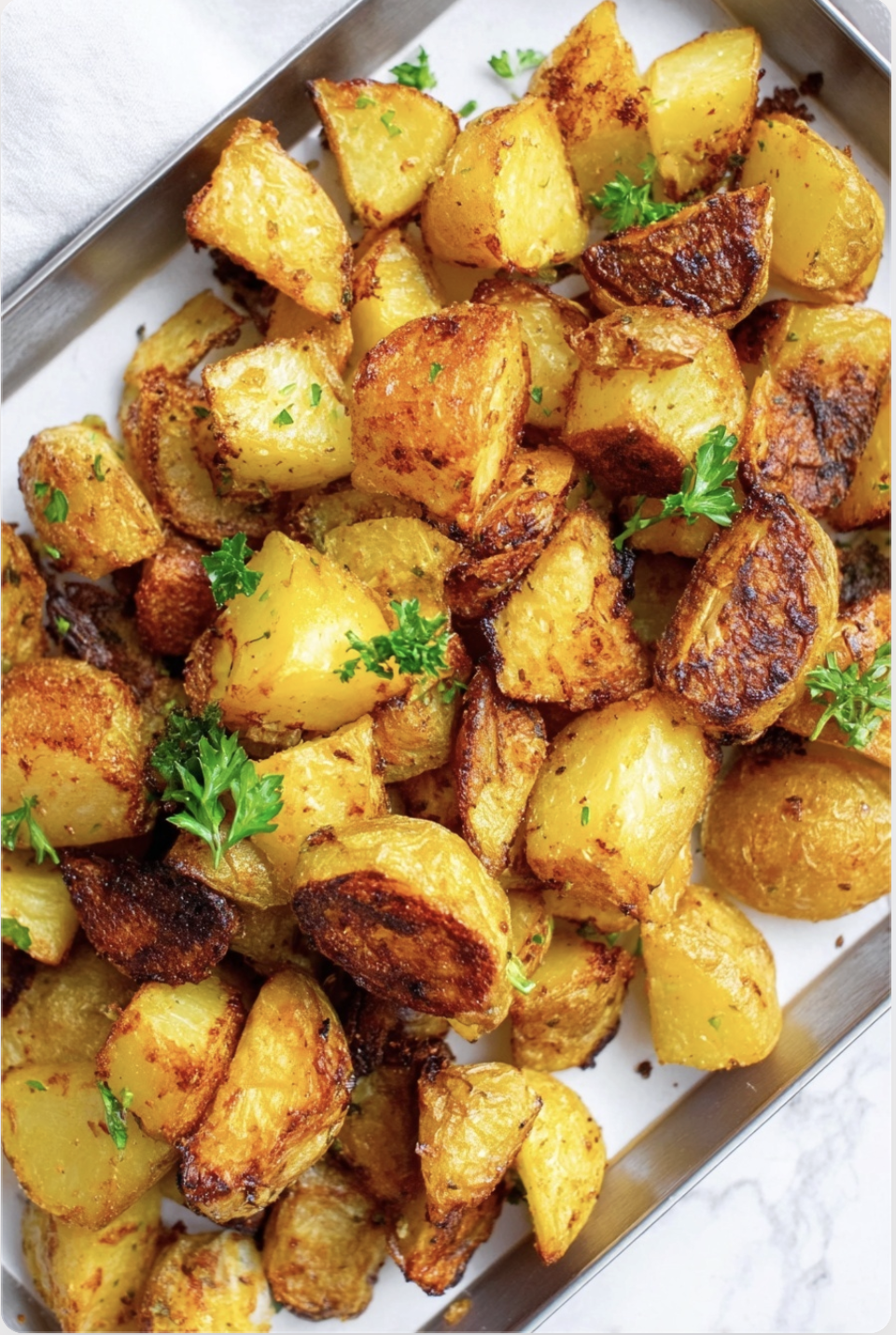
They should have irregular crunchy edges, a rich golden colour, and some darker, almost overdone bits around the corners.
That contrast is what makes them irresistible.
If you break one open, the centre should be pale yellow, soft, and fluffy.
The outside should have that delicate crunch that gives way with one bite.
That contrast between crisp shell and tender middle is the whole point.
Serving Ideas
These potatoes are made for steak night.
They look right at home next to sliced steak, a bit of pan sauce, and something green on the side.
They are also excellent with roast chicken, sausages, or even a simple fried egg if you are working with leftovers.
If I am putting together a cosy weekend dinner, I serve them with steak, garlicky butter, and green beans or asparagus.
If I am doing a more casual meal, I pile them onto a plate with ketchup and call it a very good decision.
They are flexible like that.
Tips for the Best Roast Potatoes
Do not skip the hot tray.
If the potatoes hit cold oil, they will still roast, but they will not get that same immediate sizzle and crust.
Do not crowd the pan either.
If the pieces are packed too tightly, they steam instead of roast, and nobody is here for soggy potatoes.
Turn them only once or twice.
Too much fiddling can knock off the crisp crust as it forms.
And perhaps most importantly, let them actually get properly golden.
Pulling them out too early is the fastest route to disappointment.
Variations
If you want to change them up slightly, you absolutely can.
A little grated Parmesan added right at the end is lovely, though I prefer keeping the focus on the crisp potato texture.
A pinch of chilli flakes gives them a bit of attitude.
Rosemary or thyme also works well if you want a more herby version.
But for me, garlic and parsley keep things clean, simple, and easy to pair with the rest of dinner.
That is usually where I land.
Storage and Reheating
Leftover roast potatoes can be stored in an airtight container in the fridge for up to 3 days.
They will soften in the fridge, which is normal, so the best move is reheating them in the oven or air fryer rather than the microwave.
Ten to fifteen minutes in a hot oven usually brings them back nicely.
I have also been known to throw them into a frying pan the next morning.
Crispy potatoes beside eggs is never a bad situation.
Q&A
What are the best potatoes for roast potatoes?
Floury potatoes are best because they fluff up beautifully after parboiling.
That fluffy outer layer is what turns crisp in the oven.
Why add baking soda to the water?
It helps break down the surface of the potatoes slightly.
That creates the rough texture that gives you crispier edges.
Can I leave the skin on?
Yes, especially if you like a more rustic look.
Just scrub the potatoes well and cut them into rough chunks.
Can I make these ahead?
You can parboil and rough up the potatoes a few hours ahead.
Keep them in the fridge, then roast them when you are ready.
Why are my roast potatoes not crispy?
Usually it comes down to one of three things.
The potatoes were not parboiled long enough, the tray was overcrowded, or the oven was not hot enough.
Do these go well with steak?
Very well.
That golden crunch next to juicy steak is one of those combinations that never needs selling.
Final Thoughts
These are the sort of potatoes that earn a place in your regular dinner rotation very quickly.
They are simple, but they do not taste basic.
You get that deeply golden crust, the soft middle, the little darker edges, and just enough garlic and parsley to make them feel special without getting fussy.
They also happen to make steak look even better, which is always useful.
Once you get the hang of roughing up the potatoes and roasting them until they are properly bronzed, it is hard to go back to flat, timid roasties.
A tray like this rarely lasts long in my kitchen.
That is usually how I know I got them right.