Korean Ground Beef Rice Bowl
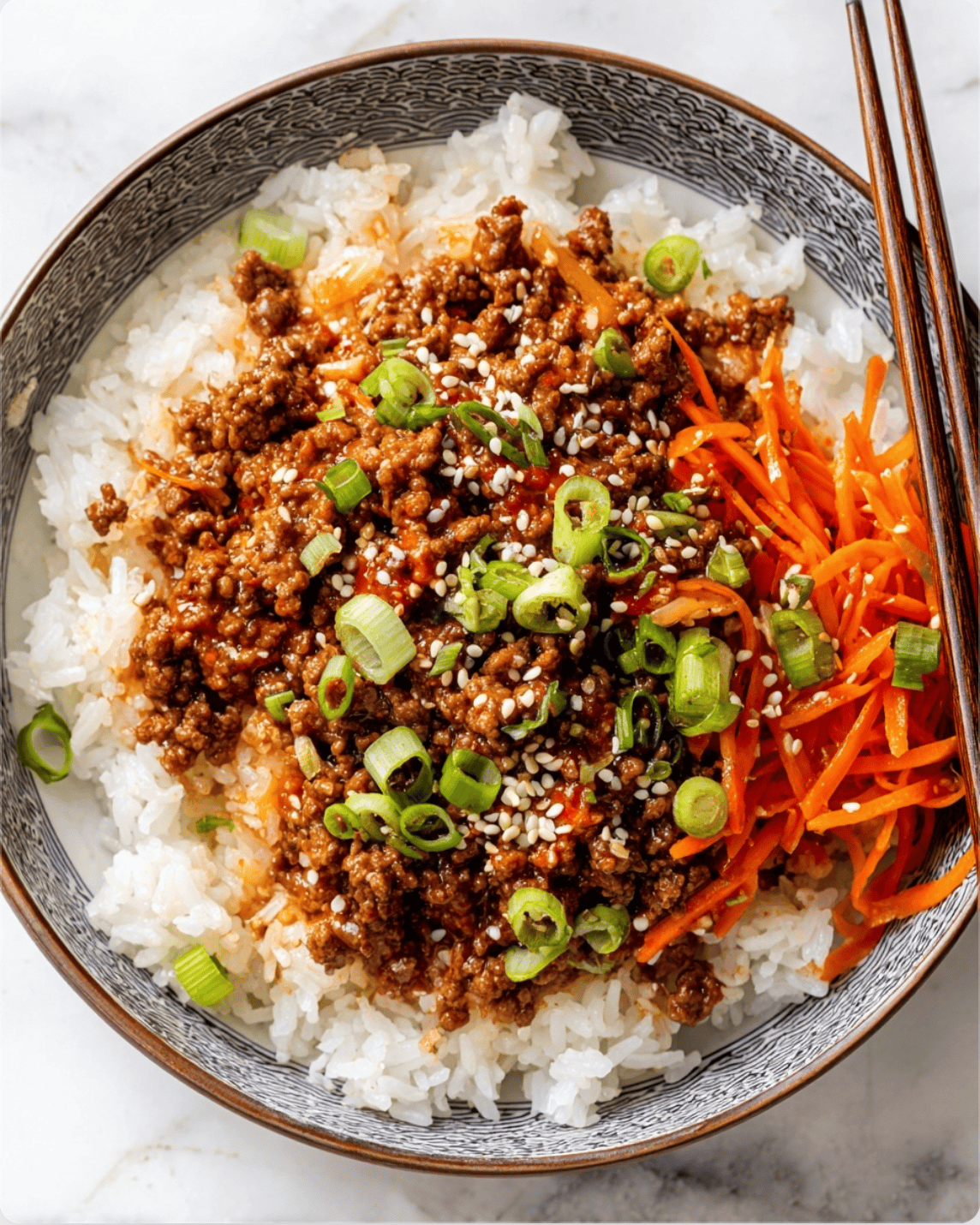
A bowl like this never lasts long at my table. The beef is sticky, sweet, spicy, and glossy in the best way, and once it lands over fluffy rice with spring onions and sesame seeds, dinner is basically handled.
I make this when I want something bold and comforting without standing at the hob for ages.
The beef cooks fast, the sauce comes together in minutes, and the whole thing has that proper takeout-style feel while still being simple enough for a regular weeknight.
What really makes it work is the balance.
You get savoury beef, a little heat from the gochujang, a touch of sweetness, soft rice to soak everything up, and crisp shredded carrots on the side to keep the bowl from feeling too heavy.
It is not fussy, it does not need a long shopping list, and it tastes like far more effort went into it than actually did.
That is always my favourite kind of dinner.
Page Contents
ToggleWhy You’ll Love This Recipe
- The beef is rich, sticky, and packed with sweet-spicy flavour.
- It comes together quickly, which makes it perfect for busy nights.
- The ingredient list is simple, but the finished bowl tastes big and bold.
- The fluffy rice balances the sauce beautifully and makes every bite feel satisfying.
- The spring onions, sesame seeds, and shredded carrots give the bowl freshness and crunch.
- It is easy to tweak depending on how spicy or sweet you like things.
Ingredients
- 500 g ground beef
- 3 cups cooked white rice
- 2 tablespoons gochujang
- 2 tablespoons soy sauce
- 1 tablespoon honey or brown sugar
- 1 tablespoon sesame oil
- 3 cloves garlic, finely grated or minced
- 1 teaspoon fresh ginger, finely grated
- 2 tablespoons water
- 1 teaspoon rice vinegar
- 2 spring onions, finely sliced
- 1 medium carrot, peeled and shredded
- 1 tablespoon sesame seeds
- 1 tablespoon neutral oil
- Black pepper, to taste
- Pinch of salt, if needed
A Few Ingredient Notes
Gochujang is doing most of the heavy lifting here, so use one you already know you like if you have a favourite.
It gives the beef that deep red colour and that lovely sweet heat that makes the sauce taste full and rounded instead of just fiery.
Ground beef is the easiest choice for this bowl because it cooks quickly and grabs onto the sauce really well.
I like using a beef mince with a little fat in it because it keeps the texture juicy and stops the finished dish from tasting dry.
The shredded carrot is simple, but do not skip it.
That little crisp, cool bite against the warm beef and rice makes the whole bowl feel more alive.
How to Make Korean Ground Beef Rice Bowls
- Cook your rice first and keep it warm while you make the beef.
- In a small bowl, stir together the gochujang, soy sauce, honey, sesame oil, garlic, ginger, water, and rice vinegar until smooth.
- Heat the neutral oil in a large frying pan over medium-high heat.
- Add the ground beef and break it up with a spoon as it cooks.
- Let it brown properly rather than constantly stirring, because those caramelised bits give the bowl a much better flavour.
- Once the beef is cooked through and lightly browned, drain off any excess grease if needed.
- Pour in the gochujang sauce and stir well so the beef is evenly coated.
- Let it bubble for a few minutes until the sauce thickens and turns glossy.
- Taste and add black pepper, and a tiny pinch of salt only if it needs it.
- Spoon the warm rice into bowls.
- Top with the sticky beef mixture.
- Add the shredded carrot to the side of each bowl.
- Finish with finely sliced spring onions and sesame seeds.
Tips for the Best Bowl
Do not rush the browning step.
The beef should not look grey and sleepy.
You want some colour on it before the sauce goes in, because that is where a lot of the savoury flavour comes from.
Keep an eye on the sauce as it reduces.
It should coat the beef nicely without turning dry or claggy.
If it thickens too much, a small splash of water will loosen it right back up.
Slice the spring onions thinly.
They are not just there for decoration.
They bring a sharp, fresh little lift that cuts through the richness of the beef.
Easy Ways to Change It Up
If you want more heat, add extra gochujang or a pinch of Korean chilli flakes.
If you want it a bit sweeter, add another teaspoon of honey.
You can also swap the shredded carrot for cucumber matchsticks if that is what you have.
A fried egg on top is lovely too, although I kept this version true to the bowl here with rice, beef, carrot, spring onion, and sesame.
You could even use ground turkey or chicken if that is what is in the fridge.
The flavour will shift a little, but the sauce still works beautifully.
What to Serve With It
This bowl is already a complete meal, so you really do not need much else.
Still, if you want to stretch dinner a little further, a quick cucumber salad works well.
Kimchi would also be great on the side if you like a sharper, punchier contrast.
For me, though, a bowl like this is usually enough all by itself.
Once the rice soaks up that glossy beef sauce, I am not exactly hunting around for side dishes.
Storage and Leftovers
The beef keeps well in the fridge for up to 3 days.
Store the rice separately if you can, and keep the spring onions and carrots back until serving so everything stays fresh.
To reheat, warm the beef gently in a pan or in the microwave with a tiny splash of water.
That helps bring the sauce back to life instead of letting it dry out.
It also makes a great lunch the next day.
In fact, I would argue it tastes even better once the flavours have had a bit more time to settle into each other.
Frequently Asked Questions
Can I make this less spicy?
Yes, absolutely.
Just use a little less gochujang and add a touch more honey if you want to soften the heat further.
It will still taste rich and savoury, just gentler.
What kind of rice works best?
Plain white rice is perfect here.
It is soft, fluffy, and soaks up the sauce really well.
Jasmine rice is especially nice if you have it.
Can I make it ahead?
Yes.
You can cook the beef ahead of time and keep it chilled in the fridge.
Then all you need to do is reheat it and cook fresh rice when you are ready to eat.
Do I have to use sesame oil?
I really recommend it.
It adds a nutty finish that gives the bowl a lot of its character.
It is only a small amount, but you would miss it if it was not there.
Can I freeze the beef?
Yes, the cooked beef freezes well.
Let it cool completely, pack it into a freezer-safe container, and freeze for up to 2 months.
Defrost overnight in the fridge before reheating.
Final Thoughts
I love recipes like this because they feel a little exciting without making a mess of the whole evening.
You brown some beef, stir together a quick sauce, pile everything over rice, and suddenly dinner feels much better than it had any right to.
The gochujang gives the beef that sticky sweet-spicy edge, the sesame seeds and spring onions finish it properly, and the shredded carrot keeps the whole bowl from feeling too rich.
It is cosy, fast, and full of flavour.
And more importantly, it is the sort of meal people actually ask for again.
If you make one weeknight rice bowl on repeat, I would make it this one.