Chilli Garlic Shrimp Spaghetti
This chilli garlic shrimp spaghetti has the kind of smell that makes people wander into the kitchen before you’ve even plated it.
The shrimp get a little colour, the tomatoes go soft and jammy, and the whole thing gets tossed with enough garlic and chilli to make plain spaghetti feel completely unnecessary.
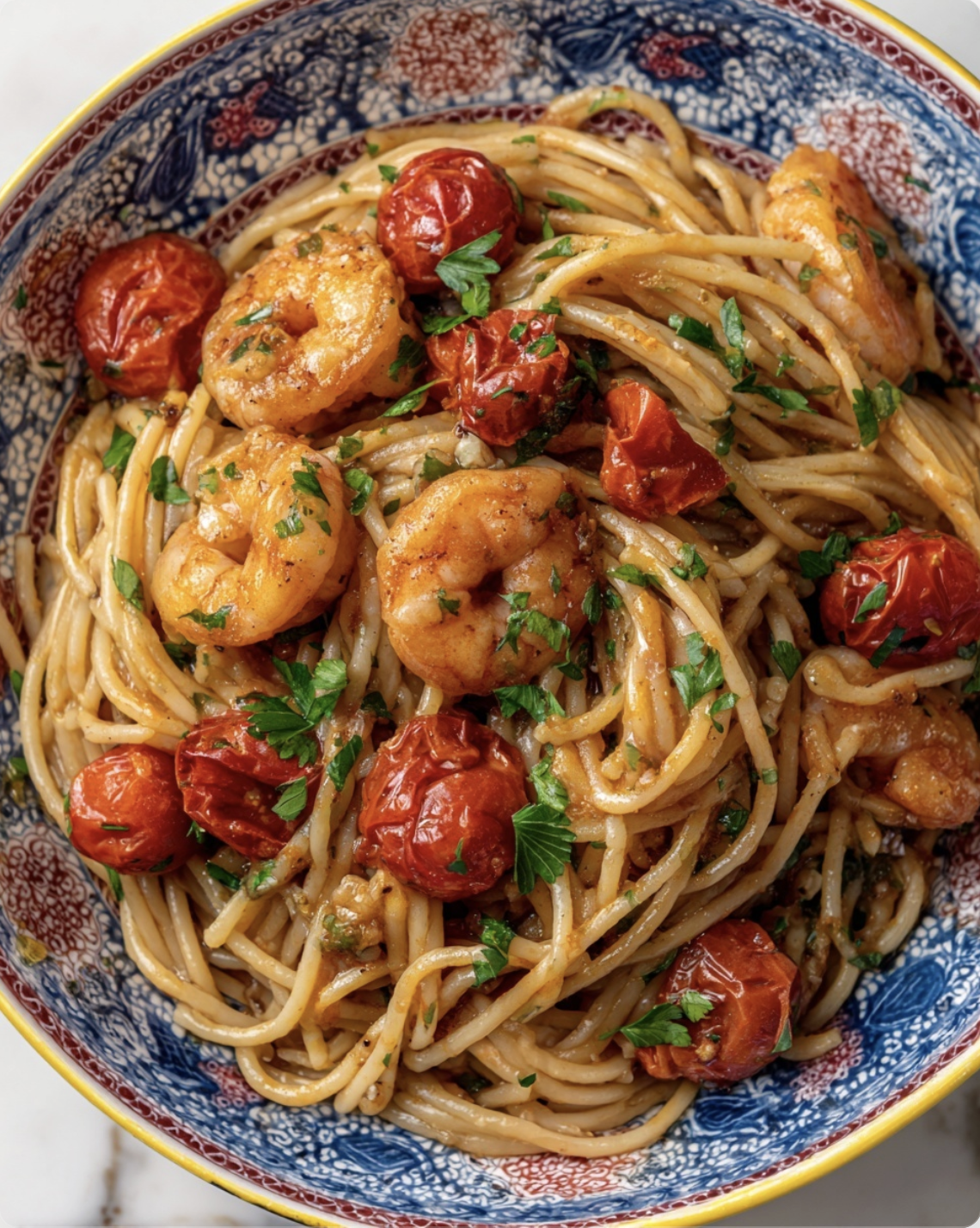
I like this pasta a little messy.
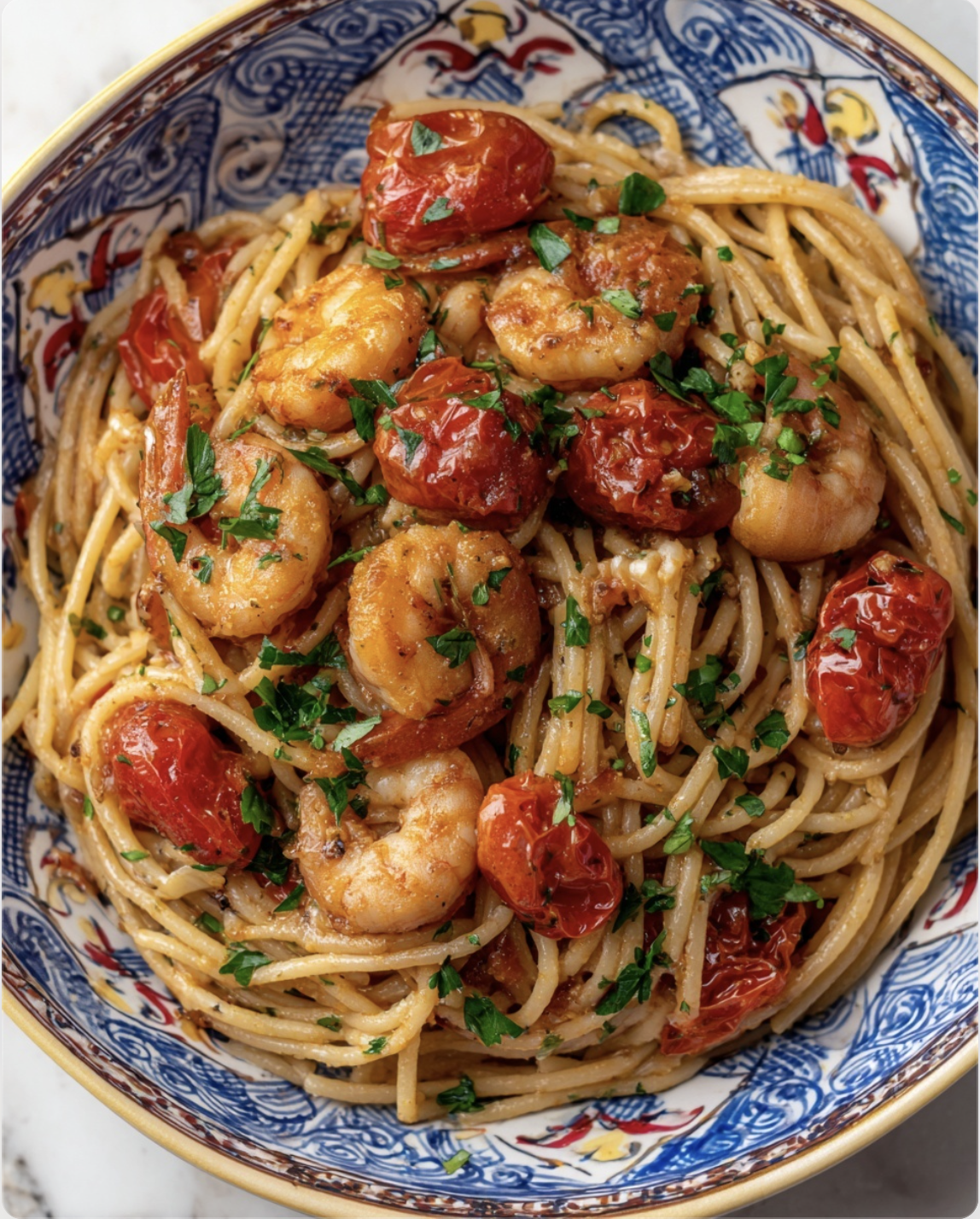
The tomatoes should burst and collapse into the pan, the shrimp should have browned bits around the edges, and the spaghetti needs enough sauce clinging to it that you don’t end up chasing dry strands around the bowl.
I cook the garlic and chilli just long enough to perfume the oil, then everything else gets built on top of that.
The shrimp go in quickly, the tomatoes soften, and the pasta gets tossed through until it picks up all those spicy, garlicky juices.
A handful of parsley at the end freshens it up without getting in the way.
It’s fast, punchy, and the sort of dinner I’d happily eat straight out of the pan if nobody was watching.
Page Contents
ToggleWhy You’ll Love This Recipe
- The shrimp stay juicy and tender.
- The cherry tomatoes become soft and jammy without disappearing completely.
- Garlic and chilli give the pasta loads of flavour without making it heavy.
- Lemon keeps the whole dish fresh.
- The sauce is glossy and light rather than creamy.
- It comes together quickly enough for a weeknight.
- You only need a handful of straightforward ingredients.
Ingredients
This serves about 4 people.
For the pasta
- 300g spaghetti
- 350g raw shrimp, peeled and deveined
- 250g cherry tomatoes
- 4 garlic cloves, finely chopped
- 1/2 teaspoon chilli flakes
- 4 tablespoons extra-virgin olive oil
- Zest of 1 lemon
- 1 to 2 tablespoons fresh lemon juice
- 3 tablespoons chopped fresh parsley
- 1/2 teaspoon salt, plus more for the pasta water
- 1/2 teaspoon cracked black pepper
- 1/3 cup reserved pasta water, as needed
A Few Ingredient Notes
I like using medium or large shrimp for this because they stay nice and plump next to the spaghetti.
If you are using frozen shrimp, thaw them properly and pat them dry before cooking.
That little bit of drying matters.
Wet shrimp steam in the pan, and you lose those lightly browned edges.
Cherry tomatoes work perfectly here because they soften quickly and release enough juice to help make the sauce.
I would not swap them for a thick bottled tomato sauce.
The whole point is keeping this pasta light and glossy.
And use an olive oil you actually like the taste of.
There is nowhere for a bad one to hide in a recipe this simple.
Instructions
1. Cook the spaghetti
- Bring a large pot of well-salted water to the boil.
- Add the spaghetti and cook until al dente.
- Before draining, scoop out about 1 cup of the pasta water.
- Drain the spaghetti and set it aside.
Do not rinse it.
You want that starch left on the pasta because it helps the olive oil and tomato juices cling to it later.
2. Season the shrimp
- Pat the shrimp dry.
- Season with salt and cracked black pepper.
- Add a small pinch of the chilli flakes.
Keep the seasoning simple at this stage.
There is plenty more flavour coming from the pan.
3. Cook the shrimp
Heat 1 tablespoon of the olive oil in a large frying pan over medium-high heat.
- Add the shrimp in a single layer.
- Cook for about 1 to 2 minutes on the first side.
- Flip and cook for another minute.
- Remove them from the pan as soon as they are pink and just cooked through.
Do not leave them sitting in there while you finish everything else.
They will go from juicy to rubbery surprisingly fast.
4. Cook the tomatoes
Turn the heat down to medium.
- Add another 2 tablespoons of olive oil.
- Add the cherry tomatoes.
- Cook for around 5 to 7 minutes.
- Stir now and then until the tomatoes soften, blister, and begin to burst.
Some should collapse more than others.
That is ideal.
You want juicy pieces of tomato as well as a little tomatoey oil collecting in the pan.
5. Add the garlic and chilli
- Add the chopped garlic.
- Add the remaining chilli flakes.
- Cook for about 30 to 60 seconds.
Keep the garlic moving.
You want it fragrant and lightly softened, not brown and bitter.
6. Add the spaghetti
Tip the drained spaghetti straight into the pan.
- Add the lemon zest.
- Add about 1/4 cup of reserved pasta water.
- Toss everything together over medium heat.
- Add another tablespoon of olive oil.
Keep tossing until the spaghetti starts looking glossy.
The pasta water should combine with the olive oil and tomato juices instead of sitting watery at the bottom.
If the pasta looks dry, add another small splash of water.
7. Add the shrimp back in
Return the cooked shrimp to the pan.
- Add the lemon juice.
- Add most of the chopped parsley.
- Toss gently for another minute.
That is really all the shrimp need.
You are warming them back through, not cooking them from scratch again.
8. Finish and serve
Divide the spaghetti between bowls.
Spoon the shrimp and burst tomatoes over the top.
Finish with:
- The remaining parsley
- Extra cracked black pepper
- A very light drizzle of extra-virgin olive oil
- A little extra lemon if you like it sharper
Serve immediately.
This pasta is at its best while the shrimp are still juicy and the sauce is glossy.
How to Get That Glossy Sauce
There is no cream here, so the pasta water is doing important work.
The starch in the water helps bind the olive oil and tomato juices together.
That is what turns everything from “pasta sitting in oil” into an actual sauce.
Do not pour in loads at once.
Add a small splash, toss well, and see what happens.
You can always add more.
And keep the pasta moving in the pan for a minute or two.
That tossing helps the sauce grab onto the spaghetti properly.
Don’t Overcook the Tomatoes
You are not trying to turn them into marinara.
I like them blistered and soft, with some split open and others still holding their shape.
That gives you a much nicer texture.
Some bites get more tomato.
Some get mostly garlic, chilli, shrimp, and olive oil.
That little bit of variation makes the bowl far more interesting.
How Spicy Is It?
This has a noticeable chilli kick, but it should not blow your head off.
You can easily change that.
For a milder version, use about 1/4 teaspoon chilli flakes.
For more heat, use a full teaspoon.
You can also add finely sliced fresh red chilli if you want something sharper.
I usually keep it moderate because I still want to taste the shrimp and lemon.
Easy Variations
You can make a few small changes without losing the whole character of the dish.
Try adding:
- A little grated Parmesan
- Fresh basil
- Baby spinach
- A splash of dry white wine
- Extra lemon zest
- A few capers
I would not throw all of those in together.
The reason this pasta works so well is because it is fairly stripped back.
Pick one or two extras at most.
What to Serve With It
Honestly, it does not need much.
If I am making this for dinner, I might add:
- Garlic bread
- A simple rocket salad
- Roasted asparagus
- A tomato and cucumber salad
That is about it.
The pasta already has plenty happening on its own.
Storage and Reheating
Store leftovers in an airtight container in the fridge for up to 2 days.
Shrimp pasta is definitely better fresh, but leftovers are still perfectly good if you reheat them gently.
Add the pasta to a frying pan with a splash of water and a tiny drizzle of olive oil.
Warm over low heat until just hot.
Try not to cook it aggressively.
The shrimp have already done their shift.
Q&A
Can I use frozen shrimp?
Yes.
Thaw them completely and pat them very dry before cooking.
Can I use linguine instead?
Absolutely.
Linguine works beautifully with this sauce.
Can I add Parmesan?
Yes, if you like.
A small amount works well, although I prefer keeping this one mostly about the garlic, chilli, tomato, lemon, and shrimp.
Can I use fresh chilli instead of chilli flakes?
Yes.
Thinly slice one red chilli and cook it with the garlic.
Why is my sauce oily?
It probably needs a little pasta water and more tossing.
The starch helps emulsify the oil and turn it into a smoother coating.
Can I make this ahead?
You can prep everything ahead, but I would cook the pasta and shrimp just before serving.
The texture is much better that way.
Can I use cooked shrimp?
Yes.
Skip the initial frying step and add them right at the end just long enough to warm through.
Final Thoughts
I like this pasta because nothing in the bowl is fighting for attention.
The shrimp taste like shrimp.
The tomatoes stay sweet and juicy.
The garlic and chilli sit in the background giving everything a bit of heat, while the lemon keeps the olive oil sauce from feeling heavy.
And then there are all those little bits of parsley caught between the spaghetti, which somehow make every forkful taste fresher.
It comes together quickly, it does not need a complicated sauce, and there is very little left in the pan afterwards.
That last part is usually the strongest review a dinner gets in my house.