Chinese Black Pepper Beef
Why You’ll Love This Recipe
- The beef stays tender instead of turning chewy.
- Plenty of cracked black pepper gives the sauce a proper warm kick.
- Chunky onions and bell peppers add sweetness without making the dish overly saucy.
- The sauce is glossy and savoury, with enough body to coat the beef rather than pool underneath it.
- It cooks quickly once everything is chopped and ready.
- Plain white rice makes an easy side and soaks up every bit of sauce left on the plate.
Ingredients
This recipe serves about 4 people.
For the beef
- 600g sirloin, rump, flank steak, or another tender beef cut
- 1 tablespoon light soy sauce
- 1 tablespoon cornflour
- 1 teaspoon sesame oil
- 1 tablespoon neutral oil, for frying
For the vegetables
- 1 large onion, cut into chunky wedges
- 1 red bell pepper, cut into thick pieces
- 1 green bell pepper, cut into thick pieces
- 2 garlic cloves, finely chopped
- 1 teaspoon finely grated ginger
For the black pepper sauce
- 2 tablespoons light soy sauce
- 1 tablespoon dark soy sauce
- 1 1/2 tablespoons oyster sauce
- 1 teaspoon brown sugar
- 1 tablespoon rice vinegar
- 1/3 cup beef stock or water
- 1 1/2 to 2 teaspoons freshly cracked black pepper
- 1 teaspoon cornflour mixed with 1 tablespoon cold water
For serving
- Fluffy boiled white rice
A Few Ingredient Notes
Sirloin works beautifully because it cooks quickly and stays tender.
Flank steak is also good, but make sure you slice it against the grain.
That little detail makes a huge difference once the beef hits the pan.
Freshly cracked black pepper is worth using here rather than finely powdered pepper.
You want to actually taste those little peppery bursts rather than having everything taste vaguely hot.
I use both red and green bell peppers because they bring different flavours as well as colour.
The onions should be cut into generous wedges too.
They soften and caramelise around the edges while still keeping enough structure to hold their own next to the beef.
How to Prepare the Beef
Thinly sliced beef cooks incredibly fast.
That is good news, but it also means there is almost no room for wandering off to answer a message once the pan is hot.
If your steak is difficult to slice thinly, put it in the freezer for about 20 to 30 minutes first.
It will firm up without freezing solid.
Then slice it against the grain into strips roughly 5mm thick.
They do not need to be perfectly identical.
A little variation gives you some deeply browned pieces and some softer ones, which I actually prefer.
Instructions
1. Marinate the beef
- Put the sliced beef into a bowl.
- Add the light soy sauce.
- Add the cornflour.
- Add the sesame oil.
- Toss until every piece is lightly coated.
- Leave it for about 15 to 20 minutes while you prepare everything else.
The cornflour gives the beef a light coating that helps it stay juicy and gives the sauce something to cling to later.
You do not need a thick batter.
It should barely look coated.
2. Mix the black pepper sauce
- Add the light soy sauce to a small bowl.
- Stir in the dark soy sauce.
- Add the oyster sauce.
- Add the brown sugar.
- Add the rice vinegar.
- Pour in the beef stock or water.
- Stir in the cracked black pepper.
Keep the cornflour slurry separate for now.
I usually taste the sauce at this stage.
It should be savoury and peppery, with just a small amount of sweetness in the background.
3. Sear the beef
Heat a large wok or heavy frying pan over high heat.
Add the neutral oil.
- Add the beef in a single layer.
- Cook in batches if your pan is not large enough.
- Leave the pieces alone for about 45 seconds before turning.
- Stir-fry for another minute or so until browned around the edges.
- Remove the beef from the pan.
Do not fully cook it to death here.
It is going back into the sauce later.
I would much rather pull the beef out slightly early than spend the rest of dinner chewing determinedly.
4. Cook the vegetables
Keep the same pan over medium-high heat.
- Add the onion wedges.
- Cook for about 2 minutes.
- Add the red and green bell peppers.
- Stir-fry for another 2 to 3 minutes.
- Add the garlic and ginger.
- Cook for around 30 seconds.
The vegetables should pick up some dark spots around the edges.
I do not want them floppy.
They should be softened enough to lose their raw crunch but still feel substantial when you bite into them.
5. Add the sauce
Give the prepared sauce another stir and pour it into the pan.
Let it bubble for around a minute.
Scrape up any browned bits from the bottom while you stir.
Those bits are flavour and I am certainly not leaving them behind.
Add the cornflour slurry.
Stir continuously for another 30 seconds or so.
The sauce should turn darker, glossy, and just thick enough to coat the back of a spoon.
6. Return the beef
Add the beef and any juices from the plate back into the pan.
- Toss everything together.
- Cook for about 1 to 2 minutes.
- Make sure the beef, onions, and peppers are well coated.
Take the pan off the heat as soon as the beef is cooked through.
The finished sauce should cling to the meat and vegetables.
It should not look like soup.
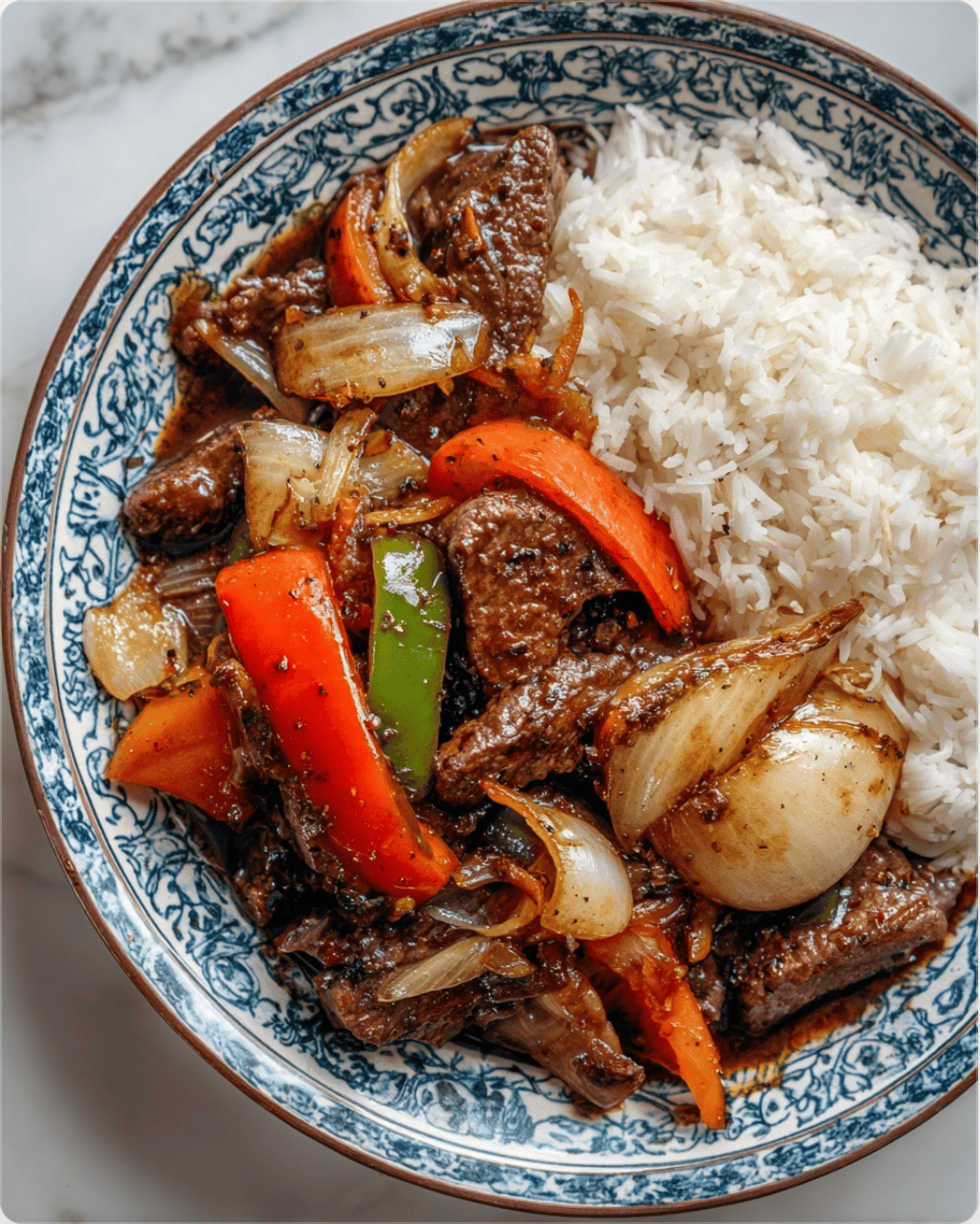
7. Serve with white rice
Spoon freshly cooked white rice onto one side of each plate or bowl.
Pile the black pepper beef alongside it.
Make sure everybody gets plenty of onion and peppers too.
I like keeping the rice and beef mostly separate at first.
By the time you are halfway through eating, the sauce naturally starts working its way into the rice anyway.
That is when it gets especially good.
How to Keep the Beef Tender
There are a few easy ways to avoid tough beef.
Slice against the grain.
That shortens the muscle fibres and makes each bite easier to chew.
Do not cut the strips too thick.
Black pepper beef is at its best when the beef cooks quickly.
And most importantly, do not overcrowd the pan.
If there are too many pieces packed together, the temperature drops and the beef releases water.
Instead of browning, it starts simmering.
I would rather cook two quick batches than end up with grey beef.
Getting That Glossy Black Pepper Sauce Right
You do not need much cornflour.
The goal is a sauce that lightly coats the beef and vegetables, not something so thick you could stand a spoon in it.
Add the slurry once the sauce is already simmering.
That lets you see the texture change almost immediately.
If it becomes too thick, stir in a tablespoon or two of water.
If it still looks thin, let it bubble for another 30 seconds before adding anything else.
It thickens quickly.
How Peppery Should It Be?
Black pepper is meant to be noticeable here.
I normally use about 1 1/2 teaspoons and then add a little more at the end if I want extra heat.
Freshly cracked pepper has a warmer, more aromatic flavour than the very fine stuff.
It also leaves those visible little black specks throughout the sauce.
If you are cooking for someone who does not love peppery food, start with 1 teaspoon.
You can always add more.
You cannot chase it back out of the pan.
Easy Variations
You can make a few swaps without changing the basic dish too much.
Chicken breast or chicken thigh works with the same sauce.
You could also use pork tenderloin cut into thin strips.
If you want more vegetables, mushrooms are a particularly good addition.
Broccoli would work too, although I would keep the quantity modest.
The beef, onions, and peppers should still be the main thing happening in the pan.
What to Serve With Black Pepper Beef
White rice is my first choice every time.
It is soft, plain, and exactly right against that strong savoury sauce.
You could also serve it with:
- Egg fried rice
- Steamed jasmine rice
- Stir-fried noodles
- Steamed broccoli
- Garlic greens
- Cucumber salad
For a normal weeknight dinner, though, I would not bother adding loads of sides.
Beef and rice gets the job done very nicely.
Storage and Reheating
Store leftover black pepper beef in an airtight container in the fridge for up to 3 days.
Keep the rice separate if possible.
Reheat the beef in a frying pan over medium heat with a splash of water.
Once it is steaming hot, take it off the heat.
Do not keep cooking it long after it is warmed through or the beef will toughen.
You can also use the microwave.
Just heat it in shorter bursts and stir between them.
Q&A
What beef is best for black pepper beef?
Sirloin is an excellent choice.
Flank steak, rump, or ribeye can also work well.
Whatever you use, slice it thinly against the grain.
Can I use ground black pepper?
Yes, but freshly cracked black pepper gives a much better flavour and texture.
Use a coarse grind if you can.
Is black pepper beef very spicy?
It has a peppery warmth rather than chilli heat.
You can easily reduce the amount of black pepper if you prefer it milder.
Do I have to use oyster sauce?
It adds a lot of savoury depth.
If you cannot use it, hoisin is not an exact replacement because it is sweeter, but a small amount can work in a pinch.
Why did my beef turn tough?
It was probably sliced too thickly, cut with the grain, or cooked for too long.
A hot pan and very quick cooking are your friends here.
Can I make the sauce ahead?
Yes.
Mix all the sauce ingredients except the cornflour slurry and keep them covered in the fridge.
Give the mixture a good stir before using it.
Can I add more vegetables?
Of course.
Mushrooms, broccoli, or snow peas would all work.
I would still keep the onion and bell peppers because they are especially good with the black pepper sauce.
Final Thoughts
Black pepper beef is one of those dinners where the pan smells so good that waiting for the rice to finish suddenly feels unreasonable.
The beef gets dark and caramelised around the edges, the onions turn sweet and slightly charred, and the peppers stay juicy with just enough bite left in them.
Then that glossy black pepper sauce gets into every little corner.
The plain rice beside it might look like the quiet part of the meal, but it is doing important work.
Once it catches a bit of that savoury sauce, the whole plate comes together.
And if there are a couple of sticky onions left behind after the beef is gone, I am absolutely eating those too.