Beef Ragu Pappardelle
I made this on one evening when I wanted a proper bowl of pasta, not a quick tomato sauce pretending to be one.
The beef cooks down into the tomatoes until the sauce is thick, rich and almost tangled through those wide pappardelle ribbons, and that first forkful is ridiculously good.
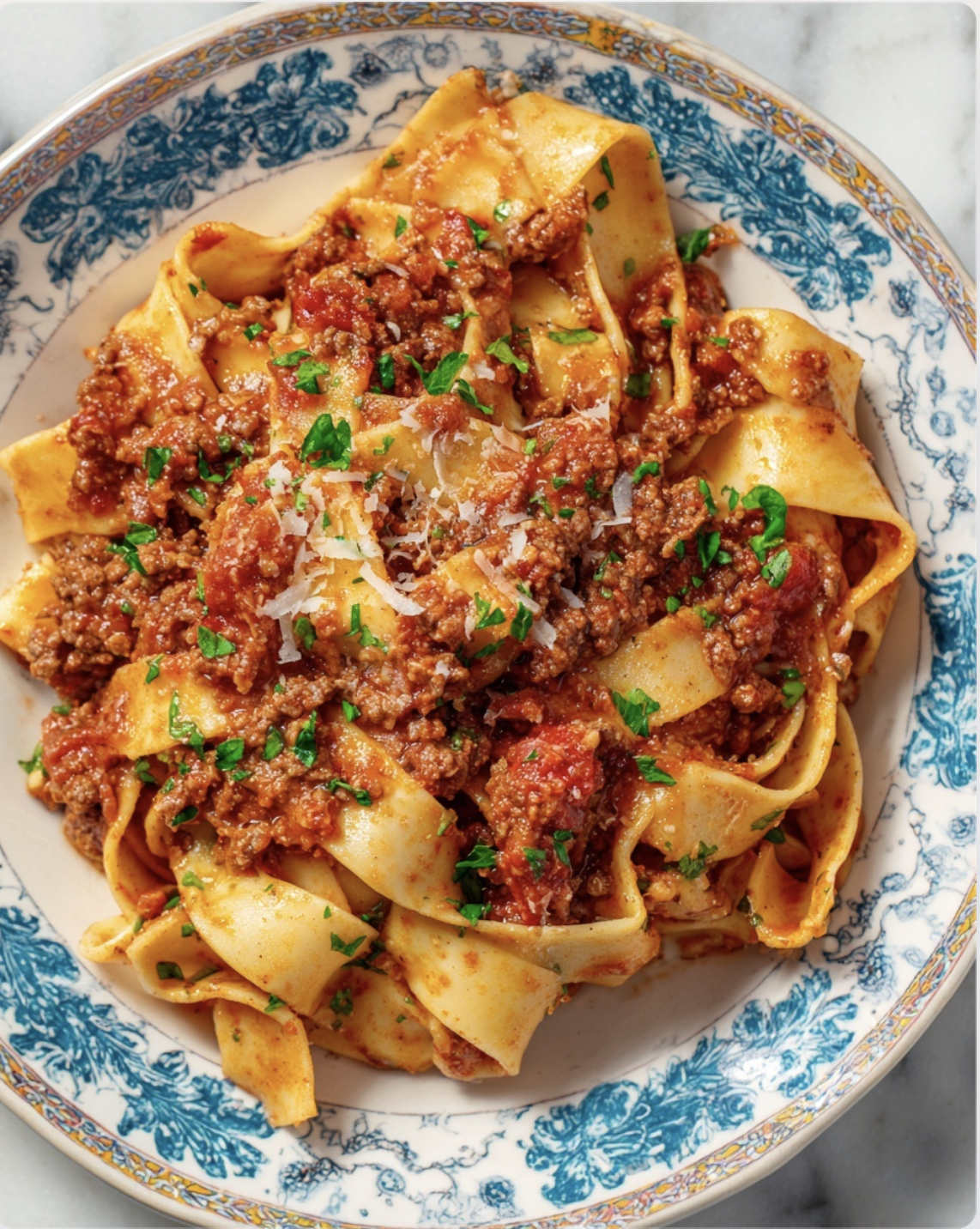
Pappardelle is absolutely the pasta I want with beef ragu.
Those big floppy ribbons give the sauce somewhere to sit, so you get little crumbles of beef and tomato tucked into nearly every fold.
The ragu itself isn’t overly saucy.
It is thick, meaty and concentrated, with softened tomatoes, garlic, onion and plenty of slow-cooked beef rather than a puddle of red sauce at the bottom of the bowl.
I leave some of the tomato pieces fairly chunky too.
They soften as everything cooks, but you can still spot them throughout the finished pasta.
Once the pappardelle goes into the pan, I toss it properly so the sauce works its way over every ribbon.
Then all it needs is Parmesan and a decent handful of chopped parsley.
I usually add more Parmesan at the table because apparently I have never once looked at pasta and thought, yes, that’s enough cheese.
Page Contents
ToggleWhy You’ll Love This Recipe
- The ragu is thick and beefy rather than thin and watery.
- Wide pappardelle ribbons are perfect for catching all those little pieces of beef and tomato.
- Most of the cooking time is hands-off once the sauce is simmering.
- You can make the ragu ahead and it actually tastes even better after sitting overnight.
- Parmesan adds a salty finish without turning the sauce creamy.
- It feels like a big Sunday dinner but isn’t difficult to make.
- Leftover ragu freezes brilliantly, so making extra is never a bad idea.
Ingredients
This makes about 4 generous servings.
For the beef ragu
- 2 tablespoons extra-virgin olive oil
- 500g ground beef
- 1 medium yellow onion, finely chopped
- 1 small carrot, finely diced
- 1 celery stalk, finely diced
- 4 garlic cloves, finely chopped
- 2 tablespoons tomato paste
- 1 x 400g can chopped tomatoes
- 1 x 400g can whole peeled tomatoes, lightly crushed
- 150ml beef stock
- 100ml dry red wine, optional
- 1 teaspoon dried oregano
- 1/2 teaspoon dried thyme
- 1 bay leaf
- 1 teaspoon salt, plus more as needed
- 1/2 teaspoon freshly cracked black pepper
For the pasta
- 350g pappardelle
- 40g finely grated Parmesan, plus extra for serving
- 3 tablespoons chopped fresh parsley
- About 1/2 cup reserved pasta water
A Few Notes Before You Start
I use ground beef here rather than large chunks of braising beef because I want that finer, crumbled ragu running all through the pappardelle.
Don’t break the beef into dust, though.
I like a mixture of smaller crumbles and a few chunkier bits because the sauce has a much nicer texture that way.
The carrot and celery are chopped quite finely.
They are there to give the ragu sweetness and depth, not to turn it into a vegetable pasta.
And yes, the sauce needs time.
You can technically eat it after twenty minutes, but it won’t taste remotely the same.
Give it a slow simmer and let the tomatoes, beef and stock cook down until the whole thing looks thick enough to cling to pasta.
That’s when it’s ready.
Instructions
1. Brown the beef properly
Heat the olive oil in a large heavy saucepan or deep frying pan over medium-high heat.
- Add the ground beef.
- Spread it out across the pan.
- Leave it alone for a minute or two before stirring.
- Break it into rough crumbles as it browns.
- Cook for about 6 to 8 minutes, until you have plenty of darker browned pieces.
Don’t stir it constantly.
If you’re moving the beef every three seconds, it never gets the chance to develop those browned bits that make the sauce taste so much better.
Once browned, spoon off a little excess fat if there is loads in the pan.
Leave some behind.
That’s flavour.
2. Add the onion, carrot and celery
Turn the heat down to medium.
- Add the chopped onion.
- Add the carrot and celery.
- Stir everything into the beef.
- Cook for 7 to 8 minutes, until the vegetables are soft.
The onion should almost melt into the mixture by the time you’re finished.
You don’t need colour on the vegetables here.
Just let them soften slowly and pick up whatever is stuck to the bottom of the pan.
3. Add the garlic and tomato paste
Add the chopped garlic and cook for about 30 seconds.
Then add the tomato paste.
- Stir it through the beef.
- Cook for another 1 to 2 minutes.
I always cook tomato paste for a minute rather than immediately dumping liquid on top.
It takes away that raw, slightly metallic taste and makes the tomato flavour noticeably richer.
4. Add the wine
If you’re using wine, pour it in now.
Let it bubble for 2 to 3 minutes while you scrape the bottom of the pan with a wooden spoon.
There will probably be a fair amount stuck down there after browning the beef.
You want all of it back in the sauce.
If you’re skipping the wine, add a small splash of beef stock instead and do the same thing.
5. Build the ragu
Add the chopped tomatoes and crushed whole tomatoes.
Pour in the beef stock.
Then add:
- Oregano
- Thyme
- Bay leaf
- Salt
- Black pepper
Stir everything together and bring it to a gentle simmer.
It may look quite loose at this point.
That’s fine.
It has some cooking to do.
6. Let it cook slowly
Turn the heat to low.
Leave the pan partially covered and simmer for about 45 minutes to 1 hour.
Give it a stir every now and then.
As it cooks, the sauce will darken and thicken considerably.
If it starts drying out before the beef has had enough time to cook, add a small splash of stock or water.
By the end, you want a chunky ragu that holds onto a spoon.
You definitely do not want beef floating around in tomato soup.
7. Cook the pappardelle
When the ragu is nearly ready, bring a large saucepan of generously salted water to the boil.
- Add the pappardelle.
- Cook until al dente according to the packet instructions.
- Scoop out about 1 cup of pasta water before draining.
- Drain the pasta.
Be slightly gentle with pappardelle.
Those wide ribbons love sticking together, folding in half, and generally behaving like fitted sheets.
A little stirring while they cook helps.
8. Toss the pasta with the ragu
Remove the bay leaf from the sauce.
Taste the ragu and adjust the seasoning.
Add the drained pappardelle directly to the pan.
- Add about half of the Parmesan.
- Add a small splash of pasta water.
- Toss gently until the ribbons are completely coated.
Use tongs if you have them.
They make life much easier here.
You want the beef tucked between the folds of pasta rather than sitting in one giant heap on top.
If everything looks too tight, add another splash of pasta water.
Not loads.
Just enough to loosen the sauce and help it grip the noodles.
9. Finish with Parmesan and parsley
Add most of the chopped parsley and toss once more.
Spoon the pappardelle into bowls.
Finish each one with:
- Freshly grated Parmesan
- More chopped parsley
- A little cracked black pepper if you like
I don’t add loads of garnish.
The ragu already looks pretty great tangled through those wide ribbons, so Parmesan and parsley are enough.
Don’t Rush the Beef
This is probably the biggest difference between an okay beef ragu and one I actually want another bowl of.
Brown the meat.
Not grey.
Not beige.
Actually brown it.
If your pan is small, do it in two batches rather than packing everything in at once.
Ground beef releases a surprising amount of moisture.
Too much meat in the pan and suddenly you’re boiling it in its own juices.
Nobody asked for boiled mince.
How Thick Should the Ragu Be?
Quite thick.
When you drag a spoon through the pan, the sauce should take a moment to move back into place.
There will still be plenty of moisture because the pasta needs something to cling to, but it shouldn’t run off the noodles.
The beef should be clearly visible throughout.
The tomatoes should look cooked down and almost jammy in places.
And once you toss the pasta through, you should see sauce coating the ribbons rather than collecting underneath them.
If the ragu still looks watery after 45 minutes, leave the lid completely off and give it another 10 to 15 minutes.
Why Pappardelle Works So Well
You could absolutely make this with tagliatelle or rigatoni.
I’m not going to pretend the pasta police will arrive.
But pappardelle is particularly good with a chunky meat sauce.
Those ribbons are wide enough to carry actual pieces of beef, and their folds trap little pockets of sauce and Parmesan.
It gives you a completely different forkful from something thin like spaghetti.
I also like that pappardelle makes the bowl feel generous.
You don’t need an enormous portion because those big ribbons already make it look like a serious plate of pasta.
Can I Make the Ragu Ahead?
Yes, and I often do.
Make the sauce completely, let it cool, then refrigerate it in an airtight container.
It keeps well for about 3 days.
The next day, the flavour is even deeper because everything has had time to settle together.
Reheat it slowly in a saucepan with a splash of water or stock.
Then cook the pasta fresh and toss it through.
That’s much better than storing cooked pappardelle already mixed with the sauce.
What to Serve With It
I usually don’t do much.
It’s beef ragu and pappardelle.
Nobody is leaving hungry.
If I want something alongside it, I’ll make:
- Garlic bread
- A simple green salad
- Rocket with lemon and olive oil
- Roasted broccoli
- Green beans
Garlic bread is obviously the least restrained option.
It’s also usually the option everyone wants.
Storage
Keep leftover pasta in an airtight container in the fridge for up to 3 days.
Reheat it gently in a pan with a splash of water.
The sauce will thicken considerably once chilled, so that little bit of moisture helps loosen everything again.
If you have leftover ragu without pasta, you can freeze it for up to 3 months.
I actually like freezing it in individual portions.
Then future-you gets beef ragu on a random Wednesday without having to start chopping onions at six o’clock.
Q&A
Can I use fresh pappardelle?
Absolutely.
Fresh pappardelle cooks much faster than dried, so keep a close eye on it.
Usually only a few minutes is enough.
Can I leave out the wine?
Yes.
Use a splash of beef stock instead.
The wine adds depth, but the ragu will still taste very good without it.
Can I use only one tin of tomatoes?
You can, but I like the combination here because it gives enough tomato to cook down around the beef without making the sauce dry.
If you reduce the tomatoes, you may need slightly more stock.
Why is my beef ragu watery?
It probably hasn’t cooked long enough.
Leave it uncovered and let it simmer until the excess liquid reduces.
Can I use another pasta?
Yes.
Tagliatelle, fettuccine or rigatoni would all be good.
I wouldn’t lose sleep over it.
Do I need Parmesan in the sauce?
No, but I like adding a little while tossing the pasta.
It melts into the hot ragu and gives it a slightly fuller, saltier finish.
Can I add cream?
You can, but I wouldn’t for this version.
The sauce is meant to stay tomato-rich and beefy rather than turning creamy.
Final Thoughts
I always think I’m going to save some of this for lunch and then somehow the pan ends up suspiciously empty.
The ragu gets right into the folds of the pappardelle, with little bits of beef, soft tomato and Parmesan stuck everywhere they should be.
The parsley gives it a bit of freshness at the end, but otherwise I leave it alone.
No giant blob of ricotta.
No pile of unnecessary toppings.
Just wide pasta ribbons and a really good beef sauce that’s been given enough time to cook properly.
And if a few Parmesan shavings land on the table while I’m grating it over the bowl, those are obviously the cook’s portion.