
BBQ Beef Brisket with Sweet Potato Mash
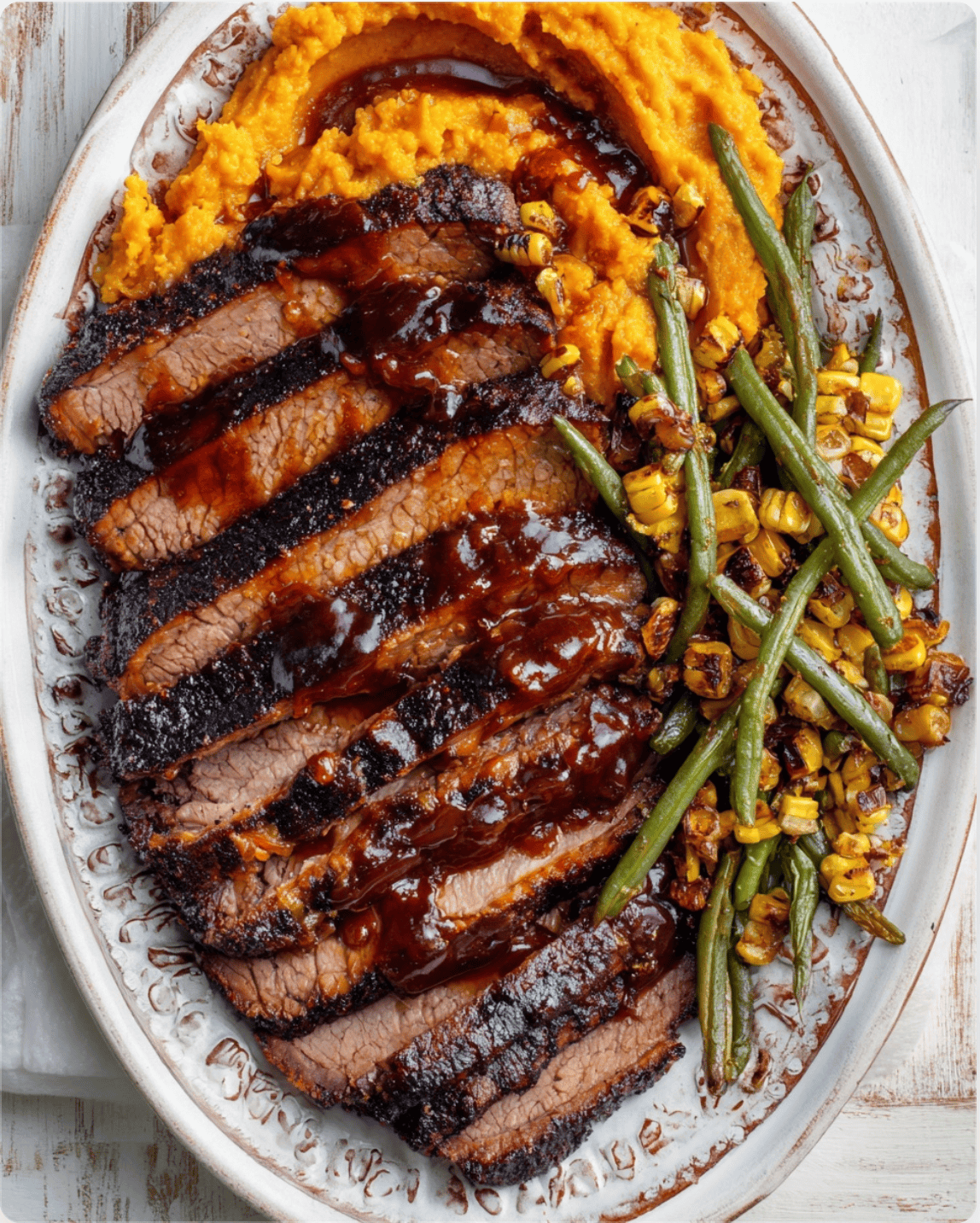
What could possibly beat tender BBQ brisket with dark, sticky edges and a pile of buttery sweet potato mash underneath it?
Add charred corn, green beans, and a generous spoonful of sauce, and you’ve got a plate that feels properly worth the wait.
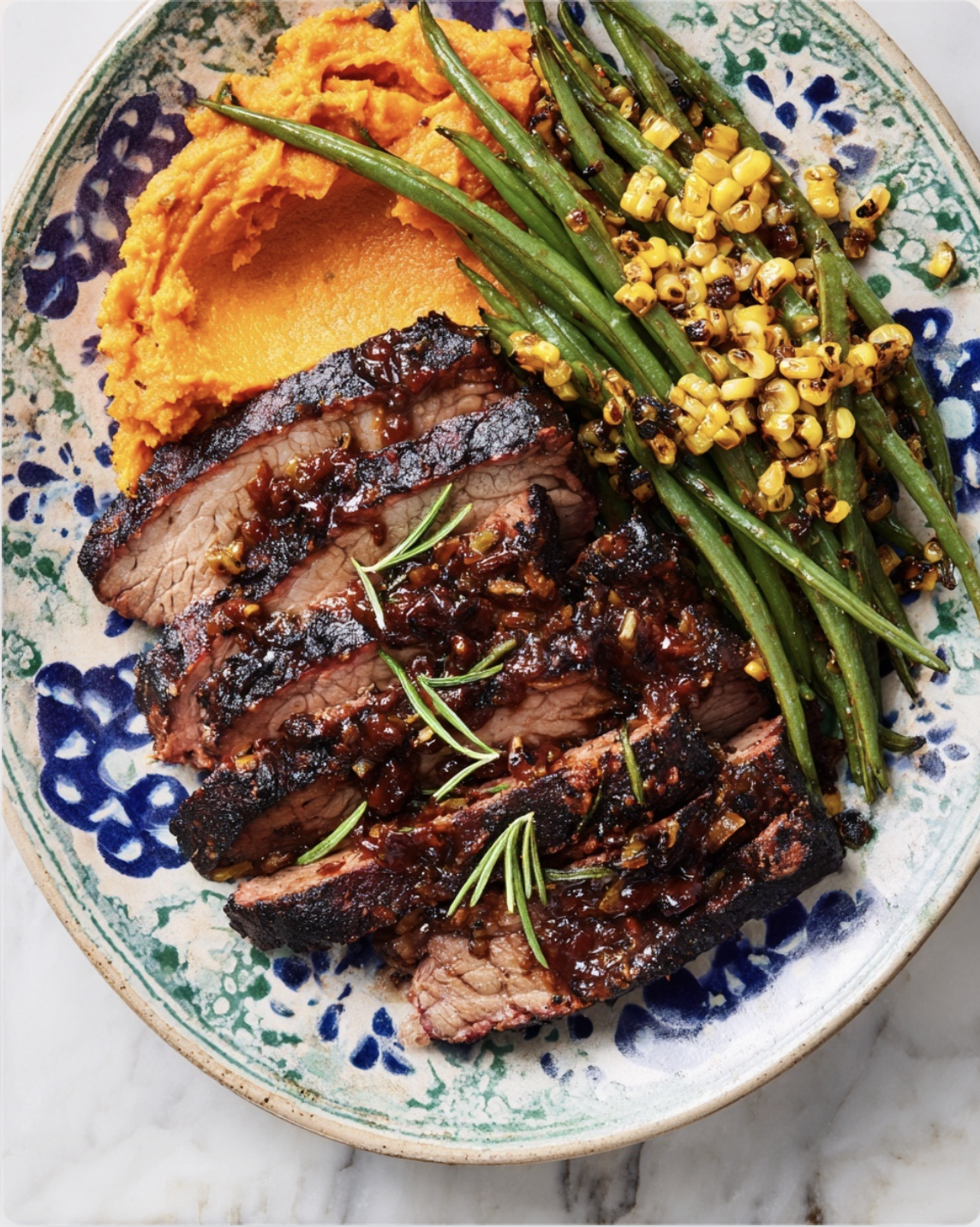
I wanted the beef to have a proper bark rather than looking like a roast covered in barbecue sauce at the last minute.
So the brisket gets a generous dry rub first, then cooks slowly until it is tender enough to slice without falling into shreds.
The barbecue sauce goes on towards the end.
That gives it time to get sticky and dark around the edges while still leaving the seasoned crust underneath.
On the side, I kept things simple with creamy sweet potato mash, blistered green beans and corn cooked until some of the kernels turn properly brown.
The sweet mash is especially good with the smoky beef.
A little barbecue sauce inevitably runs into it on the plate, and frankly that is exactly where I want it.
Why You’ll Love This Recipe
- The brisket has a dark, caramelised crust with tender meat underneath.
- A sticky barbecue glaze gives the sliced beef plenty of smoky-sweet flavour.
- The sweet potato mash is smooth and creamy rather than overly sweet.
- Green beans and charred corn give the plate some much-needed freshness and texture.
- Most of the brisket cooking time is hands-off.
- It is an excellent weekend dinner when you have time to let the beef cook slowly.
- The leftovers make very good sandwiches the next day.
Ingredients
This recipe serves about 6 people.
For the BBQ Brisket
- 1.5 to 1.8kg beef brisket
- 1 tablespoon olive oil
- 2 teaspoons salt
- 2 teaspoons smoked paprika
- 1 1/2 teaspoons coarse black pepper
- 1 teaspoon garlic powder
- 1 teaspoon onion powder
- 1 teaspoon brown sugar
- 1/2 teaspoon ground cumin
- 1/2 teaspoon chilli powder
- 250ml beef stock
For the Barbecue Glaze
- 180ml barbecue sauce
- 2 tablespoons brown sugar
- 1 tablespoon apple cider vinegar
- 1 tablespoon Worcestershire sauce
- 1 teaspoon Dijon mustard
- 1/2 teaspoon smoked paprika
For the Sweet Potato Mash
- 1kg sweet potatoes
- 40g butter
- 60ml double cream or whole milk
- 1/2 teaspoon salt
- Cracked black pepper, to taste
For the Green Beans and Corn
- 300g green beans
- 2 corn cobs, kernels sliced off
- 1 tablespoon olive oil
- 1 tablespoon butter
- 1 garlic clove, finely chopped
- Salt, to taste
- Cracked black pepper, to taste
Before You Start
Brisket needs time.
There is no clever shortcut that turns a tough piece of beef into tender slices in forty minutes.
The good news is that most of the cooking happens without you doing anything.
I use a covered roasting dish for the first part so the brisket has enough moisture to soften.
Then I uncover it, glaze it and turn the heat up slightly so the outside gets much darker.
That last part is important.
The finished brisket should not be pale underneath the barbecue sauce.
You want a dark crust around the outside of every slice.
Instructions
1. Season the Brisket
- Take the brisket out of the fridge about 30 minutes before cooking.
- Pat it very dry with kitchen paper.
- Rub the olive oil over the entire piece of beef.
- Mix together the salt, smoked paprika, black pepper, garlic powder, onion powder, brown sugar, cumin and chilli powder.
- Rub the seasoning generously over every side of the brisket.
Really press the seasoning into the meat.
The outside should look heavily coated.
That rub is eventually going to become the dark crust around the brisket.
2. Start the Slow Cook
- Preheat the oven to 150°C fan or 170°C conventional.
- Place the seasoned brisket in a deep roasting dish.
- Pour the beef stock around the brisket, not directly over the top.
- Cover the dish tightly with foil.
- Roast for about 3 1/2 to 4 1/2 hours, depending on the thickness of the meat.
You are looking for beef that feels tender when pierced with a knife.
It should not be completely falling apart because we still want clean slices later.
If the brisket is particularly thick, give it longer.
This is one of those times when the meat decides the schedule, not the clock.
3. Make the Barbecue Glaze
- Add the barbecue sauce, brown sugar, apple cider vinegar, Worcestershire sauce, Dijon mustard and smoked paprika to a small saucepan.
- Stir over low heat for 3 to 4 minutes.
- Remove from the heat once the sugar has dissolved and the sauce looks glossy.
Taste it.
You want a good balance of smoky, sweet and sharp.
If your barbecue sauce is already very sweet, cut the brown sugar down slightly.
4. Glaze the Brisket
- Remove the brisket from the oven once tender.
- Carefully pour off most of the liquid from the roasting dish.
- Increase the oven temperature to 200°C fan or 220°C conventional.
- Brush a generous layer of barbecue glaze over the top and sides of the brisket.
- Return it to the oven uncovered for about 15 minutes.
- Brush with another layer of glaze.
- Roast for another 10 to 15 minutes.
The outside should get very dark in places.
Those nearly black edges are not something I try to avoid here.
That is exactly the look and flavour I want around the brisket.
Just keep an eye on the sugary glaze because there is a difference between deeply caramelised and completely burnt.
5. Rest the Beef
- Transfer the brisket to a board.
- Cover loosely with foil.
- Let it rest for at least 20 minutes.
Do not skip the rest.
Brisket straight from the oven will lose far too much juice when sliced.
It also cuts more neatly once it has had a little time to settle.
6. Make the Sweet Potato Mash
While the brisket rests, prepare the mash.
- Peel the sweet potatoes.
- Cut them into even chunks.
- Add them to a saucepan of salted water.
- Bring to the boil and cook for about 15 to 18 minutes, until completely tender.
- Drain thoroughly.
- Return the sweet potatoes to the warm saucepan.
- Add the butter, cream, salt and black pepper.
- Mash until smooth.
I keep this mash pretty simple.
The barbecue sauce already brings sweetness, smoke and spice, so I do not pile sugar or maple syrup into the potatoes.
A little butter and cream is plenty.
You want the mash smooth enough to scoop but still thick enough to sit properly on the plate.
7. Char the Green Beans and Corn
- Heat the olive oil in a large frying pan over medium-high heat.
- Add the green beans.
- Cook for about 4 minutes, tossing occasionally.
- Add the corn.
- Cook for another 4 to 5 minutes.
- Let the vegetables sit against the pan long enough to develop some dark spots.
- Add the butter and garlic.
- Season with salt and black pepper.
- Toss for another minute and remove from the heat.
Do not keep stirring every second.
The corn needs direct contact with the pan if you want those darker roasted-looking kernels.
The green beans should stay intact with a little bite left in them.
8. Slice the Brisket
- Find the direction of the grain in the beef.
- Slice the brisket against the grain into fairly thick slices.
- Arrange the slices on a platter or individual plates.
- Spoon extra barbecue glaze over the top.
Cutting against the grain makes a huge difference with brisket.
Even perfectly cooked beef can feel chewy if you slice it the wrong way.
The slices should hold together but still look tender inside.
9. Plate Everything
- Spoon a generous amount of sweet potato mash onto each plate.
- Add several slices of BBQ brisket.
- Spoon over a little extra barbecue glaze.
- Add the charred green beans and corn alongside.
- Finish with cracked black pepper if you like.
I do not add loads of garnish here.
The dark beef, orange mash and green vegetables already give the plate plenty of colour.
Getting That Dark Brisket Crust
The dark outside comes from two separate stages.
First, the dry rub cooks into the surface of the beef during the long roast.
Then the barbecue glaze caramelises over it at a higher temperature.
If you add loads of barbecue sauce at the beginning, you will not get the same result.
The sugar can burn before the beef becomes tender.
Glazing near the end gives you much more control.
I usually apply the sauce twice rather than drowning the brisket in one enormous layer.
The thinner layers get stickier and darker.
How Tender Should the Brisket Be?
For this recipe, I want the brisket tender but sliceable.
You should be able to push a knife into it with very little resistance.
But when you slice it, the pieces should still hold their shape.
If you want shredded brisket, cook it longer.
That is great for sandwiches, but it is not the texture I want for this plate.
These thicker slices look better and give you a mix of soft meat and those dark crusty edges in every piece.
The Sweet Potato Mash
Sweet potato mash can become watery surprisingly easily.
Drain the potatoes properly before adding butter or cream.
I even leave them sitting in the colander for a minute after draining.
That extra steam escaping makes the mash much better.
Add the cream gradually too.
You can always add another splash.
Taking it back out is slightly more challenging.
The Green Beans and Corn
I really like these alongside the brisket because they are not saucy.
The plate already has barbecue glaze and creamy mash.
The vegetables need to bring texture.
I cook them in a wide hot pan and let them colour.
The corn gets sweet and slightly smoky when some of the kernels brown.
The green beans blister in places but stay firm.
It is a very simple side, which is exactly what a big piece of BBQ brisket needs.
Easy Variations
You can change the sides without touching the brisket.
Try:
- Regular mashed potatoes instead of sweet potato mash
- Roasted carrots instead of corn
- Tenderstem broccoli instead of green beans
- Coleslaw for something cold and crunchy
- Mac and cheese if you want a much heavier plate
- Cornbread on the side
You can also make the barbecue glaze hotter with cayenne or chilli sauce.
I would still keep some sweetness in it.
That sticky sweet edge works particularly well with the heavily seasoned beef.
What to Do with Leftover Brisket
Leftover brisket is honestly a reason to make a slightly bigger piece than you need.
Slice it thinly and put it in sandwiches with pickles.
Chop it and pile it into baked potatoes.
Add it to tacos.
Put it into grilled cheese.
Or just heat a few slices with leftover sweet potato mash and repeat dinner the next day.
There are much worse problems to have.
Storage
- Store leftover brisket in an airtight container in the fridge for up to 3 days.
- Keep a little barbecue sauce with the meat so it does not dry out.
- Store the sweet potato mash separately.
- Keep the vegetables in another container if possible.
To reheat the brisket, place it in a covered dish with a small splash of beef stock or water.
Warm it gently in the oven until hot.
High heat will dry it out surprisingly quickly.
The sweet potato mash can be reheated with a small splash of milk or cream.
Q&A
Can I make the brisket the day before?
Yes.
Brisket reheats very well.
Cook it, cool it and refrigerate it whole.
Slice it the next day and reheat gently with some of the cooking juices and barbecue sauce.
Can I use store-bought barbecue sauce?
Absolutely.
That is what I usually start with here.
Adding vinegar, mustard and Worcestershire sauce simply gives it a little more depth.
Can I cook the brisket in a slow cooker?
Yes.
Cook it on low for around 8 hours, then transfer it to a roasting tray.
Brush it with barbecue glaze and finish it in a hot oven to build the dark crust.
Why is my brisket tough?
It probably needs longer.
Brisket becomes tender only after enough time for the connective tissue to break down.
If it still feels firm, cover it and keep cooking.
Can I skip the sweet potato mash?
Of course.
Regular mash, roast potatoes or even fries would work.
Can I use frozen green beans?
Fresh beans are much better for getting the charred texture.
Frozen beans release more water and tend to soften before they brown.
How do I know which way the grain runs?
Look closely at the cooked meat before slicing.
You will see long lines running through the brisket.
Cut across those lines rather than following them.
Final Thoughts
The first thing I go for on this plate is always one of the end pieces of brisket.
They have the most seasoning, the darkest crust and usually an unfair amount of sticky barbecue glaze clinging to them.
Then there is the sweet potato mash underneath, which catches whatever sauce escapes from the beef.
The corn gets little charred edges.
The green beans stay firm enough to actually taste like green beans.
It is a big, generous dinner, but every part earns its place.
And if there is an extra spoonful of barbecue sauce left in the pan, put it over the brisket.
This is absolutely not the time to be restrained.