Sticky Barbecue Chicken Thighs with Coleslaw and Potato Wedges
How good does dinner look when the chicken is sticky enough to need extra napkins?
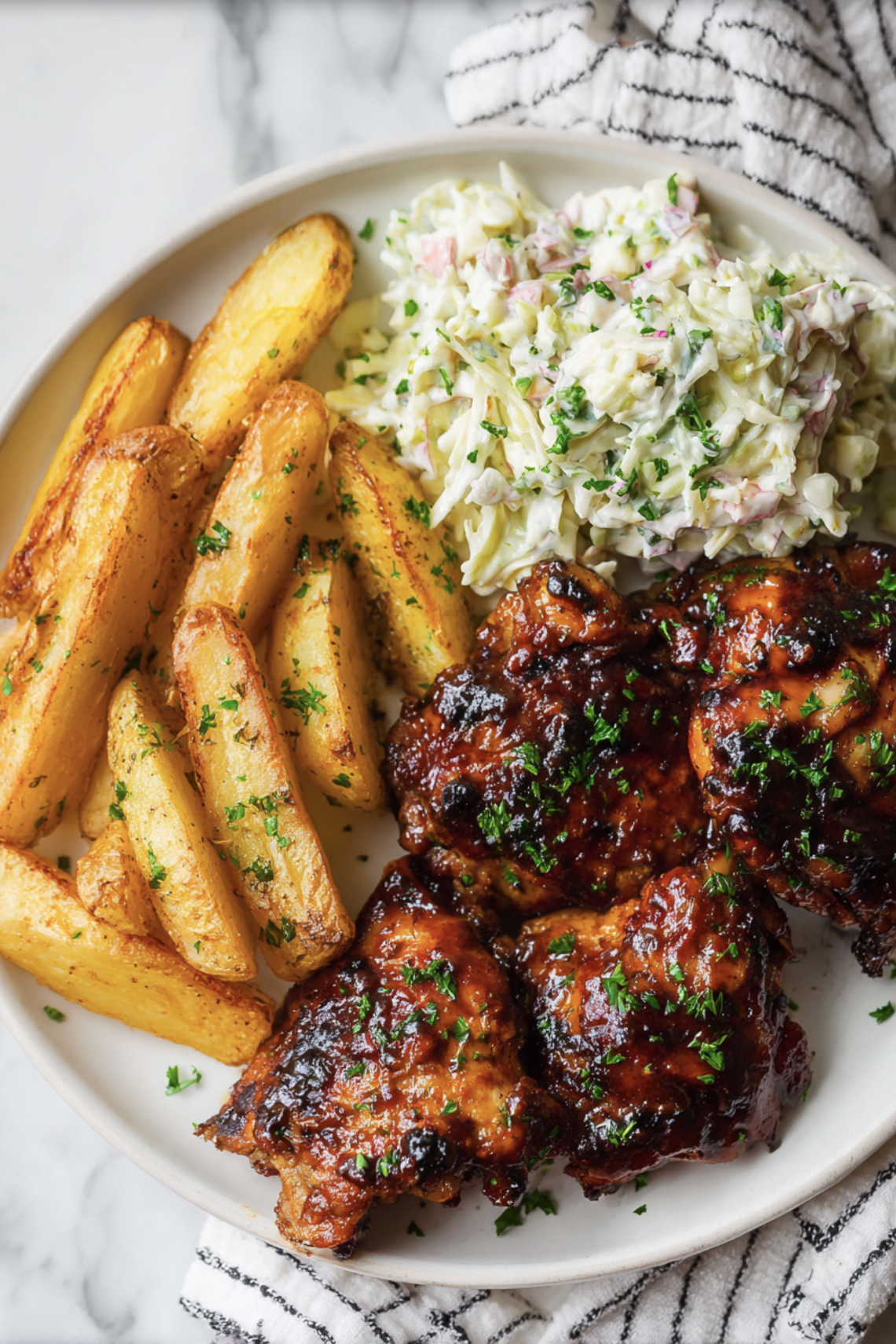
These barbecue chicken thighs come out juicy and deeply glazed, with golden potato wedges and cold creamy coleslaw on the side.
What makes barbecue chicken thighs worth the mess?
For me, it’s when the sauce has really cooked onto the chicken instead of just being brushed over at the end.
The edges go dark and tacky, the skin picks up those caramelised bits, and every piece ends up with a proper smoky-sweet coating.
Then the wedges come in hot and crisp, which is ideal because they inevitably end up dragged through whatever sauce is left on the plate.
The coleslaw is there to cool everything down a bit, with that creamy crunch making the chicken feel even better.
It’s not neat food.
It’s sticky fingers, extra napkins, and somebody definitely stealing the crispiest wedge before the plate hits the table.
Recipe Details
- Prep time: 20 minutes
- Cook time: 40 minutes
- Serves: 4
What You’ll Need
For the chicken
- 8 boneless, skinless chicken thighs
- 1 tablespoon olive oil
- 1 teaspoon smoked paprika
- 1 teaspoon garlic powder
- 1/2 teaspoon onion powder
- 3/4 teaspoon salt
- 1/2 teaspoon black pepper
For the sticky barbecue sauce
- 180 ml barbecue sauce
- 2 tablespoons honey
- 1 tablespoon ketchup
- 1 tablespoon Worcestershire sauce
- 1 teaspoon apple cider vinegar
- 1/2 teaspoon smoked paprika
- 1/4 teaspoon chilli flakes, optional
For the potato wedges
- 800 g potatoes
- 2 tablespoons olive oil
- 1 teaspoon paprika
- 1/2 teaspoon garlic powder
- 1/2 teaspoon dried oregano
- 3/4 teaspoon salt
- Black pepper, to taste
For the coleslaw
- 1/2 small white cabbage, finely shredded
- 1/4 small red cabbage, finely shredded
- 1 large carrot, grated
- 4 tablespoons mayonnaise
- 2 tablespoons Greek yogurt
- 1 teaspoon Dijon mustard
- 1 tablespoon apple cider vinegar
- 1 teaspoon honey
- Salt and black pepper, to taste
To finish
- Chopped fresh parsley
How to Make It
1. Get the wedges in first
Heat the oven to 220°C, or 200°C fan.
Cut the potatoes into thick wedges and put them in a large bowl.
Add the olive oil, paprika, garlic powder, oregano, salt and a good crack of black pepper.
Toss until every wedge looks lightly coated.
Spread them over a large baking tray with a little room between them.
Roast for 35 to 40 minutes, turning them after about 20 minutes.
They should be golden around the edges and soft all the way through when pierced with a knife.
2. Mix the coleslaw while the potatoes cook
Add the white cabbage, red cabbage and carrot to a large bowl.
In a smaller bowl, mix the mayonnaise, Greek yogurt, Dijon mustard, vinegar and honey.
Season with salt and pepper.
Pour the dressing over the cabbage and toss well.
You want everything lightly coated rather than drowning in dressing.
Put the bowl in the fridge while you cook the chicken.
The colder it gets, the better it tastes next to the hot barbecue sauce.
3. Season the chicken
Pat the chicken thighs dry.
Add them to a bowl with the olive oil, smoked paprika, garlic powder, onion powder, salt and black pepper.
Rub the seasoning over both sides.
Heat a large ovenproof frying pan over medium-high heat.
Lay in the chicken and cook for around 3 minutes per side until you have some good colour on the outside.
Do this in two batches if the pan feels crowded.
Crowded chicken does that annoying thing where it releases water and starts steaming instead of browning.
4. Make the sauce sticky
Stir together the barbecue sauce, honey, ketchup, Worcestershire sauce, apple cider vinegar, smoked paprika and chilli flakes.
Return all the chicken to the pan if you cooked it in batches.
Pour the sauce over the thighs and turn each piece so it gets coated.
Spoon a little extra over the tops.
5. Finish the chicken in the oven
Put the pan in the oven for 15 to 20 minutes, depending on the size of the thighs.
Halfway through, open the oven and spoon the bubbling sauce from the bottom of the pan back over the chicken.
The chicken is ready when it is cooked through and the sauce has reduced to a thick glossy coating.
The internal temperature should reach 75°C in the thickest part.
For darker caramelised edges, put the chicken under the grill for 1 to 3 minutes at the end.
Do not wander away during this bit.
Honey and barbecue sauce can go from gorgeous to cremated with impressive speed.
6. Plate everything up
Pile the golden wedges onto each plate.
Add a generous spoonful of cold coleslaw.
Sit the sticky chicken thighs alongside them and spoon over a little of the thick sauce left in the pan.
Scatter chopped parsley over the chicken and wedges.
Getting That Dark, Sticky Finish
The sauce needs enough time in the heat to reduce.
If it still looks thin when the chicken is cooked, transfer the chicken to a plate and put the pan back over medium heat for a few minutes.
Let the sauce bubble until it looks thick enough to coat the back of a spoon.
Return the chicken to the pan and turn it through the sauce.
That gives you the lacquered finish instead of chicken sitting in a puddle of runny barbecue sauce.
Don’t Cut the Potatoes Too Thin
These are wedges, not oven chips.
Keep them fairly chunky so the outside can brown while the middle stays fluffy.
If one end is much thinner than the other, that skinny little point will inevitably burn while the rest is still cooking.
Try to keep the pieces roughly the same size and they will behave themselves.
The Coleslaw Should Stay Crunchy
Salt draws water out of cabbage, so I would not make this coleslaw the night before.
A couple of hours ahead is absolutely fine.
If you want to prep further in advance, shred the vegetables and refrigerate them separately from the dressing.
Toss everything together closer to dinner.
That gives you proper crunchy slaw rather than a bowl of cabbage that has given up on life.
A Few Easy Changes
For hotter chicken, add cayenne or a spoonful of hot sauce to the barbecue mixture.
A smoky chipotle barbecue sauce works brilliantly too.
You can make the wedges with sweet potatoes, although they cook a little faster and will not get quite as crisp.
For the slaw, thinly sliced spring onions are good mixed through the cabbage.
A small grated apple also works if you like a sweeter coleslaw with barbecue food.
What Else Works on the Side?
The chicken is good with corn on the cob if you do not fancy wedges.
Mac and cheese makes the whole meal considerably more ridiculous, in a good way.
A simple green salad works when you want something lighter.
Baked beans are another easy option, particularly if you are serving this outside in summer.
You could also put the chicken into toasted brioche buns with the coleslaw piled straight on top.
That version is messy enough to require commitment.
Can I Use Bone-In Chicken Thighs?
Yes.
Bone-in thighs will take longer, usually around 30 to 40 minutes in the oven depending on their size.
Check the temperature close to the bone before serving.
Skin-on thighs also work, although I would crisp the skin well before adding the barbecue sauce so it does not turn soft underneath it.
Can I Cook the Chicken in an Air Fryer?
Yes.
Season the thighs and cook them at 190°C for around 12 minutes, turning halfway through.
Brush generously with the barbecue mixture and cook for another 4 to 6 minutes, brushing with more sauce once during that time.
Check they have reached 75°C before serving.
The sauce will caramelise quickly in an air fryer, so keep an eye on the final few minutes.
Can I Make It Less Sweet?
Use a less sweet barbecue sauce and reduce the honey to one tablespoon.
You can also add a little extra apple cider vinegar.
That sharpness cuts through the sweetness without making the sauce taste vinegary.
How Long Do Leftovers Keep?
The cooked chicken will keep in the fridge for up to 3 days.
Store the wedges separately if you can.
They reheat much better in the oven or air fryer than in the microwave.
Keep the coleslaw in its own container and eat it within a day or two while it still has some crunch.
For the chicken, reheat gently until piping hot, then spoon over any sauce you saved from the pan.