Creamy Honey Mustard Sausage and Potatoes
Would you believe the sauce is the reason I make this often?
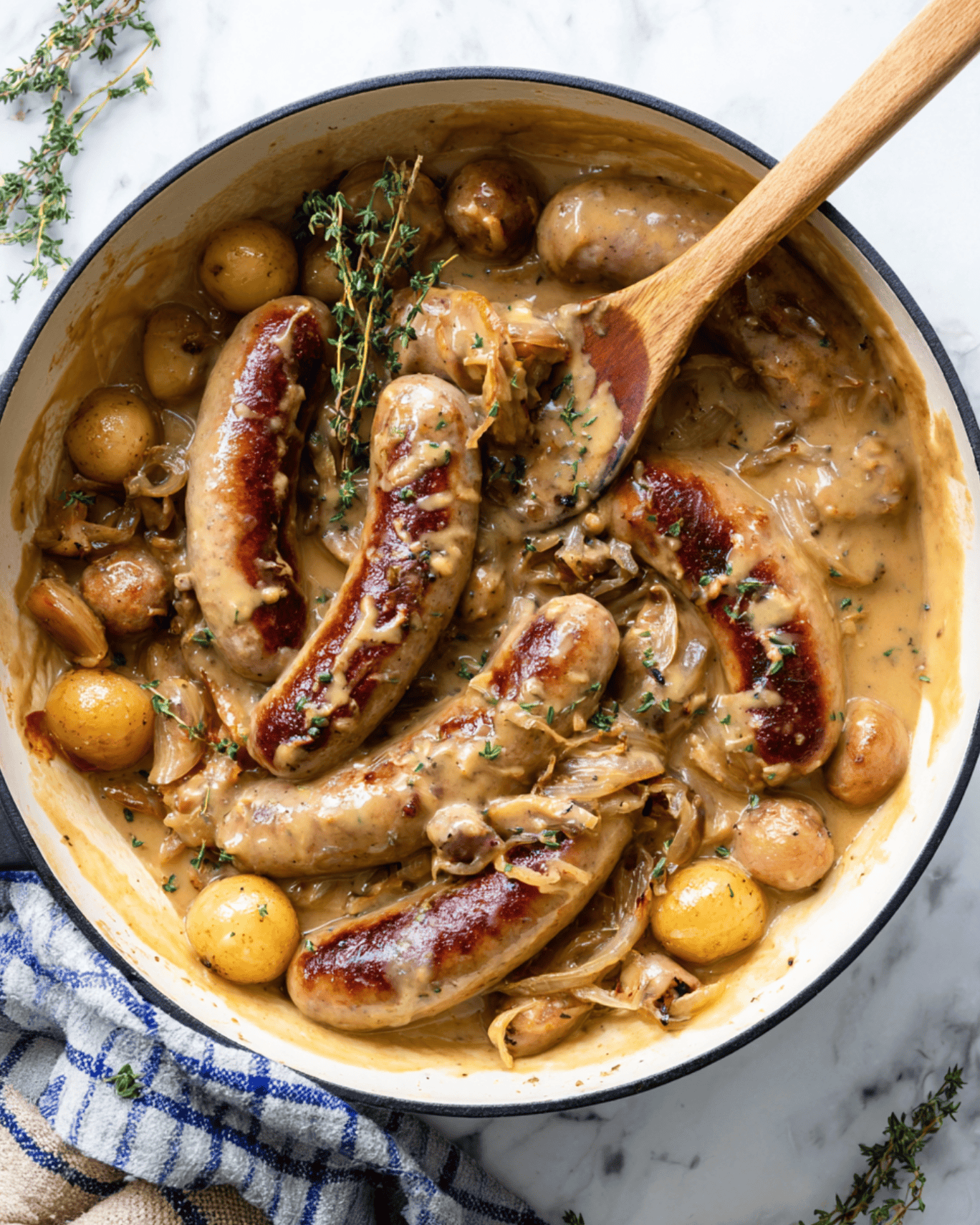
It’s creamy, mustardy and just sweet enough, and the potatoes soak up far too much of it in the best way.
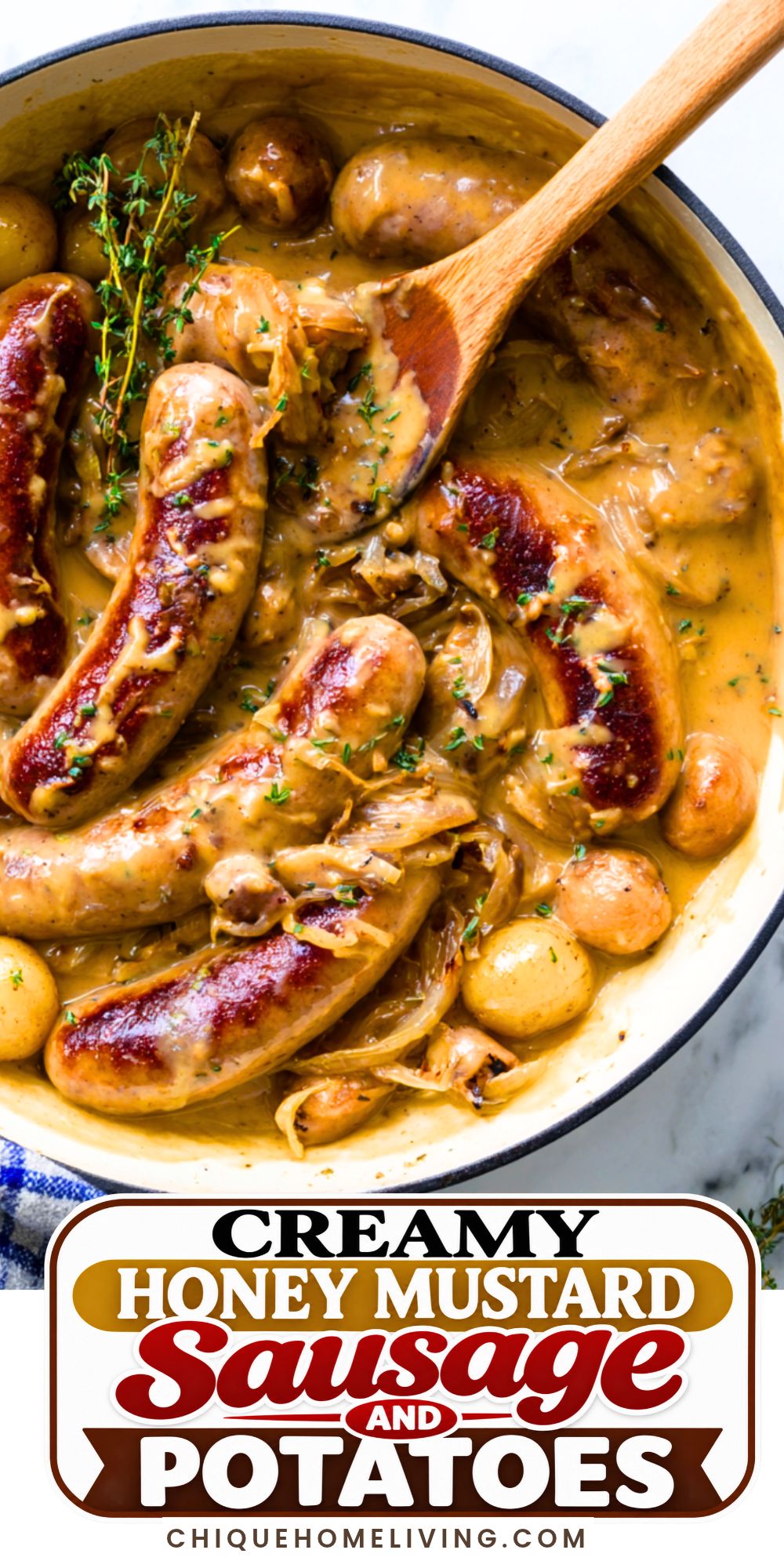
I knew the sausages would be good.
It was the potatoes I kept going back for.
Once they’ve been sitting in that creamy honey mustard sauce for a while, they pick up all the flavour from the pan and end up being the bit you start hunting for with your fork.
The sauce has that nice little sharpness from the mustard, but the honey softens it without making the whole thing sweet.
And because the sausages are already doing plenty, you really don’t need to mess around with much else.
I’d serve this straight from the pan with something green on the side and call it done.
Simple, cosy, and very easy to eat more of than you planned.
Ingredients
- 8 pork sausages
- 650 g baby potatoes
- 2 large onions, sliced into thick wedges
- 1 tablespoon olive oil
- 1 tablespoon butter
- 3 garlic cloves, finely chopped
- 1 tablespoon plain flour
- 300 ml chicken stock
- 200 ml double cream
- 2 tablespoons Dijon mustard
- 1 tablespoon wholegrain mustard
- 1 tablespoon runny honey
- 1 teaspoon Worcestershire sauce
- 5 to 6 fresh thyme sprigs
- 1/2 teaspoon black pepper
- Salt, as needed
Leave the Baby Potatoes Whole Where You Can
The small whole potatoes are part of what makes this dish so good.
They stay creamy inside and do not fall apart once they are stirred through the sauce.
If you have a few larger ones mixed into the bag, halve those so everything cooks evenly.
I parboil them first rather than trying to cook them from raw in the cream sauce.
That way the potatoes become properly tender without the sauce spending half an hour bubbling itself into cement.
Ten minutes in salted water is usually enough.
They should be almost tender but still hold their shape.
Brown the Sausages Properly
The dark caramelised patches on the sausages are not optional decoration.
That browning gives the whole pan much more flavour.
Use a wide pan and give the sausages a little room.
Turn them every couple of minutes rather than continuously rolling them around.
Once one side is properly browned, move onto the next.
They do not need to be completely cooked through at this stage because they will finish in the sauce later.
You just want that good colour first.
Instructions
Prepare the potatoes
- Place the baby potatoes in a saucepan and cover with cold salted water.
- Bring to the boil.
- Cook for about 10 minutes, until the potatoes are beginning to soften but are not completely tender.
- Drain and set aside.
Brown the sausages
- Heat the olive oil in a large deep frying pan or casserole dish over medium-high heat.
- Add the sausages.
- Cook for 8 to 10 minutes, turning occasionally, until deeply browned on several sides.
- Transfer the sausages to a plate.
Cook the onions
- Reduce the heat to medium.
- Add the butter to the same pan.
- Add the onion wedges and cook for 10 to 12 minutes.
- Stir occasionally rather than constantly so the onions have time to catch and caramelise around the edges.
- Add the garlic and cook for another 30 seconds.
Build the sauce
- Sprinkle the flour over the onions.
- Stir for about 1 minute.
- Slowly pour in the chicken stock while stirring.
- Add the Dijon mustard, wholegrain mustard, honey and Worcestershire sauce.
- Stir until smooth.
- Pour in the cream.
- Add the thyme sprigs and black pepper.
- Bring the sauce to a gentle simmer.
Finish everything together
- Return the browned sausages to the pan.
- Add the parboiled baby potatoes.
- Spoon the sauce over everything.
- Reduce the heat to medium-low.
- Simmer uncovered for 12 to 15 minutes, turning the sausages and potatoes occasionally.
- Cook until the sausages are completely cooked through, the potatoes are tender and the sauce has thickened.
- Taste before adding salt, as the sausages, mustard and stock may already provide enough.
- Remove any woody thyme stems.
- Scatter over a few fresh thyme leaves before serving.
The Onions Need to Go Past Soft
There is a noticeable difference between cooked onions and properly caramelised onions in this recipe.
You want the second one.
They do not need the full hour-long French onion treatment, but give them enough time to become golden and sweet around the edges.
Those onions eventually mix into the cream sauce, which is why the finished sauce has so much flavour despite being fairly simple.
If the onions start catching too quickly, lower the heat.
A tablespoon of water can also loosen any dark bits from the bottom of the pan.
Do not throw those bits away.
That is free flavour sitting there.
Dijon Plus Wholegrain Mustard Works Better
Using two mustards gives the sauce a much nicer balance.
Dijon melts smoothly into the cream and gives you that sharp mustard flavour throughout.
Wholegrain mustard adds tiny bursts of flavour and a little texture.
You can use only Dijon if that is what you have.
I just would not replace all of it with yellow sandwich mustard unless you particularly want your dinner to taste like a hot dog took over the recipe.
Honey Needs a Light Hand
One tablespoon is plenty.
This is a honey mustard sauce, but the mustard should still lead.
The honey mainly softens its sharper edges and works with the sweetness of the onions.
If you are using particularly sweet sausages, such as caramelised onion or apple sausages, start with 2 teaspoons of honey instead.
Taste before adding more.
There is no prize for making the sweetest sausage casserole in Britain.
Let the Sauce Reduce Naturally
Once the cream has gone in, you do not need to attack the sauce with high heat.
A gentle uncovered simmer will thicken it naturally as the sausages finish cooking.
The flour gives it body, while the cream reduces slightly.
By the end, the sauce should cling to the potatoes and coat the back of a spoon.
It should still move around the pan, though.
If it gets too thick, add a small splash of chicken stock.
If it is still thin after the sausages are cooked, remove the sausages and potatoes temporarily and simmer the sauce alone for a few minutes.
Much easier than throwing more flour into a finished cream sauce and hoping nobody notices the lumps.
Why the Potatoes Work So Well Here
Baby potatoes are particularly good with creamy mustard sauces because their flavour is fairly mild.
They take on whatever is around them.
Once they finish simmering in this sauce, their skins are coated in mustard cream while the centres stay buttery and soft.
I would leave the skins on.
Apart from saving you from peeling a mountain of tiny potatoes, the skins help the potatoes stay intact.
They also look much better in the finished pan.
Sometimes laziness and good cooking genuinely agree.
What to Serve With It
You do not need another starch.
The potatoes have that department thoroughly covered.
Something green works much better.
Try:
- Steamed green beans
- Tenderstem broccoli
- Buttered peas
- Wilted spinach
- A crisp green salad
Crusty bread is admittedly another carbohydrate, but I am willing to make an exception because leaving creamy mustard sauce in the bottom of the pan feels wasteful.
Leftovers Might Be Even Saucer
The potatoes keep absorbing sauce as they sit, so leftovers will be noticeably thicker the next day.
Store everything in an airtight container in the fridge for up to 3 days.
Reheat gently in a covered pan over medium-low heat.
Add a splash of chicken stock or cream before reheating to loosen the sauce.
Turn the sausages occasionally so everything heats evenly.
I prefer reheating this on the hob rather than in the microwave because the sauce comes back together more smoothly.
Make It Ahead
You can parboil the potatoes and brown the sausages earlier in the day.
You can also cook the onions ahead.
When you are ready for dinner, continue from the sauce stage and let everything simmer together.
I would not fully cook the cream sauce several hours ahead unless you really need to.
It only takes a few minutes to put together, and freshly made cream sauce behaves better.
Which Pork Sausages Work Best?
Plain pork sausages are perfect.
Cumberland sausages are also excellent because the pepper and herbs work naturally with the mustard sauce.
Lincolnshire sausages bring a little more sage flavour, which also works nicely.
I would avoid anything extremely spicy or heavily smoked.
There is already a clear flavour going on here, and the sausages should join it rather than start an entirely separate conversation.
Q&A
Can I use larger potatoes?
Yes.
Cut them into roughly 4 cm chunks and parboil them until almost tender before adding them to the pan.
Can I use chicken sausages?
Yes.
Just be aware that they are usually leaner, so you may need a little extra oil when browning them.
Can I leave out the wholegrain mustard?
Yes.
Use an extra tablespoon of Dijon instead.
The sauce will be smoother but still very good.
Can I make this without cream?
You can use crème fraîche for a slightly tangier sauce.
Full-fat crème fraîche is especially useful because it handles heat well.
Why did my cream sauce split?
The heat was probably too high.
Keep the sauce at a gentle simmer once the cream has been added.
A hard boil can make creamy sauces separate.
Can I add mushrooms?
You can, although they are not needed for this version.
If adding them, brown sliced mushrooms after removing the sausages and before cooking the onions.
What if the sauce tastes too mustardy?
Add a little more cream or another teaspoon of honey.
Do it gradually and taste again.
What if the sauce tastes too sweet?
Add another teaspoon of Dijon mustard and a little black pepper.
That usually brings the balance back quickly.
Can I cook the potatoes completely in the sauce?
Technically yes, but I would not.
Raw potatoes take much longer and release starch into the sauce while cooking.
Parboiling gives you better control over both the potatoes and the thickness of the sauce.
Can I make this in the oven?
Yes.
After preparing the sauce, return the sausages and parboiled potatoes to an oven-safe casserole and bake uncovered at 190°C / 170°C fan / 375°F for around 20 minutes, until the sausages are cooked through and the sauce is bubbling around the edges.