
Lemon Garlic Butter Salmon
This lemon garlic butter salmon is such an easy dinner when you want something fresh, filling and really tasty.
Serve it with roasted baby potatoes and asparagus and you’ve got the whole meal on one plate.
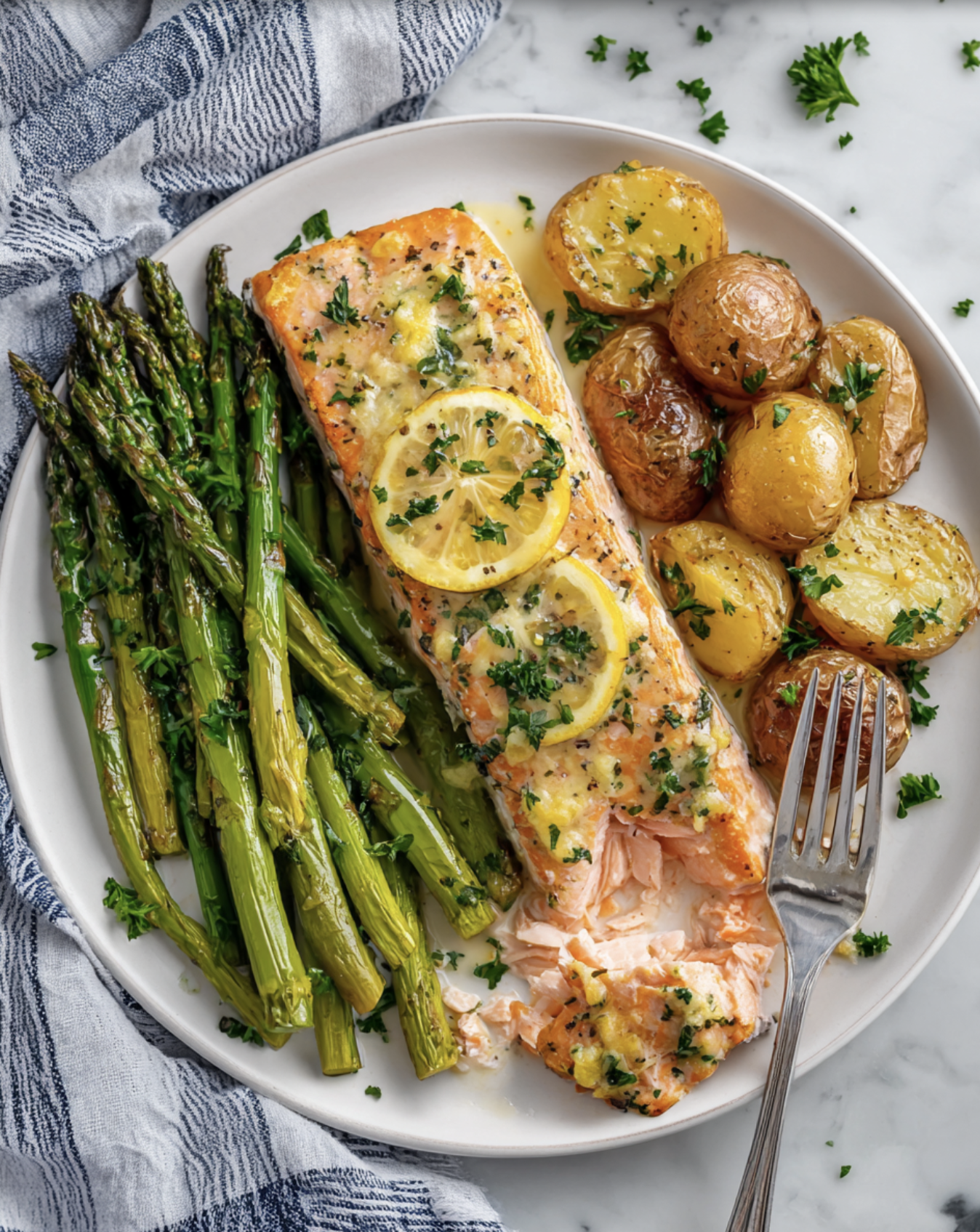
Salmon, potatoes and something green is always a good dinner combination, especially when there’s plenty of garlic butter involved.
The salmon is cooked until golden on the outside and soft in the middle, then finished with lemon, garlic and herbs.
I like serving it with roasted baby potatoes because they’re perfect for soaking up the extra buttery sauce.
The asparagus keeps everything feeling fresh and adds a little crunch alongside the soft salmon and potatoes.
It’s simple enough for a busy weeknight, but still feels like a dinner you’ve actually made an effort with.
Add a couple of lemon slices over the salmon, spoon over any extra garlic butter and serve it straight away.
Easy, fresh and full of flavour.
What You’ll Need
- 4 thick salmon fillets
- 750 g baby potatoes
- 1 bunch asparagus, woody ends trimmed
- 3 tablespoons olive oil
- Salt, to taste
- Black pepper, to taste
- 1 teaspoon garlic powder
- 1 lemon, sliced
- 2 tablespoons chopped fresh parsley
For the lemon garlic butter sauce
- 4 tablespoons unsalted butter
- 4 garlic cloves, finely minced
- Juice of 1 lemon
- 1 teaspoon lemon zest
- 1 tablespoon chopped fresh parsley
- 2 tablespoons warm water or chicken stock
- Salt, to taste
- Black pepper, to taste
A Few Ingredient Notes
Use thick salmon fillets if you can.
This recipe really suits a chunky piece of fish because it stays moist in the centre and flakes into bigger, softer pieces.
Thin salmon fillets cook much faster and can go from perfect to dry before you have even called everyone to the table.
Baby potatoes are ideal here because they roast beautifully and look good on the plate.
You can halve the larger ones so they cook evenly, but keep the smaller ones whole.
Asparagus should be fresh and firm.
If the stalks are very thick, give them a few extra minutes.
If they are very thin, keep an eye on them because they roast fast.
For the butter sauce, fresh lemon makes a real difference.
Bottled lemon juice will technically do the job, but fresh lemon tastes brighter and cleaner.
That matters in a recipe this simple.
How to Make It
- Preheat your oven to 200°C fan / 220°C / 425°F.
- Put the baby potatoes on a large baking tray.
- Drizzle with 2 tablespoons of olive oil.
- Season with salt, black pepper and the garlic powder.
- Toss well to coat.
- Roast for 25 minutes.
- While the potatoes roast, pat the salmon dry and season both sides with salt and black pepper.
- Place the asparagus in a bowl or on a second tray.
- Drizzle with the remaining 1 tablespoon of olive oil.
- Season lightly with salt and black pepper.
- After the potatoes have roasted for 25 minutes, give them a turn.
- Push them to one side of the tray if there is room, or use a second tray for the salmon and asparagus.
- Add the salmon fillets to the tray.
- Tuck the asparagus around them.
- Lay lemon slices over the top of the salmon.
- Return everything to the oven.
- Roast for 12 to 15 minutes, depending on the thickness of the salmon, until the fish is just cooked and flakes easily.
- While the salmon roasts, make the sauce.
- Melt the butter in a small pan over low heat.
- Add the minced garlic and cook for about 30 seconds to 1 minute until fragrant.
- Do not let it brown too much.
- Add the lemon juice, lemon zest, chopped parsley and warm water or stock.
- Stir well.
- Season with a small pinch of salt and black pepper.
- Simmer very gently for about 1 minute, then take it off the heat.
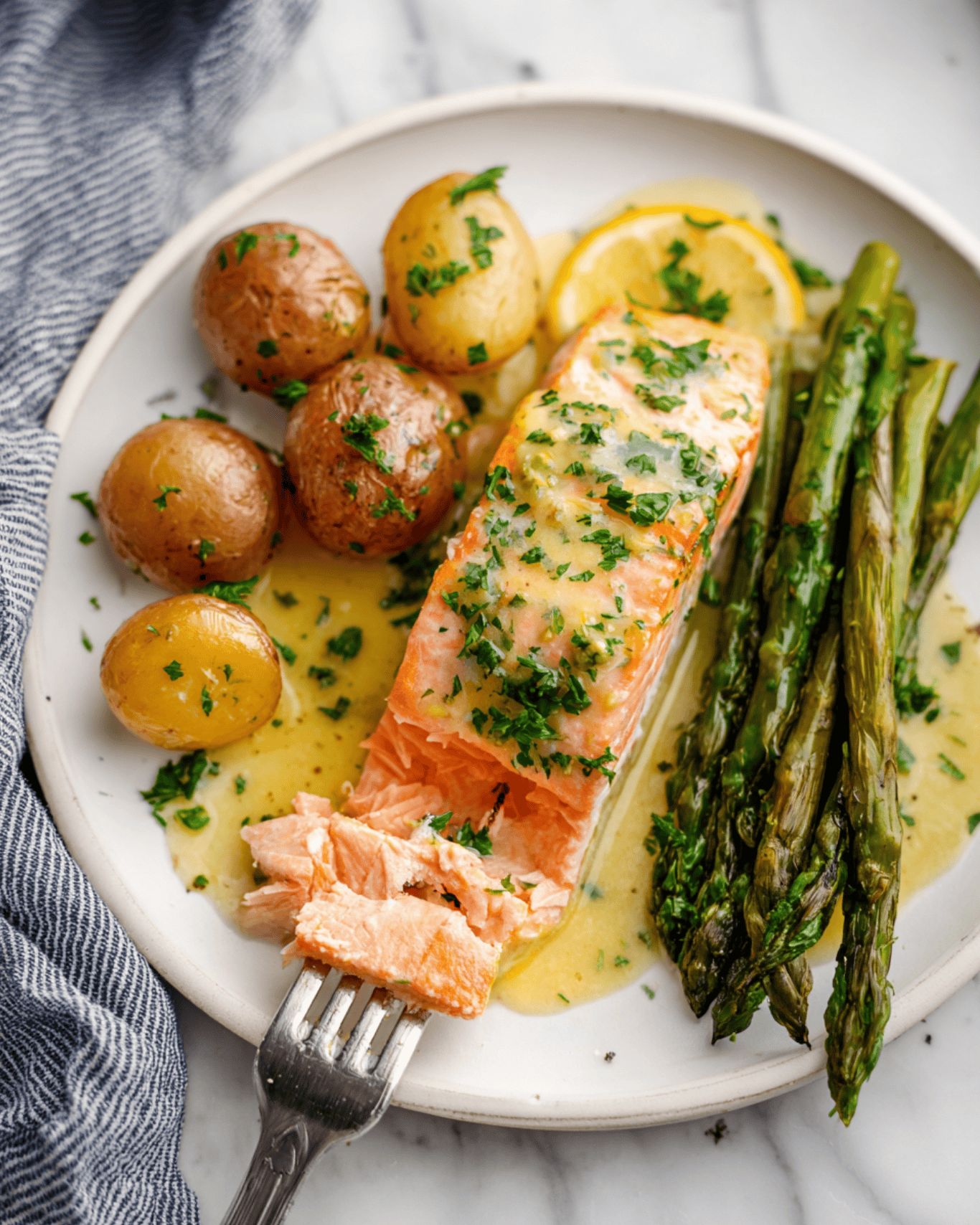
- Once the salmon is cooked, spoon some of the lemon garlic butter sauce over the top.
- Scatter with the extra chopped parsley.
- Serve the salmon with the crispy baby potatoes and roasted asparagus.
- Spoon more sauce over everything before serving.
The Best Way to Cook the Salmon
Salmon is lovely when it is just cooked through and still tender.
That is the goal.
You want the flesh to separate into juicy flakes, not sit there dry and tight like it has been punished.
A thick fillet usually needs around 12 to 15 minutes in a hot oven.
If your fillets are smaller, start checking earlier.
You will know it is ready when the salmon flakes easily with a fork and the centre is still moist.
It does not need to be overcooked to be safe.
That is where a lot of people go wrong.
They keep it in the oven until every trace of softness is gone, and then wonder why they suddenly need half a glass of water with dinner.
Pull it out while it still looks tender.
It will reward you.
Getting the Potatoes Properly Golden
The potatoes need a little head start, which is why they go in first.
That is how you get those golden skins and fluffy middles without overcooking the salmon.
Do not crowd them too much.
Potatoes like space.
If they are jammed together, they steam instead of roast, and then you miss out on those browned edges that make them worth eating in the first place.
Turning them halfway through helps too.
It gives them a more even colour and makes sure they are not getting too attached to the tray.
Also, do not be afraid of seasoning them properly.
Potatoes need help.
A pinch of salt alone will not magically transform them into something exciting.
Why the Lemon Garlic Butter Sauce Matters
This meal would still be decent without the sauce.
With the sauce, it is a completely different story.
The butter gives richness.
The garlic makes it savoury and warm.
The lemon cuts through everything and keeps the plate tasting fresh.
And the parsley lifts it all at the end so it does not feel too heavy.
It is a very simple sauce, but simple is often exactly what works best.
You are not trying to bury the salmon.
You are just giving it something glossy and punchy to sit in.
I also like that the sauce ends up on the potatoes.
That is one of the best parts of the whole meal.
Those little buttery lemony puddles on the plate should not be wasted.
Easy Variations
If you want to change it up a bit, you can add a sprinkle of chilli flakes to the sauce for a touch of heat.
That works especially well if you like a bit of contrast with the lemon and butter.
You could also swap parsley for dill if you are in a dill mood.
Dill and salmon are always good friends.
Green beans can work instead of asparagus if that is what you have.
Tenderstem broccoli would be lovely too.
If you want an even heartier plate, you could add a spoonful of crème fraîche or a little parmesan to the potatoes after roasting, but I honestly do not think it needs it.
This meal already knows what it is doing.
Serving Ideas
This is a full meal on its own, so you do not really need anything else.
That said, a crisp green salad on the side would be nice if you want something extra fresh.
A piece of warm bread would also be excellent for mopping up any leftover sauce.
I would absolutely not judge.
If I were serving this to people, I would bring it to the table with extra lemon wedges and the rest of the sauce on the side.
Some people always want more lemon.
Some people always want more butter.
This recipe kindly allows both.
Storing and Reheating
Leftovers can be stored in an airtight container in the fridge for up to 2 days.
The potatoes and asparagus reheat well enough, but salmon is always at its best when freshly cooked.
If you do reheat it, do it gently.
A low oven or short burst in the microwave is better than blasting it until it gives up.
You can also eat the leftover salmon cold, flaked over a salad or mixed into rice.
That is a very good next-day lunch, actually.
The sauce may thicken in the fridge.
If that happens, warm it gently with a splash of water to loosen it up again.
Q&A
Can I use frozen salmon?
Yes, but thaw it fully first and pat it dry really well before cooking.
Too much water on the surface makes it harder to roast nicely.
Do I need to peel the baby potatoes?
No.
The skins help them roast up beautifully and add texture.
Just wash them well.
Can I make this with another fish?
Yes.
Cod or trout could work, though cooking times may vary.
Still, salmon is the best fit here because it stands up so well to the lemon garlic butter sauce.
How do I know when the salmon is done?
It should flake easily with a fork and look opaque, while still staying moist in the centre.
Do not wait until it looks dry.
Can I make the sauce ahead?
Yes.
You can make it a little ahead and gently reheat it before serving.
It is best fresh, but it does not take long anyway.
What if I do not have asparagus?
Use green beans, tenderstem broccoli, or even roasted courgettes.
Just keep the veg simple and fresh.
Can I use dried parsley?
Fresh is much better here.
Dried parsley will not give the same freshness or finish.
Should I leave the lemon slices on the salmon while baking?
Yes.
They help perfume the fish and keep it looking bright and appetising.
Can I make this for guests?
Absolutely.
It looks elegant, tastes lovely, and does not require you to lose your mind in the kitchen.
That is always a win.
Final Thoughts
This lemon garlic butter salmon is exactly the sort of dinner I come back to again and again.
It is fresh, buttery, comforting and simple, without ever being boring.
You get tender flaky salmon, crisp little potatoes, roasted asparagus, and a glossy sauce that ties the whole plate together.
It looks beautiful.
It tastes even better.
And best of all, it feels like a proper meal without turning the kitchen into a disaster zone.