Blueberry Lemon Ricotta Pancakes
Ricotta in pancake batter sounds a little unusual until you try it.
Some pancakes disappear because everyone’s hungry. These disappear because nobody stops at just one.
These are the pancakes I make when I want breakfast to feel a bit special without turning the kitchen upside down.
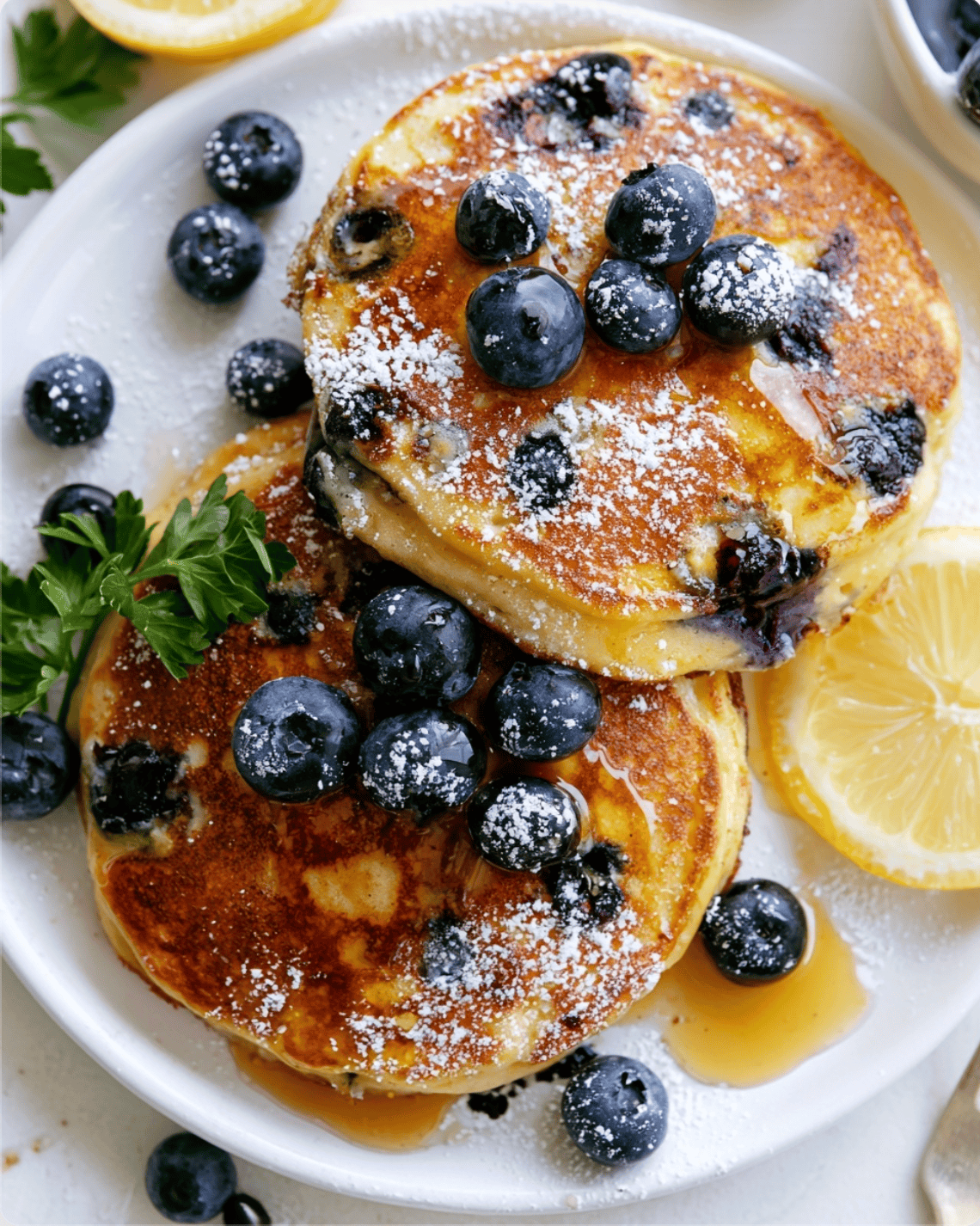
Blueberries and lemon have always been one of those combinations that just work. Add ricotta to the batter, and the pancakes come out soft, rich, and almost custardy in the middle while the edges turn beautifully golden.
The blueberries soften as the pancakes cook, leaving little pockets of warm juice through the centre.
A squeeze of lemon in the batter keeps the flavour fresh, while the ricotta gives each pancake enough substance that they don’t turn thin or dry.
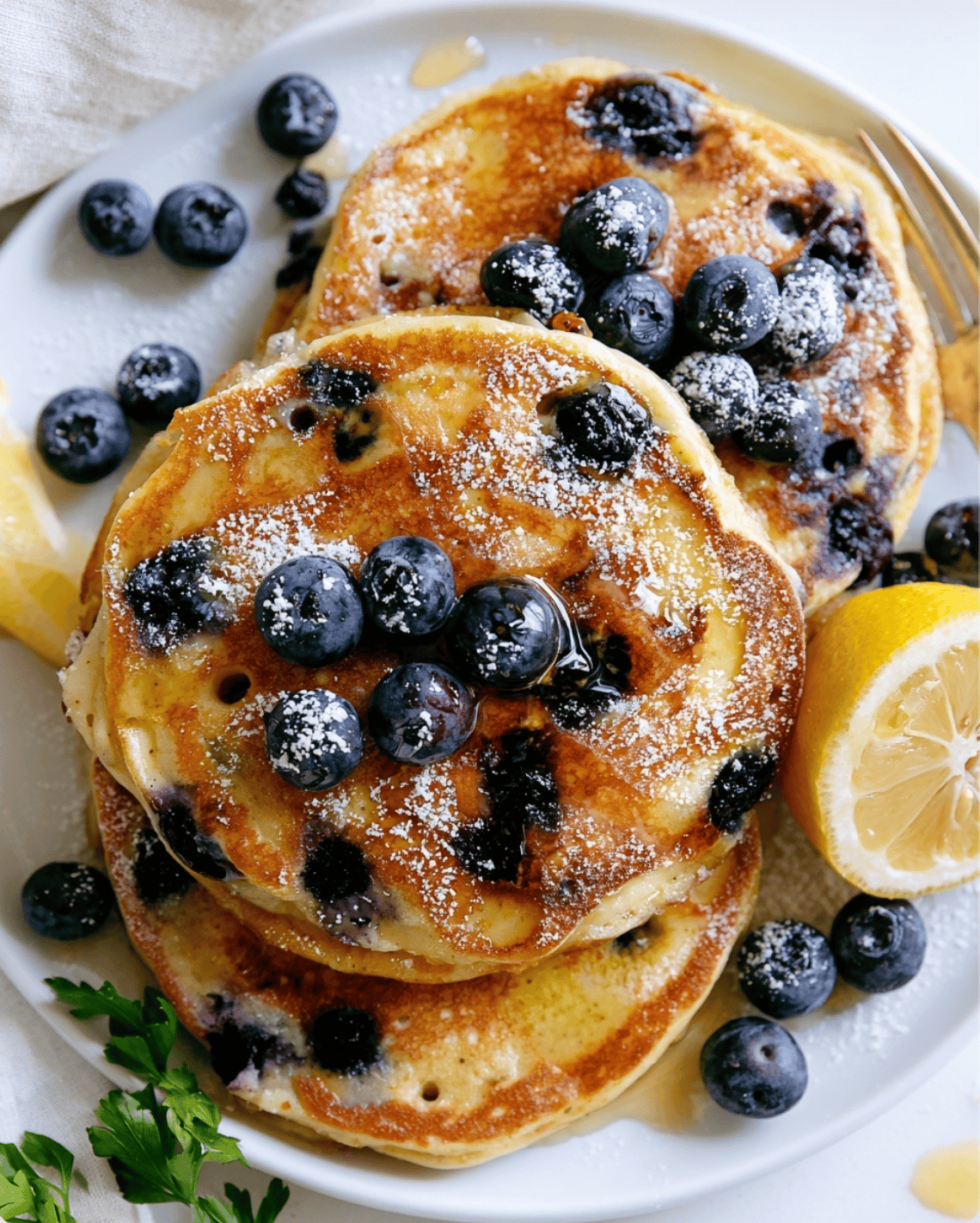
I like these best with fresh blueberries scattered over the top, a light dusting of powdered sugar, and maple syrup running down the sides.
The syrup is enough.
There’s no need to bury them under whipped cream or a heavy topping because the pancakes already have plenty going on inside.
The batter is simple, but it does need a gentle hand.
Overmixing will flatten the texture, and cooking them over high heat usually leaves the outside dark before the middle has time to set.
Keep the pan at medium-low, let the first side cook properly, and resist the urge to press them down with the spatula.
That soft, thick centre is the whole point.
Page Contents
ToggleWhy These Pancakes Work
- Ricotta keeps the middle moist and tender.
- Lemon zest adds flavour without making the batter watery.
- Fresh blueberries cook directly into the pancakes and become soft and jammy.
- Whipped egg whites give the batter a little lift without needing an excessive amount of baking powder.
- Medium-low heat allows the thick pancakes to cook through before the outside gets too dark.
- Maple syrup, powdered sugar, and fresh berries match the pancakes without covering up the lemon and ricotta.
Ingredients
For the pancakes
- 250g ricotta cheese
- 180g plain flour
- 2 tablespoons granulated sugar
- 2 teaspoons baking powder
- ¼ teaspoon bicarbonate of soda
- ¼ teaspoon salt
- 2 large eggs, separated
- 180ml whole milk
- 1 teaspoon vanilla extract
- Finely grated zest of 1 large lemon
- 1 tablespoon fresh lemon juice
- 150g fresh blueberries
- Butter or neutral oil, for cooking
For serving
- Fresh blueberries
- Powdered sugar
- Maple syrup
- Lemon wedges, optional
Equipment You’ll Need
- Two mixing bowls
- Whisk
- Silicone spatula or wooden spoon
- Non-stick frying pan or griddle
- Ladle or measuring cup
- Wide spatula
- Fine grater
How to Make Blueberry Lemon Ricotta Pancakes
1. Prepare the ricotta mixture
- Add the ricotta, egg yolks, milk, vanilla, lemon zest, and lemon juice to a large bowl.
- Whisk until combined.
- The mixture does not need to become completely smooth.
- A few small pieces of ricotta are fine and will melt into the pancakes as they cook.
- If the ricotta is especially wet, let it drain in a sieve for 10 to 15 minutes first.
- Very watery ricotta can make the batter loose and harder to flip.
2. Mix the dry ingredients
- In a separate bowl, combine the flour, sugar, baking powder, bicarbonate of soda, and salt.
- Whisk briefly to break up any lumps and distribute the raising agents evenly.
- This matters more than it seems.
- If the baking powder sits in one area, some pancakes may rise beautifully while others stay flat.
3. Combine the batter
- Add the dry ingredients to the ricotta mixture.
- Fold gently until you can no longer see large pockets of dry flour.
- The batter will look thick and slightly lumpy.
- That is exactly what you want.
- Do not keep mixing until it becomes perfectly smooth because that develops the gluten and can make the pancakes tough.
4. Whip the egg whites
- In a clean bowl, whisk the egg whites until soft peaks form.
- They should hold their shape but still look smooth rather than dry.
- Fold one-third of the whipped whites into the batter to loosen it.
- Add the rest and fold carefully until mostly combined.
- Try not to knock out all the air.
- This is what helps the pancakes stay thick without becoming heavy.
5. Add the blueberries
- Fold most of the blueberries into the batter.
- Keep a small handful aside for topping the pancakes later.
- Be gentle so the berries stay whole.
- If several burst while mixing, the batter can turn grey-purple and may stick more easily to the pan.
6. Heat the pan
- Place a non-stick frying pan or griddle over medium-low heat.
- Add a small amount of butter and let it melt.
- Wipe away any large pools with kitchen paper.
- Too much butter can fry the outside unevenly and make the pancakes look patchy rather than evenly golden.
7. Cook the pancakes
- Spoon roughly 60ml of batter into the pan for each pancake.
- Use the back of the spoon to ease it into a round shape if needed.
- Leave enough room between each one because the batter will spread slightly.
- Cook for three to four minutes.
- Small bubbles should appear near the surface, and the edges should begin to look set.
- Check underneath before turning.
- It should be a deep, even golden brown.
- Flip carefully and cook for another two to three minutes.
- Because the batter is thick, the second side may need a little longer than standard pancakes.
- Do not flatten them with the spatula.
- Pressing pushes out the air and can make the centre dense.
8. Keep the cooked pancakes warm
- Transfer the pancakes to a plate and cover loosely with foil.
- You can also keep them in a low oven at about 100°C while cooking the remaining batches.
- Add a little more butter to the pan only when needed.
- If the butter begins to brown too quickly, lower the heat and allow the pan to cool slightly before adding more batter.
9. Serve
- Stack two or three pancakes on each plate.
- Add fresh blueberries over the top.
- Dust lightly with powdered sugar.
- Pour over warm maple syrup just before serving.
- Add a lemon wedge at the side if you want a slightly sharper finish.
What the Batter Should Look Like
This batter is thicker than an ordinary pancake batter.
It should fall from the spoon slowly rather than pour like cream.
If it spreads immediately into a thin circle, the ricotta may have been very wet or too much milk may have been added.
Stir in one tablespoon of flour at a time until the batter holds its shape better.
If the batter is so thick that it won’t leave the spoon, add one or two tablespoons of milk.
Small lumps are normal.
Large dry pockets of flour are not.
Fold only until the flour disappears, then stop.
Tips for Golden, Fluffy Pancakes
Use whole-milk ricotta
Low-fat ricotta tends to be wetter and less creamy.
Whole-milk ricotta gives the pancakes a better texture and richer taste.
Use lemon zest for most of the lemon flavour
Too much lemon juice can thin the batter and react too strongly with the bicarbonate of soda.
The zest provides a stronger lemon aroma without affecting the texture.
Keep the heat moderate
The blueberries and sugar can catch against a very hot pan.
Medium-low heat gives the centre time to cook while the outside develops an even colour.
Wait before flipping
Ricotta pancakes are softer than regular pancakes.
If you turn them too early, they may fold or break in the middle.
Let the edges set and check that the underside has browned first.
Use a wide spatula
A narrow spatula makes thick pancakes more difficult to lift.
Slide a wide spatula fully underneath before flipping in one quick movement.
Don’t use frozen blueberries straight from the freezer
Frozen berries release more water and cool the batter.
If that’s all you have, thaw and drain them well, then pat them dry before folding them in.
What to Serve with Them
These pancakes are filling enough on their own, especially once the ricotta and toppings are added.
For a larger breakfast, serve them with:
- Crispy bacon
- Breakfast sausages
- Scrambled eggs
- Greek yoghurt
- Fresh fruit
- Lemon curd
- Warm blueberry compote
- Honey instead of maple syrup
I wouldn’t add both lemon curd and a large amount of maple syrup.
One sweet topping is usually enough.
Can You Make the Batter Ahead?
The full batter is best cooked shortly after mixing because the whipped egg whites and raising agents begin working straight away.
After several hours in the fridge, the batter loses some of its lift.
You can prepare the recipe in parts.
Mix the dry ingredients and refrigerate them separately.
Combine the ricotta, egg yolks, milk, vanilla, and lemon in another covered bowl.
The next morning, combine the two mixtures, whip the egg whites, fold them in, and cook.
Storage
Allow leftover pancakes to cool completely.
Store them in an airtight container in the refrigerator for up to three days.
Place a small sheet of baking paper between them if you are stacking several together.
Keep the fresh berries and maple syrup separate until serving.
Reheating
Reheat the pancakes in a dry frying pan over low heat for one to two minutes on each side.
This helps restore some of the golden surface.
You can also warm them in a toaster on a low setting if they fit without getting stuck.
For the microwave, heat one or two pancakes for around 20 to 30 seconds.
Microwaving too long can make the ricotta centre rubbery.
Freezing
Place the cooled pancakes in a single layer on a lined tray and freeze until firm.
Transfer them to a freezer bag with baking paper between each pancake.
Freeze for up to two months.
Reheat directly from frozen in the toaster, oven, or a covered frying pan over low heat.
Frequently Asked Questions
Do the pancakes taste strongly of ricotta?
No.
The ricotta gives them a tender, creamy texture, but the main flavours are lemon, blueberry, vanilla, and maple.
Why are my pancakes raw in the middle?
The pan was probably too hot.
The outside browned before the thick centre had enough time to cook.
Lower the heat and make the pancakes slightly smaller.
Can I use cottage cheese?
You can blend cottage cheese until smooth and use it in place of ricotta.
The flavour and texture will be slightly different, but it works.
Why did my pancakes spread too much?
The ricotta may have contained excess liquid.
Drain wet ricotta before using it or add a little extra flour to thicken the batter.
Can I use self-raising flour?
Yes.
Use 180g self-raising flour and leave out the baking powder.
Keep the bicarbonate of soda because it reacts with the lemon juice and helps with browning.
Why are the blueberries burning?
Blueberries sitting directly against the pan can release juice and caramelise quickly.
Use moderate heat and wipe the pan between batches if sticky juice begins to build up.
Can I leave out the egg-white step?
Yes, but the pancakes will be a little denser.
Whisk the whole eggs into the ricotta mixture and continue with the recipe.
How do I know when they’re cooked?
The pancakes should feel springy when touched gently in the centre.
If they feel very soft and wet, cook them for another minute over low heat.
One Last Note
The first pancake is often the slightly odd one.
It tells you whether the pan is too hot, whether the batter needs another spoonful of milk, and how long each side will take.
After that, the rest usually cook much more evenly.
Stack them while they’re warm, add the maple syrup at the table, and don’t put the powdered sugar on too early.
It disappears into warm pancakes surprisingly fast, and that light dusting on top is half the charm.