Creamy Garlic Butter Cod with Mash
Cod can go from lovely to dry and disappointing in a matter of minutes, which is why I usually keep the rest of the meal simple and give the fish my full attention.
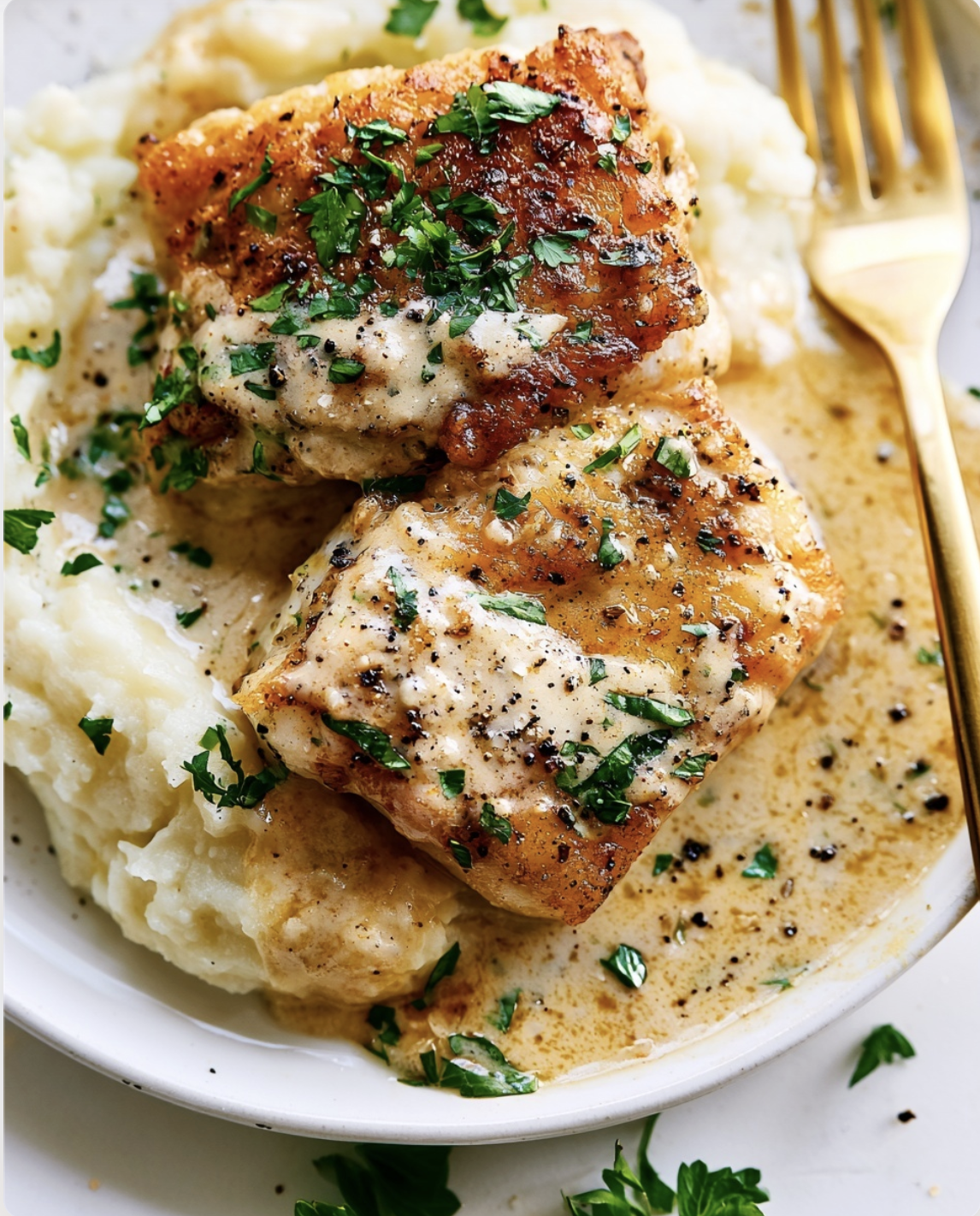
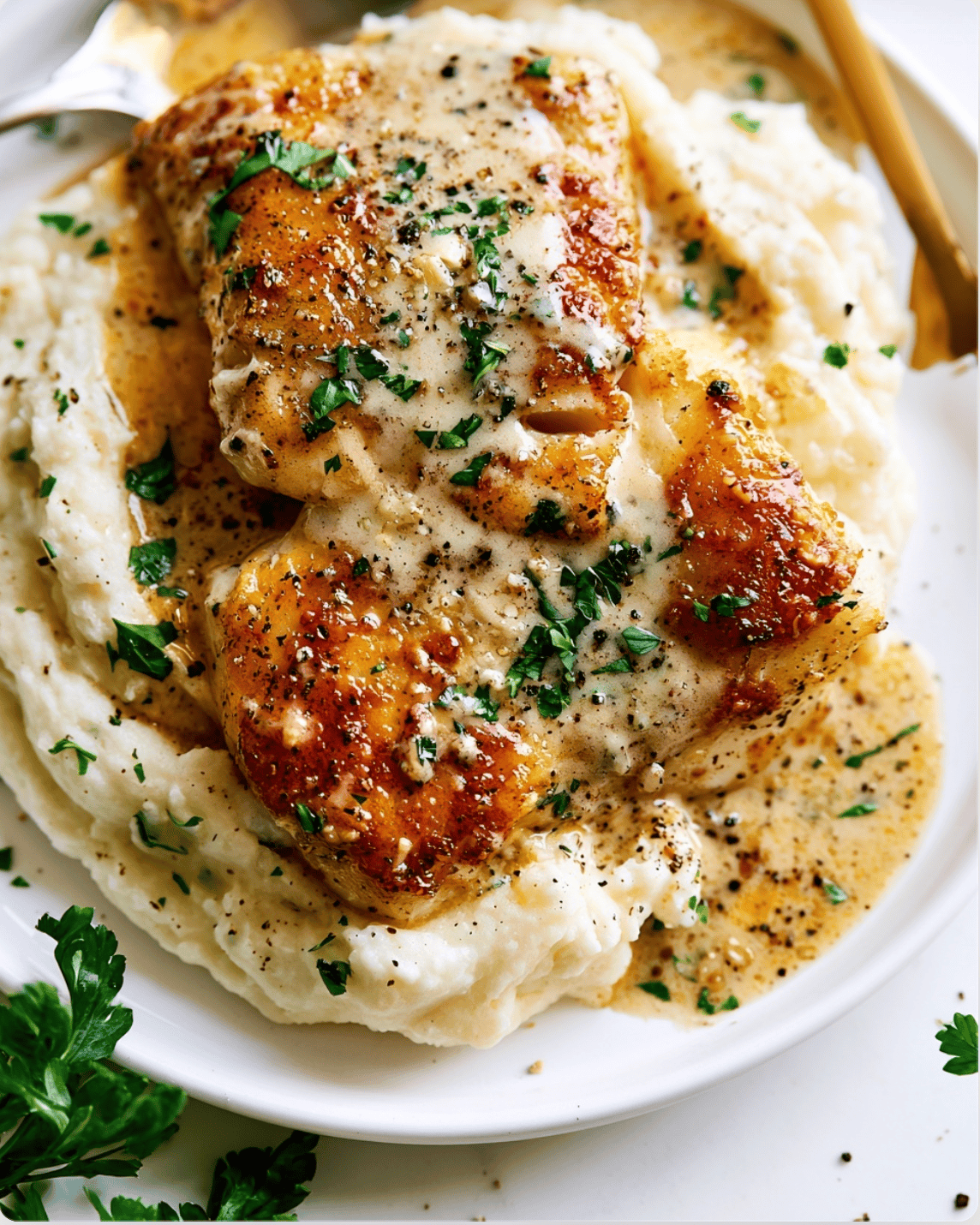
For this dish, thick cod fillets are pan-seared until the outside is deeply golden while the centre stays soft and flaky.
They’re served over buttery mashed potatoes and finished with a garlic Parmesan sauce that’s creamy without being so thick that it hides the fish.
The sauce settles into the mashed potatoes, which is honestly where most of it ends up on my plate.
Fresh parsley and plenty of cracked black pepper stop the whole thing from feeling too heavy.
It looks like a proper sit-down dinner, but none of the steps are difficult.
The main thing is getting everything ready before the cod goes into the pan because once it starts cooking, it moves quickly.
Make the potatoes first, keep them warm, then cook the fish and sauce in the same skillet.
That way, all the browned bits from the cod stay in the pan and become part of the sauce rather than being washed down the sink.
Why This Recipe Works
- Thick cod fillets stay moist inside while developing a golden crust.
- A light coating of flour helps the fish brown and gives the sauce a little body.
- The garlic Parmesan sauce is made in the same skillet, so it picks up all the flavour left from searing the cod.
- Warm butter and cream keep the mashed potatoes soft rather than stiff or gluey.
- The sauce is spoonable and glossy, not thick like pasta sauce.
- Fresh parsley and black pepper give the finished plate some freshness and contrast.
Ingredients
For the cod
- 4 thick cod fillets, around 150g to 180g each
- ½ teaspoon salt
- ½ teaspoon freshly cracked black pepper
- ½ teaspoon garlic powder
- ½ teaspoon paprika
- 2 tablespoons plain flour
- 1 tablespoon olive oil
- 2 tablespoons butter
For the creamy mashed potatoes
- 1kg floury potatoes, such as Maris Piper
- 60g butter
- 120ml warm double cream or whole milk
- Salt, to taste
- Black pepper, to taste
For the garlic Parmesan sauce
- 2 tablespoons butter
- 4 garlic cloves, finely minced
- 250ml chicken or vegetable stock
- 200ml double cream
- 60g freshly grated Parmesan
- ½ teaspoon Italian seasoning
- 1 teaspoon Dijon mustard
- Salt, if needed
- Freshly cracked black pepper
To finish
- Chopped fresh parsley
- Extra grated Parmesan, optional
Equipment You’ll Need
- Large frying pan or skillet
- Large saucepan
- Potato masher
- Colander
- Fish slice or wide spatula
- Whisk or wooden spoon
How to Make Creamy Garlic Butter Cod
1. Prepare the potatoes
Peel the potatoes and cut them into evenly sized chunks.
Place them in a large saucepan and cover with cold water.
Add a generous pinch of salt, then bring the water to a boil.
Reduce the heat slightly and cook for 15 to 20 minutes, or until the potatoes are completely tender.
A knife should slide through the centre without resistance.
Drain them well, then leave them in the colander for two minutes so the steam can escape.
This small pause matters because watery potatoes make loose, bland mash.
2. Make the mashed potatoes
Return the drained potatoes to the warm saucepan.
Mash them until there are no large lumps.
Add the butter and stir until it has melted into the potatoes.
Pour in the warm cream a little at a time, mixing gently until the mash is smooth and creamy.
Season with salt and black pepper.
Cover the pan and keep the potatoes warm over the lowest possible heat.
Do not keep stirring them, as overworking potatoes can make them stretchy and sticky.
3. Season the cod
Pat the cod fillets very dry with kitchen paper.
This is one of those steps that’s easy to skip, but damp fish will steam instead of developing the golden surface you want.
Season both sides with salt, black pepper, garlic powder, and paprika.
Dust each fillet lightly with flour, then shake off the excess.
The coating should be barely visible.
Too much flour can make the sauce pasty later.
4. Pan-sear the cod
Heat the olive oil and one tablespoon of butter in a large skillet over medium-high heat.
Once the butter is foaming, add the cod.
Leave a little space between the fillets so the pan stays hot.
Cook the first side for four to five minutes without moving the fish.
When the underside is golden and releases easily from the pan, turn each fillet carefully.
Add the remaining tablespoon of butter.
Cook for another three to four minutes, spooning the melted butter over the cod as it cooks.
The exact time will depend on the thickness of your fillets.
Transfer the cod to a plate when the centre is opaque and flakes with gentle pressure.
Cover loosely to keep warm.
Make the Garlic Parmesan Sauce
1. Cook the garlic
Lower the heat to medium.
Add two tablespoons of butter to the same skillet.
Stir in the minced garlic and cook for around 30 seconds.
The garlic should smell fragrant but should not turn dark brown.
Burnt garlic will make the whole sauce bitter.
2. Loosen the browned bits
Pour in the stock.
Use a wooden spoon to scrape the golden bits from the bottom of the skillet.
Let the stock simmer for three to four minutes so it reduces slightly.
This gives the finished sauce more flavour and stops it from tasting like cream with cheese stirred into it.
3. Add the cream and Parmesan
Reduce the heat to medium-low.
Stir in the double cream, Italian seasoning, Dijon mustard, and cracked black pepper.
Let the sauce simmer gently for two minutes.
Add the Parmesan a little at a time, stirring until it melts before adding more.
Keep the heat low once the cheese goes in.
A hard boil can make Parmesan clump and may cause the sauce to split.
4. Finish the sauce
Simmer the sauce gently until it lightly coats the back of a spoon.
It should still pour easily and spread around the mashed potatoes.
If it becomes too thick, stir in a splash of stock or cream.
Taste before adding salt because the stock and Parmesan may already provide enough.
Return the cod to the skillet for one minute, spooning the warm sauce over the top.
How to Serve It
Spoon a generous amount of mashed potato onto each plate.
Set a cod fillet over the mash.
Pour the garlic Parmesan sauce over the fish and around the potatoes.
Finish with chopped parsley, cracked black pepper, and a little extra grated Parmesan if you like.
Serve straight away while the cod is still hot and the sauce is loose and creamy.
Tips for Cooking Cod Properly
Use thick fillets
Thin pieces cook too quickly and are easier to dry out.
Choose fillets that are fairly even in thickness so they finish at roughly the same time.
Let the pan heat up
If the skillet isn’t hot enough, the cod may stick and turn pale instead of golden.
The butter should foam as the fish goes in, but it shouldn’t be smoking.
Turn the fish only once
Cod is delicate, especially once cooked.
Repeatedly flipping it makes the fillets more likely to split.
Wait until the first side has formed a crust before trying to move it.
Don’t drown the fish while it sears
The cod is served with plenty of sauce at the end, but it needs direct contact with the skillet first.
That contrast between the browned surface and creamy sauce is what keeps the dish interesting.
Grate the Parmesan yourself
Pre-grated Parmesan often contains anti-caking agents that prevent it from melting smoothly.
A block of Parmesan gives the sauce a much better texture.
Easy Variations
- Add spinach: Stir a few handfuls of baby spinach into the sauce before returning the cod.
- Use haddock: Thick haddock fillets cook in much the same way and work well with the sauce.
- Add lemon: Stir one or two teaspoons of lemon juice into the finished sauce for a brighter flavour.
- Include mushrooms: Brown sliced mushrooms after removing the cod, then continue with the garlic and sauce.
- Make it spicy: Add a pinch of chilli flakes with the garlic.
- Use herbs: Fresh dill, chives, or tarragon can replace the parsley.
- Serve with cauliflower mash: This works well when you want something lighter than potatoes.
- Add capers: A spoonful of drained capers gives the creamy sauce a salty, sharp edge.
What to Serve With It
The mashed potatoes already make this a filling meal, so I’d keep any extra sides fairly simple.
Roasted asparagus works well because its slightly charred flavour cuts through the cream sauce.
Green beans, steamed broccoli, peas, or wilted spinach are all easy options.
A crisp green salad with a sharp lemon dressing also works nicely.
And although the mashed potatoes catch most of the sauce, a piece of crusty bread on the side is never a bad idea.
Storage
Store the cod, mashed potatoes, and sauce in separate airtight containers when possible.
The cod will keep in the refrigerator for up to two days.
The mashed potatoes and sauce can be refrigerated for up to three days.
Fish is always best shortly after cooking, so I wouldn’t make the cod several days ahead on purpose.
How to Reheat It
Reheat the sauce in a small saucepan over low heat.
Add a splash of stock, milk, or cream if it has thickened in the refrigerator.
Warm the mashed potatoes gently with a little milk and butter.
For the cod, cover it loosely with foil and warm it in a 160°C oven for around 8 to 10 minutes.
Avoid reheating it for too long, as cod dries out quickly.
The microwave works in a hurry, but use short intervals at a lower power setting.
Frequently Asked Questions
Can I use frozen cod?
Yes, but thaw it completely before cooking.
Pat it especially well with kitchen paper because frozen fish tends to release more moisture.
Why did my cod stick to the pan?
The pan may not have been hot enough, or the fish may have been turned before a crust had formed.
Once properly browned, cod usually releases much more easily.
How do I know when the cod is cooked?
The centre should be opaque and should separate into large flakes when pressed gently with a fork.
If using a thermometer, the thickest part should reach 63°C.
Can I leave out the flour?
Yes.
The fish may be slightly less golden, and the sauce may be a little thinner, but the recipe will still work.
Why did my Parmesan sauce become grainy?
The heat was probably too high, or the Parmesan was added too quickly.
Lower the heat and stir in the cheese gradually.
Freshly grated cheese also melts more smoothly.
Can I use milk instead of double cream?
Whole milk can be used, but the sauce will be thinner.
You may need to simmer it a little longer or add slightly more Parmesan.
Can I prepare the mashed potatoes ahead?
Yes.
Reheat them gently with extra butter and a splash of warm cream or milk.
What can I use instead of cod?
Haddock, halibut, pollock, or another firm white fish will all work.
Just adjust the cooking time based on thickness.
A Few Final Thoughts
The sauce is rich, but the cod itself is mild, so don’t be shy with the black pepper and parsley.
Those finishing touches make more difference than they seem to.
And watch the fish closely once it goes into the pan.
The potatoes can wait under a lid and the sauce can be loosened with stock, but overcooked cod is harder to rescue.
Get the fish golden, keep the centre tender, and spoon enough garlic Parmesan sauce over the mashed potatoes that there’s a little pooling around the edge of the plate.
That’s the good bit.