Jamaican Oxtail with Rice and Peas
If there was one meal that could make an entire house smell like Sunday afternoon, this Authentic Jamaican Oxtail would be it.
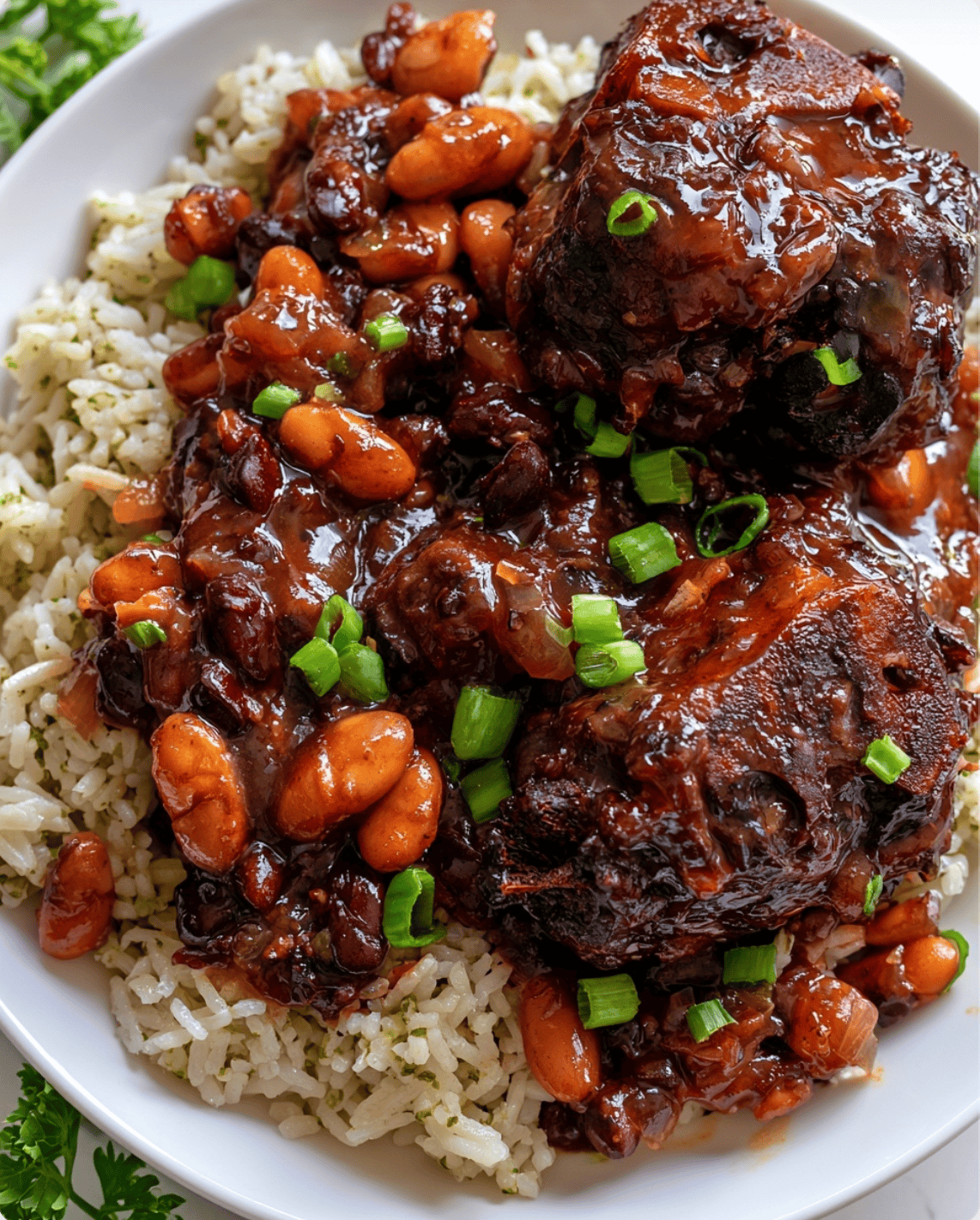
Jamaican oxtail isn’t a quick dinner you throw together after work. It’s the kind of meal you plan for because you already know the payoff is worth every minute.
As the oxtail slowly cooks away, the meat becomes so tender it barely clings to the bone, the gravy turns rich and glossy, and the butter beans soak up all those deep, savoury flavours.
By the time it’s ready, the hardest part is waiting long enough not to burn your mouth on the first bite.
Growing up, oxtail was never an everyday meal. It was what appeared on the table for birthdays, family gatherings, holidays, or those Sundays when everyone somehow knew dinner was going to be special.
The pot would quietly bubble away for hours while the whole house filled with the unmistakable aroma of thyme, garlic, onions, Scotch bonnet, and browning sauce.
Before anyone even called us to eat, we’d already wandered into the kitchen asking, “Is it ready yet?”
This isn’t a shortcut version. It’s the classic Jamaican-style oxtail that rewards a little patience with a meal you’ll be thinking about long after dinner is over.
Why This Recipe Works
- The oxtail is marinated before cooking, giving the seasoning time to reach beyond the surface.
- Each piece is browned in batches, which creates a deeper colour and fuller gravy.
- The Scotch bonnet is left whole, so it perfumes the pot without making the dish unnecessarily hot.
- Butter beans are added near the end and remain visible in the finished gravy.
- Dried kidney beans are cooked separately until nearly tender before the rice is added.
- The rice is washed thoroughly, helping it cook up fluffy rather than gummy.
- Reserved bean cooking liquid gives the rice and peas its traditional colour and flavour.
Ingredients
For the Jamaican oxtail
- 1.8kg to 2kg oxtail pieces
- 1 large brown onion, chopped
- 4 spring onions, sliced
- 5 garlic cloves, finely chopped
- 1 tablespoon fresh ginger, grated
- 4 sprigs fresh thyme
- 1 whole Scotch bonnet pepper
- 2 teaspoons ground allspice
- 1 teaspoon smoked paprika
- 1 teaspoon freshly ground black pepper
- 1½ teaspoons salt
- 2 tablespoons soy sauce
- 1 tablespoon Worcestershire sauce
- 2 tablespoons browning sauce
- 2 tablespoons tomato ketchup
- 1 teaspoon brown sugar
- 2 tablespoons vegetable oil
- 750ml beef stock, plus more if needed
- 1 x 400g tin butter beans, drained and rinsed
- 1 tablespoon cornflour, optional
- 2 tablespoons cold water, optional
- Chopped spring onions, for serving
For the rice and peas
- 200g dried red kidney beans
- Water, for soaking and cooking
- 400ml full-fat coconut milk
- 2 garlic cloves, lightly crushed
- 3 spring onions, left whole and bruised
- 4 sprigs fresh thyme
- 1 whole Scotch bonnet pepper
- 1 teaspoon ground allspice
- 1½ teaspoons salt, or to taste
- 400g long-grain rice
- Reserved bean cooking liquid, as needed
Before You Start
Soak the dried kidney beans in plenty of cold water overnight.
They will expand quite a bit, so use a bowl with more room than you think you need.
If you forget to soak them overnight, cover the beans with water in a saucepan, boil for two minutes, remove from the heat, and leave them covered for one hour.
Drain that water before cooking the beans properly.
Trim away any large, hard pieces of fat from the oxtail, but do not remove every bit.
A little fat gives the gravy body and flavour.
Pat the meat dry before seasoning.
Wet oxtail will struggle to brown properly and may steam in the pot instead.
How to Make Jamaican Oxtail
1. Season the oxtail
- Put the oxtail in a large bowl.
- Add the chopped onion, spring onions, garlic, ginger, thyme, ground allspice, paprika, black pepper, salt, soy sauce, Worcestershire sauce, browning sauce, ketchup, and brown sugar.
- Massage the seasoning into every piece, turning the oxtail several times so nothing is left bare.
- Cover the bowl and refrigerate for at least four hours.
- Overnight is better because the seasoning has more time to settle into the meat.
2. Bring the meat closer to room temperature
- Take the seasoned oxtail out of the refrigerator about 30 minutes before cooking.
- Scrape most of the chopped onion and herbs from the meat and keep them in the bowl.
- Leaving too much wet seasoning on the surface can cause the aromatics to burn before the meat has browned.
3. Brown the oxtail properly
- Heat the vegetable oil in a large, heavy-bottomed pot over medium-high heat.
- Add the oxtail in batches, leaving a little space between each piece.
- Brown for three to four minutes on each side until the surface is dark and caramelised.
- Do not keep moving the meat around.
- Let each side sit against the hot pot long enough to form a crust.
- Transfer the browned pieces to a plate and continue with the remaining oxtail.
4. Cook the aromatics
- Reduce the heat to medium.
- Add the reserved onion, garlic, spring onions, ginger, and thyme from the marinade.
- Cook for three to four minutes, stirring and scraping the browned bits from the bottom of the pot.
- If the bottom begins to catch, add a small splash of beef stock.
- The mixture should smell deeply savoury and slightly sweet, not burnt.
5. Start the braise
- Return the browned oxtail and any juices from the plate to the pot.
- Pour in enough beef stock to come about two-thirds of the way up the meat.
- Add the whole Scotch bonnet pepper.
- Bring the liquid to a gentle simmer.
- Cover the pot, reduce the heat to low, and cook for about three hours.
- Turn the pieces occasionally so they cook evenly.
- Add a little more stock or hot water if the liquid becomes too low before the meat is tender.
6. Check the texture
- After about three hours, test one of the larger pieces with a fork.
- The fork should slide into the meat easily, and the meat should begin pulling away from the bone with very little effort.
- If it still feels tight or chewy, cover the pot and continue cooking.
- Oxtail does not become tender according to the clock alone.
- Some batches need another 30 to 45 minutes.
7. Add the butter beans
- Once the oxtail is tender, remove the Scotch bonnet carefully without breaking it.
- Stir in the drained butter beans.
- Simmer uncovered for 15 to 20 minutes.
- This gives the beans enough time to absorb the gravy without becoming overly soft.
- Spoon away some of the excess fat from the surface if needed.
8. Finish the gravy
- The gravy should coat the oxtail and look shiny rather than watery.
- If it is too thin, leave the pot uncovered and simmer until it reduces.
- For a faster fix, mix one tablespoon of cornflour with two tablespoons of cold water.
- Stir a little of the slurry into the simmering gravy and cook for two to three minutes.
- You may not need all of it.
- Taste before serving and adjust the salt, black pepper, or browning sauce if necessary.
How to Make Jamaican Rice and Peas
1. Cook the soaked kidney beans
- Drain the soaked beans and rinse them.
- Put them in a saucepan and cover with plenty of fresh water.
- Bring the beans to a full boil for at least 10 minutes.
- Reduce the heat and simmer for 35 to 50 minutes, or until they are almost tender.
- They should be cooked enough to bite through but still hold their shape.
- Do not cook them until they are splitting or collapsing.
- Drain the beans, reserving at least 500ml of the bean cooking liquid.
2. Wash the rice
- Put the rice in a bowl and cover it with cold water.
- Swirl it with your hand, then pour away the cloudy water.
- Repeat this three to five times until the water looks mostly clear.
- Drain the rice thoroughly in a sieve.
- Washing away the loose surface starch is what helps the finished rice remain fluffy.
3. Prepare the coconut cooking liquid
- Return the cooked kidney beans to a clean saucepan.
- Add the coconut milk, crushed garlic, whole spring onions, thyme, whole Scotch bonnet, allspice, and salt.
- Pour in enough reserved bean liquid to make approximately 850ml of liquid in total.
- Bring the mixture to a gentle boil and simmer for five minutes.
- Taste the liquid before adding the rice.
- It should taste slightly more seasoned than you want the finished rice to taste because the rice will absorb and soften the seasoning.
4. Add the washed rice
- Stir the drained rice into the seasoned coconut mixture.
- Bring it back to a gentle boil.
- Stir once to make sure nothing is stuck to the bottom, then stop stirring.
- Reduce the heat to its lowest setting and cover the pan tightly.
- Cook for 18 to 22 minutes.
- Do not keep lifting the lid because the trapped steam is doing most of the cooking.
5. Rest and fluff
- Turn off the heat once the liquid has been absorbed and the rice is tender.
- Leave the pan covered for 10 minutes.
- Remove the Scotch bonnet, thyme stems, garlic, and whole spring onions.
- Fluff the rice gently with a fork, lifting from the bottom rather than pressing the grains together.
- If the rice seems slightly firm after resting, sprinkle over two tablespoons of hot water, cover again, and leave it on the lowest heat for another five minutes.
Tips That Make a Real Difference
Do not crowd the pot while browning
Crowded oxtail releases liquid faster than it can evaporate.
Instead of developing a dark crust, it turns grey and steams.
Working in batches may feel slow, but the colour left behind in the pot is what gives the finished gravy its depth.
Keep the Scotch bonnet whole
A whole Scotch bonnet gives the dish its fruity aroma without releasing all of its heat.
Check the pepper whenever you stir the pot and avoid crushing it against the side.
If it splits, the gravy can become much hotter very quickly.
Give tough oxtail more time
Chewy oxtail is not ruined.
It simply has not cooked long enough.
Add a little more liquid if necessary and continue simmering until the connective tissue breaks down.
Do not cook the butter beans for hours
Butter beans are already cooked.
Adding them during the final part of the braise keeps them creamy but intact.
If they go in at the beginning, many of them will split and disappear into the gravy.
Measure the rice liquid carefully
The coconut milk, bean liquid, and water all count towards the total cooking liquid.
Too much gives you wet, clumped rice.
Too little leaves the centre of the grains hard.
The exact amount can vary slightly with the rice and the width of the saucepan, so check the package as a useful guide.
What to Serve with Jamaican Oxtail
Rice and peas is the obvious base because it catches the gravy without competing with it.
A spoonful of steamed cabbage on the side works well, especially when cooked with a little carrot, thyme, and black pepper.
Fried plantain adds sweetness against the savoury oxtail.
A crisp cabbage slaw is also useful when you want something fresh to cut through the richness.
Other good sides include:
- Jamaican steamed cabbage
- Fried ripe plantain
- Callaloo
- Festival
- Fried dumplings
- Macaroni pie
- Cucumber and tomato salad
Storage and Reheating
Keep the oxtail and rice in separate airtight containers.
The oxtail will keep in the refrigerator for up to four days.
The rice is best eaten within one to two days and should be chilled promptly after cooking.
Reheat the oxtail gently in a covered saucepan over low heat.
Add a small splash of stock or water if the gravy has become very thick.
Stir occasionally until the meat and gravy are piping hot.
Reheat the rice only once.
Add a teaspoon or two of water, cover it, and microwave until steaming hot throughout.
Can You Freeze Jamaican Oxtail?
Yes.
Oxtail freezes very well and often tastes even deeper after being reheated.
Let it cool, place it in a freezer-safe container with plenty of gravy, and freeze for up to three months.
Defrost it overnight in the refrigerator before reheating.
Rice and peas can also be frozen, although freshly cooked rice has the better texture.
Spread the rice out to cool quickly, portion it, and freeze as soon as possible.
Frequently Asked Questions
Can I use canned kidney beans for the rice and peas?
You can, but dried beans give you the traditional bean liquor that colours and seasons the rice.
Canned beans are already fully cooked, so they need gentler handling.
If using them, rinse and drain the beans, prepare the coconut cooking liquid, and fold the beans in during the final five to eight minutes rather than boiling them for the entire rice cooking time.
Why is my oxtail tough?
It needs longer.
Oxtail becomes tender only after its collagen has had enough time to break down.
Keep it at a gentle simmer, top up the liquid if needed, and check it again after 30 minutes.
Can I make the oxtail in a pressure cooker?
Yes.
Brown the seasoned oxtail first, then pressure cook it with the aromatics and stock for approximately 45 to 50 minutes.
Allow the pressure to release naturally.
Finish it uncovered with the butter beans so the gravy can reduce.
Can I use a slow cooker?
Brown the oxtail and cook the aromatics on the hob first.
Transfer everything to the slow cooker with less stock than you would use on the hob.
Cook on low for eight to nine hours or on high for five to six hours.
Add the butter beans during the final 30 minutes.
What if my gravy is greasy?
Oxtail naturally releases a good amount of fat.
Skim the surface with a spoon while the gravy simmers, or chill the cooked dish and lift off the firm layer of fat before reheating.
Do not remove every bit because some fat gives the gravy its texture and flavour.
Is Jamaican rice and peas made with green peas?
No.
In Jamaican cooking, “peas” usually refers to beans, most commonly red kidney beans or gungo peas.
Why is my rice and peas mushy?
The rice may not have been washed well, there may have been too much liquid, or it may have been stirred repeatedly while cooking.
Wash the rice, drain it thoroughly, measure the liquid carefully, and leave it alone once the lid goes on.
Can I leave out the coconut milk?
You can, but the finished rice will not have the same taste or texture.
Coconut milk gives rice and peas its familiar richness and carries the flavour of the thyme, scallions, and pimento.
A Final Note
This is not a recipe to squeeze into a spare 45 minutes.
It is the sort of cooking that asks you to season early, brown carefully, and let the pot do its work without constantly interfering.
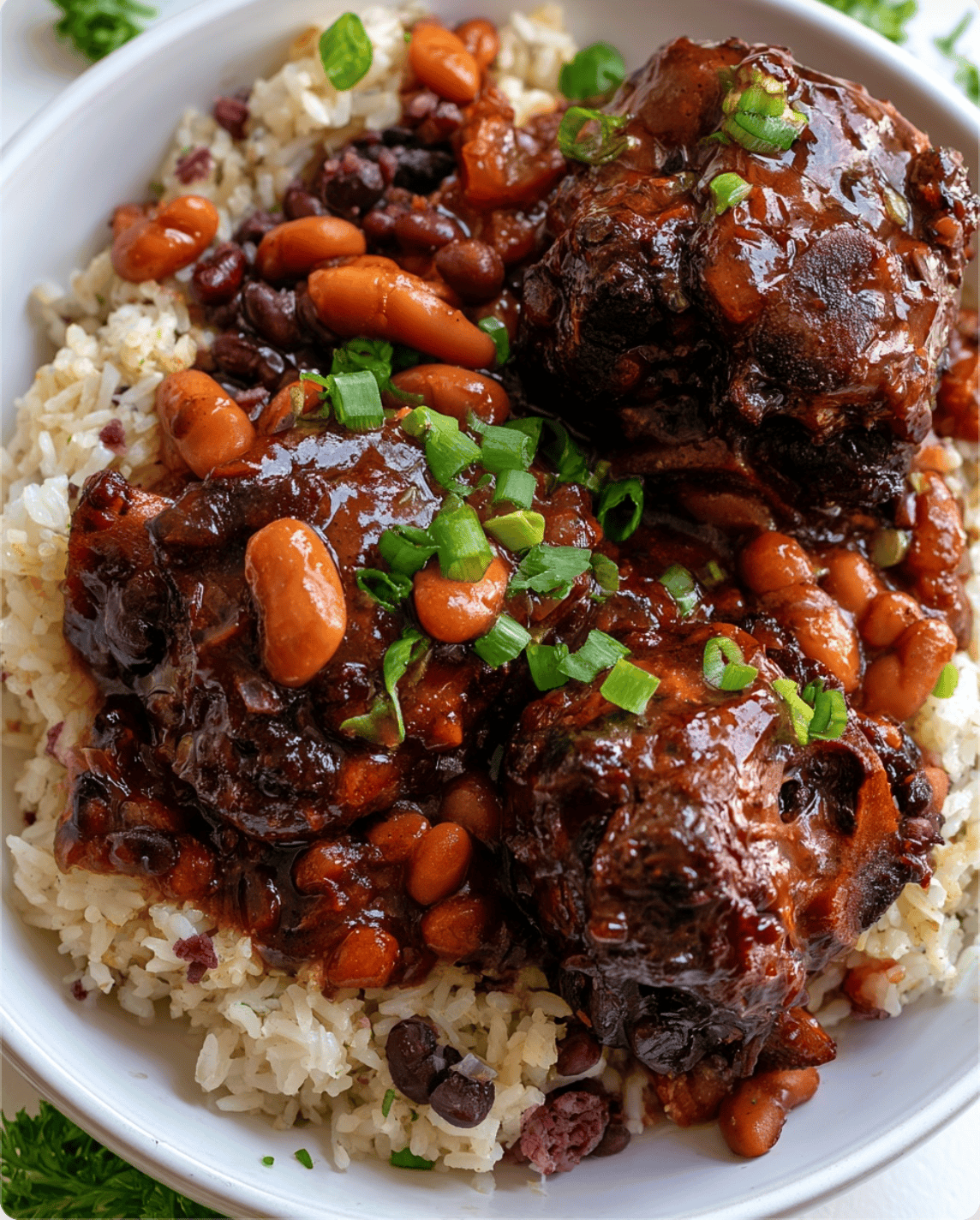
The result is tender oxtail coated in dark, glossy gravy, whole butter beans tucked between the pieces, and properly cooked rice and peas underneath.
Add the scallions at the end, make sure every plate gets enough gravy, and keep the Scotch bonnet where you can see it.
Nobody wants that particular surprise hiding under the rice.