Gochujang Tofu with Noodles
The tofu came out sticky, deeply browned and properly saucy, with sweet peppers and onions tangled through every bite.
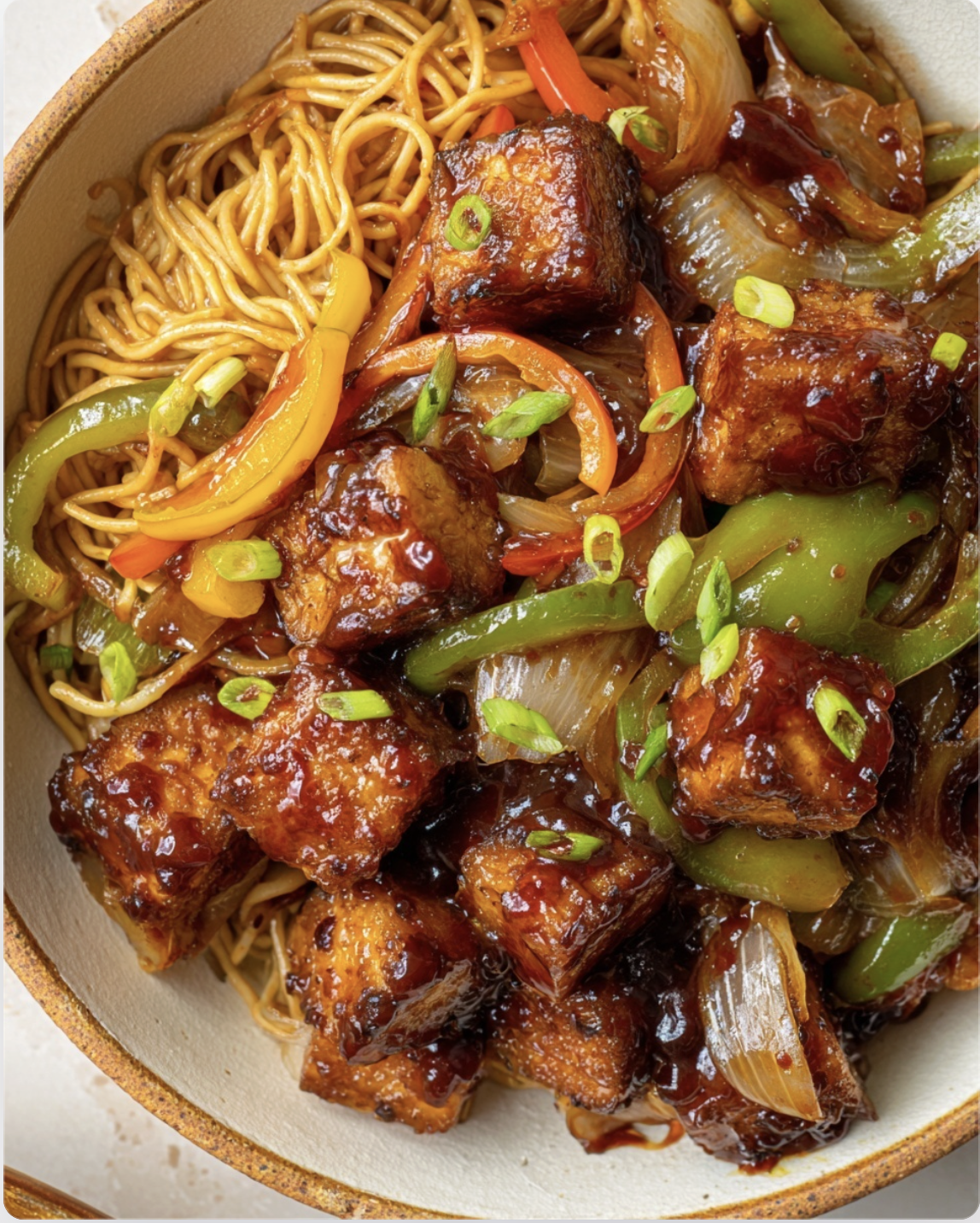
The noodles stay simple and savoury underneath, which is exactly what they need to do.
Once that thick gochujang sauce starts finding its way into them, dinner pretty much sorts itself out.
I’m very particular about saucy tofu.
I don’t want soft cubes sitting in a watery stir-fry sauce.
I want proper browned edges, a sticky coating, and enough sauce left in the pan to catch the onions and peppers.
That is what we’re doing here.
The tofu gets pan-fried first until golden and firm around the edges.
Then the vegetables go into the same pan, followed by a thick gochujang sauce that turns glossy almost as soon as it heats up.
The onions soften into the sauce, while the green, red and yellow peppers keep a little bite.
I serve it beside a generous pile of dark, savoury noodles and finish everything with sliced spring onions.
It’s bold, a little sweet, nicely spicy and exactly messy enough to be worth making.
Ingredients
This serves 4 people.
For the tofu
- 2 blocks extra-firm tofu
- 2 tablespoons cornflour
- ½ teaspoon fine sea salt
- ¼ teaspoon black pepper
- 2 tablespoons neutral oil
For the vegetables
- 1 large green bell pepper, thinly sliced
- ½ red bell pepper, thinly sliced
- ½ yellow bell pepper, thinly sliced
- 1 large onion, sliced into thin wedges
- 3 spring onions, thinly sliced
For the gochujang sauce
- 3 tablespoons gochujang
- 2 tablespoons soy sauce
- 1 tablespoon dark soy sauce
- 1½ tablespoons brown sugar
- 1 tablespoon rice vinegar
- 2 teaspoons sesame oil
- 3 garlic cloves, finely minced
- 1 teaspoon fresh ginger, grated
- 3 tablespoons water
- 1 teaspoon cornflour
For the noodles
- 300g medium wheat noodles
- 1 tablespoon soy sauce
- 1 tablespoon dark soy sauce
- 1 teaspoon sesame oil
- 1 teaspoon brown sugar
- 1 tablespoon water
Get the Tofu Ready
The tofu needs to be firm enough to brown well and sturdy enough to survive all that tossing at the end.
Extra-firm is the one I use.
- Drain the tofu.
- Wrap it in kitchen paper or a clean tea towel.
- Place something moderately heavy on top.
- Leave it for 20 to 30 minutes.
- Cut the tofu into chunky cubes.
Keep the pieces fairly large.
Small cubes dry out too quickly and get lost among the peppers and onions.
Once cut:
- Add the tofu to a bowl.
- Sprinkle over the cornflour, salt and black pepper.
- Toss gently until every piece has a light coating.
You don’t need a thick crust here.
A little cornflour is enough to help the edges crisp and gives the sauce something to cling to later.
Mix the Gochujang Sauce
Do this before the pan gets hot.
The actual cooking moves fairly quickly, and nobody needs to be hunting for rice vinegar while tofu is burning beside them.
- Add the gochujang to a small bowl.
- Stir in the soy sauce and dark soy sauce.
- Add the brown sugar, rice vinegar and sesame oil.
- Add the minced garlic and grated ginger.
- Stir in the water and cornflour.
- Whisk until smooth.
The sauce should already look fairly thick.
That’s intentional.
Once it hits the hot pan, it loosens for a moment and then quickly turns glossy and sticky.
Cook the Noodles
The noodles aren’t supposed to be swimming in sauce.
They’re seasoned just enough to stay savoury and glossy, then they pick up more flavour once everything is plated together.
- Cook the noodles according to the packet instructions.
- Drain well.
- Mix the soy sauce, dark soy sauce, sesame oil, brown sugar and water in a small bowl.
- Pour the mixture over the hot noodles.
- Toss until evenly coated.
- Set aside and keep warm.
If the noodles start sticking together while you finish the tofu, add a tiny splash of warm water and loosen them with tongs.
Pan-Fry the Tofu
This is where a bit of patience pays off.
If you keep poking at the tofu every ten seconds, it never gets the chance to colour properly.
- Heat the neutral oil in a large frying pan or wok over medium-high heat.
- Add the tofu in a single layer.
- Leave it alone for about 2 minutes before turning.
- Continue cooking for 8 to 10 minutes in total.
- Turn the cubes every couple of minutes so several sides become golden.
- Transfer the tofu to a plate.
The tofu doesn’t need to be crunchy all the way around.
You just want those darker caramelised edges that still show through once the sauce goes on.
Cook the Peppers and Onions
Use the same pan.
There will already be a little flavour left behind from the tofu, so there’s no reason to clean anything.
- Add the sliced onion.
- Cook for 2 minutes.
- Add the green, red and yellow peppers.
- Stir-fry for another 4 to 5 minutes.
The onions should soften and turn glossy.
The peppers should bend easily but still have some shape.
I don’t cook them until completely soft.
A little texture makes the finished bowl much better.
Add the Sauce
Give the gochujang mixture another stir before pouring it into the pan.
The cornflour tends to settle while it sits.
- Pour the sauce over the peppers and onions.
- Stir immediately.
- Let it bubble for 1 to 2 minutes.
- Add the tofu back to the pan.
- Toss gently until every cube is coated.
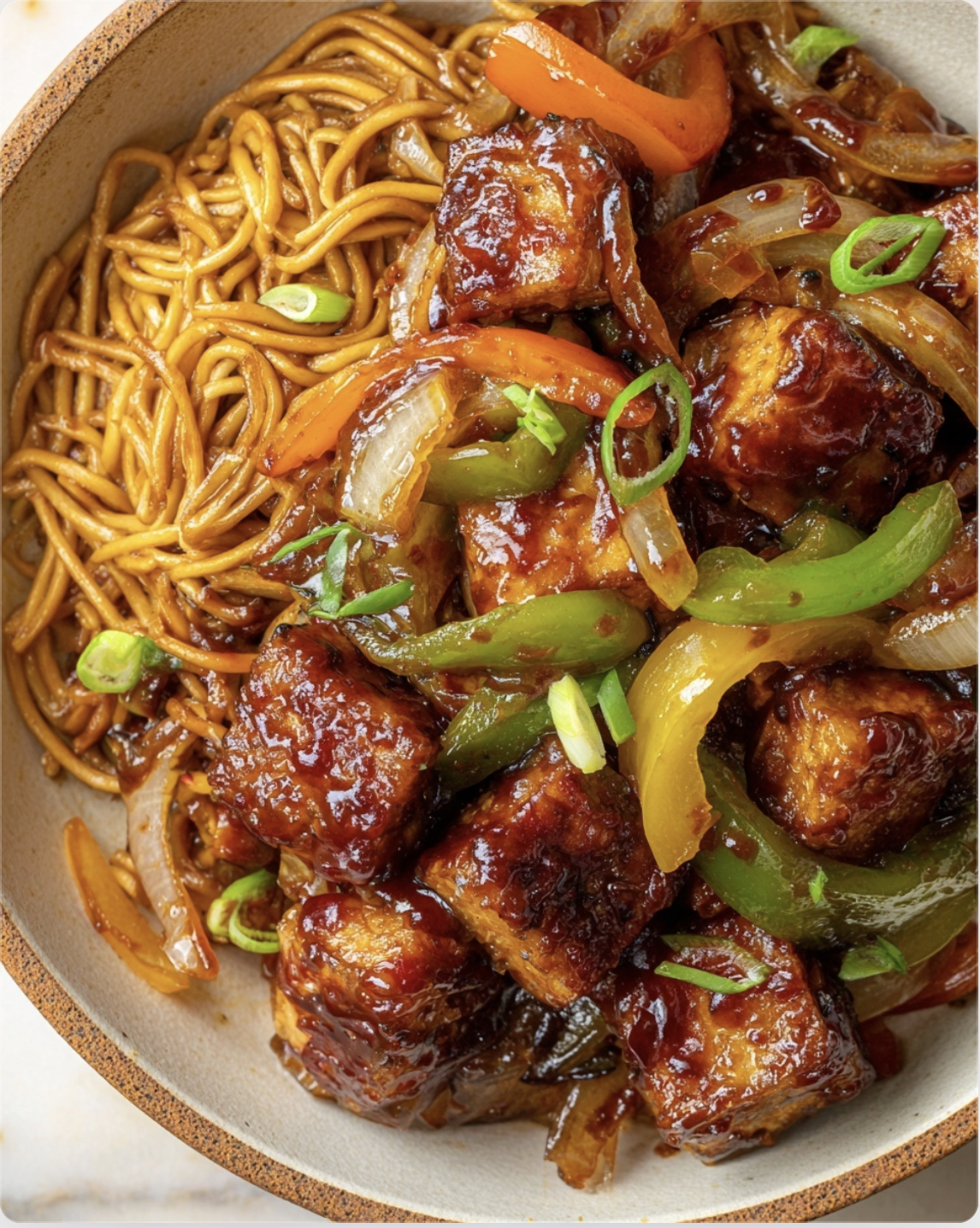
At this point the sauce should look thick, shiny and almost lacquered.
If it tightens up too much, add a tablespoon of water.
If it still looks a little loose, give it another minute over the heat.
You want plenty of sauce coating the tofu and vegetables, but not a puddle at the bottom of the pan.
Put the Bowls Together
I like serving the noodles and tofu beside each other rather than mixing everything in the pan.
That keeps the bowl from turning into one big dark heap, and the noodles slowly catch the extra sauce as you eat.
- Divide the noodles between four bowls.
- Spoon the tofu, peppers and onions alongside.
- Make sure each serving gets plenty of sauce.
- Scatter sliced spring onions over the top.
That’s all I add.
The bowl already has enough colour and flavour without covering it in extra toppings.
How Spicy Is It?
Gochujang has heat, but it isn’t only about heat.
It’s also sweet, savoury and fermented, which is why it gives the sauce so much depth.
Three tablespoons gives this recipe a noticeable kick without making it difficult to eat.
If you prefer things milder, use 2 tablespoons and add another teaspoon of brown sugar.
For more heat, add a little chilli paste or a pinch of red pepper flakes.
I’d taste the finished sauce first before throwing more chilli at it.
A Few Things I’d Actually Pay Attention To
Keep the tofu chunky
It stays juicier and holds onto the sauce much better.
Don’t overcrowd the pan
If the tofu is piled on top of itself, it will steam instead of brown.
Cook it in two batches if your pan is small.
Slice the vegetables fairly thin
You want softened ribbons of onion and pepper running through the sauce.
Huge chunks would completely change the texture.
Don’t thin the sauce too early
It will look very thick in the bowl.
That’s fine.
Wait until it has cooked with the vegetables before deciding whether it needs more water.
Keep the noodles simple
They are there to balance the sticky tofu.
They don’t need another heavy sauce fighting for attention.
What to Serve With It
I usually leave it exactly as it is because the noodles already make it a full meal.
If I’m feeding more people, I might add something crisp and fresh on the side.
A cucumber salad works well.
So does steamed edamame.
Kimchi is great if you want another punchy flavour at the table.
But I wouldn’t load the bowl with extra vegetables just for the sake of it.
The peppers, onions, tofu and noodles already make a very complete dinner.
Q&A
Can I bake the tofu instead?
Yes.
Toss the tofu with the cornflour and a little oil, then bake at 220°C for around 25 minutes.
Turn it once halfway through.
Add it to the sauce right at the end.
Can I use an air fryer?
Yes.
Air fry the coated tofu at 200°C for 12 to 15 minutes, shaking the basket once or twice.
Can I make this vegan?
Yes.
Use brown sugar, maple syrup or another vegan sweetener.
Everything else is already plant-based.
What noodles work best?
Medium wheat noodles are my first choice.
They stay springy and hold the dark soy seasoning well.
Ramen-style noodles also work.
Can I use only green peppers?
You can.
I prefer the mix of green, red and yellow because the sweeter peppers balance the gochujang nicely.
Why did my sauce go too thick?
Cornflour thickens quickly.
Add warm water one tablespoon at a time until the sauce loosens.
Why isn’t my tofu browning?
The usual problem is moisture.
Press it well, pat it dry after cutting, and make sure the pan is hot before the tofu goes in.
Can I make it ahead?
You can make the sauce and prep the vegetables in advance.
I’d still fry the tofu and cook the noodles shortly before serving.
That’s when their texture is best.
Storing Leftovers
Keep leftovers in an airtight container in the refrigerator for up to 3 days.
If possible, store the noodles separately from the tofu mixture.
Reheat the tofu and vegetables in a frying pan with a small splash of water.
The sauce loosens again as it warms.
The noodles can go into another pan for a minute or two, or you can microwave them with a few drops of water.
They won’t be quite as springy as they were on day one, but they still make a very respectable lunch.
Final Thoughts
I keep coming back to this one because the payoff is much bigger than the amount of work involved.
The tofu gets those chewy golden edges, then the gochujang sauce settles into every corner and turns sticky around the peppers and onions.
The noodles are simple enough to let all of that shine, but they still catch plenty of sauce once you start eating.
By the time I get to the bottom of the bowl, there’s usually nothing left except a few stray spring onions and the strong feeling that I should have made more.