Sweet and Sour Pork
The sauce is the whole reason I make sweet and sour pork at home.
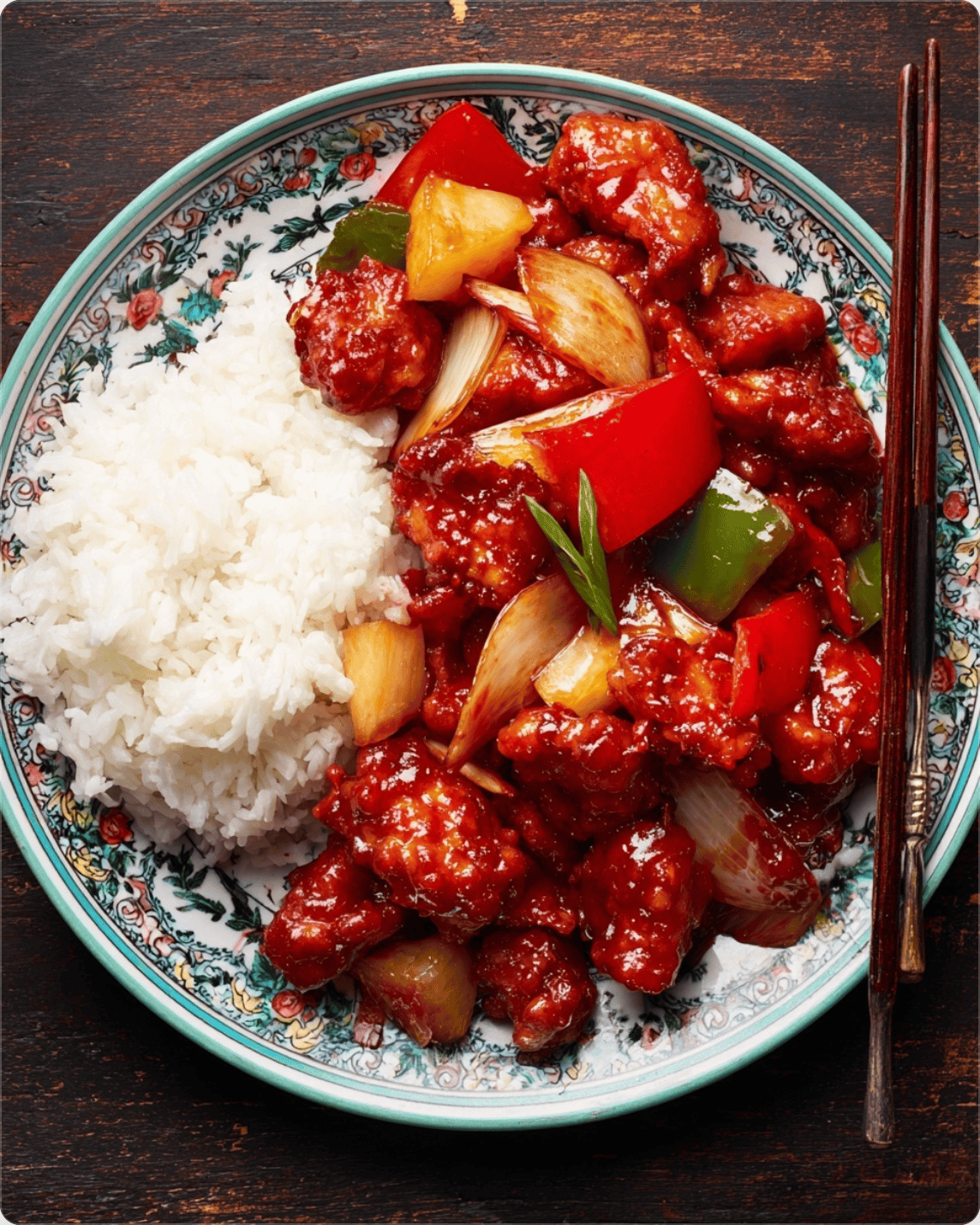
I want it sticky enough to cling to the pork, sharp enough to make you go back for another bite, and loaded with peppers, onion, and pineapple so every forkful has something different in it.
Sweet and sour pork has to have contrast or it just falls a bit flat.
The pork should still have some crunch under the sauce, the peppers shouldn’t be cooked to death, and the pineapple needs to stay juicy enough to actually taste like pineapple.
I like the sauce glossy, tangy, and just sweet enough, with plenty of it coating the pork rather than flooding the plate.
The onions soften around the edges, the peppers keep a little bite, and the whole thing gets spooned next to a mound of plain white rice so you can mix in as much sauce as you want.
It’s sticky, punchy, a little chaotic, and very easy to keep eating.
Basically, exactly what sweet and sour pork should be.
Page Contents
ToggleWhy You’ll Love This Recipe
The pork stays crisp even after getting tossed in the sauce, which is the whole point of sweet and sour pork in the first place.
The sauce has that glossy, takeout-style finish, but it still tastes fresh and lively.
You get sweetness from the pineapple, tang from the vinegar, and plenty of savory flavor underneath it all.
The peppers and onions give the dish bite and color, so it doesn’t feel heavy or one-note.
And with white rice on the side, it turns into a full dinner that’s satisfying without needing anything else.
Ingredients You’ll Need
For the pork:
- 500 g pork loin or pork shoulder, cut into bite-sized chunks
- 1 teaspoon salt
- 1/2 teaspoon black pepper
- 1 teaspoon garlic powder
- 2 eggs
- 4 tablespoons cornstarch
- 4 tablespoons plain flour
- Oil, for frying
For the sweet and sour sauce:
- 1/2 cup ketchup
- 1/4 cup rice vinegar or white vinegar
- 1/4 cup brown sugar
- 2 tablespoons soy sauce
- 2 tablespoons pineapple juice
- 1 tablespoon cornstarch
- 3 tablespoons water
For the stir-fry:
- 1 cup pineapple chunks
- 1 small red bell pepper, chopped into chunky pieces
- 1 small green bell pepper, chopped into chunky pieces
- 1 small onion, cut into wedges
- 2 garlic cloves, finely chopped
- 1 teaspoon grated ginger, optional
For serving:
- Cooked white rice
Ingredient Notes
Pork loin gives you neater, leaner bites, while pork shoulder gives you a bit more richness.
Either works, so use what you like eating most.
The pineapple really matters here because it brings that classic sweet and sour flavor and a bit of juicy contrast.
Fresh or canned is fine, as long as the pieces are chunky rather than tiny.
White rice is the best partner for this because it soaks up the extra sauce without competing with it.
How to Make Sweet and Sour Pork
1. Cook the rice
Start by cooking your white rice so it’s ready by the time the pork is done.
Keep it warm and set it aside.
2. Prep the pork
Put the pork pieces in a bowl and season them with salt, black pepper, and garlic powder.
Crack in the eggs and mix until the pork is evenly coated.
Add the cornstarch and flour, then toss everything together until the pieces are well covered and look slightly shaggy.
That coating is what helps create those crisp little edges.
3. Fry the pork
Heat oil in a deep frying pan or heavy pot over medium-high heat.
Fry the pork in batches so the pan doesn’t get crowded.
Cook each batch for about 4 to 6 minutes, turning as needed, until golden, crisp, and cooked through.
Transfer the cooked pork to a plate lined with paper towel.
If you want extra crisp pork, you can fry it a second time for 1 to 2 minutes right before tossing it in the sauce.
4. Make the sauce
In a small bowl, whisk together the ketchup, vinegar, brown sugar, soy sauce, pineapple juice, cornstarch, and water.
Make sure the cornstarch is fully dissolved so the sauce thickens smoothly later.
Set it aside.
5. Stir-fry the vegetables and pineapple
In a large pan or wok, add a small splash of oil.
Cook the onion and peppers for 2 to 3 minutes until they soften slightly but still keep some bite.
Add the garlic and ginger, if using, and cook for another 30 seconds.
Stir in the pineapple chunks and let them warm through.
6. Add the sauce
Pour the sauce into the pan with the vegetables and pineapple.
Let it bubble for a couple of minutes until it thickens into a glossy coating.
It should look shiny and rich, not watery.
7. Toss everything together
Add the crispy pork to the sauce and toss quickly so every piece gets coated.
You want the pork covered in sauce, but not sitting around so long that it loses all its crunch.
Serve it right away with a generous scoop of white rice.
Tips for the Best Sweet and Sour Pork
Cut the pork into similar-sized chunks so it cooks evenly.
Don’t skip the cornstarch because it helps create that crisp, craggy coating that holds the sauce so well.
Fry in batches, even if it annoys you a bit, because overcrowding makes the pork steam instead of crisp.
Keep the peppers and onions slightly chunky so they match the feel of the dish and don’t disappear into the sauce.
And once the pork goes into the sauce, get it to the table fairly quickly.
That’s when it’s at its absolute best.
Easy Swaps and Add-Ins
You can use chicken instead of pork if that’s what you have.
It changes the vibe a little, but it still works beautifully.
Yellow bell pepper can be added too, especially if you want more color.
If you like a bit of heat, toss in a few sliced red chilies or a pinch of chili flakes.
And if you want to stretch the dish a little further, serve it with extra rice and a simple cucumber salad on the side.
Storage and Reheating
Store any leftovers in an airtight container in the fridge for up to 3 days.
The pork will soften as it sits, so it won’t be quite as crisp the next day, but the flavor will still be great.
Reheat in a pan over medium heat until warmed through.
A microwave works too, especially if you’re more interested in eating quickly than pretending you’ll re-crisp it properly.
If you know you’ll have leftovers, you can also store the sauce and pork separately to keep the texture better.
Frequently Asked Questions
Can I make sweet and sour pork without deep frying?
Yes, you can shallow fry or even air fry the pork.
It may not be exactly the same, but it will still be delicious.
What cut of pork is best?
Pork loin is great for tender, neat pieces.
Pork shoulder is slightly richer and more forgiving.
Can I use canned pineapple?
Absolutely.
Just drain it well, and if possible, save a little of the juice for the sauce.
How do I keep the pork crispy?
Fry it well, avoid overcrowding, and toss it in the sauce right before serving.
That’s the best way to keep as much crunch as possible.
What should I serve with it?
White rice is the classic choice and honestly the best one here.
It softens the bold sauce and makes the plate feel complete.
Final Thoughts
This sweet and sour pork is one of those dinners that instantly feels fun.
It’s colorful, saucy, crisp around the edges, and deeply satisfying with that fluffy mound of rice sitting right beside it.
I love how each bite gives you something slightly different, whether it’s juicy pineapple, sweet onion, tender pork, or that sticky red sauce coating the peppers.
It’s cheerful food, and sometimes that’s exactly what dinner needs to be.
Once you make it at home and realize how good it can be fresh from the pan, it’s the kind of recipe you’ll keep coming back to.