Maple Glazed Salmon with Sweet Potato Mash
This maple glazed salmon has that sweet, sticky finish that makes plain salmon feel a bit too boring afterwards.
The sweet potato mash is soft and buttery, the Brussels sprouts get properly browned, and the whole plate just works without needing much else.
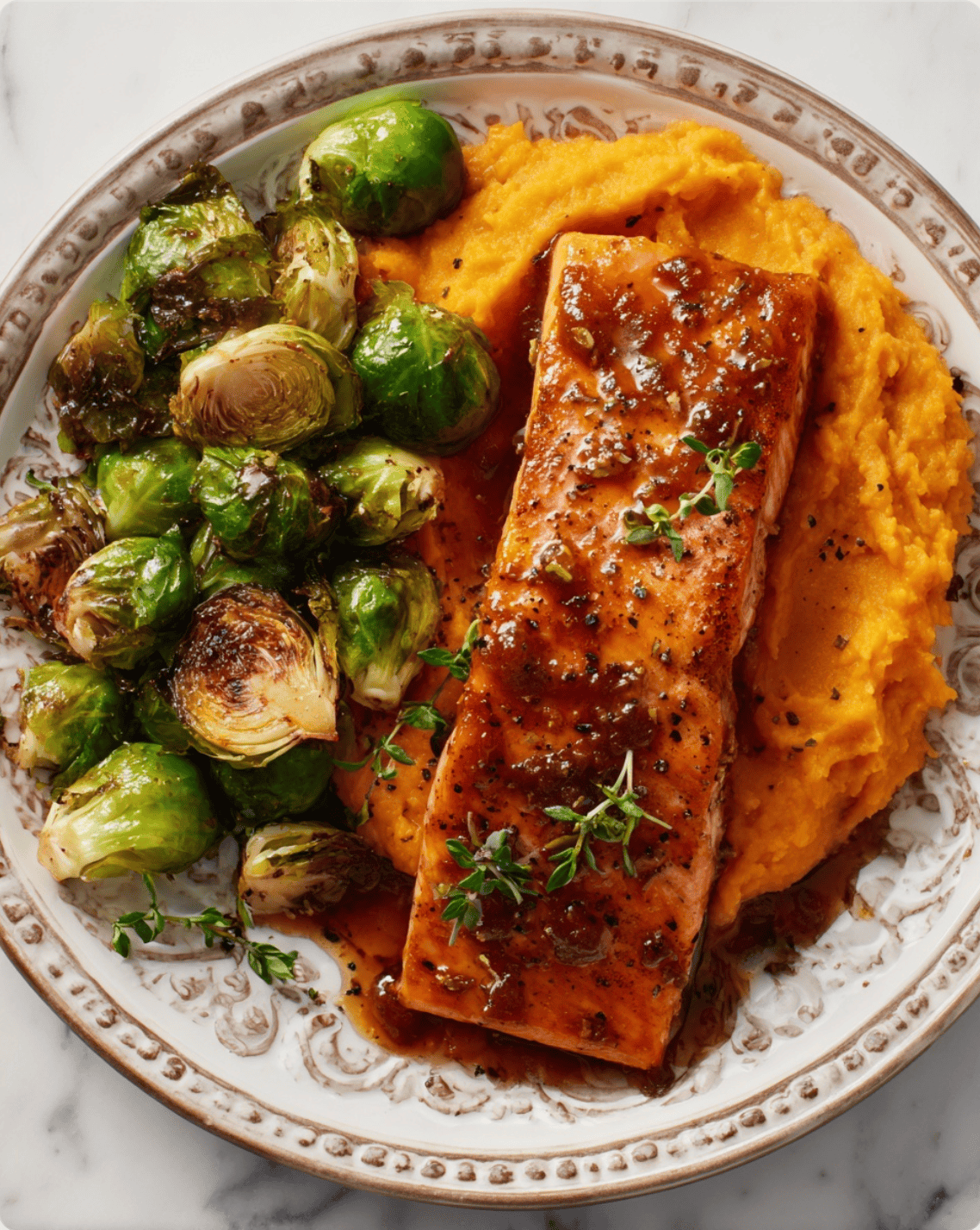
The maple glaze is what makes this worth making.
It cooks onto the salmon and turns glossy around the edges, with just enough sweetness to make every bite interesting without tipping into dessert territory.
I serve it with sweet potato mash because the two are ridiculously good together.
The mash is soft and mellow, so it balances the richer salmon, and then the Brussels sprouts bring in that slightly bitter, roasted edge that stops the plate from feeling too sweet.
I like a little thyme over the top and plenty of black pepper.
Nothing complicated, nothing overloaded.
Just salmon, mash, sprouts, and a sauce that somehow ends up on absolutely everything.
Page Contents
ToggleWhy You’ll Love This Recipe
- The salmon stays juicy and flaky while the outside gets beautifully caramelised.
- The maple glaze is sweet, savoury and glossy without being cloying.
- Creamy sweet potato mash makes the meal feel properly comforting.
- The Brussels sprouts roast at the same time, so you are not juggling three pans for no reason.
- It works for a weeknight but still looks good enough for company.
- The whole meal feels hearty without being overly heavy.
Ingredients
This serves about 4 people.
For the maple glazed salmon
- 4 salmon fillets
- 3 tablespoons pure maple syrup
- 1 tablespoon soy sauce
- 1 tablespoon Dijon mustard
- 1 tablespoon olive oil
- 2 garlic cloves, finely grated
- 1 teaspoon apple cider vinegar
- 1/2 teaspoon smoked paprika
- 1/2 teaspoon salt
- 1/2 teaspoon cracked black pepper
- 1 teaspoon fresh thyme leaves
For the sweet potato mash
- 900g sweet potatoes
- 2 tablespoons butter
- 3 tablespoons double cream or whole milk
- 1/2 teaspoon salt
- 1/4 teaspoon black pepper
For the Brussels sprouts
- 600g Brussels sprouts
- 2 tablespoons olive oil
- 1/2 teaspoon salt
- 1/2 teaspoon cracked black pepper
To finish
- Fresh thyme
- Extra cracked black pepper
- Any remaining maple glaze from the pan
A Few Notes Before You Start
I like using fairly thick salmon fillets here because they stay juicier while the outside caramelises.
If your fillets are very thin, they will cook faster, so keep an eye on them.
The glaze is intentionally simple.
Maple syrup gives it sweetness, Dijon adds a little sharpness, and soy sauce brings enough savouriness to stop the whole thing becoming too sweet.
For the mash, sweet potatoes can get watery if you boil them for too long.
Cook them until tender, drain them properly, then mash while they are still hot.
That gives you a much better texture.
And with the Brussels sprouts, let them actually colour.
Those dark roasted edges are the good bit.
Instructions
1. Roast the Brussels sprouts
- Preheat the oven to 220°C, or 200°C fan.
- Trim the ends from the Brussels sprouts.
- Halve the larger ones and leave the smallest ones whole.
- Add them to a baking tray.
- Drizzle with olive oil.
- Season with salt and black pepper.
- Toss well, then spread them out in one layer.
- Roast for about 25 to 30 minutes, turning once halfway through.
You want a mix of bright green sprouts and deeply browned edges.
A few darker leaves are absolutely fine.
Those bits are usually the first ones I eat.
2. Make the maple glaze
While the sprouts roast, add the maple syrup, soy sauce, Dijon mustard, olive oil, garlic, apple cider vinegar and smoked paprika to a small bowl.
Whisk everything together.
Taste it before adding extra salt.
The soy sauce already brings quite a lot.
You want the glaze sweet at first, then savoury, with a little sharpness right at the end.
3. Prepare the salmon
Pat the salmon fillets dry with kitchen paper.
Season lightly with salt and cracked black pepper.
Place them on a lined baking tray or in a lightly greased baking dish.
Spoon a generous amount of maple glaze over each fillet.
Keep a little back for brushing on later.
4. Roast the salmon
Put the salmon into the oven once the Brussels sprouts have about 12 to 15 minutes left.
- Roast for 10 to 14 minutes, depending on thickness.
- Brush with another layer of maple glaze halfway through.
- Cook until the salmon flakes easily but is still moist in the centre.
The glaze should look shiny and slightly sticky.
The edges will darken first, and that is exactly what you want.
Do not wait until the entire top is very dark.
By then the middle may already be overcooked.
5. Make the sweet potato mash
While the salmon cooks, peel the sweet potatoes.
Cut them into fairly even chunks.
- Add them to a large saucepan.
- Cover with cold salted water.
- Bring to the boil.
- Cook for about 15 minutes, or until completely tender.
Drain very well.
Leave them in the colander for a minute so extra steam can escape.
Return them to the warm pan.
Add the butter, cream or milk, salt and black pepper.
Mash until smooth and creamy.
I like this mash soft and silky, but not runny.
If it feels too thick, add another small splash of cream.
6. Check the Brussels sprouts
By now the sprouts should be tender and browned around the edges.
Take them out once they look properly roasted.
If a few pieces need another couple of minutes, give them another couple of minutes.
I would rather slightly over-colour a Brussels sprout than serve one pale and squeaky.
7. Rest the salmon briefly
Once the salmon is cooked, take it out of the oven and leave it alone for about 3 minutes.
That little pause gives the fish time to settle.
It also stops the glaze sliding straight off when you move the fillets.
8. Plate everything
Spoon a generous amount of sweet potato mash onto each plate.
Set a salmon fillet over the mash.
Add the roasted Brussels sprouts alongside.
Spoon over a little of the sticky maple glaze from the baking tray.
Finish with fresh thyme and cracked black pepper.
Serve immediately.
How to Keep the Salmon Juicy
Salmon is lovely right up until it is not.
A few extra minutes can make a big difference.
The middle should still look moist and flake easily with a fork.
If you have an instant-read thermometer, around 52 to 57°C in the thickest part gives you a juicy result, depending on how done you like it.
Remember that the salmon will carry on cooking slightly as it rests.
I usually pull it out a touch earlier than I think I need to.
That has saved more salmon dinners than I care to admit.
Getting the Maple Glaze Right
The glaze should coat the salmon rather than slide off like water.
If your maple syrup is very thin, the glaze may look loose before cooking.
That is fine.
It thickens as it roasts.
Brushing on a second layer halfway through gives you that deeper glossy finish and those darker caramelised patches around the edges.
Just keep an eye on it.
Maple syrup burns faster than you think.
If the top is colouring too quickly, loosely cover the salmon with foil for the last few minutes.
How to Make Really Creamy Sweet Potato Mash
Sweet potatoes already have a softer texture than regular potatoes.
You do not need to attack them with loads of cream.
The biggest thing is getting rid of excess water after boiling.
Drain them properly.
Then mash with butter first.
Once the butter has melted through, add the cream gradually.
That way you can stop as soon as the texture looks right.
I also keep the seasoning fairly simple.
The salmon and glaze have plenty happening, so the mash does not need garlic, cheese, herbs and three different spices fighting for attention.
Roasting Brussels Sprouts Properly
Spread them out.
That is the rule.
If they are piled on top of each other, they steam.
If they have space, they roast.
Put the cut sides down where possible.
That gives you those deep brown, caramelised surfaces that make Brussels sprouts actually worth eating.
And do not worry about a few loose leaves.
They get crispy in the oven and are usually the best bits on the tray.
Easy Variations
You can tweak this without changing the whole meal.
Try:
- Honey instead of maple syrup
- Broccoli instead of Brussels sprouts
- Regular mashed potatoes instead of sweet potato mash
- A pinch of chilli flakes in the glaze
- A little lemon juice over the finished salmon
- Rosemary instead of thyme
I would keep the overall flavour fairly simple.
The maple salmon already does most of the work.
What to Serve With It
This is already a complete dinner.
You have salmon, vegetables and mash all on one plate.
If I was adding anything, it would probably be something fresh.
A simple green salad works.
Steamed green beans would also fit nicely.
But most of the time, I leave it exactly as it is.
It does not need rescuing with five side dishes.
Storage and Reheating
Store leftovers in separate airtight containers in the fridge for up to 2 days.
The sweet potato mash reheats very well.
Warm it gently with a splash of milk or cream.
The Brussels sprouts can go back into a hot oven or air fryer for a few minutes.
For the salmon, reheat gently.
Low heat is much kinder than blasting it in the microwave until the fish becomes dry around the edges.
I actually quite like leftover salmon cold over salad the next day.
Q&A
Can I use frozen salmon?
Yes.
Defrost it completely first and pat it very dry before glazing.
Can I make the glaze ahead?
Yes.
Mix it up to 3 days ahead and keep it covered in the fridge.
Give it a good stir before using.
Can I use honey instead of maple syrup?
Absolutely.
The flavour will be slightly different, but it still works beautifully.
Can I make the sweet potato mash ahead?
Yes.
Make it earlier in the day and reheat gently with a splash of cream or milk.
How do I know when salmon is cooked?
The flesh should flake easily and look opaque around the edges while staying moist inside.
The centre should not look dry.
Can I use regular potatoes?
Yes.
Creamy mashed potatoes would work very well here too.
Do I have to halve the Brussels sprouts?
Not all of them.
I like halving the larger ones and leaving the small ones whole.
That gives you a more natural mix of textures.
Final Thoughts
I keep coming back to meals like this because they feel a little more put together than the effort involved would suggest.
The salmon gets sticky and dark around the edges, but it stays soft and flaky inside.
The sweet potato mash catches the maple sauce underneath, which is probably the best part of the plate if I am being greedy about it.
Then the Brussels sprouts bring in those charred, savoury edges and stop everything leaning too sweet.
It is cosy without being stodgy, and it looks good without needing any fiddly plating.
A little thyme, a lot of black pepper, and that extra spoonful of glaze over the salmon at the end are about as complicated as I want dinner to get.