Japanese Chicken Katsu Curry
Looking for something crispy, comforting and full of flavour for dinner tonight?
This Japanese chicken katsu curry has golden breaded chicken, fluffy rice and a rich curry sauce that makes the whole plate feel seriously satisfying.
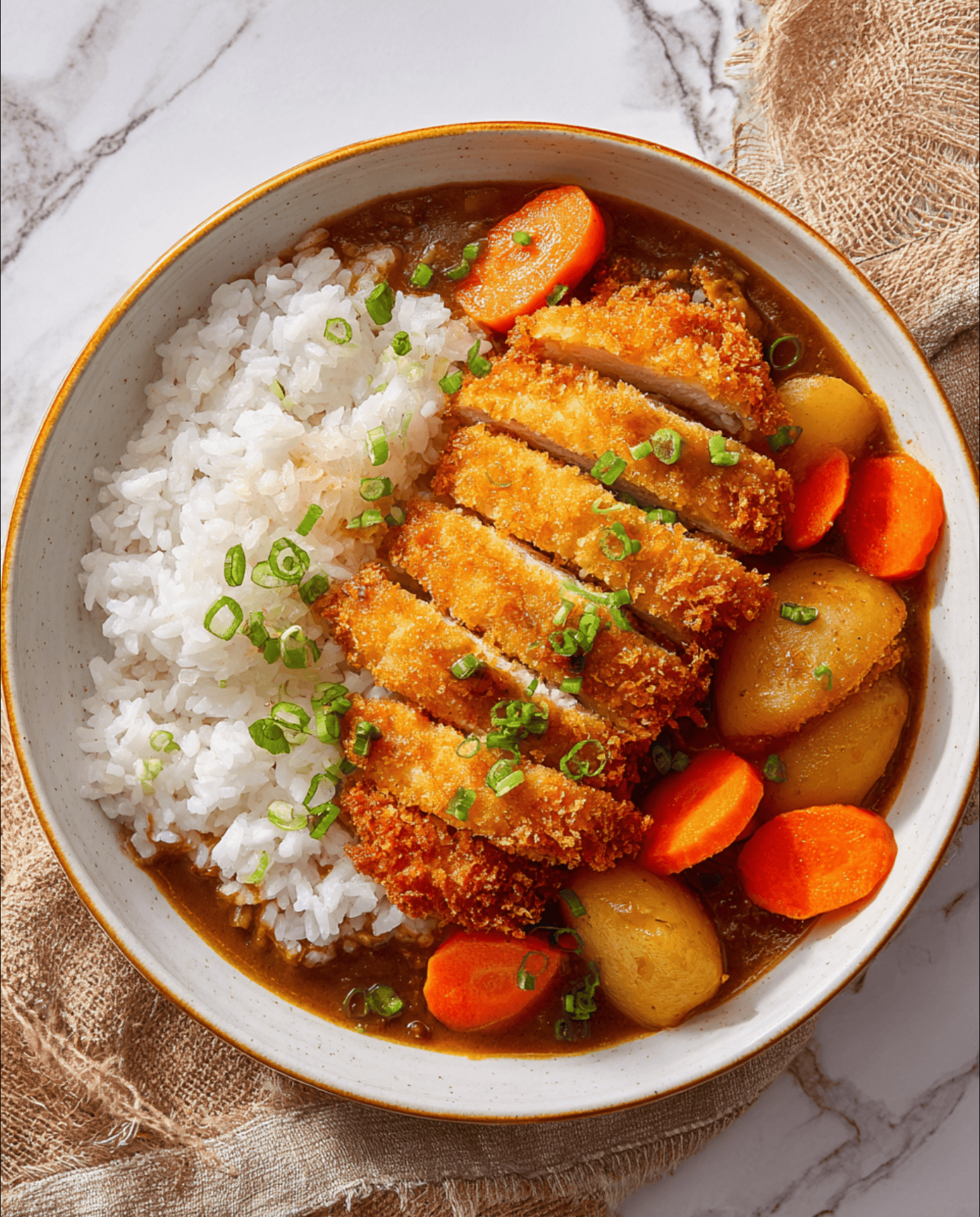
Japanese chicken katsu curry is such a good dinner when you want something a little different but still easy enough to make at home.
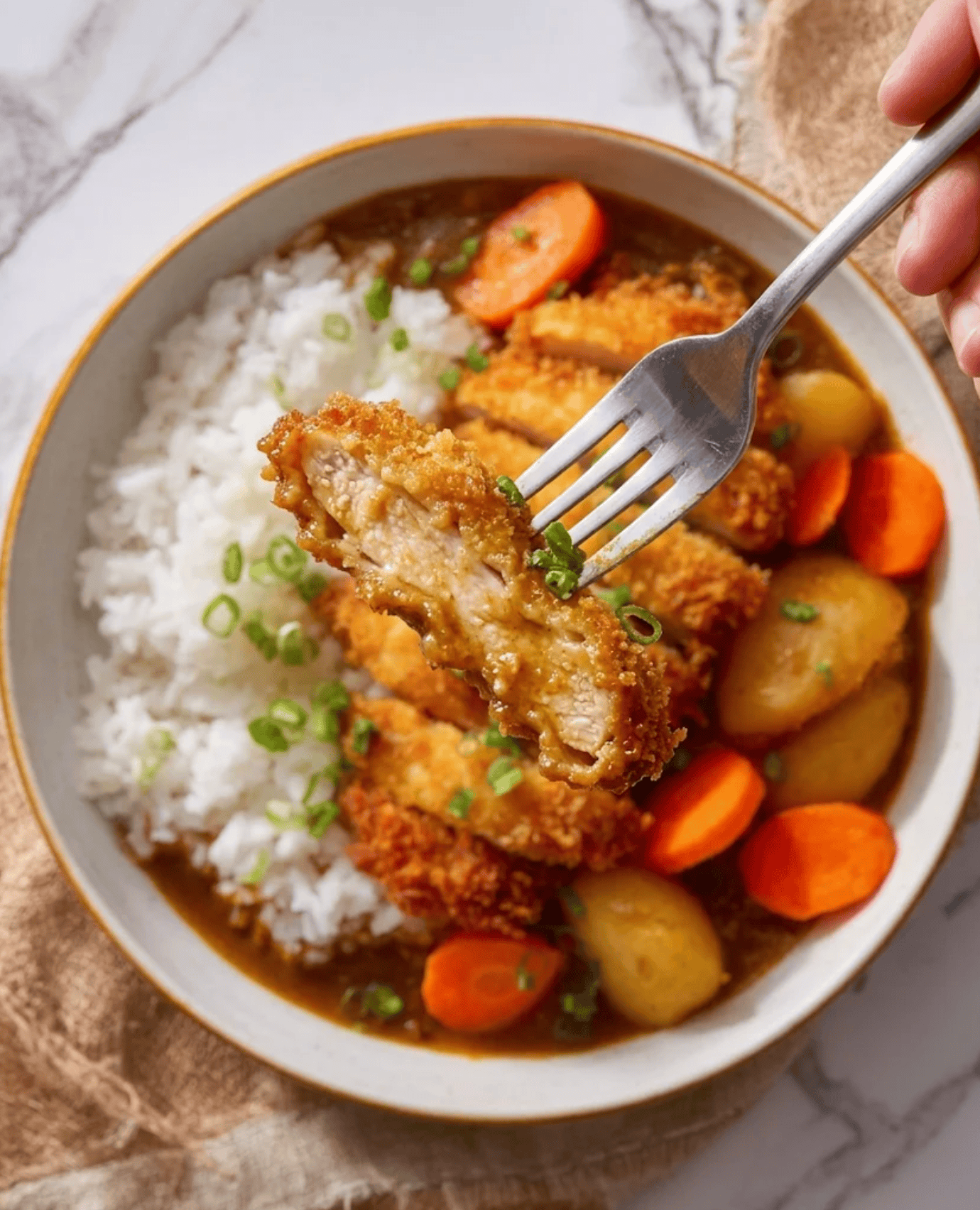
The chicken is coated in breadcrumbs and cooked until crisp and golden, then sliced and served with rice and plenty of curry sauce.
I like the contrast between the crunchy chicken and the smooth sauce because it keeps every bite interesting.
The curry itself is warm, savoury and gently spiced rather than too hot, so it works really well for a family dinner too.
Add some sliced spring onions or pickles on the side if you like, but honestly, the chicken, rice and curry sauce are more than enough.
Simple, filling and definitely worth making again.
What You’ll Need
For the chicken katsu
- 2 large chicken breasts
- Salt, to taste
- Black pepper, to taste
- 60 g plain flour
- 2 large eggs, beaten
- 120 g panko breadcrumbs
- Vegetable oil, for shallow frying
For the curry sauce
- 1 tablespoon vegetable oil
- 1 medium onion, finely chopped
- 2 garlic cloves, finely chopped
- 1 teaspoon grated fresh ginger
- 2 medium carrots, peeled and cut into chunky slices
- 400 g baby potatoes or small potatoes, halved if large
- 700 ml chicken stock
- 1 tablespoon soy sauce
- 1 teaspoon honey or brown sugar
- 1 tablespoon Worcestershire sauce
- 90 to 100 g Japanese curry roux blocks
- Black pepper, to taste
For the rice
- 300 g Japanese short-grain rice or jasmine rice
- Water, according to the rice packet
- Pinch of salt
To finish
- 3 spring onions, finely sliced
Get the Curry Going First
The curry needs a bit more time than the chicken.
That is useful, because the chicken is much nicer when it comes out of the oil close to serving time.
Start with the onions, garlic, and ginger.
Let the onion soften properly before adding the stock.
You are building the base here, so do not rush it.
The potatoes and carrots then simmer right in the curry liquid until tender.
They should still hold their shape.
You want proper chunky pieces in the bowl, not vegetables that have dissolved into the sauce.
How to Make It
Cook the rice
- Rinse the rice under cold water until the water runs mostly clear.
- Cook according to the packet instructions.
- Once done, remove it from the heat and let it sit covered for 10 minutes.
- Fluff gently before serving.
Start the curry
- Heat the vegetable oil in a large saucepan over medium heat.
- Add the chopped onion.
- Cook for 6 to 8 minutes until soft and lightly golden.
- Add the garlic and ginger.
- Cook for about 30 seconds.
- Add the carrots and potatoes.
- Stir for a minute so they pick up some of the onion mixture.
- Pour in the chicken stock.
- Add the soy sauce, honey or brown sugar, Worcestershire sauce, and black pepper.
- Bring to a gentle simmer.
- Cover and cook for about 15 to 20 minutes, until the potatoes and carrots are tender.
Thicken the curry
- Lower the heat.
- Break the Japanese curry roux into pieces.
- Add them gradually to the saucepan.
- Stir until completely melted.
- Let the curry simmer gently for another 5 minutes.
- The sauce should become thick, glossy, and deep brown.
- If it gets too thick, add a splash of stock or water.
Prepare the chicken
- Slice each chicken breast horizontally or pound it gently so the pieces are an even thickness.
- Season with salt and black pepper.
- Put the flour on one plate.
- Put the beaten eggs in a shallow bowl.
- Put the panko breadcrumbs on another plate.
- Coat each piece of chicken in flour.
- Dip into the egg.
- Press firmly into the panko breadcrumbs until fully coated.
Fry the chicken
- Pour enough vegetable oil into a large frying pan to cover the base generously.
- Heat over medium-high heat.
- Add the breaded chicken.
- Fry for about 4 to 5 minutes on each side, depending on thickness.
- The outside should be deeply golden and crisp.
- Transfer to a rack or plate lined with kitchen paper.
- Let the chicken rest for a couple of minutes.
- Slice into thick strips.
Assemble
- Spoon the fluffy white rice into one side of each bowl.
- Add plenty of the Japanese curry sauce with carrots and potatoes.
- Lay the sliced chicken katsu across the curry.
- Scatter chopped spring onions over the top.
- Serve immediately while the chicken is still crisp.
The Chicken Needs to Stay Crisp
This part matters.
Do not fry the chicken and then let it sit in the curry for ten minutes.
The whole point of katsu is that contrast between crisp breadcrumbs and soft curry sauce.
Put the curry into the bowl first.
Then lay the chicken over the top.
That way the bottom edges catch a little sauce, but the top stays crunchy.
Also, use panko breadcrumbs.
They give you that lighter, rougher coating that crisps up much better than fine breadcrumbs.
Press them onto the chicken properly so you get an even crust.
Keep the Curry Thick
The curry should not be watery.
It needs enough body to coat the potatoes, carrots, and chicken.
Japanese curry roux makes that easy.
Once the roux melts into the stock, the sauce thickens quickly.
Keep the heat low at that stage.
You want a gentle simmer.
If the curry gets too thick, loosen it with a splash of stock.
If it feels too thin, let it simmer uncovered for a few more minutes.
The finished sauce should sit around the rice and vegetables rather than running straight across the bowl.
Why the Potatoes and Carrots Matter
The curry is much better with proper chunks of vegetables in it.
The potatoes make it more filling and soak up loads of flavour.
The carrots bring a little sweetness that works really well with the curry roux.
Do not cut them too small.
You want them tender, but still clearly visible.
That gives the bowl more texture and makes it feel like a proper meal instead of just sauce and rice.
The Rice Should Stay Simple
Plain white rice is exactly right here.
Do not overthink it.
The curry has plenty of flavour.
The chicken has seasoning and crunch.
The rice is there to balance everything and soak up the sauce.
Japanese short-grain rice is ideal, but jasmine rice works well too if that is what you have.
The important thing is that it stays fluffy and not overly wet.
Use Japanese Curry Roux
If you want that familiar Japanese curry flavour, roux blocks are the easiest and most reliable way to get it.
They are usually mildly sweet, savoury, and warmly spiced rather than aggressively hot.
You can choose mild, medium, or hot depending on what you like.
I would start with medium.
It gives enough warmth without taking over the bowl.
If you prefer a sweeter curry, add a little extra honey.
For more savoury depth, add another splash of soy.
Can You Bake the Chicken Instead?
Yes.
Place the breaded chicken on a lined baking tray.
Spray or brush lightly with oil.
Bake at 220°C / 200°C fan / 425°F for about 20 to 25 minutes, turning once.
It will not be quite as rich as shallow-fried katsu, but it still works.
An air fryer is another good option.
Cook at around 200°C / 400°F until golden and cooked through.
Make It Ahead
The curry sauce is excellent made ahead.
In fact, it often tastes even better the next day.
Cook the curry, cool it completely, and refrigerate for up to 3 days.
Reheat gently and add a splash of stock if it has thickened too much.
The chicken is best made fresh.
You can bread it ahead of time and keep it refrigerated for a few hours, then fry just before serving.
That way you keep the crisp crust.
Storage
Store leftover curry and rice separately if possible.
Keep them in airtight containers in the fridge for up to 3 days.
The chicken can also be refrigerated, but it will lose some crunch.
Reheat the chicken in the oven or air fryer to bring some of that crispness back.
The curry can be reheated gently on the hob.
Add a little stock or water if needed.
Q&A
Can I use chicken thighs?
Yes.
Boneless chicken thighs work very well and stay especially juicy.
Pound them to an even thickness before breading.
Can I use regular breadcrumbs?
Yes, but panko gives you a lighter, crispier crust.
What does Japanese curry taste like?
It is rich, savoury, gently sweet, and warmly spiced.
It is usually milder than many other curry styles.
Can I make it spicy?
Yes.
Use hot Japanese curry roux or add a little chilli powder or cayenne.
Can I use sweet potato instead of regular potato?
Yes.
It will make the curry slightly sweeter, but it works well.
Why is my curry too thick?
The roux has reduced too much.
Add a splash of stock or water and stir until smooth.
Why is my chicken not crispy?
The oil may not have been hot enough, or the chicken may have been sitting in sauce too long.
Fry until deep golden and serve it over the curry rather than under it.
Can I use pre-cooked chicken?
You can, but you will lose the crisp katsu crust.
Fresh breaded chicken gives the best result.
Can I freeze Japanese curry?
Yes.
The curry freezes well for up to 2 months.
Potatoes may soften slightly after thawing, but the flavour remains good.
What should I serve with it?
The rice, curry, chicken, carrots, and potatoes already make a full meal.
A little pickled ginger or Japanese pickles on the side would also work nicely.