Creamy Cheeseburger Pasta
Ever wish a cheeseburger came with a fork and a bowl instead of a bun?
This creamy cheeseburger pasta gives you all the beefy, cheesy, slightly tangy bits you want, just wrapped around pasta instead.
Have you ever browned ground beef for dinner and then kept adding things until it basically turned into cheeseburger pasta?
That’s the energy here.
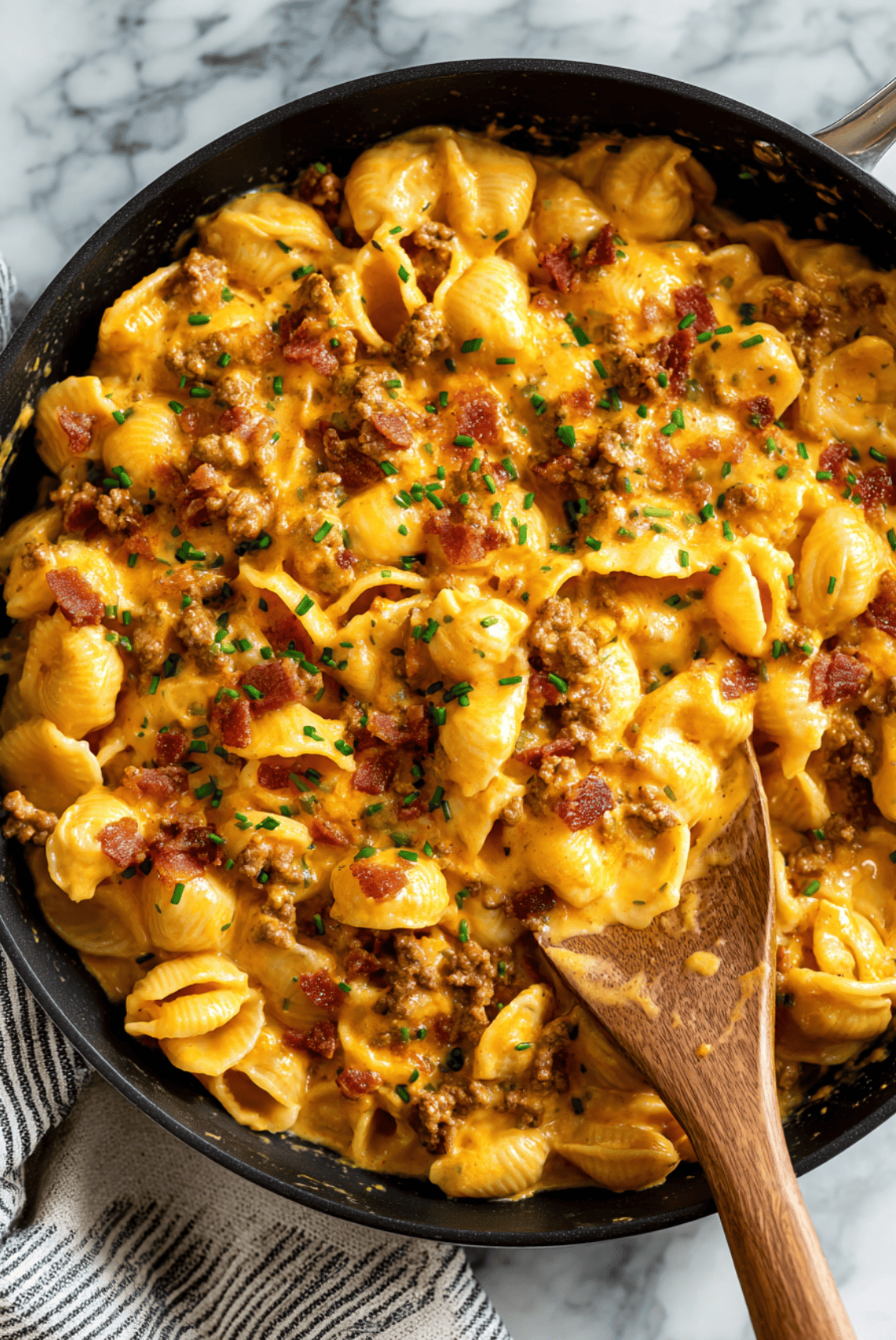
The beef gets cooked with onion and garlic, then a creamy sauce comes together around it with plenty of cheddar and just enough mustard to give it that familiar cheeseburger flavour without making the whole thing taste odd.
The pasta picks up all of it, especially once the cheese melts through and thickens the sauce.
A few chopped pickles on top work brilliantly if you like that sharp little bite, and black pepper is very welcome.
It’s rich, beefy, cheesy, and exactly as comforting as the name sounds.
Why This May Become Your Favorite
- Properly cheesy without turning into a bowl of cheese soup
- Plenty of browned ground beef throughout
- Crispy bacon adds smoky, salty flavour
- Pasta shells catch the sauce beautifully
- Made mostly in one large skillet
- Easy enough for an ordinary weeknight
- Reheats surprisingly well with a splash of milk
What You’ll Need
For the Pasta
- 12 oz / 340 g medium pasta shells
- Salt, for the pasta water
For the Beef and Bacon
- 6 slices streaky bacon, chopped
- 1 lb / 450 g ground beef
- 1 small yellow onion, finely diced
- 3 garlic cloves, minced
- 1 teaspoon smoked paprika
- 1/2 teaspoon onion powder
- 1/2 teaspoon garlic powder
- 1/2 teaspoon black pepper
- 1/2 teaspoon salt, or to taste
For the Cheddar Sauce
- 2 tablespoons butter
- 2 tablespoons plain flour
- 1 1/2 cups / 360 ml whole milk
- 1/2 cup / 120 ml beef stock
- 1 teaspoon Dijon mustard
- 1 teaspoon Worcestershire sauce
- 2 cups / about 200 g mature cheddar, freshly grated
- 2 tablespoons cream cheese
- 1/4 teaspoon smoked paprika
- Black pepper, to taste
To Finish
- 2 tablespoons finely chopped fresh chives
- Reserved crispy bacon
- Extra cheddar, optional
A Few Ingredient Notes Before You Start
Pasta shells
Medium shells are particularly good here because they catch little pockets of beef and sauce.
You can use another short pasta, but shells give you that thick, scoopable texture that suits this dish better than long noodles.
Ground beef
Use beef with a little fat in it.
Very lean beef works, but you lose some of the browned, savoury flavour that makes this taste more like an actual cheeseburger.
Cheddar
A mature or sharp cheddar is worth using.
Mild cheddar can get lost once the beef, bacon and seasoning go in.
Grate it yourself if possible. Pre-shredded cheese often contains anti-caking agents that can make a cream sauce slightly grainy.
How to Make Creamy Cheeseburger Pasta
1. Cook the pasta
- Bring a large pot of salted water to a boil.
- Add the pasta shells.
- Cook until just al dente according to the packet instructions.
- Before draining, reserve about 1 cup of the pasta water.
- Drain and set aside.
Do not overcook the shells.
They will spend another few minutes in the hot sauce later, and you want them tender rather than collapsing.
2. Crisp the bacon
- Place the chopped bacon in a large skillet over medium heat.
- Cook for 6 to 8 minutes, stirring occasionally, until browned and crisp.
- Transfer the bacon to a plate lined with kitchen paper.
- Leave about 1 tablespoon of bacon fat in the skillet.
Keep some of the crispest bacon aside for the top.
That final scattering gives the finished pasta much more texture.
3. Brown the beef properly
- Increase the heat to medium-high.
- Add the ground beef to the bacon fat.
- Spread it across the pan and leave it alone for a minute or two before breaking it apart.
- Cook until browned, about 5 to 7 minutes.
- Drain excess grease if there is a lot in the pan.
Try not to stir constantly.
Giving the beef time against the hot skillet creates darker browned pieces, and those taste far better than beef that has simply steamed.
4. Add the onion and seasoning
- Add the diced onion to the beef.
- Cook for 3 to 4 minutes until softened.
- Stir in the garlic.
- Add smoked paprika, onion powder, garlic powder, black pepper and salt.
- Cook for another 30 seconds.
5. Remove the beef
- Transfer the seasoned beef mixture to a bowl.
- Keep the same skillet on the heat.
You could make the sauce directly around the beef, but removing it briefly makes it much easier to get a smooth cheddar sauce.
6. Start the cheese sauce
- Reduce the heat to medium.
- Add the butter to the skillet.
- Once melted, sprinkle in the flour.
- Whisk continuously for about 1 minute.
You are looking for a smooth paste with no dry flour left.
Do not let it brown heavily.
7. Add the liquids
- Slowly pour in the milk while whisking.
- Add the beef stock.
- Stir in the Dijon mustard and Worcestershire sauce.
- Let the mixture gently bubble for 2 to 3 minutes until it begins to thicken.
It should coat the back of a spoon but still be loose at this point.
8. Melt in the cheddar
- Turn the heat to low.
- Add the cheddar a handful at a time.
- Stir after each addition until melted before adding more.
- Stir in the cream cheese and smoked paprika.
- Add black pepper to taste.
Keep the heat low once the cheese goes in.
Boiling cheese sauce aggressively is one of the easiest ways to make it split or turn grainy.
9. Bring everything together
- Return the browned beef to the skillet.
- Add about three-quarters of the cooked bacon.
- Stir everything through the cheddar sauce.
- Add the drained pasta shells.
- Fold gently until every shell is coated.
Let it cook together over low heat for 1 to 2 minutes.
If the sauce becomes thicker than you want, add reserved pasta water a tablespoon or two at a time.
10. Finish the pasta
- Remove the skillet from the heat.
- Sprinkle over the remaining crispy bacon.
- Add plenty of chopped chives.
- Grind over a little extra black pepper.
- Serve immediately.
Getting That Thick, Glossy Sauce Right
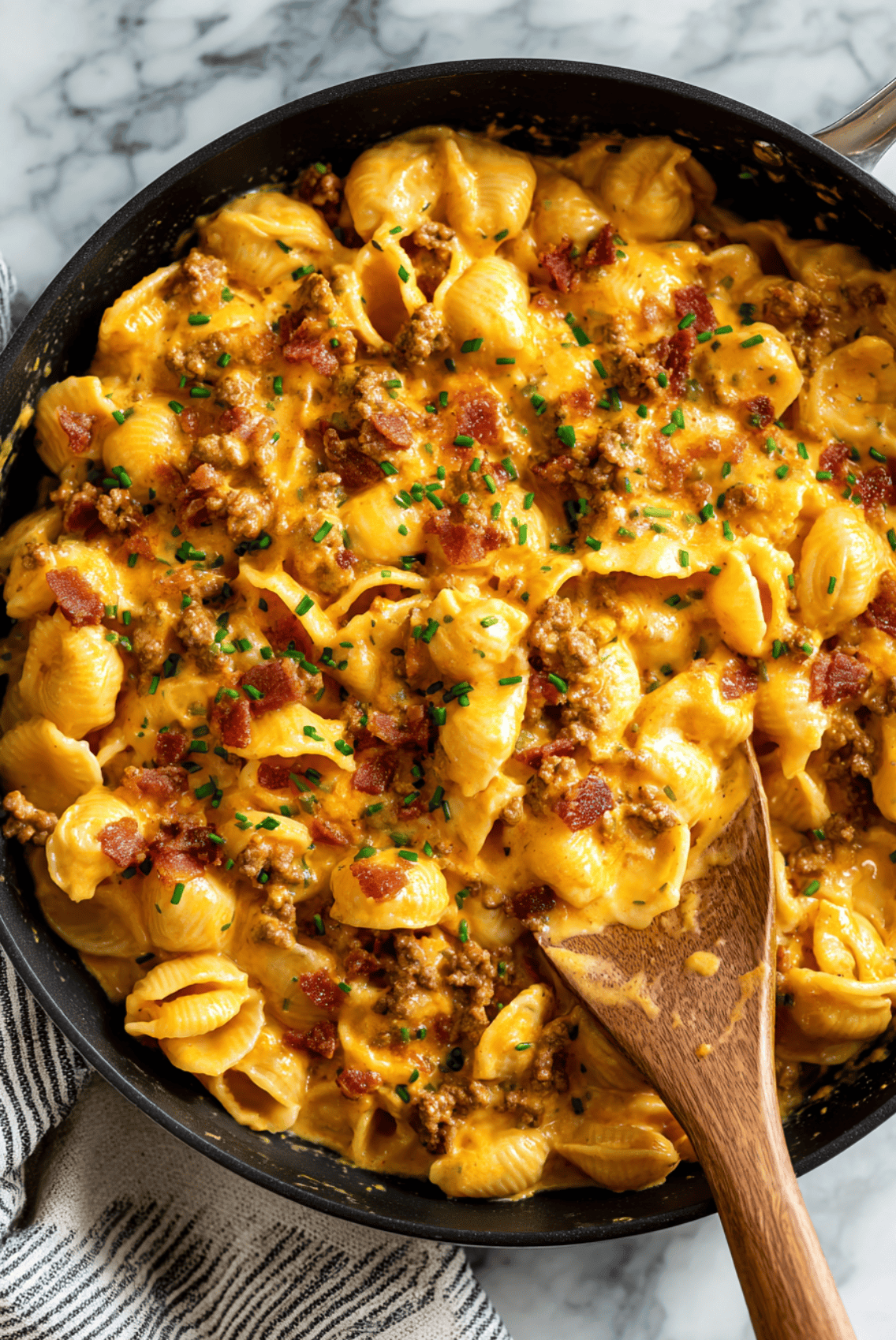
The sauce here should be creamy enough to cling to the shells.
It should not be thin enough to collect as a puddle underneath them.
It will also continue thickening once you take the skillet off the heat, especially because both the pasta and cheese absorb moisture.
That is why the reserved pasta water matters.
If the pan starts looking a little too tight, loosen it before serving rather than adding more cream or cheese.
Why Worcestershire Sauce Works So Well Here
A small amount gives the beef a deeper savoury flavour without making the pasta taste obviously of Worcestershire sauce.
It is especially useful in a dish like this because it gives the sauce some of the tangy, savoury character you expect from a cheeseburger.
The Dijon does something similar.
Neither ingredient should dominate.
They just stop the cheddar sauce from tasting flat.
Make It Taste More Like a Cheeseburger
You can take the cheeseburger idea further, but I would keep the additions restrained.
A few good options are:
- Finely chopped dill pickles stirred through just before serving
- A spoonful of pickle juice added to the sauce
- A small squirt of yellow mustard
- Diced fresh tomatoes scattered on top
- Extra crispy bacon
- A little extra sharp cheddar
I would not throw all of them in at once.
The beef, bacon and cheddar should still be the main flavours.
What to Serve With It
This pasta is rich enough that something green alongside it works particularly well.
Try:
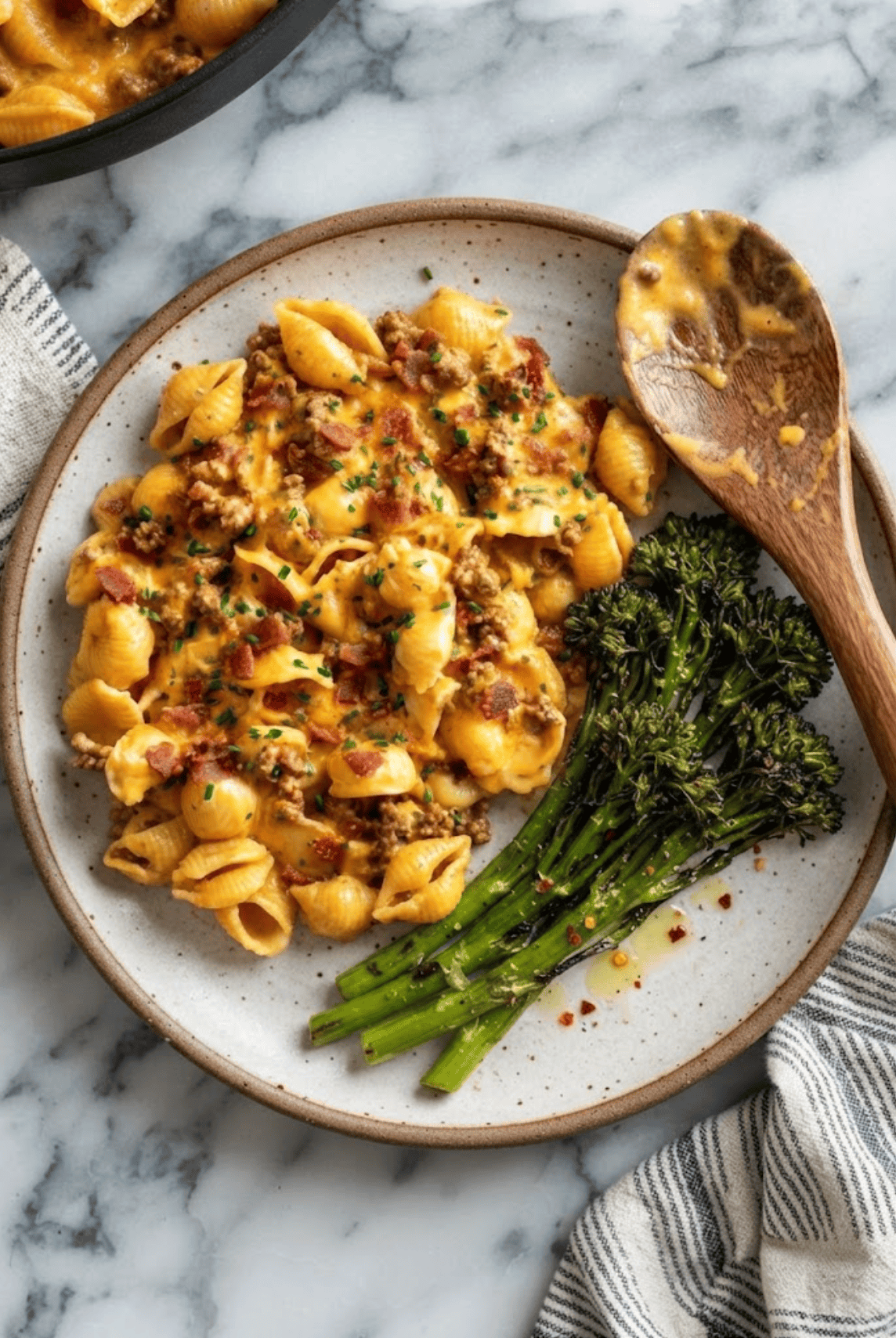
- Roasted tenderstem broccoli
- Steamed green beans
- Simple garden salad
- Roasted broccoli
- Garlic green beans
- Crisp cucumber salad
Tenderstem broccoli with a little olive oil, chilli and black pepper is especially good next to it.
Can You Make It Ahead?
You can, although the sauce is at its creamiest when freshly made.
If you need to prepare dinner ahead:
- Cook the pasta slightly under al dente.
- Make the beef and sauce as directed.
- Combine everything.
- Cool and refrigerate in an airtight container.
- Reheat gently with a splash of milk.
Do not blast it over high heat when reheating.
Cheddar sauce prefers patience.
Storing Leftovers
Keep leftovers refrigerated in an airtight container for up to 3 days.
The pasta will absorb more of the sauce overnight, so it will look thicker the next day.
Add a splash of milk before reheating and stir gently until creamy again.
Frequently Asked Questions
Can I use another pasta shape?
Yes.
Rigatoni, penne, fusilli or macaroni all work.
Shells are my favourite here because they trap the beef and sauce inside.
Can I leave out the bacon?
Absolutely.
The pasta will still work as a creamy cheeseburger pasta without it.
You may want to brown the beef in a little olive oil or butter instead.
Can I use pre-shredded cheddar?
You can, but freshly grated cheese generally melts more smoothly.
For a really creamy sauce, grating a block of cheddar yourself is worth the extra couple of minutes.
Why did my cheese sauce turn grainy?
The heat was probably too high when the cheese was added.
Take the pan down to low before stirring in the cheddar and avoid boiling the sauce afterward.
Can I freeze cheeseburger pasta?
Technically yes, but creamy cheese sauces can change texture after freezing.
I prefer refrigerating leftovers and eating them within a few days.
Can I make it spicy?
Yes.
Add cayenne, chilli flakes or a little hot sauce to the beef.
You can also use pepper jack alongside the cheddar.
Final Thoughts
There is nothing delicate about a skillet full of beef, bacon, cheddar and pasta shells, and that is exactly the point.
The beef gives the sauce plenty of savoury flavour, while those crisp bacon pieces stop each bite from feeling completely soft and creamy.
The shells end up coated in thick golden cheddar sauce with little bits of beef tucked inside them, and the fresh chives cut through all that richness just enough.
Serve it hot, preferably with something green on the side, and make sure you get some of that reserved crispy bacon over your own bowl before everyone else gets to it.