Creamy Coconut Chicken
Have you ever opened a tin of coconut milk with no real dinner plan and somehow ended up making something really good?
This creamy coconut chicken is rich, garlicky and full of flavour, with a sauce you’ll want plenty of rice for.
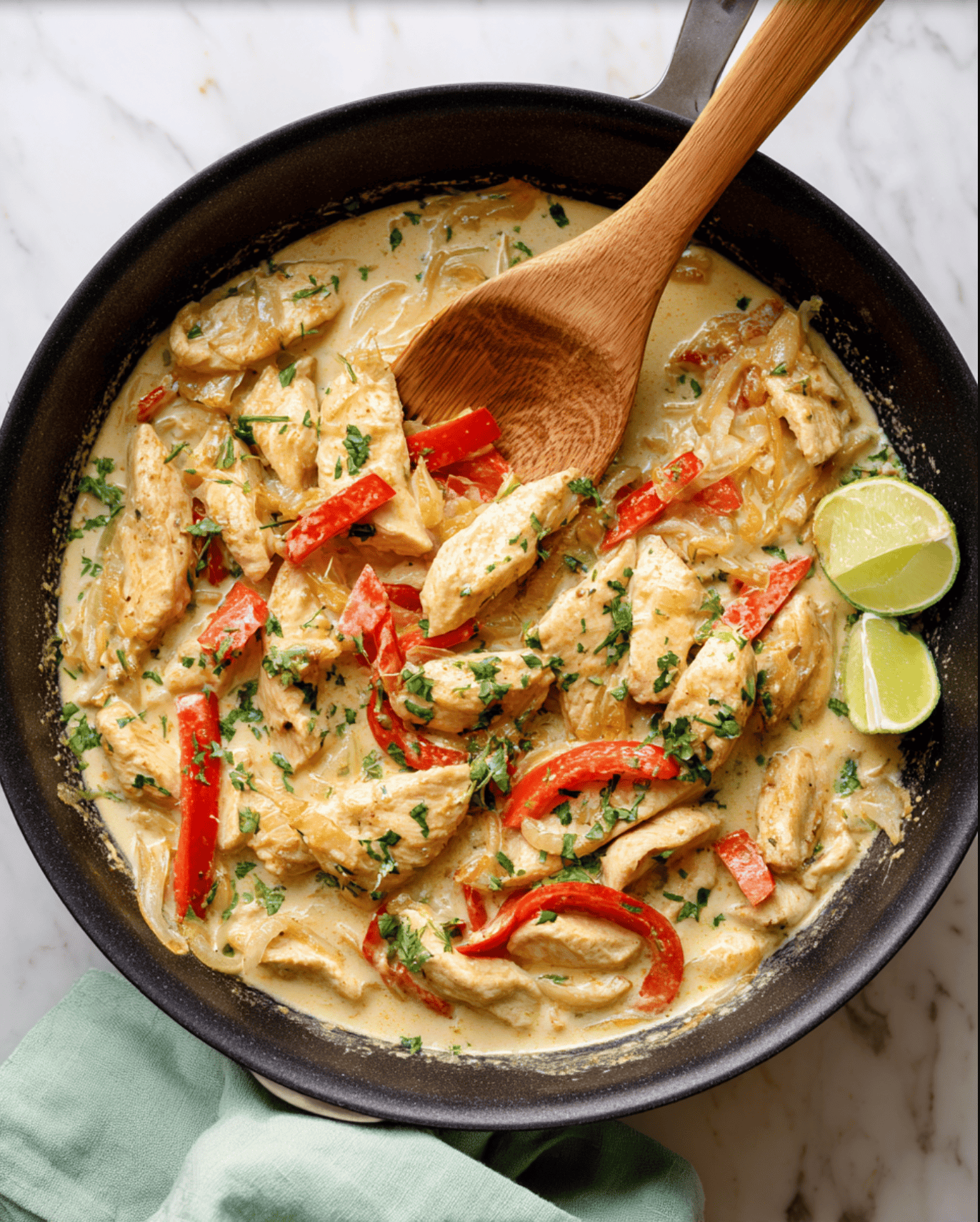
The sauce is what makes this one worth making.
Coconut milk gives it that smooth, creamy texture, but it still has enough garlic, seasoning and spice going on that it doesn’t taste flat or overly sweet.
The chicken cooks right in the sauce, so by the time everything is ready it has picked up loads of flavour and stays nice and tender.
I usually keep the sides simple and serve it with rice because that sauce needs something to soak into.
A little lime or fresh herbs at the end is nice too, especially if you want to brighten it up a bit.
It’s easy, cosy, and exactly the sort of dinner I’d happily make again when I want something creamy without using actual cream.
What You’ll Need
For the chicken
- 650 g boneless skinless chicken breasts
- 1 tablespoon olive oil
- 1 teaspoon paprika
- 1/2 teaspoon garlic powder
- 1/2 teaspoon salt
- 1/4 teaspoon black pepper
For the coconut cream sauce
- 1 tablespoon butter
- 1 large onion, thinly sliced
- 1 large red bell pepper, sliced
- 3 garlic cloves, finely chopped
- 1 teaspoon grated fresh ginger
- 1 teaspoon ground cumin
- 1/2 teaspoon chilli flakes, optional
- 300 ml coconut cooking cream
- 120 ml chicken stock
- Zest of 1 lime
- 2 tablespoons fresh lime juice
- Salt and black pepper, to taste
- Small handful of fresh coriander, roughly chopped
About the Coconut Cream
Use coconut cooking cream rather than the really thick solid coconut cream sold for desserts.
You want something that loosens into a silky sauce rather than sitting in the pan like coconut frosting.
Full-fat coconut milk also works, although the finished sauce will be a little thinner.
And yes, you can reduce it.
Just let it simmer gently rather than attacking it with maximum heat.
Coconut-based sauces can split if you really bully them.
Nobody needs that drama at six-thirty on a Tuesday.
How to Make It
Brown the chicken
- Slice the chicken breasts into thick strips.
- Pat them dry with kitchen paper.
- Season with paprika, garlic powder, salt and black pepper.
- Heat the olive oil in a large frying pan over medium-high heat.
- Add the chicken in a single layer.
- Cook for 5 to 7 minutes, turning as needed, until golden on the outside and almost cooked through.
- Transfer the chicken to a plate.
Soften the onions and peppers
- Reduce the heat to medium.
- Add the butter to the same pan.
- Add the sliced onion and red pepper.
- Cook for 7 to 9 minutes, stirring occasionally, until both are soft and the onions have started to turn golden.
- Add the garlic, ginger, cumin and chilli flakes.
- Cook for another 30 to 45 seconds.
Build the sauce
- Pour in the chicken stock.
- Scrape the bottom of the pan with a wooden spoon to loosen any browned bits.
- Add the coconut cooking cream.
- Stir in the lime zest.
- Bring the sauce to a gentle simmer.
- Cook for 3 to 4 minutes, until it begins to thicken slightly.
Finish the chicken in the sauce
- Return the chicken and any juices on the plate to the pan.
- Turn the strips gently in the sauce.
- Simmer for another 4 to 5 minutes, or until the chicken is cooked through and the sauce is silky and slightly thickened.
- Stir in the fresh lime juice.
- Taste and adjust the salt and black pepper.
- Scatter over plenty of chopped coriander just before serving.
Let the Onion Actually Soften
I know seven or eight minutes feels like an eternity when you are hungry and staring at a pan.
Still worth it.
The onion should not have that raw crunch left.
It needs to soften enough that it almost becomes part of the sauce.
The red pepper can keep a little more structure.
You want tender strips, not red mush.
That mix of very soft onion and slightly firmer pepper is much nicer to eat and looks better in the finished pan too.
Lime Goes In at the End for a Reason
I add the zest while the sauce simmers but save most of the juice until the end.
Fresh lime juice loses some of its brightness if you boil it for ages.
Adding it after the chicken has finished cooking gives you that clean, fresh flavour right when you need it.
It also stops the coconut cream from tasting too sweet.
Taste after adding the lime.
Sometimes one lime is plenty.
Sometimes you squeeze a second wedge in and suddenly everything clicks.
Cooking is rude like that.
It refuses to obey exact numbers all the time.
Getting Chicken Breast Right
Chicken breast does not need a long simmer.
It really does not.
The easiest way to keep it juicy is to brown it first, remove it before it is completely finished, then let it cook through gently in the sauce.
That gives you colour without drying it out.
If your strips are thin, start checking them early.
If they are thicker, they may need an extra couple of minutes.
The chicken should be opaque through the centre and reach 75°C / 165°F at the thickest part.
And no, simmering it for another fifteen minutes “just to be safe” is not safer for your dinner.
It is just how chicken becomes depressing.
The Sauce Should Coat the Chicken
This is not meant to be coconut soup.
The sauce should be thick enough to cling to the chicken strips and peppers but still loose enough to spoon over rice.
If it seems too thin, remove the chicken once it is cooked and let the sauce simmer alone for another couple of minutes.
If it gets too thick, add a splash of stock.
Very fixable.
No need to panic and throw flour into it at the last second.
That is how mysterious lumps enter the chat.
What to Serve With It
Rice is the obvious answer and, frankly, the correct one.
Plain basmati or jasmine rice works perfectly because the sauce has enough flavour already.
You could also serve it with:
- Coconut rice
- Steamed broccoli
- Green beans
- Flatbread
- Roasted sweet potatoes
I would keep the sides fairly simple.
This sauce deserves something quiet enough to soak it up.
A Little Heat Is Nice, but Not Essential
The version here is mild unless you add the chilli flakes.
That works well because the lime and coconut stay front and centre.
If you want more heat, sliced fresh red chilli on top would be brilliant.
You could also add a teaspoon of chilli paste with the garlic.
Just do not go so far that the coconut and lime vanish underneath it.
This is creamy coconut chicken, not an endurance event.
Fresh Coriander Really Finishes It
I would not skip the coriander unless you genuinely dislike it.
The fresh herbal flavour works beautifully with the lime and coconut cream.
Add it right at the end.
Do not simmer it for ten minutes until it goes dark and sad.
A generous handful scattered over the finished pan gives you much more flavour.
Also, it makes the whole dinner look like you had a plan.
Useful.
Make-Ahead Notes
You can slice the vegetables and chicken earlier in the day and keep them covered in the fridge.
The full dish can also be made ahead and reheated gently.
If the sauce thickens in the fridge, add a little chicken stock or coconut cream when reheating.
Warm it slowly over medium-low heat.
Do not boil it aggressively.
The chicken has already done its shift.
There is no reason to send it back in for overtime.
Leftovers
Store leftovers in an airtight container in the fridge for up to 3 days.
Reheat until piping hot throughout.
The sauce may look thicker after chilling because coconut cream firms up when cold.
That is completely normal.
Once warmed, it loosens again.
A squeeze of fresh lime over leftovers is also a very good idea because reheating can soften some of that bright citrus flavour.
Q&A
Can I use chicken thighs instead?
Yes.
Boneless chicken thighs are excellent here and stay very juicy.
Cut them into strips and give them a little longer to brown.
Can I use coconut milk instead of coconut cooking cream?
Yes.
Use full-fat coconut milk if possible.
The sauce will be thinner, so you may need to simmer it for a few extra minutes.
Is this dish sweet?
Not really.
Coconut has a natural sweetness, but the lime, garlic, stock and seasoning keep the sauce firmly savoury.
Can I leave out the ginger?
Yes.
It adds warmth, but the dish will still taste good without it.
What can I use instead of coriander?
Flat-leaf parsley works if you dislike coriander.
The flavour will be different, but it still gives the dish a fresh finish.
Can I add more vegetables?
Yes.
Spinach would be especially easy because you can stir it through right at the end.
Tenderstem broccoli or sugar snap peas would also work.
Can I freeze it?
Yes, although coconut sauces can occasionally separate slightly after freezing.
Cool completely, freeze in an airtight container and thaw overnight in the fridge.
Reheat gently and stir well.
Why did my sauce split?
The heat was probably too high.
Keep coconut cream at a gentle simmer rather than a hard boil.
Can I make it spicier?
Definitely.
Add more chilli flakes, fresh red chilli or a spoonful of chilli paste.
Taste as you go because it is much easier to add heat than remove it.
Can I make this without stock?
Yes.
Use water instead and season the sauce a little more generously.
Chicken stock simply gives the sauce more savoury depth.