Creamy Coconut Curry Shrimp Pasta
Looking for something creamy, spicy and easy for dinner tonight?
This coconut curry shrimp pasta is packed with juicy shrimp, red peppers, fresh chilli and a rich coconut curry sauce that coats every strand of pasta.
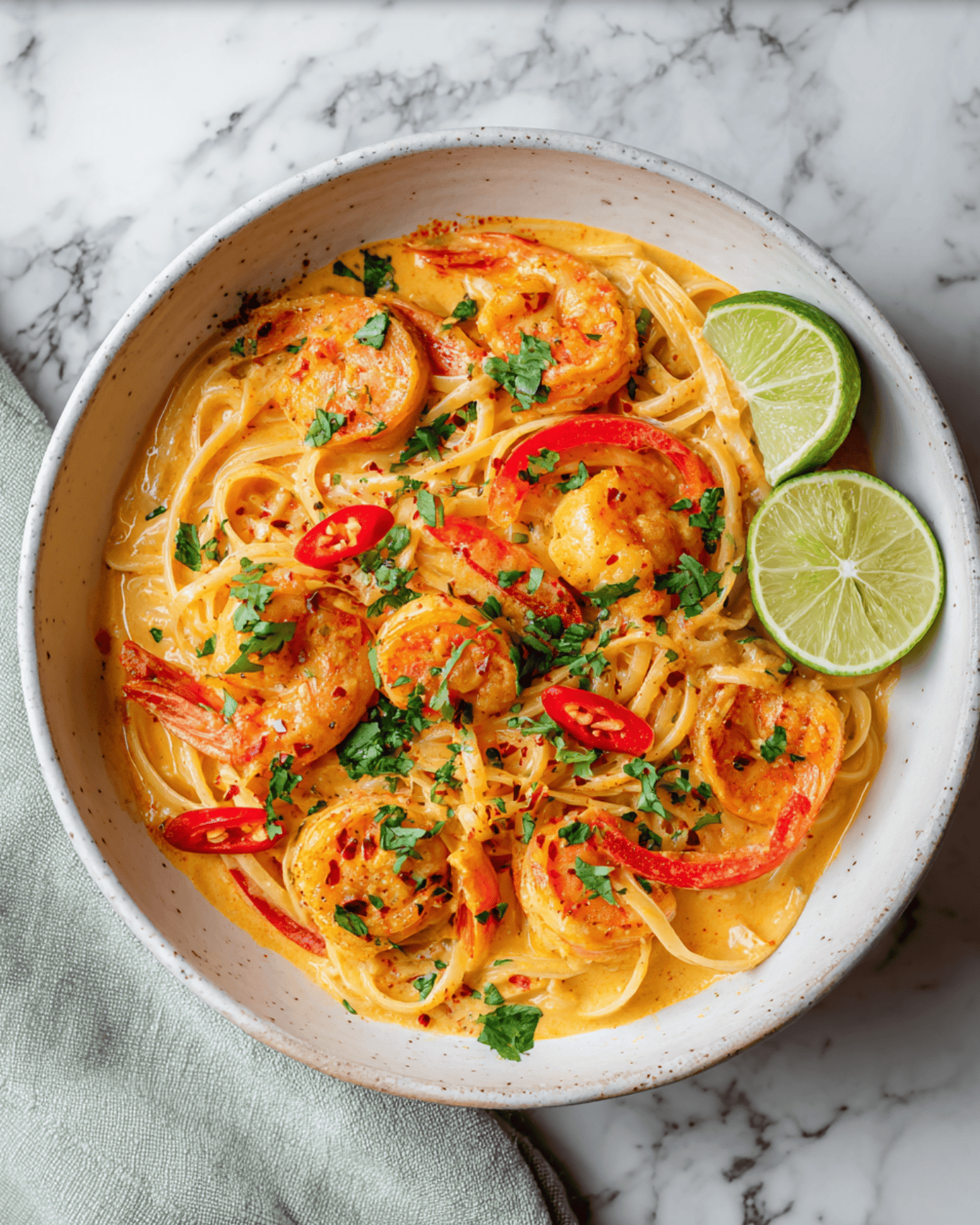
This is a really good dinner when you want something creamy but still full of fresh, punchy flavour.
The shrimp cook quickly, then get tossed through spaghetti with red peppers and a smooth coconut curry sauce.
I like adding fresh chilli because it gives the dish a bit of heat without taking over, while the coconut milk keeps the sauce creamy and mellow.
A squeeze of lime at the end makes a big difference too and works really well with the curry and shrimp.
Finish it with plenty of fresh coriander and serve it straight away while the pasta is still hot and saucy.
It’s quick, filling and a nice change from the usual creamy pasta dinner.
What You’ll Need
For the shrimp
- 450 g large raw shrimp, peeled and deveined
- 1 tablespoon olive oil
- 1 teaspoon curry powder
- 1/2 teaspoon smoked paprika
- 1/2 teaspoon garlic powder
- 1/2 teaspoon salt
- 1/4 teaspoon black pepper
For the pasta
- 350 g spaghetti
- Salt, for the pasta water
For the coconut curry sauce
- 1 tablespoon butter
- 1 tablespoon olive oil
- 1 small onion, finely chopped
- 3 garlic cloves, finely minced
- 1 teaspoon fresh ginger, grated
- 1 red bell pepper, thinly sliced
- 1 tablespoon tomato paste
- 1 1/2 tablespoons mild or medium curry powder
- 1/2 teaspoon turmeric
- 1/2 teaspoon paprika
- 1/4 teaspoon chilli flakes, optional
- 400 ml full-fat coconut milk
- 120 ml chicken or vegetable stock
- 1 teaspoon brown sugar or honey
- 1 tablespoon soy sauce
- Juice of 1/2 lime
- Salt and black pepper, to taste
To finish
- Small handful fresh coriander, roughly chopped
- 1 fresh red chilli, thinly sliced
- Lime wedges
Get the Pasta Water Going First
This recipe moves fairly quickly once the shrimp hit the pan.
So get a large pot of salted water boiling before you start messing around with the sauce.
Cook the spaghetti until just al dente.
You want it tender but still with enough bite to survive another couple of minutes in the curry sauce.
Before draining it, save about a mugful of pasta water.
I know everyone says that.
There is a reason everyone says it.
That starchy water is ridiculously useful when a creamy sauce needs loosening without becoming watery.
How to Make It
Cook the spaghetti
- Bring a large pot of generously salted water to the boil.
- Add the spaghetti.
- Cook until just al dente according to the packet instructions.
- Reserve about 200 ml of pasta water.
- Drain the spaghetti and set it aside.
Season the shrimp
- Pat the shrimp dry with kitchen paper.
- Add them to a bowl with the olive oil, curry powder, smoked paprika, garlic powder, salt, and black pepper.
- Toss until evenly coated.
Sear the shrimp
- Heat a large deep frying pan over medium-high heat.
- Add the shrimp in a single layer.
- Cook for about 1 to 2 minutes on the first side.
- Turn and cook for another minute until lightly golden and almost cooked through.
- Transfer the shrimp to a plate.
- Do not keep cooking them while you make the sauce.
Build the curry sauce
- Lower the heat to medium.
- Add the butter and olive oil to the same pan.
- Add the chopped onion.
- Cook for 3 to 4 minutes until softened.
- Add the sliced red pepper.
- Cook for another 3 minutes so it softens slightly while keeping some shape.
- Add the garlic and ginger.
- Cook for about 30 seconds.
- Stir in the tomato paste, curry powder, turmeric, paprika, and chilli flakes if using.
- Cook for 1 minute, stirring constantly.
- Pour in the coconut milk and stock.
- Add the brown sugar or honey and soy sauce.
- Stir well.
- Let the sauce simmer gently for 4 to 5 minutes.
Bring everything together
- Add the cooked spaghetti directly to the curry sauce.
- Toss until every strand is coated.
- Add a splash of reserved pasta water if the sauce needs loosening.
- Return the shrimp to the pan.
- Toss gently for about 1 minute, just until the shrimp are hot and fully cooked.
- Squeeze in the lime juice.
- Taste and adjust the salt and black pepper.
- Spoon into bowls.
- Finish with chopped coriander, sliced red chilli, and lime wedges.
The Sauce Should Be Silky, Not Thick Like Curry Paste
The sauce needs enough body to coat the spaghetti, but it should still move around the pan.
Coconut milk naturally thickens as it simmers, and the pasta brings starch with it, so things can tighten up surprisingly fast.
If that happens, add a little pasta water.
A tablespoon or two at a time is plenty.
You want the spaghetti glossy and coated, with some creamy sauce still sitting naturally around it.
The finished colour should be warm golden-orange rather than pale cream.
That comes from the curry powder, turmeric, paprika, and tomato paste working together.
Keep the Red Peppers Visible
Do not cook the red pepper until it collapses into the sauce.
It should stay bright and slightly firm.
Those thin red strips give you little sweet bites against the creamy coconut curry.
They also make the bowl much more interesting than one uninterrupted sea of orange sauce.
I like adding them before the garlic and spices so they get a few minutes to soften but still stay recognisable.
Shrimp Do Not Need Your Patience
Shrimp need the opposite.
They need you to pay attention and then leave them alone.
Cook them quickly, take them out, make the sauce, then add them back right at the end.
That keeps them juicy.
Leaving shrimp simmering in coconut sauce while you finish the pasta is an excellent way to spend good money making seafood unnecessarily chewy.
Once they turn pink and opaque, their work is basically done.
Coconut Milk Needs Something Sharp
Coconut milk is creamy and slightly sweet.
That is lovely, but without something acidic it can start tasting a bit flat.
Lime fixes that immediately.
Add it at the end rather than simmering it for ages.
You get a fresher, brighter flavour and it makes the curry spices taste more lively too.
I like serving extra lime wedges with the pasta because some people want considerably more lime than others.
I am usually one of those people.
Curry Powder Is Doing the Heavy Lifting
Use a curry powder you already enjoy.
That sounds obvious, but there can be a huge difference between blends.
Some are earthy and mild.
Some are quite spicy.
Some are heavy on turmeric.
Start with the amount in the recipe and adjust from there.
This pasta should have a proper curry flavour, but it should still taste creamy and balanced rather than like someone emptied the spice cupboard into dinner.
Why Soy Sauce Works Here
It is only a small amount.
You are not making the sauce taste like soy.
It adds salt and savoury depth, which is especially helpful because coconut milk can soften stronger flavours.
That little bit of soy makes the sauce taste fuller without making the recipe more complicated.
It is one of those ingredients you might not immediately identify in the finished dish, but you would notice if it were missing.
Fresh Coriander Belongs at the End
Do not cook all the coriander into the sauce.
You want it fresh.
Scatter it over the finished pasta so you get those little green, citrusy herbal bites between the richer forkfuls.
The red chilli works the same way.
It is not just there to make the bowl look pretty.
Those fresh slices add a sharper kind of heat than the dried spices in the sauce.
If you do not want much heat, remove the seeds first or simply use fewer slices.
How Spicy Is It?
As written, it is warm rather than aggressively hot.
The curry powder brings spice, while the optional chilli flakes and fresh chilli take care of the heat.
For a mild version, leave out the chilli flakes and use very little fresh chilli.
For something hotter, increase both.
I would still keep the lime and coconut milk balanced because that creamy-spicy contrast is what makes the pasta so good.
Make It Ahead
The curry sauce can be made a day ahead.
Cool it, refrigerate it, then reheat gently before adding freshly cooked spaghetti and shrimp.
I would not cook the shrimp ahead unless absolutely necessary.
They take so little time that making them fresh gives you a much better texture.
The red peppers can be sliced and the garlic, ginger, coriander, and chilli can all be prepped earlier in the day.
That makes the actual dinner come together very quickly.
Storage
Keep leftovers in an airtight container in the fridge for up to 2 days.
Reheat gently in a pan with a splash of coconut milk, stock, or water.
The pasta will absorb some of the sauce overnight, so it usually needs a little liquid to loosen it again.
Try not to overheat the shrimp while reheating.
Once they are hot, stop.
They have already done enough.
Q&A
Can I use light coconut milk?
Yes.
The sauce will be thinner and not quite as rich, but it will still work.
Full-fat coconut milk gives the closest result to the creamy sauce here.
Can I use another pasta?
Yes.
Linguine, fettuccine, or tagliatelle would all work.
Spaghetti gives you the closest texture to this version.
Can I use cooked shrimp?
You can.
Skip the searing step and add them during the final minute, just long enough to heat through.
Can I use chicken instead?
Yes.
Thinly sliced chicken breast or chicken thigh would work with the same coconut curry sauce.
Can I leave out the red pepper?
You can, but it adds sweetness, colour, and texture.
I would keep it if possible.
What can I use instead of coriander?
Fresh parsley works if you dislike coriander.
It changes the flavour slightly but still adds freshness.
Why is my sauce too thick?
The pasta has probably absorbed more liquid than expected.
Add reserved pasta water or a splash of stock until the consistency loosens.
Can I make this without cream?
There is no dairy cream needed here.
The creamy texture comes from full-fat coconut milk.
Can I add vegetables?
Yes.
Spinach or sugar snap peas would work nicely, but keep the additions fairly light so the shrimp, red pepper, and coconut curry sauce remain the focus.
Can I make this extra limey?
Absolutely.
Add a little more fresh lime juice right before serving and put extra wedges on the table.