Creamy Garlic Shrimp and Butter Beans
Looking for something quick, creamy and really tasty for dinner tonight?
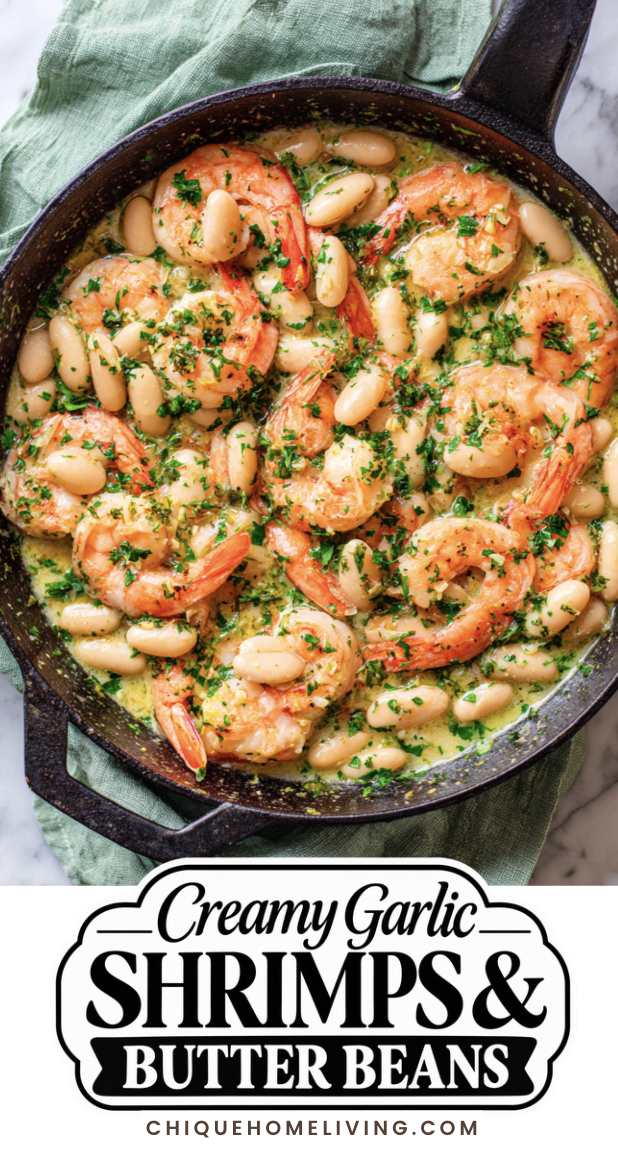
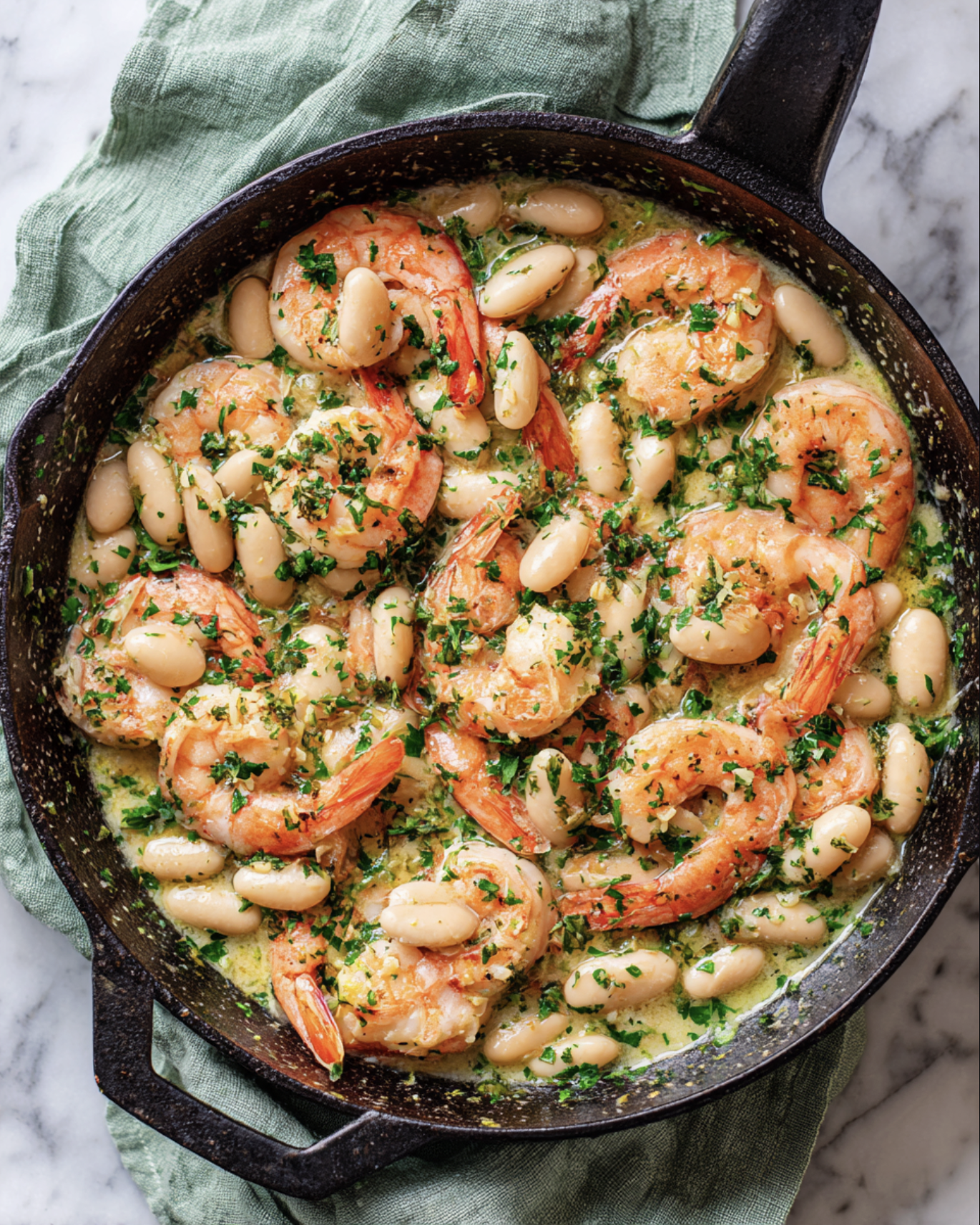
This creamy garlic shrimp and butter beans recipe comes together easily and is packed with plenty of garlicky flavour.
Need an easy dinner that feels comforting but doesn’t take much effort?
Creamy garlic shrimp and butter beans is a great one to make on a busy evening.
The shrimp cook quickly, while the butter beans make the dish more filling and work really well with the creamy garlic sauce.
It’s rich without being too heavy, and you only need a few simple ingredients to make the whole thing taste good.
I like serving it with crusty bread so you can scoop up the extra sauce, but rice works just as well if you want something a little more substantial.
Add a little lemon and fresh herbs at the end and dinner is ready.
Simple, cosy and full of flavour.
What You’ll Need
- 450 g large raw shrimp, peeled and deveined
- 2 x 400 g tins butter beans, drained and rinsed
- 1 tablespoon olive oil
- 2 tablespoons butter, divided
- 5 garlic cloves, finely chopped
- 250 ml cooking cream
- 100 ml chicken or vegetable stock
- Zest of 1 lemon
- 1 tablespoon fresh lemon juice
- 1/2 teaspoon chilli flakes, optional
- 1/2 teaspoon black pepper
- Salt, to taste
- 3 tablespoons finely chopped fresh parsley, plus extra for serving
Big Shrimp Are Worth Using Here
I would choose large shrimp for this rather than the tiny ones that seem to shrink to the size of confetti the second they hit a hot pan.
They need enough presence to hold their own beside those enormous butter beans.
Raw shrimp are also easier to control than pre-cooked shrimp.
You can give them a quick sear, take them out, make the sauce and return them right at the end.
That little detour onto a plate is important.
Leaving them in the pan throughout the whole sauce-making process is how lovely juicy shrimp end up bouncing off your fork
 .
How to Make It
- Pat the shrimp dry with kitchen paper and season lightly with salt and black pepper.
- Heat the olive oil and 1 tablespoon of butter in a large skillet over medium-high heat.
- Add the shrimp in a single layer.
- Cook for about 1 to 2 minutes on each side, just until they turn pink and opaque around the edges.
- Transfer the shrimp to a plate while you make the sauce.
- Lower the heat to medium and add the remaining tablespoon of butter.
- Add the chopped garlic and chilli flakes, if using.
- Cook for about 30 seconds, stirring, until the garlic smells fragrant.
- Pour in the stock and scrape the bottom of the pan to loosen any browned bits left by the shrimp.
- Add the cooking cream and lemon zest.
- Stir and let the sauce simmer gently for 3 to 4 minutes.
- Add the drained butter beans.
- Fold them carefully through the sauce so they stay whole.
- Simmer for another 3 to 4 minutes, until the beans are hot and the sauce has thickened slightly.
- Return the shrimp and any juices from the plate to the skillet.
- Add the lemon juice and chopped parsley.
- Gently turn everything through the sauce for another minute, just long enough to warm the shrimp.
- Taste and adjust the salt, black pepper or lemon juice.
- Scatter with a little more chopped parsley and serve while the sauce is still silky.
The Garlic Should Stay Soft, Not Brown
There is loads of garlic in this, but I do not want it toasted.
Browned garlic has its place.
This is not it.
The sauce should taste buttery, mellow and properly garlicky, so give the chopped garlic only about 30 seconds before the liquid goes in.
Once it starts smelling good, move on.
If you wait until the pieces are dark, that slight bitterness follows you straight into the cream sauce and there is nowhere for it to hide.
Butter Beans Change the Whole Meal
Without the beans, this would be delicious creamy garlic shrimp.
With them, it becomes dinner.
Large butter beans have such a soft, almost buttery centre that they make sense in cream sauce in a way smaller, firmer beans sometimes do not.
They also soak up some of that garlic and lemon flavour while still holding their shape.
I rinse them well before adding them.
The liquid from the tin is useful in some recipes, but here I want a clean, pale cream sauce rather than one muddied by bean liquid.
And once the beans go into the skillet, be gentle.
They are tender.
We are not making mashed beans with surprise shrimp.
Keep the Sauce Loose
The sauce should pool naturally between the shrimp and butter beans.
That is important.
It should not be so thick that you can stand a spoon upright in the middle of the skillet.
Cooking cream thickens quickly once it simmers, and the beans absorb a little liquid too, so stop reducing while the sauce still looks slightly looser than you think you need.
By the time everything reaches the table, it will have settled nicely.
If you accidentally take it too far, add a splash of stock.
Problem solved.
I would much rather rescue an overly thick sauce with stock than start throwing flour around a pan that never asked for it.
Lemon Zest Does More Work Than Lemon Juice
There is both zest and juice here, but they are doing different jobs.
The zest gives the cream sauce a fragrant lemon flavour without making it particularly acidic.
The juice is what gives you that fresh little lift at the end.
I add the zest while the sauce simmers and the juice after the shrimp go back in.
That way the final sauce still tastes bright instead of as though the lemon has been boiled into submission.
If your lemon is especially sharp, start with half a tablespoon of juice.
Taste it.
Then decide.
The sauce needs freshness, not an identity crisis.
Parsley Belongs Everywhere
This is not a recipe where I would put three parsley leaves in the centre and congratulate myself on the garnish.
Use a decent amount.
Some goes into the sauce and some goes over the finished skillet.
Its freshness is useful against all that butter and cream, and those little green flecks are part of what makes the finished pan look so good.
Flat-leaf parsley is my first choice.
Chives would also work, although they would give the sauce a mild onion flavour rather than the cleaner herbal finish parsley brings.
What I Would Eat With It
Crusty bread is hard to beat.
Tear off a piece, drag it through the garlic cream left at the bottom of the skillet, and suddenly washing the pan becomes much easier.
Rice works too if you want a bigger meal.
The sauce is lovely over plain white rice because it gives you somewhere for all that garlic butter to go.
You could also serve it with:
- Mashed potatoes
- Roasted baby potatoes
- Steamed green beans
- Tenderstem broccoli
- A simple green salad
I would not add another heavy creamy side.
The skillet has already handled that department.
Can You Add Spinach?
Yes, and it works really well.
Add a couple of handfuls after the beans have warmed through and let the spinach wilt before returning the shrimp.
I have left it out of this version because I like the simplicity of shrimp, butter beans and parsley.
Sometimes adding another vegetable improves dinner.
Sometimes it just means another ingredient got invited because there was space on the shopping list.
This pan does not need much help.
A Little Chilli Works Nicely
The chilli flakes are optional, but I like a small pinch.
Not enough to make it a spicy dish.
Just enough to give the garlic cream a little warmth.
If you want actual heat, increase the flakes or finish the skillet with finely chopped fresh chilli.
I would still keep it restrained.
The shrimp are quite delicate, and I would rather taste them than spend dinner wondering why my mouth is on fire.
Leftovers
Keep leftovers in an airtight container in the fridge for up to 2 days.
Reheat gently.
That part really matters with shrimp.
Use low heat on the hob and add a splash of stock or cream to loosen the sauce.
Once the shrimp are hot, stop cooking.
They already completed their first shift.
There is absolutely no need to make them work overtime.
The butter beans may absorb more sauce overnight, so leftovers will naturally be thicker.
A little liquid brings everything back quickly.
Q&A
Can I use frozen shrimp?
Yes.
Thaw them completely first and pat them very dry before cooking.
Frozen shrimp can release quite a bit of water if they are not dried properly.
Can I use cooked shrimp?
You can, but add them only at the very end.
They just need warming through because they are already cooked.
Can I use cannellini beans instead?
Yes.
They are smaller than butter beans but work well with the same sauce.
For the chunky texture of this particular dish, I prefer butter beans.
What cream should I use?
Cooking cream or double cream both work well.
Double cream will give you a richer, thicker sauce.
Can I make this dairy-free?
Yes.
Use olive oil instead of butter and a dairy-free cooking cream that is suitable for heating.
The flavour will change slightly, but the basic dish still works.
Why did my shrimp become rubbery?
They cooked for too long.
Shrimp need very little time, which is why they are removed from the skillet before the cream sauce is made.
Can I add parmesan?
You can, but I would use a small amount.
The sauce already has plenty of richness, and too much parmesan can overpower the shrimp and lemon.
Why is my sauce too thick?
The cream probably reduced a little too far or the beans absorbed more liquid than expected.
Stir in a splash of stock until it loosens.
Can I make this ahead?
I would make the sauce and beans ahead if necessary, but cook the shrimp shortly before serving.
Freshly cooked shrimp have a much better texture.
Is this filling enough without pasta?
Definitely.
The butter beans make it much more substantial than a plain creamy shrimp dish.
Add bread or a vegetable side and you have a proper dinner.