Korean BBQ Beef Meal Prep Bowls
How much money would you save if you stopped buying lunch every day?
These Korean BBQ beef bowls might give you a very good reason to start packing your own.
Does anyone else get a little bored of sandwiches for lunch?
Meal prepping doesn’t have to mean eating plain chicken and broccoli every day.
These Korean BBQ beef bowls are a much tastier option, and they’re surprisingly easy to put together.
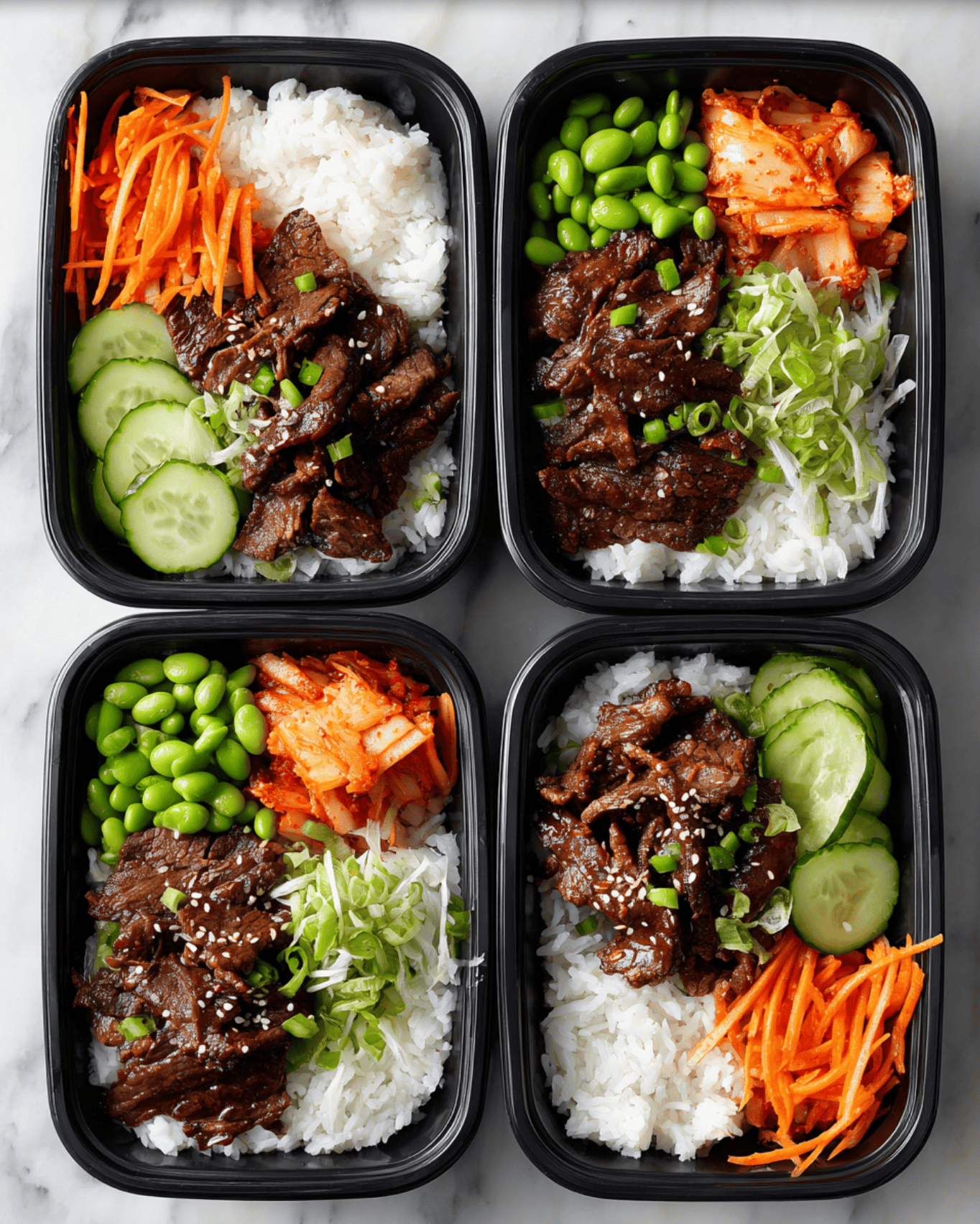
The thinly sliced beef is cooked in a sweet, garlicky marinade until beautifully browned and slightly caramelised.
Kimchi adds a lovely tangy flavour, while the cucumber is particularly refreshing alongside the rich beef.
Edamame is also great for adding some extra protein without much preparation.
You can find frozen shelled edamame in most large supermarkets, which makes things even easier.
I’d recommend packing the cucumber and kimchi separately if you’re planning to reheat the beef and rice.
Spend a little time preparing these bowls, and that’s a few fewer lunches to worry about during your busy week!
Why You’d Want This ASAP
The beef marinade uses simple ingredients but gives the meat a lovely sweet and savoury flavour.
Edamame beans add extra protein and a nice bite to the bowls.
There’s very little vegetable preparation involved, especially when using ready-made kimchi.
You can adjust the portion of rice depending on how hungry you usually get at lunchtime.
The different textures keep the meal interesting, even when you’re eating it more than once a week.
And unlike some meal prep recipes that leave you desperately searching for a snack afterwards, these bowls are genuinely filling.
What You’ll Need
For the Korean BBQ beef
-
600g sirloin or flank steak, thinly sliced
-
4 tablespoons soy sauce
-
2 tablespoons brown sugar
-
1 tablespoon sesame oil
-
1 tablespoon rice vinegar
-
1 tablespoon gochujang
-
3 garlic cloves, minced
-
1 teaspoon grated fresh ginger
-
½ small Asian pear or apple, finely grated
-
1 tablespoon vegetable oil
-
Black pepper, to taste
For the bowls
-
300g uncooked jasmine rice
-
200g shelled edamame beans
-
200g kimchi
-
1 large cucumber, sliced
-
3 spring onions, sliced
-
1 tablespoon toasted sesame seeds
Helpful Tips
– Slice the beef against the grain to keep it tender.
– Cook the beef in batches so it browns rather than steams.
– Keep the cucumber and kimchi separate from the ingredients you plan to reheat.
– Taste the marinade before adding the raw beef, as gochujang and kimchi can vary in spiciness.
Servings and Time
Serves: 4
Prep time: 15 minutes
Marinating time: 30 minutes
Cook time: 20 minutes
Total time: 1 hour 5 minutes
How to Make It
1. Marinate the beef
– In a large bowl, combine the soy sauce, brown sugar, sesame oil, rice vinegar, gochujang, minced garlic, grated ginger, grated pear and black pepper.
– Stir until the sugar has mostly dissolved.
– Add the thinly sliced beef and toss thoroughly until every piece is coated in the marinade.
– Cover the bowl and refrigerate for at least 30 minutes.
– For a deeper flavour, you can leave the beef to marinate for up to 4 hours.
2. Cook the rice
– Rinse the jasmine rice under cold water until the water runs mostly clear.
– Place the rice in a saucepan and add water according to the packet instructions.
– Bring to a boil, reduce the heat and cover with a lid.
– Cook until the rice is tender and the water has been absorbed.
– Remove from the heat and leave covered for 5 minutes before fluffing gently with a fork.
3. Prepare the vegetables
– Cook the shelled edamame beans according to the packet instructions, usually for around 4 to 5 minutes in boiling water.
– Drain thoroughly and allow them to cool.
– Wash the cucumber and cut it into thin rounds.
– Drain any excessive liquid from the kimchi.
– Thinly slice the spring onions and set them aside for garnishing.
4. Cook the Korean BBQ beef
– Heat half the vegetable oil in a large skillet over medium-high heat.
– Remove half the beef from the marinade, allowing any excess liquid to drip off.
– Arrange the beef in a single layer in the hot pan.
– Cook for approximately 1 to 2 minutes on each side, until browned and caramelised around the edges.
– Transfer the cooked beef to a clean plate.
– Repeat with the remaining oil and beef.
– Return all the beef to the skillet and toss briefly in the pan juices until glossy and cooked through.
– Remove from the heat and sprinkle over the toasted sesame seeds.
5. Assemble the meal prep bowls
– Divide the cooked jasmine rice evenly between four meal prep containers.
– Add an equal portion of Korean BBQ beef to each container.
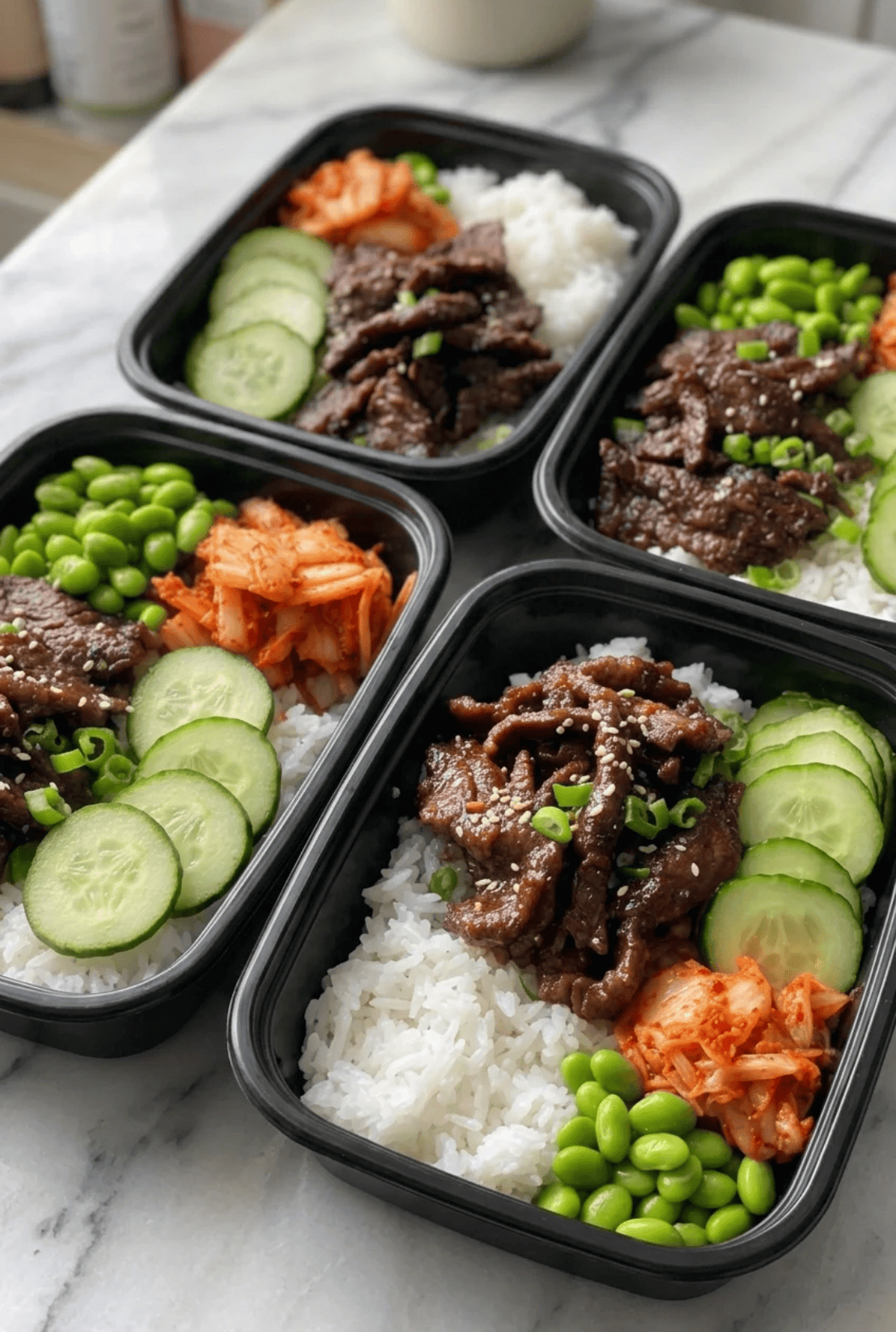
– Arrange the edamame beans, kimchi and cucumber slices alongside the beef and rice.
– Sprinkle the sliced spring onions and sesame seeds over the beef.
– Serve immediately, or cool the cooked components quickly before storing.
– For packed lunches that will be reheated, store the cucumber and kimchi in separate small containers.
Choosing the Right Beef
Nobody wants to spend their entire lunch break chewing a piece of beef.
Choosing the right cut makes a noticeable difference, particularly when you’re cooking thin strips over high heat.
Here are some good options for these bowls.
– Sirloin steak: Tender, flavourful and relatively easy to slice.
– Flank steak: Excellent for marinades and particularly good when sliced thinly against the grain.
– Ribeye steak: A richer option with more fat and plenty of flavour.
– Rump steak: Usually more affordable and works well when sliced thinly.
A useful little trick is to place your steak in the freezer for about 20 minutes before slicing it.
The meat firms up slightly, making it much easier to cut into thin, even strips.
The grated pear in the marinade also helps tenderise the beef while adding a little natural sweetness.
An ordinary apple works as a convenient substitute if you can’t find Asian pears at your local supermarket.
Easy Ways to Change Up Your Meal Prep Bowls
Eating the same lunch repeatedly isn’t for everyone, so a few small changes can help keep things interesting throughout the week.
– Extra spicy: Add a little more gochujang or sliced fresh red chillies.
– Garlic lovers: Add an extra garlic clove to the beef marinade.
– More vegetables: Include shredded carrots, sautéed mushrooms or steamed broccoli.
– Lower-carb bowls: Replace some or all of the rice with cauliflower rice.
– Extra crunchy: Add shredded red cabbage or thinly sliced radishes.
– With noodles: Swap the jasmine rice for cooked rice noodles.
– With chicken: Use thinly sliced boneless chicken thighs instead of steak and cook them thoroughly.
A fried egg is also a delicious addition when you’re serving the bowls fresh at home.
A slightly runny yolk mixed into the warm rice and barbecue beef is particularly good.
Storage and Reheating
Since these bowls contain cooked rice, it’s important to cool and store them properly, especially when preparing several lunches at once.
In the fridge
– Cool the cooked rice and beef quickly, ideally within one hour.
– Store them in shallow, airtight meal prep containers.
– Refrigerate the portion you intend to eat within 24 hours.
– Keep the cucumber and kimchi separately refrigerated to maintain their freshness.
In the freezer
– Freeze the remaining portions of cooked beef, rice and edamame promptly after cooling.
– Keep frozen for up to 2 months.
– Do not freeze the fresh cucumber, as it will become watery and soft.
– Defrost individual portions overnight in the fridge.
– Add fresh cucumber, kimchi and spring onions after reheating.
How to reheat
– Remove the cucumber and kimchi before reheating.
– Add a tablespoon of water to the rice to prevent it from drying out.
– Microwave the beef, rice and edamame until steaming hot throughout.
– Stir halfway through reheating to help everything heat evenly.
– Add the cold vegetables and garnishes just before eating.
Only reheat the rice once.
Q&A
Can I use store-bought Korean BBQ sauce?
Absolutely.
Use approximately 150ml of Korean BBQ sauce in place of the homemade marinade.
It’s a useful shortcut when you’re preparing several meals and don’t particularly fancy measuring out seven different sauces and seasonings.
Is Korean BBQ beef the same as bulgogi?
Bulgogi is a popular Korean dish made with marinated, thinly sliced meat, often beef.
These meal prep bowls are inspired by bulgogi, using a sweet and savoury marinade with garlic, soy sauce, sesame oil and grated fruit.
The addition of gochujang gives this version a slightly spicier flavour.
Can I make these bowls with ground beef?
Yes, ground beef is a great budget-friendly alternative.
Brown 600g of ground beef in a skillet, drain any excess fat and stir in the sauce.
Simmer until the sauce thickens and the beef is thoroughly cooked.
Are these bowls very spicy?
They have a moderate kick from the gochujang and kimchi.
For a milder version, reduce the gochujang to one teaspoon and choose a mild kimchi.
You can also leave the gochujang out altogether.
Can I substitute the edamame beans?
Yes.
Garden peas, steamed green beans or broccoli are all good alternatives.
Edamame is particularly useful because it adds extra plant-based protein without requiring much preparation.
Can I eat these meal prep bowls cold?
Yes, provided the cooked ingredients have been cooled and stored safely.
However, the beef and rice generally have a nicer texture when served warm.
I prefer keeping the cucumber and kimchi cold for that lovely contrast in temperature.
What can I use instead of kimchi?
Quick-pickled cabbage or carrots are good alternatives.
Their slightly sour flavour helps balance the sweetness of the barbecue beef.
A simple cucumber salad dressed with rice vinegar and sesame oil would also work well.
Can I use brown rice instead of white rice?
Definitely.
Brown rice has a slightly nuttier flavour and contains more fibre than white rice.
Just allow extra cooking time and follow the instructions on the packet.
Why is my Korean BBQ beef tough?
The beef may have been sliced too thickly, cut with the grain or cooked for too long.
Use a tender cut of steak, slice it thinly against the grain and cook it quickly in a hot skillet.
Avoid simmering the thin beef strips in the sauce for an extended period.
Can I make extra marinade to drizzle over the rice?
Yes, and it’s a particularly good idea if you enjoy your rice a little saucier.
Prepare an additional half batch of the marinade separately, simmer it in a small saucepan until slightly thickened and drizzle it over the cooked beef and rice.
Never use marinade that has been in contact with raw beef as a serving sauce unless it has been thoroughly boiled first.