Spicy Gochujang Udon Noodles
These are the noodles I make when plain old stir-fry just isn’t going to cut it.
They’re spicy, a little sweet, ridiculously saucy, and ready for a proper tangle around your fork.
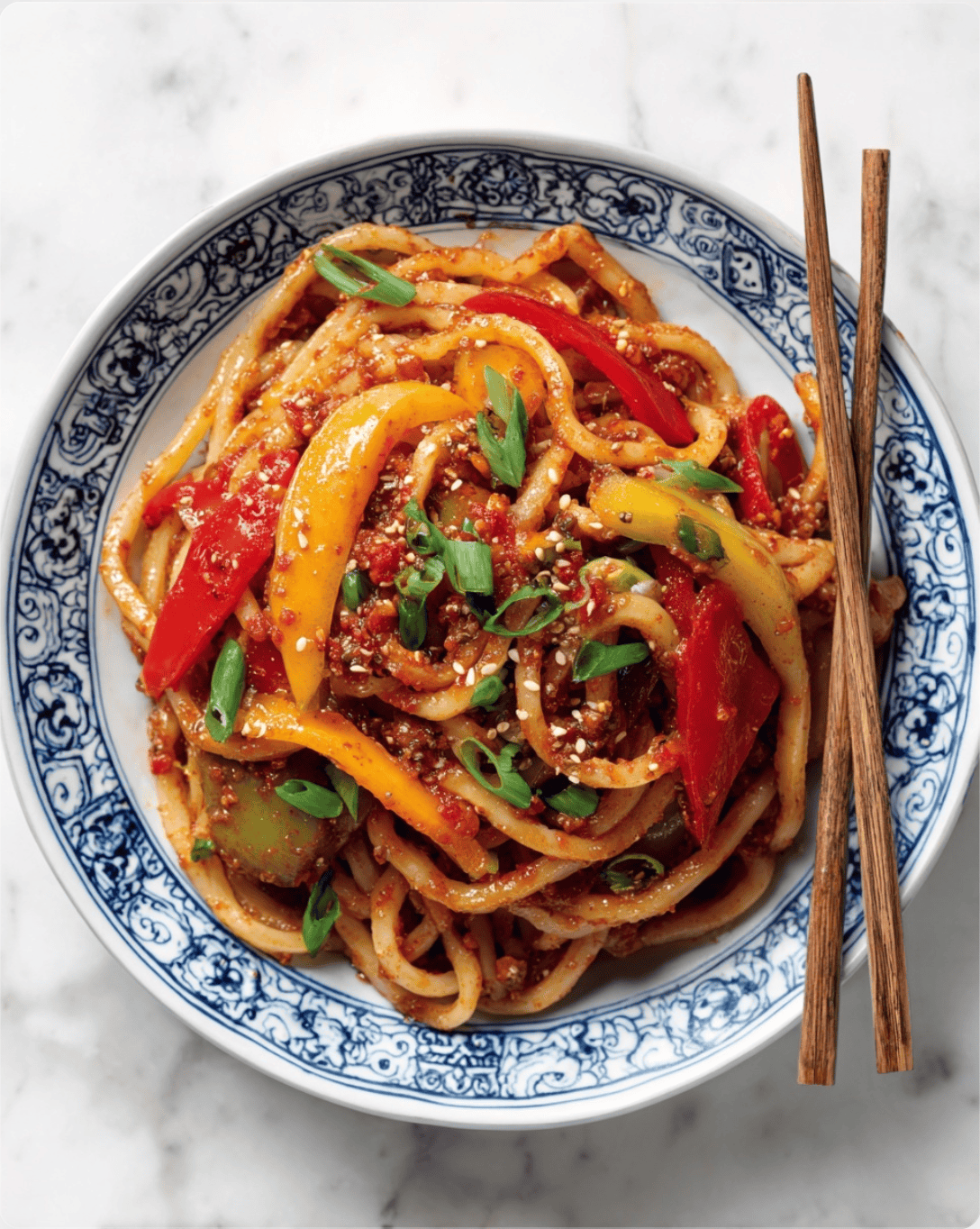
Udon noodles already have that thick, chewy texture going for them, so I don’t like drowning them in a complicated sauce.
Gochujang does most of the heavy lifting here. It’s spicy, savoury, slightly sweet, and once it coats those noodles, there’s really no going back to boring.
The peppers are important too. I use red and yellow and leave them with a little crunch.
Apart from making the whole bowl look good, their sweetness is really nice against the heat of the gochujang.
Spring onions go in at the end, along with sesame seeds and a few slices of fresh chilli when I’m in the mood for even more heat.
The best part is right at the bottom of the bowl.
That’s where the extra sauce, stray bits of pepper, sesame seeds, and the last few slippery noodles seem to collect.
It’s messy, spicy and very easy to eat faster than intended. And yes, I usually regret wearing anything white while making it.
Page Contents
ToggleWhy You’ll Love This Recipe
- Ready in under 30 minutes.
- Thick, chewy udon noodles soak up every drop of sauce.
- Sweet peppers balance the spicy gochujang perfectly.
- Better than takeout and surprisingly easy.
- Easily made vegan.
- Great for weeknight dinners.
- Packed with bold, savory flavor.
Ingredients
For the Noodles
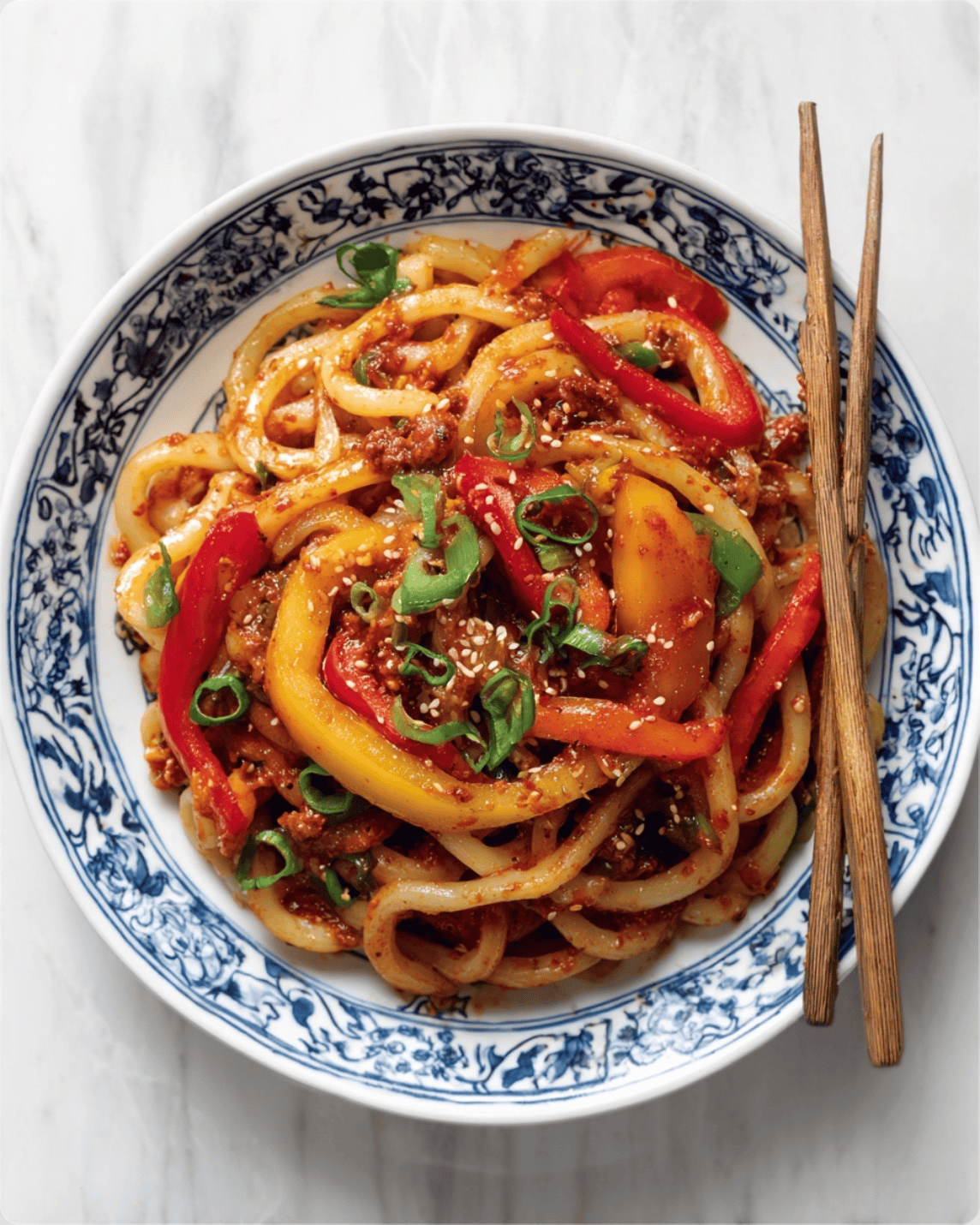
- 400g fresh udon noodles
- 1 tablespoon vegetable oil
- 1 red bell pepper, sliced
- 1 yellow bell pepper, sliced
- 3 spring onions, sliced (reserve some for garnish)
- 2 cloves garlic, minced
- 1 teaspoon grated fresh ginger
For the Gochujang Sauce
- 2 tablespoons gochujang
- 2 tablespoons soy sauce
- 1 tablespoon sesame oil
- 1 tablespoon honey or maple syrup
- 1 tablespoon rice vinegar
- 2 tablespoons water
To Finish
- Sliced fresh red chilies
- Sliced spring onions
- Sesame seeds (optional)
Instructions
1. Mix the Sauce
Whisk together the gochujang, soy sauce, sesame oil, honey, rice vinegar and water until smooth.
2. Cook the Vegetables
Heat the vegetable oil in a large wok or frying pan over medium-high heat. Add the peppers and cook for about 4 to 5 minutes until they soften slightly but still have a little bite. Stir in the garlic, ginger and most of the spring onions for another minute.
3. Prepare the Udon
If using vacuum-packed fresh udon, separate the noodles according to the package instructions. They usually only need a quick rinse or 1 minute in boiling water.
4. Toss Everything Together
Add the noodles to the pan along with the gochujang sauce. Toss continuously for 2 to 3 minutes until every strand is coated in the glossy sauce.
5. Finish
Top with sliced red chilies, the remaining spring onions and a sprinkle of sesame seeds if using. Serve immediately while the noodles are hot and wonderfully chewy.
Tips
- Fresh udon gives the best chewy texture.
- Don’t overcook the peppers. They should still have a little crunch.
- Taste the sauce before adding it. If you like more heat, stir in an extra spoonful of gochujang.
- A splash of noodle cooking water helps loosen the sauce if it becomes too thick.
Easy Variations
Add Protein
Chicken, steak, shrimp or crispy tofu all work beautifully.
More Vegetables
Broccoli, mushrooms, pak choi, carrots or sugar snap peas make great additions.
Extra Creamy
Stir in a spoonful of peanut butter for a richer, creamier sauce.
Make It Vegan
Use maple syrup instead of honey and double-check that your noodles are vegan.
Serving Suggestions
- Korean cucumber salad
- Crispy vegetable spring rolls
- Steamed edamame
- Kimchi
- Asian slaw
Storage
Store leftovers in an airtight container in the fridge for up to 3 days. Reheat in a frying pan with a splash of water to bring the sauce back to life.
Frequently Asked Questions
What is gochujang?
Gochujang is a Korean fermented chili paste with a rich, savory flavor that’s spicy, slightly sweet and deeply umami.
Can I use another type of noodle?
Absolutely. Ramen, thick wheat noodles, rice noodles or even spaghetti will work if that’s what you have.
Is this recipe very spicy?
It has a noticeable kick, but it’s balanced by the sweetness of the peppers and the sauce. Reduce the gochujang if you prefer a milder dish.
Can I meal prep it?
Yes. The sauce can be made several days in advance, and the finished noodles reheat surprisingly well for lunch the next day.
Why are my noodles sticking together?
Fresh udon separates easily once warmed. Toss them quickly with the sauce while they’re hot, and they’ll stay silky instead of clumping together.