Spicy Tomato Chicken Curry with Rice
Want a curry that actually has a bit of fire to it instead of tasting vaguely tomatoey and sweet?
This spicy tomato chicken curry is rich, punchy, and full of sauce that absolutely deserves a pile of hot rice underneath it.
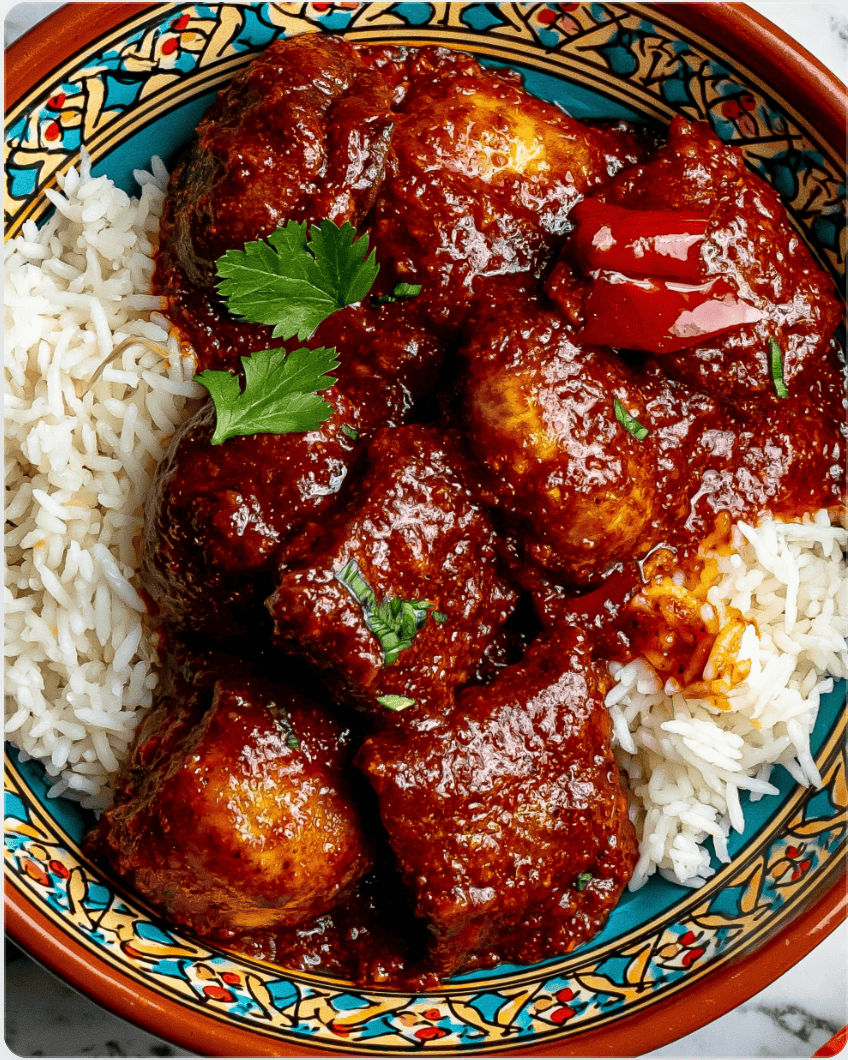
What makes a tomato chicken curry really good is getting the balance right.
The tomatoes need time to cook down properly so the sauce tastes deep and savoury, not sharp or watery. Then come the garlic, ginger, chilli, and spices, which build up slowly rather than hitting you all at once.
The chicken simmers in that sauce until it stays tender and picks up all that flavour, while the rice keeps things simple and gives the curry somewhere to go.
There’s enough heat here to make you notice it, but not so much that every bite becomes a challenge.
A little fresh coriander over the top, maybe some yoghurt on the side if you like, and that’s plenty.
The sauce does most of the talking anyway.
Why You’ll Want to Make This Again
- Thick, rich tomato curry sauce rather than a thin gravy
- Big tender pieces of chicken
- Plenty of onion, red pepper, garlic and warming spices
- Easy ingredients you can find in a normal supermarket
- Can be made as mild or spicy as you like
- Reheats brilliantly the next day
- Plain basmati rice keeps the whole plate simple and balanced
Ingredients
For the Chicken Curry
- 650g boneless, skinless chicken thighs or chicken breast, cut into chunky pieces
- 2 tablespoons vegetable oil
- 1 large onion, roughly chopped
- 1 large red bell pepper, cut into chunks
- 4 garlic cloves, finely chopped
- 1 tablespoon fresh ginger, grated
- 2 tablespoons tomato purée
- 1 x 400g tin chopped tomatoes
- 150ml chicken stock
- 1 teaspoon ground cumin
- 1 teaspoon ground coriander
- 1 teaspoon paprika
- 1 teaspoon garam masala
- 1/2 teaspoon turmeric
- 1/2 teaspoon chilli powder
- 1/2 teaspoon chilli flakes, optional
- 1 teaspoon salt, or to taste
- 1/2 teaspoon black pepper
- 1 teaspoon brown sugar, optional
- 1 tablespoon fresh lemon juice
- Small handful fresh coriander, roughly chopped
- 2 spring onions, thinly sliced, for finishing
For the Rice
- 300g basmati rice
- 600ml water
- 1/2 teaspoon salt
Before You Start
Cut the chicken into decent-sized chunks rather than tiny bite-sized pieces.
They will shrink slightly while cooking, and larger pieces stay noticeably juicier.
I also like the red pepper fairly chunky.
You want to still see pieces of pepper in the finished curry instead of having everything disappear into the tomato sauce.
Have your spices measured before you start cooking as well.
Once the garlic and ginger hit the pan, things move pretty quickly for the next couple of minutes.
How to Make Spicy Tomato Chicken Curry
- Rinse the basmati rice several times under cold water until the water looks much clearer.
- Add the rice to a saucepan with 600ml water and the salt.
- Bring it to a boil, cover with a tight-fitting lid and turn the heat right down.
- Cook for around 12 minutes, then remove the pan from the heat.
- Leave the lid on for another 10 minutes.
- Fluff the rice gently with a fork just before serving.
- While the rice cooks, heat 1 tablespoon of the oil in a large deep frying pan or casserole over medium-high heat.
- Season the chicken lightly with salt and black pepper.
- Add the chicken in a single layer and let it colour properly before moving it around.
- Cook for around 4–5 minutes, turning occasionally, until the outside has some good golden-brown patches.
- The chicken does not need to be cooked all the way through yet.
- Transfer it to a plate.
- Add the remaining tablespoon of oil to the pan.
- Tip in the chopped onion and red pepper.
- Cook for around 5–6 minutes, stirring occasionally, until the onion softens and the pepper starts getting a little colour around the edges.
- Add the garlic and grated ginger.
- Stir for about 30 seconds.
- Add the tomato purée, cumin, coriander, paprika, garam masala, turmeric and chilli powder.
- Add the chilli flakes too if you want a stronger kick.
- Stir the spices through the onion mixture for around 1 minute.
- Pour in the chopped tomatoes and chicken stock.
- Scrape the bottom of the pan well so any browned bits from the chicken go straight into the sauce.
- Add the brown sugar if using.
- Return the chicken and any juices from the plate to the pan.
- Stir everything together and bring the curry to a gentle simmer.
- Leave it uncovered for around 18–20 minutes.
- Stir occasionally, particularly towards the end when the sauce starts getting thicker.
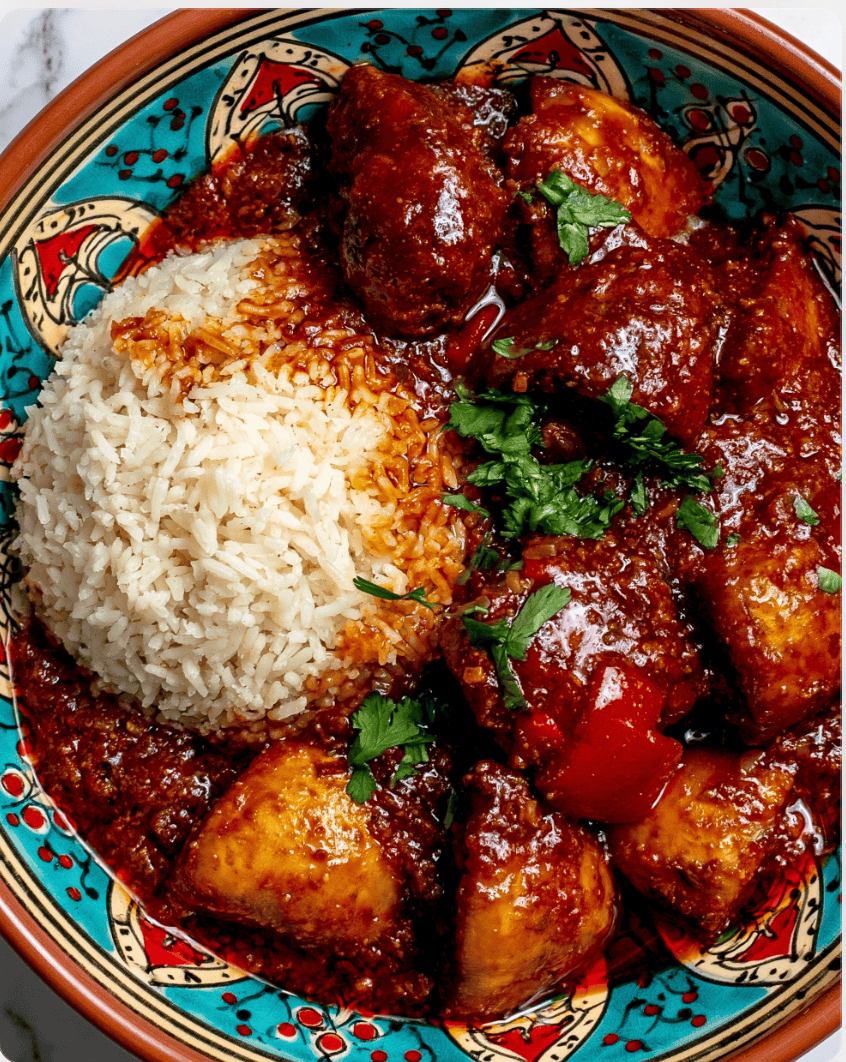
- The curry is ready when the chicken is completely cooked and the tomato sauce is thick, glossy and clinging to the chicken.
- If the sauce still looks watery, give it another few minutes uncovered.
- Stir through the lemon juice and most of the chopped coriander.
- Taste before adding any more salt.
- Spoon plenty of basmati rice onto each plate and add the curry alongside it.
- Finish with the remaining coriander and sliced spring onions.
hed curry from tasting as though everything was simply boiled together.
What to Serve With It
Plain basmati rice is my first choice.
The curry already has plenty going on, so the simplicity of white rice works really well.
You could also add:
- Warm naan bread
- Cucumber raita
- Simple cucumber and onion salad
- Mango chutney
- Poppadoms
- Roasted cauliflower
- Steamed green beans
If I’m making this on a normal weeknight, though, rice and curry are more than enough.
Can You Make It Ahead?
Yes, and the sauce is arguably even better after sitting for a while.
Make the curry, let it cool completely and keep it covered in the fridge.
Reheat it gently in a saucepan until piping hot.
If the sauce has thickened too much overnight, add a splash of chicken stock or water.
I prefer cooking fresh rice rather than storing it with the curry.
That keeps the rice fluffy and stops it soaking up all the sauce.
Storage
Keep leftover curry in an airtight container in the fridge for up to 3 days.
Reheat it thoroughly on the hob or in the microwave.
You can also freeze the curry for around 2 months.
Let it cool completely before transferring it to a freezer-safe container.
Defrost overnight in the fridge, then reheat gently.
Q&A
Can I use leftover cooked chicken?
Yes.
Make the sauce first and let it simmer until thick.
Add your cooked chicken during the final 5–7 minutes, just long enough to heat it through properly.
That way it doesn’t dry out.
Is chicken breast or thigh better?
Both work.
Breast gives you firmer, leaner chunks of chicken.
Thigh meat is richer and stays a little juicier during simmering.
I’d lean towards thighs if you’re not fussed either way.
Why is my curry sauce watery?
It probably just needs longer.
Keep the pan uncovered and let the sauce simmer.
A wide pan also helps because more liquid can evaporate at once.
Can I use fresh tomatoes?
You can, but tinned tomatoes give you a more reliable rich tomato flavour.
Fresh tomatoes vary massively depending on season and ripeness.
If you do use fresh ones, choose very ripe tomatoes and expect the sauce to need a little longer to reduce.
Can I add coconut milk?
You can, but it changes the curry quite a lot.
This version is meant to have that deeper tomato-based sauce rather than a creamy coconut finish.
If you want to add some anyway, I’d use only around 100ml so the tomato still comes through.
Do I need the sugar?
No.
It is only there to balance particularly acidic tomatoes.
Taste the sauce first.
If it already tastes rounded and slightly sweet from the onions and peppers, leave it out.
What if the curry gets too thick?
Add a splash of chicken stock or hot water and stir.
Do it a tablespoon or two at a time.
It is much easier to loosen a thick curry than rescue one that has become watery.
Can I make it hotter after cooking?
Yes.
Fresh sliced chilli, chilli oil or extra chilli flakes can all go on at the end.
That is especially handy when some people at the table want serious heat and others absolutely do not.