Classic Sunday Pot Roast
There are plenty of meals that come and go, but a good pot roast never seems to lose its place at the table.
Maybe it’s because it asks so little from you once it’s in the oven.
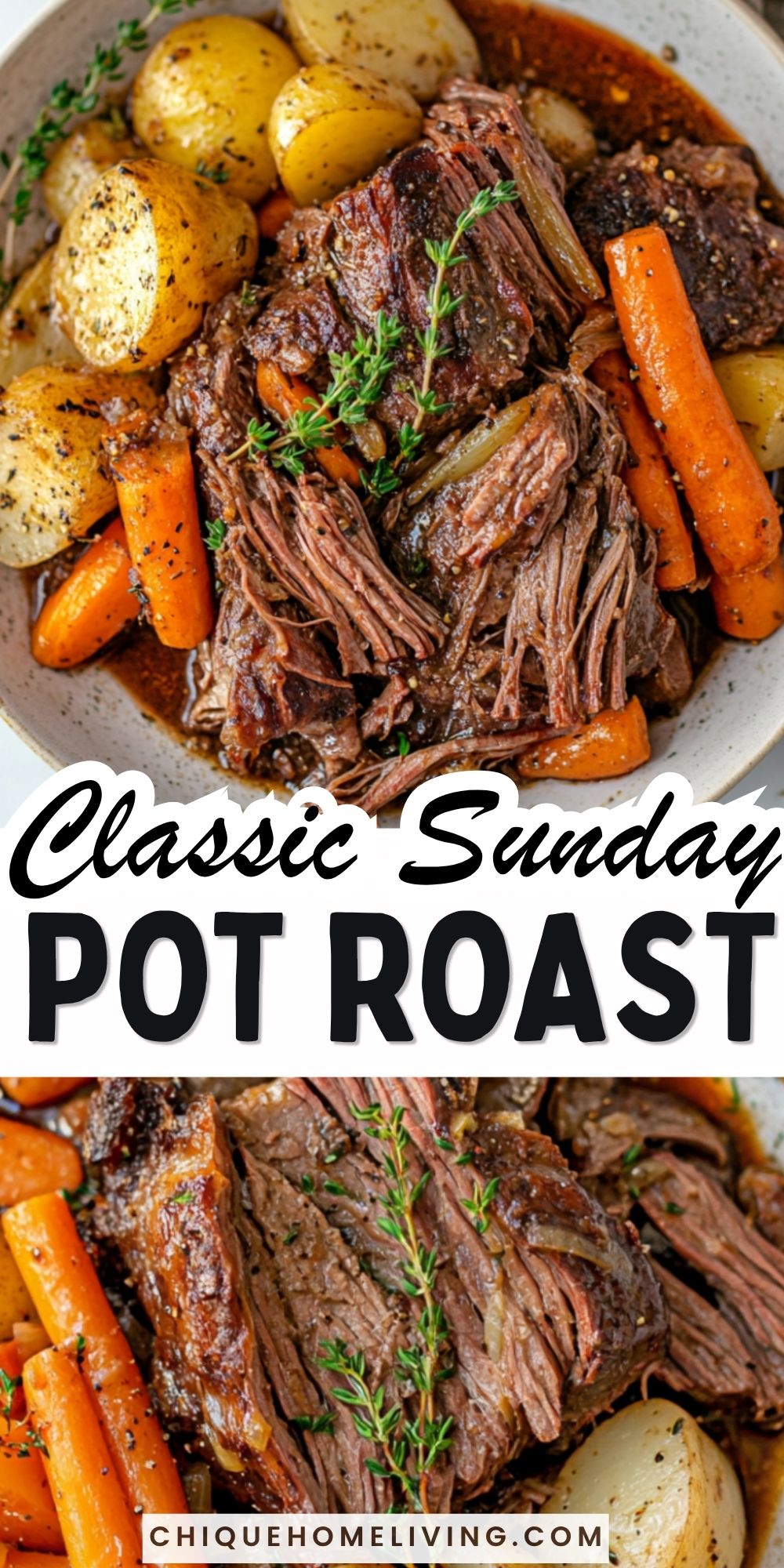
The meat slowly becomes fall-apart tender while the vegetables soak up every bit of the rich cooking juices.
By the time dinner rolls around, the whole house smells incredible, and all that’s left to do is serve it up.
I like recipes that don’t need constant attention, especially on weekends when I’d rather spend time with family than stand over the stove.
This one has become a favorite for exactly that reason.
The beef turns fork-tender, the baby potatoes stay buttery and creamy inside, the carrots become perfectly soft, and the savory gravy ties everything together.
It’s simple comfort food, and sometimes that’s exactly what’s needed.
Page Contents
ToggleWhy You’ll Love This Recipe
- The beef becomes incredibly tender after slow cooking.
- Everything cooks together in one pot.
- The vegetables absorb all of the rich beef flavor.
- Leftovers taste even better the next day.
- Simple pantry ingredients create an impressive meal.
- Great for Sunday dinners or special family gatherings.
- Minimal hands-on cooking once everything is in the pot.
- The homemade gravy is rich without being complicated.
Ingredients
- 3 to 4 pound chuck roast
- 2 tablespoons olive oil
- Salt
- Freshly ground black pepper
- 1 teaspoon garlic powder
- 1 teaspoon onion powder
- 1 teaspoon smoked paprika
- 1 large yellow onion, sliced
- 4 garlic cloves, minced
- 2 cups beef broth
- 2 tablespoons Worcestershire sauce
- 1 tablespoon tomato paste
- 1 teaspoon Dijon mustard (optional)
- 3 sprigs fresh thyme
- 1 sprig fresh rosemary
- 1½ pounds baby Yukon Gold potatoes
- 5 to 6 medium carrots, peeled and cut into large pieces
- 1 tablespoon cornstarch mixed with 2 tablespoons cold water (optional, for thickening)
- Fresh chopped parsley, for garnish
How to Make Classic Sunday Pot Roast
1. Season the Roast
Pat the chuck roast dry with paper towels.
Season both sides generously with salt, pepper, garlic powder, onion powder, and smoked paprika.
Let it sit at room temperature while the Dutch oven heats.
2. Sear the Beef
Heat the olive oil in a large Dutch oven over medium-high heat.
Carefully place the roast into the hot pot.
Let it cook undisturbed until a deep brown crust forms.
Flip and repeat on the other side.
Don’t rush this step.
A properly browned roast creates much more flavor in the finished gravy.
Transfer the beef to a plate.
3. Build the Flavor Base
Reduce the heat slightly.
Add the sliced onions to the pot.
Cook until they begin to soften and pick up the browned bits from the bottom.
Stir in the garlic and cook for another 30 seconds.
Mix in the tomato paste and cook briefly until it darkens slightly.
Pour in the beef broth and Worcestershire sauce.
Use a wooden spoon to scrape up every browned bit from the bottom of the pot.
Those little pieces are packed with flavor.
Stir in the Dijon mustard if using.
4. Return the Roast
Nestle the roast back into the pot.
Add the thyme and rosemary.
The liquid shouldn’t completely cover the meat.
It only needs to come about halfway up the sides.
Cover tightly with the lid.
5. Slow Cook
Transfer the pot to a 325°F oven.
Cook for about 2½ hours.
The meat should begin to soften but won’t be fully tender yet.
6. Add the Vegetables
Arrange the baby potatoes and carrots around the roast.
Spoon some of the cooking liquid over the vegetables.
Cover again and continue cooking for another 60 to 90 minutes.
The roast is ready when it easily pulls apart with a fork.
The potatoes should be tender but still hold their shape.
The carrots should be soft without becoming mushy.
7. Finish the Gravy
Transfer the roast and vegetables to a serving platter.
Discard the herb stems.
If you’d like a thicker gravy, bring the cooking liquid to a gentle simmer on the stove.
Whisk in the cornstarch slurry.
Cook for several minutes until the gravy lightly coats the back of a spoon.
Taste and adjust the seasoning if needed.
8. Serve
Pull the roast into large chunks rather than slicing it thin.
Arrange it alongside the potatoes and carrots.
Spoon plenty of the warm gravy over everything.
Finish with chopped parsley before serving.
Pro Tips
- Don’t skip searing the roast. A deep brown crust adds layers of flavor to both the meat and the gravy.
- Chuck roast is the best cut for this recipe because the marbling melts during cooking, leaving the meat tender and easy to shred.
- Keep the potatoes whole if they’re small. They’ll hold their shape much better than diced potatoes.
- Cut the carrots into large pieces so they don’t become overly soft after several hours in the oven.
- Check that there’s always some liquid in the pot during cooking. If it starts looking low, add a little more warm beef broth.
- Let the roast rest for about 10 minutes before pulling it apart. It helps the meat stay juicy.
- Fresh thyme makes a noticeable difference, but dried thyme works in a pinch if that’s what you have.
- Taste the gravy before serving. Sometimes it only needs another pinch of salt or a few cracks of black pepper.
- If you prefer a thicker gravy, simmer it for a few extra minutes instead of adding too much cornstarch.
- Spoon plenty of the cooking juices over the meat and vegetables just before serving. It keeps everything moist and flavorful.
Variations
- Add celery pieces along with the carrots and potatoes for a more traditional vegetable mix.
- Stir sliced mushrooms into the pot during the last hour of cooking.
- Replace the baby potatoes with quartered Yukon Gold potatoes.
- Add pearl onions instead of sliced onions for a sweeter flavor.
- Include a splash of red wine with the beef broth for extra depth.
- Add parsnips for another hearty root vegetable.
- Mix fresh rosemary and thyme together if you enjoy more herb flavor.
- Finish with a little butter whisked into the gravy for extra richness.
What to Serve With It
This roast is filling enough to stand on its own, but a few simple sides round out the meal nicely.
Warm crusty bread is always welcome for soaking up the rich gravy.
A crisp green salad with a light vinaigrette balances the richness of the beef.
Steamed green beans or roasted Brussels sprouts add a fresh contrast without competing with the main dish.
If you’re serving guests, a simple apple crisp or bread pudding makes an easy dessert to finish the meal.
Storage
Allow everything to cool before transferring it to an airtight container.
Store the roast, vegetables, and gravy together so the meat stays moist.
Leftovers will keep well in the refrigerator for up to 4 days.
The flavors often become even better after a night in the fridge.
Reheating
Place the roast, vegetables, and gravy in a covered skillet or saucepan over medium-low heat.
Add a splash of beef broth if the gravy has thickened too much.
Heat gently until everything is warmed through.
Individual portions can also be microwaved in short intervals, stirring the gravy halfway through heating.
Frequently Asked Questions
What’s the best cut of beef for pot roast?
Chuck roast is the most reliable choice because it becomes tender after slow cooking while staying juicy.
Can I make this in a slow cooker?
Yes.
Sear the roast first, then transfer everything to the slow cooker and cook on Low for 8 to 9 hours.
Do I have to sear the meat?
Technically no, but it’s highly recommended.
The browned crust adds a tremendous amount of flavor.
Can I prepare it ahead of time?
Absolutely.
Many people think it tastes even better the next day.
Why is my roast tough?
It probably needs more time.
A tough roast usually hasn’t cooked long enough for the connective tissue to break down.
Can I freeze leftovers?
Yes.
Store them with plenty of gravy in a freezer-safe container for up to 3 months.
Should the roast be completely covered with liquid?
No.
The liquid only needs to come about halfway up the meat.
The roast cooks by braising, not boiling.
Can I use dried herbs?
Yes.
Use about one-third the amount compared to fresh herbs.
How do I know when it’s done?
The roast should pull apart easily with a fork.
If you need to use a knife, it isn’t ready yet.
Can I make the gravy thicker?
Yes.
A simple cornstarch slurry works well, or simmer the liquid uncovered until it naturally reduces.
Common Mistakes to Avoid
- Skipping the searing step.
- Cooking at too high a temperature.
- Using a lean cut of beef instead of chuck roast.
- Cutting the vegetables too small.
- Not seasoning the meat well before browning.
- Forgetting to scrape the browned bits from the bottom of the pot.
- Rushing the cooking time.
- Slicing the roast instead of pulling it apart once it’s tender.
- Serving without tasting the gravy first.
Final Thoughts
There’s a reason a classic pot roast has remained a favorite for generations.
It isn’t complicated, and it doesn’t rely on fancy ingredients.
Given enough time, a simple chuck roast transforms into tender pieces of beef that practically fall apart with a fork, while the potatoes and carrots soak up every bit of the savory cooking juices.
It’s the kind of meal that encourages everyone to slow down, grab another spoonful of gravy, and stay at the table a little longer.
If you make this recipe, I’d love to hear how it turned out.
Leave a comment below and a rating to share your thoughts and any family twists you added to make it your own.