Korean Beef and Potatoes
Running out of interesting ways to cook beef and potatoes?
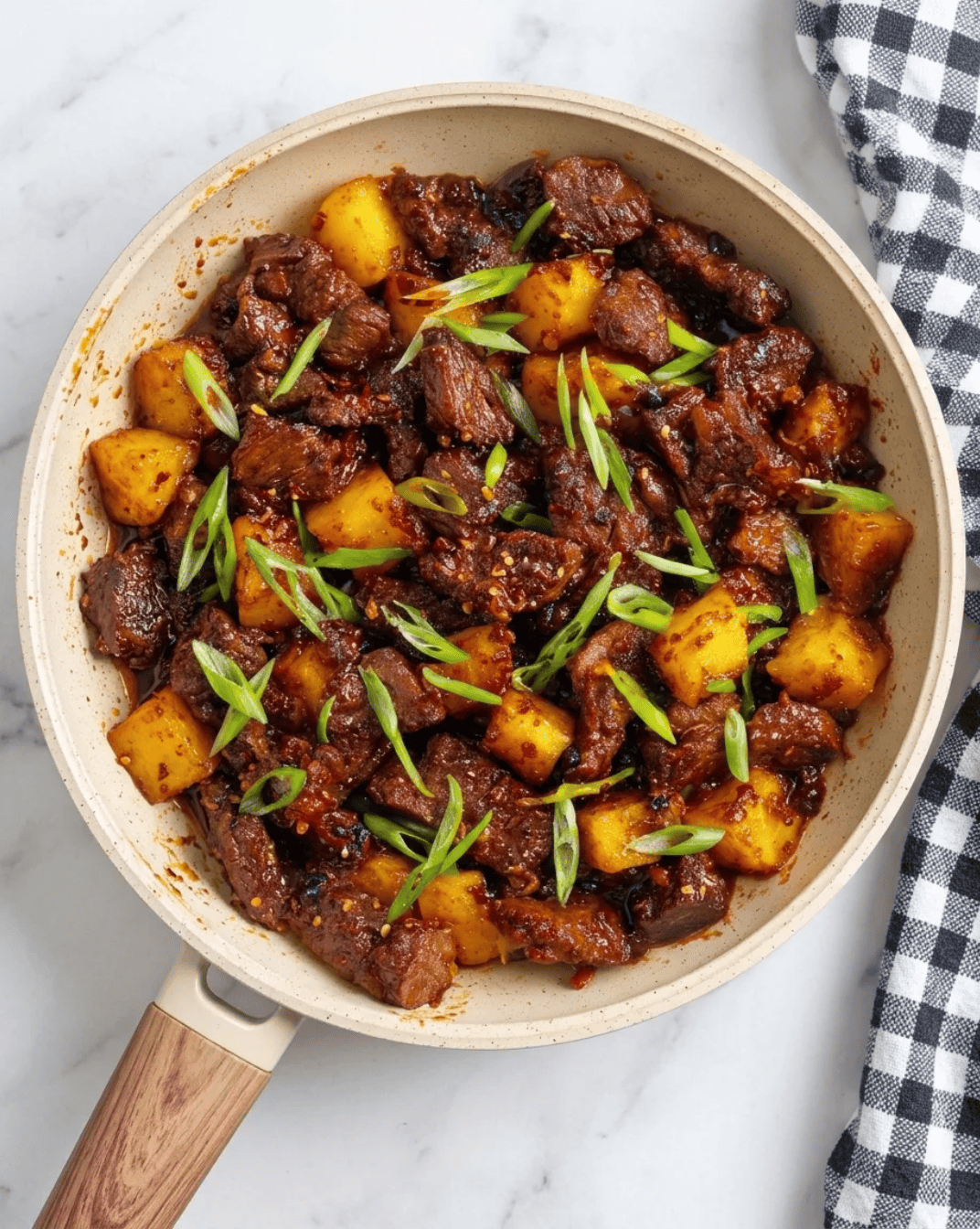
This Korean-inspired recipe brings the two together in a deliciously sticky, sweet and spicy sauce that makes an ordinary dinner taste incredible.
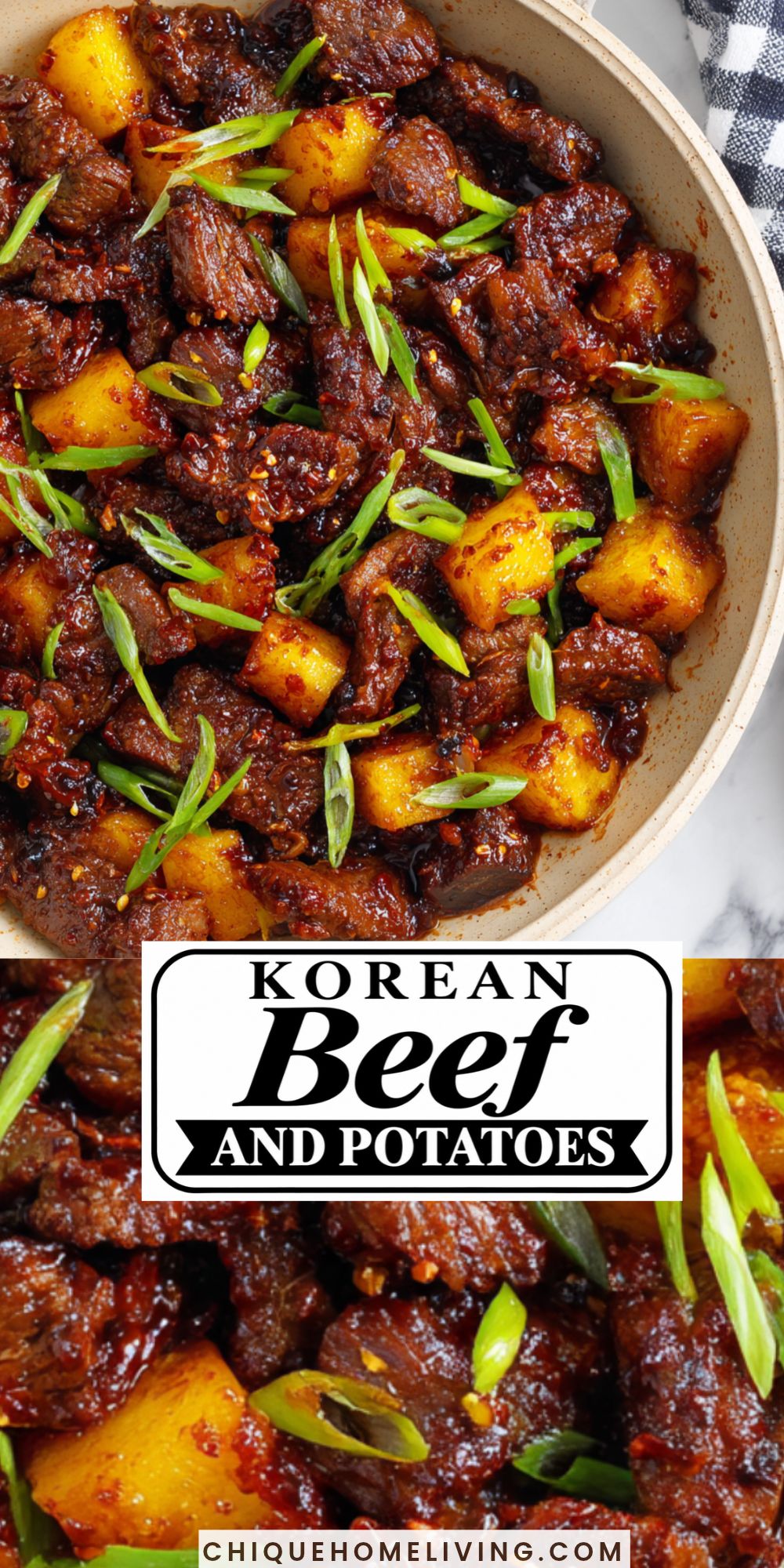
Who knew beef and potatoes could taste so good with a little Korean-inspired seasoning?
Instead of making the usual beef stew or serving steak with roast potatoes, try cooking them together in a rich, sticky sauce.
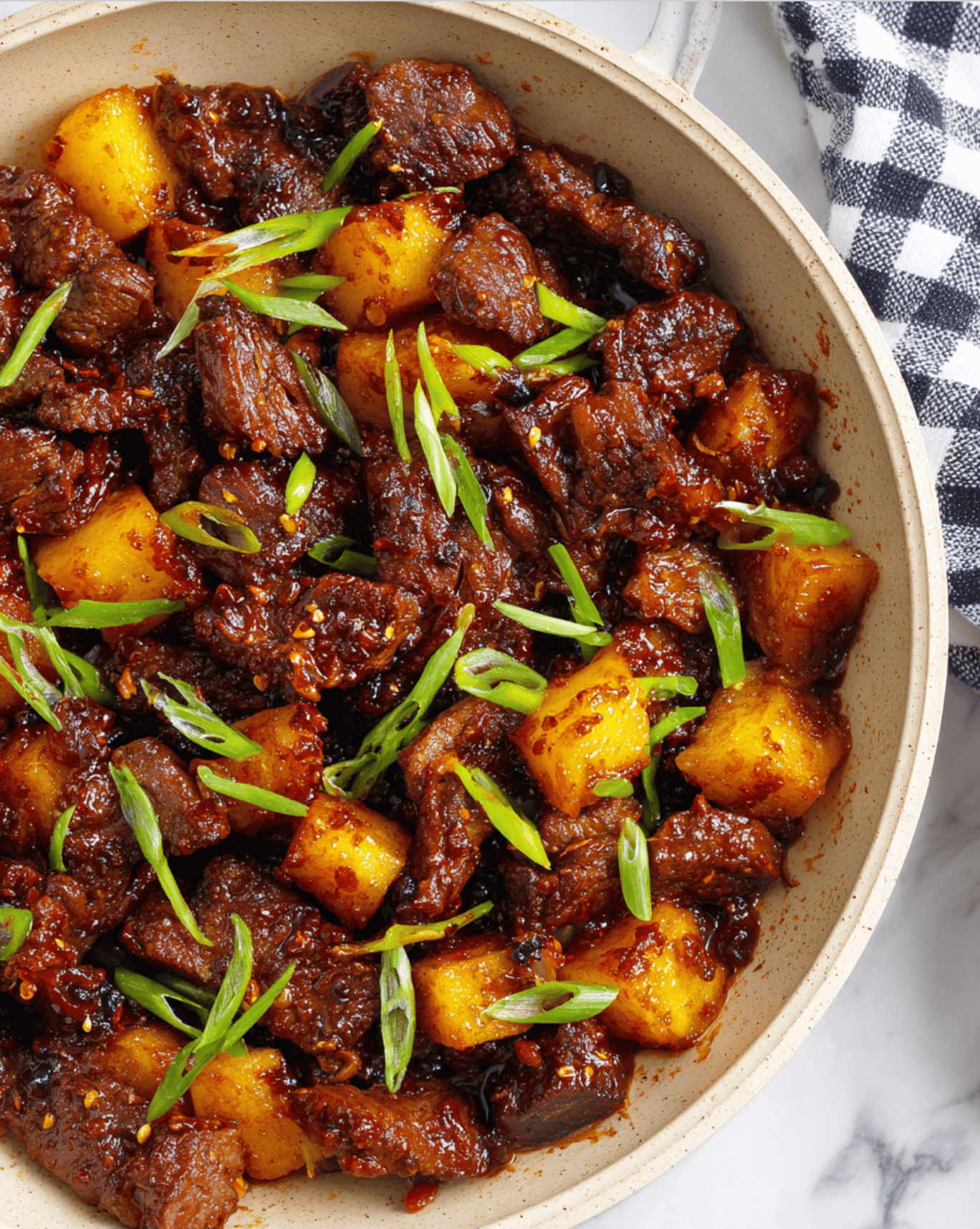
The potatoes are soft on the inside with lovely golden edges, and the beef is cut into bite-sized pieces.
There’s a nice balance of sweetness, garlic and chilli without the sauce being overwhelmingly spicy.
Give the potatoes enough time to develop some colour before tossing them with the beef and sauce.
That’s where a lot of the flavour comes from.
A handful of fresh spring onions adds a little crunch and freshness to the finished dish.
You don’t necessarily need rice with this meal since the potatoes are already quite filling, but nobody’s stopping you from having both!
Why You’d Want This ASAP
Beef and potatoes are inexpensive, familiar ingredients, but the gochujang sauce gives them a completely different flavour.
There’s no need to make a separate carbohydrate side dish.
The potatoes soak up just enough of the sticky sauce without becoming completely soft.
You can make it mildly spicy or give it enough heat to warrant a cold drink nearby.
It’s also a great excuse to finally use that tub of gochujang sitting in your fridge.
And for a dinner made with fairly basic ingredients, it certainly doesn’t taste basic.
What You’ll Need
For the beef and potatoes
-
600g sirloin or rump steak, cut into thick strips
-
650g Yukon Gold or Maris Piper potatoes
-
3 tablespoons vegetable oil, divided
-
1 teaspoon garlic powder
-
½ teaspoon onion powder
-
½ teaspoon black pepper
-
½ teaspoon salt
-
4 green onions, thinly sliced
For the gochujang sauce
-
2 tablespoons gochujang
-
3 tablespoons light soy sauce
-
1 tablespoon dark soy sauce
-
2 tablespoons honey
-
4 garlic cloves, minced
-
1 teaspoon grated fresh ginger
-
1 tablespoon rice vinegar
-
1 teaspoon toasted sesame oil
-
½ teaspoon crushed red chilli flakes
-
60ml water
Helpful Tips
-
Cut the beef against the grain to keep it tender.
-
Dry the potatoes thoroughly before frying for crispier edges.
-
Cook the beef in batches rather than overcrowding the skillet.
-
Add the potatoes to the sauce at the very end so they retain some crunch.
Servings and Time
Serves: 4
Prep time: 15 minutes
Cook time: 30 minutes
Total time: 45 minutes
How to Make It
1. Prepare the potatoes
– Peel the potatoes and cut them into roughly 2cm cubes.
– Place them in a saucepan and cover with cold, lightly salted water.
– Bring to a boil and cook for approximately 5 to 7 minutes, until slightly tender but still firm enough to hold their shape.
– Drain thoroughly and allow the potatoes to steam-dry for a few minutes.
– Gently pat away any remaining surface moisture with kitchen paper.
2. Make the gochujang sauce
– Add the gochujang, light soy sauce, dark soy sauce, honey, minced garlic, grated ginger, rice vinegar, sesame oil, chilli flakes and water to a small bowl.
– Whisk until the gochujang has dissolved and everything is well combined.
– Taste the sauce and adjust the sweetness or heat according to your preference.
– Set aside while preparing the beef and potatoes.
3. Fry the potatoes
– Heat 2 tablespoons of vegetable oil in a large skillet over medium-high heat.
– Carefully add the potato cubes in a single layer.
– Season with a little of the salt and black pepper.
– Fry for approximately 10 to 12 minutes, turning occasionally until golden and crispy on several sides and tender throughout.
– Transfer the cooked potatoes to a clean plate.
4. Cook the beef
– Pat the steak dry with kitchen paper.
– Season with garlic powder, onion powder and the remaining salt and black pepper.
– Heat the remaining tablespoon of vegetable oil in the same skillet.
– Add the beef strips in batches, leaving enough space between the pieces.
– Sear for approximately 2 to 3 minutes per side, depending on their thickness, until browned and cooked to your preferred doneness.
– Transfer the cooked beef to a clean plate and repeat with the remaining pieces.
5. Prepare the sticky sauce
– Reduce the skillet to medium-low heat.
– Pour the prepared gochujang sauce into the pan.
– Stir well, scraping up any browned bits left behind by the beef.
– Allow the sauce to simmer gently for 2 to 3 minutes until slightly reduced and glossy.
– Add a small splash of water if it becomes excessively thick.
6. Combine everything
– Return the seared beef to the skillet.
– Toss gently until the meat is evenly coated in the sauce.
– Add the crispy golden potato cubes.
– Carefully fold everything together without breaking up the potatoes.
– Cook for another minute until heated through.
– Remove from the heat and scatter the sliced green onions over the beef and potatoes.
– Serve immediately while the potatoes still have their lovely crispy edges.
Which Potatoes Are Best for This Recipe?
Not every potato behaves the same way in a frying pan.
Some become beautifully golden and fluffy, while others can start falling apart before you’ve even finished turning them.
For this recipe, you want potatoes that hold their shape reasonably well but still develop a crisp exterior.
– Yukon Gold: Naturally buttery with a lovely golden colour and creamy interior.
– Maris Piper: Excellent for crispy potatoes with fluffy centres.
– Russet potatoes: Great for developing a crunchy exterior, although they require gentle handling.
– Red potatoes: Slightly firmer and particularly good at holding their shape.
– Baby potatoes: A convenient alternative that can be quartered without peeling.
I wouldn’t cut the potatoes too small.
Tiny cubes can easily become overcooked when you fry them and then toss them in the sauce.
A decent-sized potato cube gives you something to bite into, which is particularly nice alongside the steak.
Can You Cook the Potatoes in the Air Fryer?
Absolutely, and it might be the easier option when you have a smaller skillet.
Cooking the potatoes separately also gives you more space to brown the steak properly.
– Cut the potatoes into evenly sized cubes.
– Toss them with 1 tablespoon of vegetable oil, salt and black pepper.
– Arrange them inside the air fryer basket without overcrowding.
– Air fry at 200°C (400°F) for approximately 18 to 25 minutes.
– Shake the basket halfway through cooking.
– Check that the potatoes are golden, crispy and tender inside.
– Add them to the cooked beef and gochujang sauce just before serving.
You can skip the parboiling step when using this method.
Easy Recipe Variations
Once you’ve made the gochujang sauce, there are quite a few directions you can take this dinner.
– Korean chicken and potatoes: Replace the steak with boneless chicken thigh chunks and cook thoroughly.
– Extra garlic: Add another two cloves of freshly minced garlic to the sauce.
– Honey gochujang beef: Increase the honey slightly for a sweeter, stickier finish.
– Korean beef and sweet potatoes: Replace the regular potatoes with golden roasted sweet potato cubes.
– Beef and mushrooms: Add separately sautéed oyster mushrooms or chestnut mushrooms.
– Extra spicy beef: Increase the gochujang and add some fresh sliced red chillies.
– Korean pork and potatoes: Use thinly sliced pork loin or tenderloin instead of steak.
Sweet potatoes are particularly worth trying because their natural sweetness pairs beautifully with the spicy fermented chilli paste.
What to Serve With Korean Beef and Potatoes
Since the potatoes are already included, I’d keep the sides fairly light.
Something fresh, green or slightly tangy would work particularly well with the rich, sticky beef.
-
Korean cucumber salad
-
Steamed broccoli
-
Spicy kimchi
-
Garlic sautéed bok choy
-
Sesame green beans
-
Shredded cabbage salad
-
Steamed edamame beans
-
Pickled carrots and radishes
-
Sautéed sugar snap peas
A cold cucumber salad dressed with rice vinegar, sesame oil and a little salt would be especially good.
It gives your mouth a little break from the heat without competing with the flavour of the beef.
Storage and Reheating
In the fridge
– Allow the beef and potatoes to cool promptly after cooking.
– Transfer to an airtight container and refrigerate within two hours.
– Store in the refrigerator for up to 2 days.
– Keep any additional fresh green onions separately refrigerated.
The potatoes will naturally lose some of their crispness once stored in the sauce.
They’ll still taste good, but don’t expect the same crunch as when they first came out of the skillet.
In the freezer
– Transfer the cooled beef and potatoes to freezer-safe containers.
– Freeze for up to 2 months.
– Defrost overnight in the refrigerator before reheating.
For the nicest texture, freeze the saucy beef separately and prepare fresh crispy potatoes when you’re ready to serve.
How to reheat
– Stovetop: Warm everything in a skillet over medium-low heat with a small splash of water until steaming hot throughout.
– Microwave: Heat in short intervals, stirring between each interval until thoroughly heated.
– Oven: Reheat in an oven-safe dish at 180°C (350°F) until steaming hot throughout.
Finish with freshly sliced green onions before serving.
Q&A
Is Korean beef and potatoes very spicy?
This recipe has a moderate amount of heat, although it depends largely on the gochujang you use.
For a milder version, reduce the gochujang to one tablespoon and leave out the chilli flakes.
The honey also helps balance some of the heat.
Can I use ground beef instead of steak?
Yes, ground beef is a great alternative when you’re trying to keep your grocery bill down.
Brown the ground beef thoroughly, drain any excessive fat and stir in the gochujang sauce.
Fold through the crispy potatoes just before serving.
Can I make this without gochujang?
You can substitute it with a combination of sriracha, a little miso paste and brown sugar.
However, the flavour won’t be quite the same because gochujang has a distinctive fermented taste.
It’s worth using the real thing whenever possible.
Why aren’t my potatoes crispy?
The potatoes may have been too wet before frying, or the skillet may have been overcrowded.
Allow them to steam-dry thoroughly after parboiling and fry them in a single layer.
Adding the sauce too early can also soften their crispy exterior.
Can I use frozen diced potatoes?
Yes, frozen diced potatoes are a useful shortcut.
Cook them according to the packet instructions until golden and crisp before adding them to the beef.
There’s no need to parboil them first if they’re already partially cooked.
Can I marinate the beef beforehand?
Definitely.
Prepare the gochujang sauce and use a small portion to marinate the beef in the refrigerator for 30 minutes to 2 hours.
Keep the remaining sauce separate for cooking.
Remove excess marinade from the beef before searing, as the honey and gochujang can burn over high heat.
Can I make this recipe gluten-free?
Yes, use gluten-free tamari in place of the soy sauces and choose a certified gluten-free gochujang.
Some gochujang brands contain wheat or barley, so checking the label is important.
Why does my gochujang sauce taste too salty?
You may have used a particularly salty brand of soy sauce or gochujang.
Add a little water, honey and rice vinegar to balance the flavour.
Low-sodium soy sauce is also a good option for future batches.
Can I add vegetables directly to the skillet?
Of course.
Red bell peppers, broccoli, onions and mushrooms would all work nicely.
Cook them separately or before adding the sauce so their excess moisture doesn’t prevent the beef and potatoes from browning.
Can I make the gochujang sauce ahead of time?
Yes, prepare the sauce and store it in an airtight container in the refrigerator for up to 3 days.
Give it a good stir before using, as some of the ingredients may settle.
Having the sauce ready makes this recipe particularly convenient on busy evenings when you want something delicious without spending ages measuring ingredients.