Chicken Nasi Goreng (Indonesian Fried Rice)
How about turning a few simple ingredients into a seriously delicious Indonesian dinner?
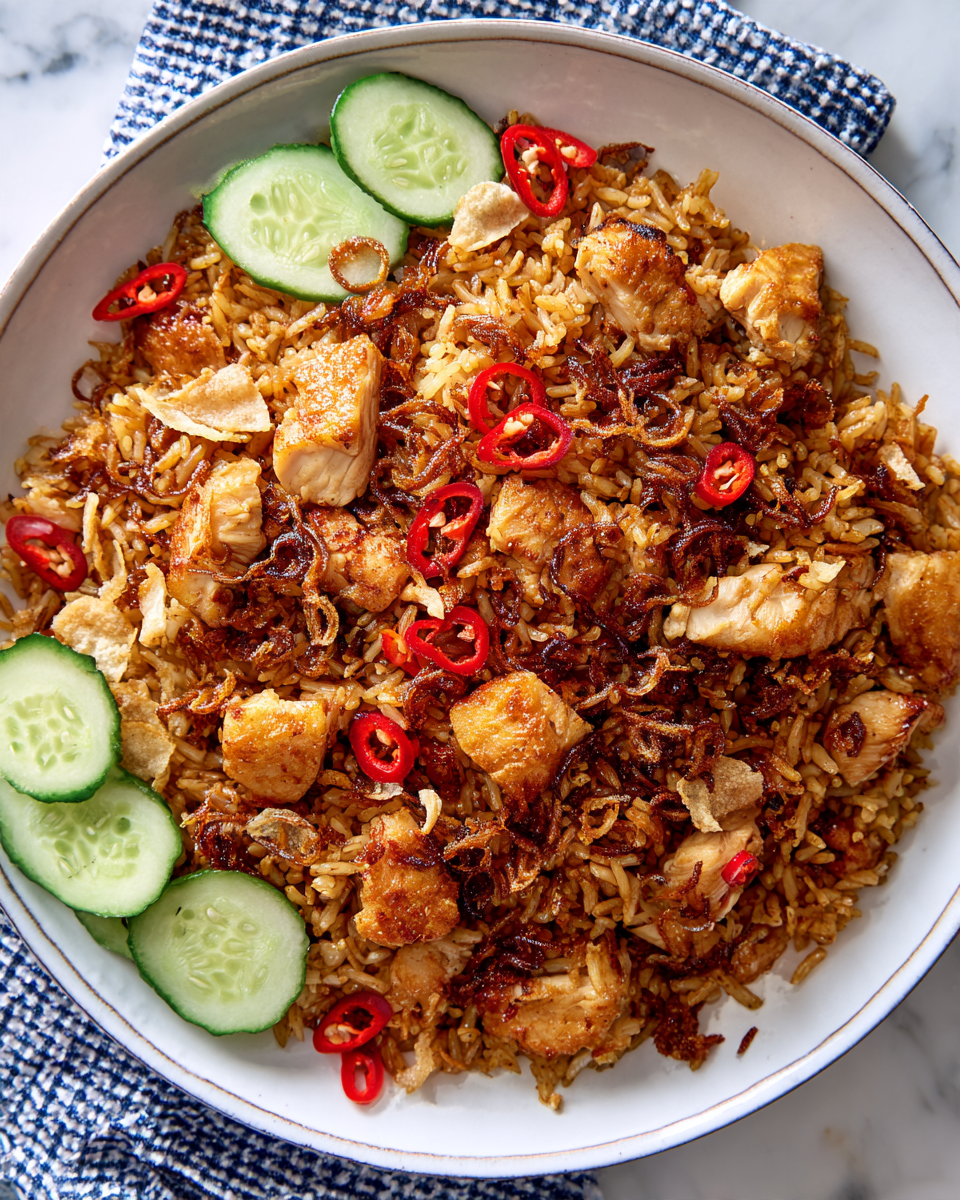
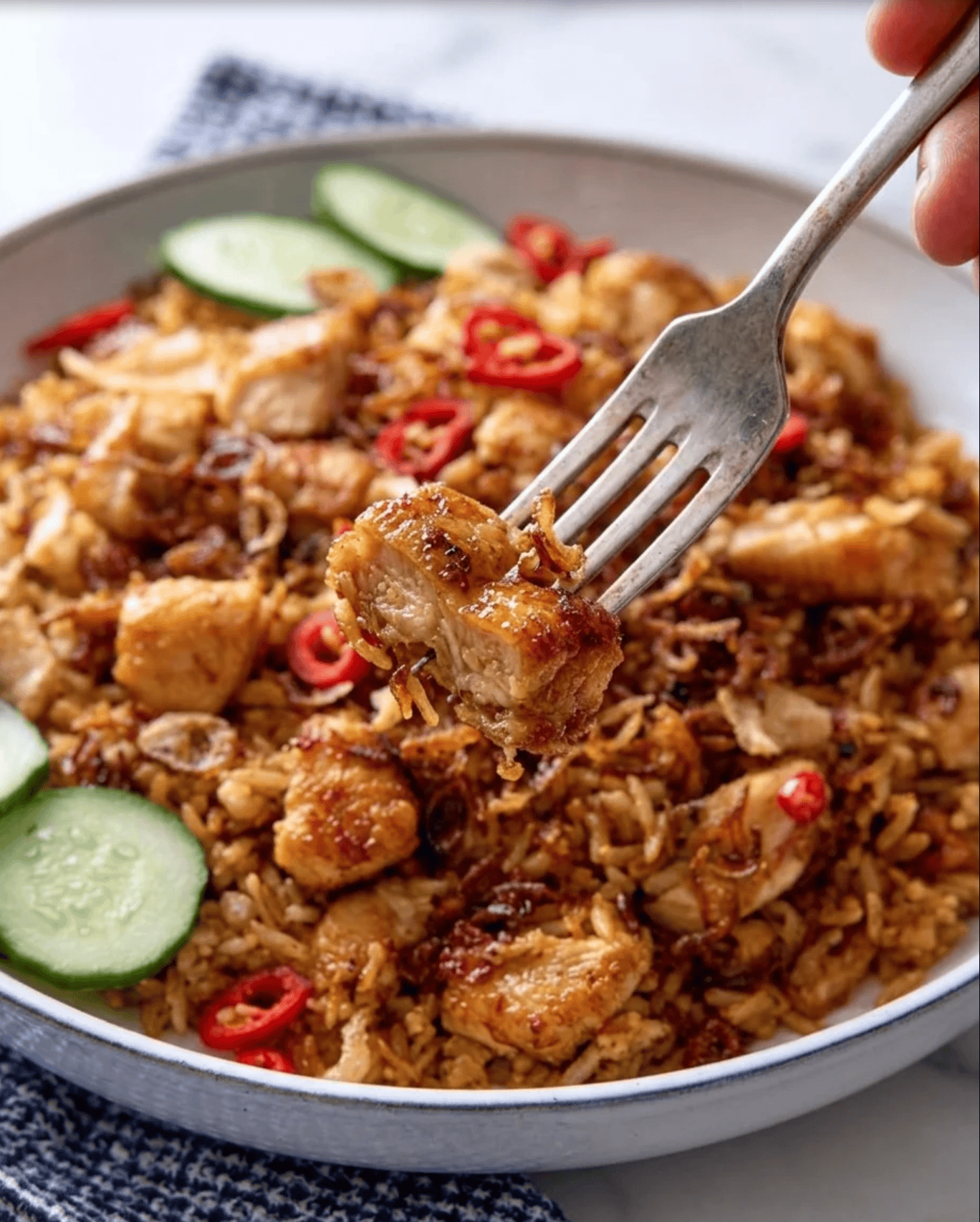
This chicken nasi goreng is packed with sweet and savoury flavours, juicy chicken pieces, crispy fried shallots and a little heat from fresh red chillies.
Have some rice and chicken at home but can’t decide what to cook?
Give this Indonesian chicken nasi goreng a go.
The secret to its gorgeous brown colour and slightly sweet flavour is kecap manis, a thick Indonesian sweet soy sauce.
It’s quite different from regular soy sauce and well worth buying a bottle for your kitchen.
The chicken is cut into generous bite-sized pieces and fried until golden before being tossed with the seasoned rice.
Now, the crispy fried shallots are not to be skipped!
They add so much flavour and a lovely crunch to the rice.
A few slices of fresh cucumber are particularly nice alongside the spicy chillies, and some crushed crackers make a tasty addition too.
It’s a filling, affordable dinner that doesn’t require much washing up afterwards, which is always welcome on a busy evening.
Why You’d Want This ASAP
It’s a brilliant excuse to turn leftover rice into something considerably more exciting.
The sweet soy sauce gives the rice plenty of flavour without needing a long list of seasonings.
Chicken breast makes it filling enough to serve as a complete dinner.
You can have everything ready in around 30 minutes, including the crispy shallots.
The cucumber and shrimp crackers give you a nice contrast to the warm, spicy rice.
It’s also considerably cheaper than ordering takeaway, especially when you’re feeding four people.
What You’ll Need
For the fried rice
-
4 cups cold cooked jasmine rice
-
500g chicken breasts, cut into chunks
-
4 tablespoons vegetable oil, divided
-
4 shallots, thinly sliced
-
3 garlic cloves, minced
-
2 red chillies, sliced
-
3 tablespoons kecap manis (sweet soy sauce)
-
1 tablespoon light soy sauce
-
1 teaspoon shrimp paste
-
½ teaspoon white pepper
-
Salt, to taste
For serving
-
1 cucumber, sliced
-
Shrimp crackers (prawn crackers)
-
Extra sliced red chillies
Helpful Tips
-
Use cold, properly refrigerated rice for the fluffiest texture.
-
Fry the shallots over medium heat, as they can burn quickly.
-
Don’t overcrowd the pan when cooking the chicken.
-
Add the sweet soy sauce gradually to avoid making the rice too wet.
Servings and Time
Serves: 4
Prep time: 10 minutes
Cook time: 20 minutes
Total time: 30 minutes
How to Make It
1. Prepare the ingredients
– Break apart any large clumps of cold cooked rice using your fingers or a fork.
– Cut the chicken breasts into bite-sized chunks and season lightly with salt and white pepper.
– Thinly slice the shallots and red chillies.
– Mince the garlic and slice the cucumber.
2. Fry the shallots
– Heat 2 tablespoons of vegetable oil in a large wok or frying pan over medium heat.
– Add the thinly sliced shallots and cook for approximately 4 to 6 minutes, stirring frequently.
– Remove them once they turn golden brown and begin to crisp.
– Transfer to a plate lined with kitchen paper, reserving the oil in the pan.
– Allow the shallots to cool while preparing the remaining ingredients.
3. Cook the chicken
– Increase the heat to medium-high and add another tablespoon of vegetable oil.
– Arrange the chicken chunks in a single layer.
– Cook for approximately 6 to 8 minutes, turning occasionally until golden brown and lightly caramelised around the edges.
– Make sure the chicken reaches an internal temperature of 74°C (165°F).
– Transfer the cooked chicken to a clean plate.
4. Prepare the fried rice
– Add the remaining tablespoon of oil to the wok.
– Stir in the minced garlic, shrimp paste and most of the sliced red chillies.
– Fry for approximately 30 seconds until fragrant.
– Add the cold cooked jasmine rice.
– Stir-fry over high heat for 2 to 3 minutes, breaking apart any remaining clumps.
– Pour the kecap manis and light soy sauce over the rice.
– Toss thoroughly until the grains are evenly coated and develop a rich brown colour.
– Continue stir-frying for another 2 minutes until the rice is steaming hot throughout and slightly caramelised.
5. Combine and serve
– Return the golden chicken chunks to the wok.
– Toss everything together for another minute until the chicken is heated through.
– Taste and adjust the seasoning if necessary.
– Divide the fried rice between serving plates.
– Scatter the crispy fried shallots generously over the rice.
– Garnish with the remaining sliced red chillies.
– Arrange fresh cucumber slices around the rice and serve with shrimp crackers.
.
Easy Recipe Variations
There are plenty of ways to change up your nasi goreng depending on what you have available.
– Shrimp nasi goreng: Replace the chicken with peeled jumbo shrimp.
– Beef nasi goreng: Use thinly sliced sirloin steak and quickly sear it over high heat.
– Extra spicy nasi goreng: Add a spoonful of sambal oelek when frying the garlic.
– Egg nasi goreng: Stir scrambled eggs through the rice or serve it with a fried egg on top.
– Vegetable nasi goreng: Replace the chicken with mushrooms, carrots, cabbage and green beans, and omit the shrimp paste.
– Tofu nasi goreng: Use golden pan-fried firm tofu and leave out the shrimp paste.
– Leftover chicken nasi goreng: Use diced cooked rotisserie chicken instead of fresh chicken breast.
A fried egg with a soft yolk is a particularly popular accompaniment to Indonesian nasi goreng.
It’s worth trying when you fancy an even more substantial dinner.
What to Serve With Chicken Nasi Goreng
Chicken nasi goreng doesn’t necessarily need another main dish alongside it.
However, a few simple accompaniments can make it even more enjoyable.
-
Fresh cucumber slices
-
Indonesian shrimp crackers
-
Fried eggs
-
Chicken satay skewers
-
Pickled cucumber and carrots
-
Sambal chilli sauce
-
Sliced fresh tomatoes
-
Grilled vegetables
The fresh cucumber is especially useful because its mild flavour helps balance the sweetness, saltiness and heat of the rice.
And keep the shrimp crackers separate until serving unless you enjoy eating soggy crackers, which I imagine very few people do.
Storage and Reheating
Fried rice is best enjoyed immediately, particularly when served with crispy shallots and shrimp crackers.
Because this recipe uses previously cooked rice, it’s important to handle leftovers carefully.
In the fridge
– Keep freshly cooked rice refrigerated and use it within 24 hours when preparing nasi goreng.
– Once you’ve reheated that rice by stir-frying it, eat the finished dish immediately rather than refrigerating it for another reheating.
– Store unused fried shallots separately in an airtight container in a cool, dry place.
For meal prep
– Prepare and cook the chicken separately in advance.
– Refrigerate the cooked chicken in an airtight container for up to 2 days.
– Prepare fresh rice or use safely stored cooked rice when you’re ready to make the fried rice.
– Add the cucumber, fried shallots and shrimp crackers just before serving.
Q&A
What is the difference between nasi goreng and regular fried rice?
Nasi goreng is an Indonesian fried rice dish typically seasoned with kecap manis, garlic, shallots and chilli.
It generally has a darker colour and a sweeter, more caramelised flavour than many Chinese-style fried rice dishes.
Crispy shallots, cucumber, fried eggs and shrimp crackers are popular accompaniments.
Can I make nasi goreng without shrimp paste?
Yes.
Shrimp paste adds a distinctive savoury depth, but you can leave it out.
A little extra soy sauce can help compensate, although the flavour will be slightly different.
Is chicken nasi goreng very spicy?
That depends entirely on the chillies you use.
Two mild red chillies provide a manageable amount of heat, while smaller bird’s eye chillies can be considerably hotter.
Remove the seeds and inner membranes or reduce the quantity for a milder dinner.
Can I use chicken thighs instead of chicken breast?
Absolutely.
Boneless, skinless chicken thighs have a richer flavour and tend to stay juicy when cooked over high heat.
Cut them into bite-sized chunks and cook thoroughly before adding them to the rice.
Can I use freshly cooked rice?
Yes, although cold cooked rice generally produces a better fried rice texture.
Spread freshly cooked rice across a large tray to release excess steam and cool it quickly before frying.
Avoid leaving cooked rice sitting at room temperature for extended periods.
Why is my nasi goreng mushy?
Your rice may have contained too much moisture, or the pan may have been overcrowded.
Adding excessive sweet soy sauce can also make the grains overly sticky.
Use properly cooled rice, a large hot pan and only enough sauce to coat the grains.
Can I use basmati rice?
Yes.
Jasmine rice is a lovely choice because of its fragrance, but basmati and regular long-grain white rice also work well.
The main thing is using rice that isn’t excessively wet or overcooked.
Can I make nasi goreng gluten-free?
Yes, provided you use gluten-free sweet soy sauce and gluten-free tamari instead of regular soy sauce.
Check the shrimp paste and shrimp crackers carefully, as ingredients vary between brands.
Can I add eggs directly to the rice?
Definitely.
Scramble two eggs separately and fold them into the rice towards the end of cooking.
Alternatively, fry an egg for each serving and place it directly on top of the finished nasi goreng.
Why does my fried rice taste too sweet?
You may have added too much kecap manis.
A little extra light soy sauce, fresh chilli or a small squeeze of lime juice can help balance the sweetness.
Add the adjustments gradually and taste as you go rather than accidentally turning your sweet fried rice into excessively salty fried rice.