
Nigerian Beef Stew
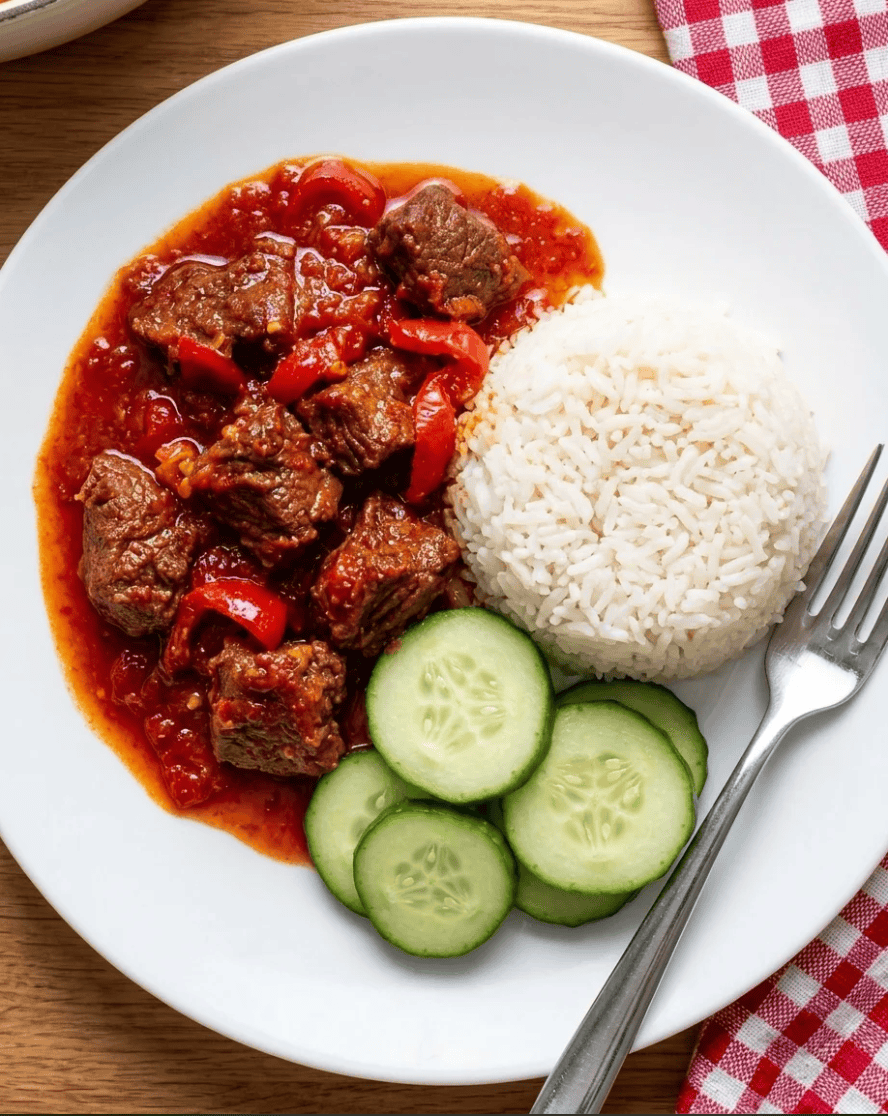
What’s a plate of white rice without a really good Nigerian beef stew?
Made with tender chunks of beef, tomatoes, red peppers and Scotch bonnet, this rich and spicy stew will have you going back for another helping.
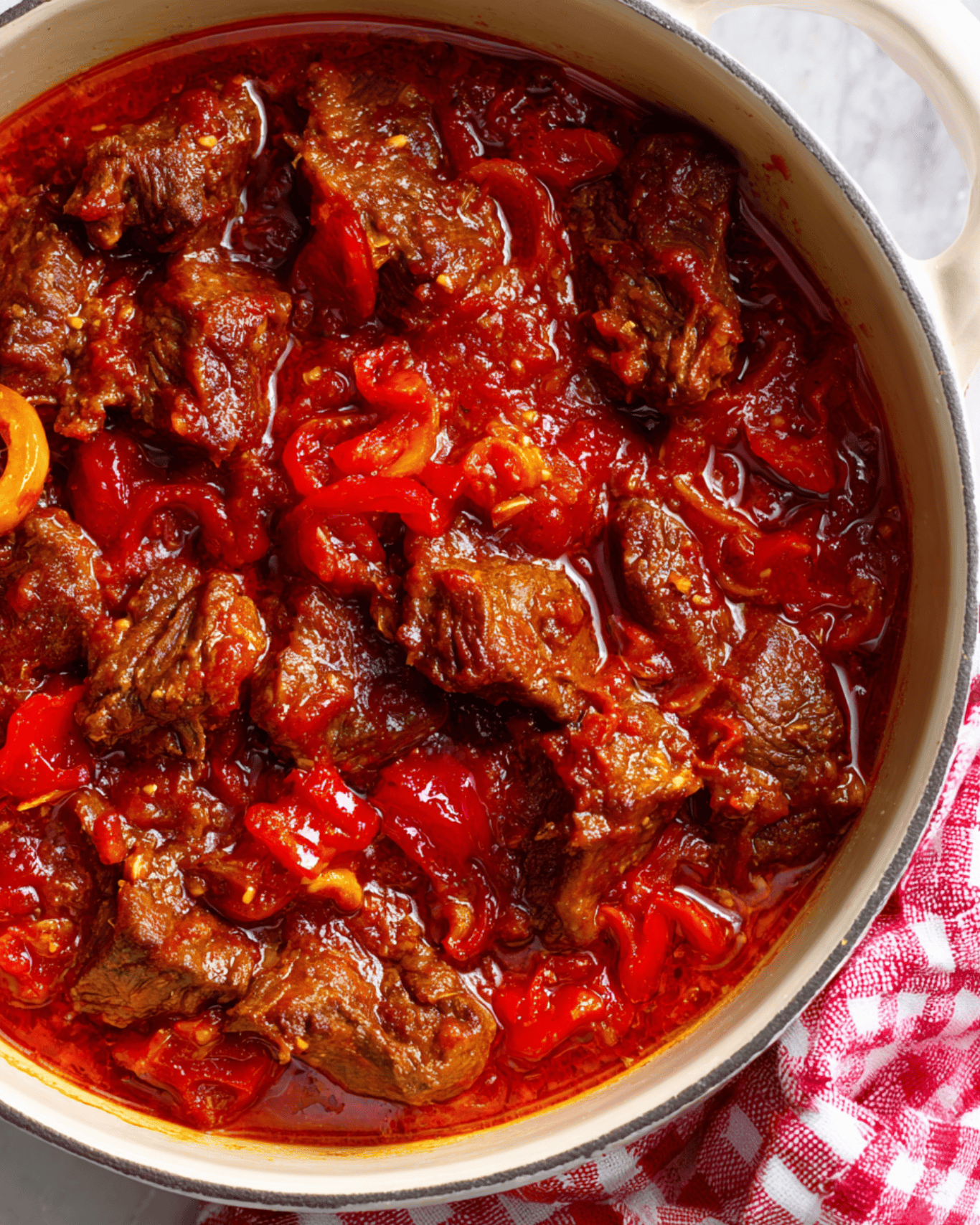
Have you ever cooked a pot of stew so good that you started eating the meat before the rice was even ready?
Nigerian beef stew can certainly have that effect!
A good Nigerian stew needs a rich tomato and pepper base, well-seasoned beef and, most importantly, patience.
You want to fry the blended tomato and pepper mixture long enough to get rid of that raw, acidic taste.
The beef is seasoned and cooked until tender before being fried and added to the stew, and the stock from cooking the meat gives the sauce even more flavour.
How much Scotch bonnet you use is entirely up to you, although I do enjoy a stew with a decent kick.
Serve it with boiled white rice, fried plantain, yam or even bread.
It’s always worth making a big pot because Nigerian beef stew goes with practically everything!
Why You’d Want This ASAP
The combination of tomatoes, peppers and beef stock gives the stew a wonderfully rich flavour.
You can adjust the Scotch bonnet peppers to suit your tolerance for spicy food.
It’s economical to cook in large batches, especially when using affordable cuts of stewing beef.
The stew tastes even better the following day as the meat absorbs more of the sauce.
It freezes beautifully and goes with everything from boiled yam to fried plantain.
And when you’ve had a long day, having some ready-made stew in the fridge makes dinner considerably easier.
What You’ll Need
For the beef
-
1kg stewing beef, cut into chunks
-
1 onion, chopped
-
2 beef stock cubes
-
1 teaspoon curry powder
-
1 teaspoon dried thyme
-
Salt, to taste
-
500ml water, or as needed
For the stew
-
6 large ripe tomatoes
-
3 large red bell peppers (tatashe), divided
-
1–2 Scotch bonnet peppers (ata rodo)
-
1 large onion
-
2 tablespoons tomato paste
-
150ml vegetable oil
-
250ml reserved beef stock, or as needed
-
1 teaspoon curry powder
-
½ teaspoon dried thyme
-
Salt, to taste
Helpful Tips
-
Use ripe red tomatoes for a richer colour and better flavour.
-
Boil the beef until tender before frying or browning it.
-
Reduce the blended pepper mixture before frying to remove excess water.
-
Don’t discard the beef stock; it adds tremendous flavour to the stew.
-
Allow the tomato mixture to fry properly before adding the beef.
Servings and Time
Serves: 6
Prep time: 15 minutes
Cook time: 1 hour 30 minutes
Total time: 1 hour 45 minutes
How to Make It
1. Season and cook the beef
– Place the beef chunks in a large cooking pot.
– Add the chopped onion, stock cubes, curry powder, thyme and a little salt.
– Toss everything together until the beef is evenly seasoned.
– Add the water and bring to a boil over medium-high heat.
– Reduce the heat, cover and allow the beef to simmer for approximately 40 to 60 minutes, or until tender.
– Add more water during cooking if necessary.
– Remove the cooked beef from the pot and reserve the stock for the stew.
2. Prepare the tomato and pepper mixture
– Wash the tomatoes, red bell peppers and Scotch bonnet peppers.
– Remove the seeds from two of the bell peppers and roughly chop them.
– Slice the remaining red bell pepper into strips and set aside.
– Add the tomatoes, chopped bell peppers, Scotch bonnet peppers and half of the large onion to a blender.
– Blend until reasonably smooth, using as little additional water as possible.
– Pour the blended mixture into a saucepan.
– Cook uncovered over medium heat for 15 to 25 minutes until considerably reduced.
3. Brown the beef
– Heat the vegetable oil in a large, heavy-bottomed cooking pot over medium-high heat.
– Pat the cooked beef dry to remove excess surface moisture.
– Carefully add the beef to the hot oil in batches.
– Fry for approximately 3 to 5 minutes, turning occasionally until browned around the edges.
– Remove the beef and transfer it to a clean plate.
– Keep the oil in the pot for preparing the stew.
4. Fry the stew base
– Slice the remaining half of the onion and add it to the oil used for frying the beef.
– Sauté for 2 to 3 minutes until softened and fragrant.
– Add the tomato paste and fry for approximately 2 minutes, stirring regularly.
– Carefully pour in the reduced tomato and pepper mixture.
– Stir thoroughly and cook over medium heat for 15 to 20 minutes.
– Partially cover the pot to reduce splattering, stirring regularly to prevent burning.
– Continue frying until the raw tomato smell has gone, the sauce has thickened and the red oil begins to separate around the edges.
5. Add the beef and stock
– Add the reserved beef stock, curry powder and thyme.
– Stir well and taste before adding any additional salt.
– Return the browned beef chunks to the pot.
– Add the reserved sliced red bell pepper.
– Reduce the heat and allow the stew to simmer gently for another 10 to 15 minutes.
– Add a little more beef stock if the sauce becomes too thick.
– Once the beef is thoroughly heated and coated in the rich tomato sauce, remove the stew from the heat.
– Serve hot with freshly cooked white rice or your preferred accompaniment.
Why Is There Oil on Top of Nigerian Stew?
That little layer of red oil is a familiar feature of properly fried Nigerian tomato stew.
As the moisture in the tomato and pepper mixture reduces, the oil begins to separate from the sauce.
It’s a useful sign that the stew is progressing nicely.
However, you don’t need an enormous amount of oil floating on top for the stew to taste good.
Once everything is cooked, you can carefully spoon away any excess oil if you prefer.
Keep a little, though, because that deeply coloured, pepper-infused oil is particularly delicious when mixed into hot white rice.
How to Adjust the Heat
Scotch bonnet peppers are considerably hotter than ordinary red chillies, and their fruity flavour is particularly lovely in Nigerian stew.
The number you use should depend on who’s eating.
– Mild stew: Use half a Scotch bonnet pepper or substitute a milder chilli.
– Medium heat: Use one Scotch bonnet pepper.
– Spicy stew: Use two Scotch bonnet peppers.
– Extra spicy: Add another pepper according to your preference.
Remember that Scotch bonnet peppers vary in strength.
Two peppers from one packet might be considerably hotter than two from another.
Red bell peppers, on the other hand, provide colour and sweetness without adding significant heat, so don’t reduce those simply because you want a milder stew.
What to Serve With Nigerian Beef Stew
White rice is an obvious favourite, but Nigerian beef stew is far too versatile to be restricted to rice alone.
Here are some delicious ways to enjoy it.
– White rice: A simple, classic combination that lets the stew do all the talking.
– Fried plantain: The sweetness of ripe plantain goes beautifully with spicy tomato stew.
– Boiled yam: Particularly satisfying for breakfast or lunch.
– Boiled potatoes: An inexpensive and filling alternative to rice.
– Beans: Spoon the stew over plain cooked beans for a hearty meal.
– Spaghetti: Toss freshly cooked spaghetti with a generous helping of the stew.
– Boiled eggs: Add peeled boiled eggs to the stew for extra protein.
– Agege bread: Perfect for scooping up the thick tomato sauce.
White rice, beef stew and fried plantain on the same plate would be my first choice.
Especially when the plantain is properly ripe and has those lovely caramelised edges.
Storage and Reheating
In the fridge
– Allow the beef stew to cool promptly after cooking.
– Transfer it to a clean, airtight container.
– Refrigerate within two hours of cooking.
– Store in the fridge for up to 2 days.
In the freezer
– Divide the cooled stew into individual or family-sized portions.
– Transfer to freezer-safe containers, leaving a little space for expansion.
– Freeze for up to 3 months.
– Defrost overnight in the refrigerator before reheating.
How to reheat
– Transfer the required portion to a saucepan.
– Add a small splash of water or beef stock if necessary.
– Heat over medium-low heat, stirring occasionally until steaming hot throughout.
– Only reheat the portion you intend to eat.
Q&A
Can I use canned tomatoes instead of fresh tomatoes?
Yes, canned plum tomatoes work very well, particularly when fresh tomatoes aren’t ripe or flavourful enough.
Two 400g tins can replace the six fresh tomatoes.
Make sure you still include the red bell peppers for that lovely sweetness and vibrant colour.
Do I have to fry the beef?
No, but frying the cooked beef gives it a firmer exterior and a lovely browned flavour.
You can also grill or air fry the beef before adding it to the stew if you prefer to use less oil.
Adding the boiled beef directly to the sauce works well when you prefer softer meat.
Why does my Nigerian stew taste sour?
The tomato mixture probably hasn’t been fried for long enough, or the tomatoes you used were particularly acidic.
Allow the sauce to cook a little longer over medium-low heat, stirring frequently.
Using ripe tomatoes and plenty of red bell peppers can also help balance the acidity naturally.
Can I use palm oil instead of vegetable oil?
Yes, although it will give the stew a noticeably different flavour.
Vegetable oil is commonly used for Nigerian tomato beef stew because its neutral flavour allows the tomatoes and peppers to stand out.
Palm oil is a lovely option when you specifically want a richer, more distinctive palm oil flavour.
Why is my beef still tough?
The beef may simply need more cooking time.
Some cuts take considerably longer to become tender than others.
Continue simmering gently with enough liquid until the meat softens rather than trying to rush it over high heat.
Can I make Nigerian stew without tomato paste?
Absolutely.
Tomato paste helps deepen the colour and concentrate the tomato flavour, but it isn’t essential.
Using good-quality ripe tomatoes and properly reducing the blended mixture will still give you a delicious stew.
Can I roast the tomatoes and peppers before blending?
Yes, roasting is another lovely way to prepare the stew base.
Roast the tomatoes, peppers and onion until softened and lightly charred before blending.
This reduces some of their moisture and introduces a subtle smoky flavour.
Why is my stew watery?
The blended tomatoes and peppers may have contained too much water, or you may have added excessive beef stock.
Simmer the stew uncovered over medium-low heat until the excess liquid evaporates.
Stir occasionally to prevent the thicker sauce from sticking to the bottom of the pot.
Can I make this stew in a pressure cooker?
Yes, a pressure cooker is particularly useful for tenderising tougher cuts of beef.
Cook the seasoned beef according to your pressure cooker’s instructions until tender, then prepare the tomato and pepper sauce separately on the stovetop.
The stew base still benefits from being fried uncovered or partially covered so the excess moisture can evaporate.
Can I use the same stew base for chicken?
Definitely.
You can replace the beef with seasoned chicken thighs, drumsticks or other chicken pieces.
Use the reserved chicken stock in place of beef stock, and make sure the chicken is thoroughly cooked.
Can I prepare Nigerian beef stew in advance?
Yes, and it’s an excellent recipe for batch cooking.
You can even prepare a large quantity of the fried tomato and pepper base without adding meat, then freeze it in smaller portions.
Whenever you fancy beef, chicken or fish stew, simply defrost a portion of the base and finish it with your chosen protein.