Aloo Gobi (Potatoes & Cauliflower Curry)
Aloo gobi is one of those dishes that proves potatoes and cauliflower really do not need much help to become dinner.
Give them butter, tomatoes, warming Indian spices and a little time in the pan, and you get something deeply savoury, fragrant and very hard to stop picking at.
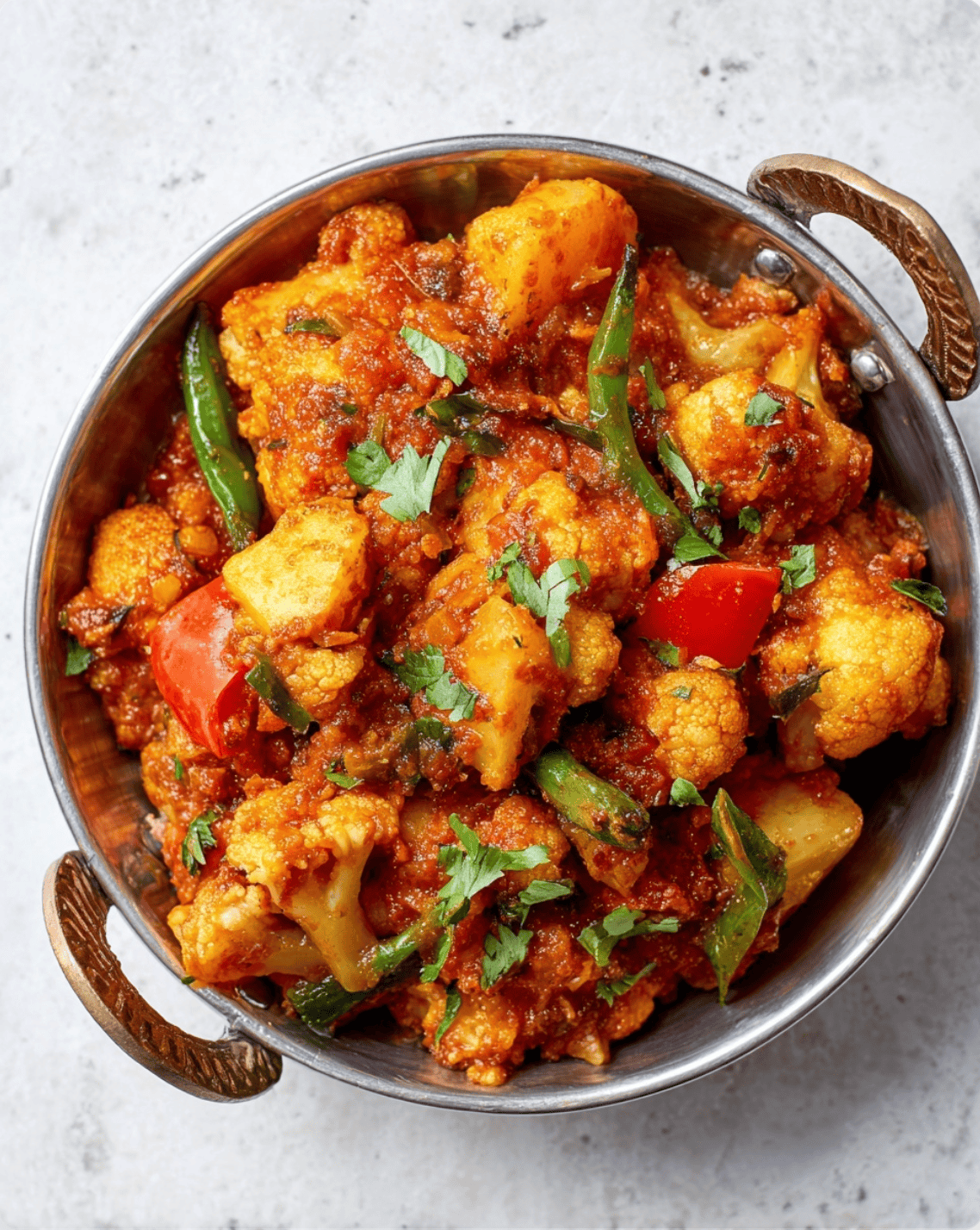
I like my aloo gobi fairly dry rather than swimming in sauce.
The potatoes should be tender all the way through.
The cauliflower needs to hold its shape.
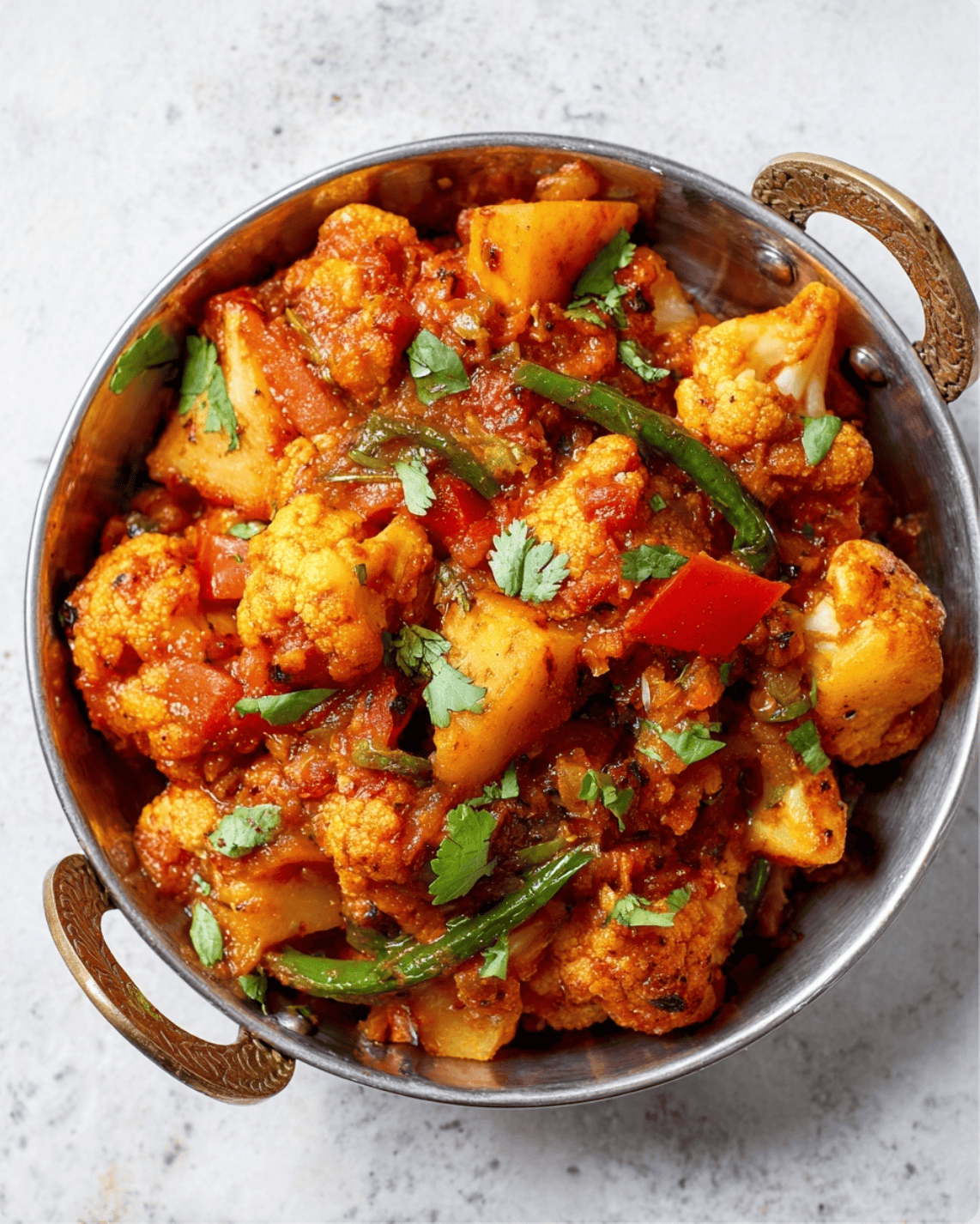
And everything should be coated in a thick, spiced tomato masala that clings to the vegetables rather than sitting underneath them.
A little butter at the end makes a surprisingly big difference too.
It softens the sharper edges of the tomato and spices and gives the whole thing that richer finish you get from really good homemade aloo gobi.
There are also chunks of red pepper and whole green chillies running through this version.
They add sweetness, colour and a bit of freshness without taking over.
Pile it into a bowl, scatter over fresh coriander and serve it with warm naan or rice.
Simple. Properly comforting. Exactly how I want it.
Page Contents
ToggleWhat Is Aloo Gobi?
Aloo gobi is a classic Indian dish made with potatoes and cauliflower cooked with spices.
“Aloo” means potato and “gobi” means cauliflower.
There are loads of ways to make it.
Some versions are completely dry.
Others have a little tomato gravy.
Some use fresh tomatoes, while others lean more heavily on spices and onions.
This version sits somewhere in the middle.
It has enough tomato masala to coat everything generously, but it is still thick rather than saucy.
The butter gives it a slightly richer finish without turning it into a heavy curry.
Ingredients
This serves 4 people as a main with sides, or around 6 as part of a larger meal.
For the aloo gobi
- 500g potatoes, peeled and cut into medium chunks
- 1 medium cauliflower, cut into florets
- 2 tablespoons neutral oil
- 1 tablespoon butter
- 1 large onion, finely chopped
- 4 garlic cloves, minced
- 1 tablespoon fresh ginger, finely grated
- 1 red bell pepper, cut into chunky pieces
- 2 fresh green chillies, left whole or slit lengthways
- 1 x 400g tin chopped tomatoes
- 2 tablespoons tomato paste
- 1 teaspoon cumin seeds
- 1 teaspoon ground cumin
- 1 teaspoon ground coriander
- 1 teaspoon turmeric
- 1 teaspoon garam masala
- 1 teaspoon Kashmiri chilli powder
- ½ teaspoon paprika
- ½ teaspoon ground black pepper
- 1 teaspoon fine sea salt, plus more to taste
- 100ml water
- 1 tablespoon butter, for finishing
- Small handful fresh coriander, roughly chopped
Start With the Potatoes
The trick with aloo gobi is getting the potatoes cooked without turning the cauliflower to mush.
Potatoes take longer.
Cauliflower does not care about your timing and will happily collapse while you wait.
So I like to give the potatoes a head start.
- Peel the potatoes and cut them into medium chunks.
- Add them to a saucepan of lightly salted water.
- Bring to the boil.
- Cook for 6 to 7 minutes.
- Drain well.
They should still feel firm in the middle.
You are not trying to cook them completely.
This just means they will finish at roughly the same time as the cauliflower later.
Brown the Cauliflower
You can throw raw cauliflower directly into the masala.
It works.
But browning it first gives you much better flavour.
Those slightly golden edges make a big difference.
- Heat 1 tablespoon oil in a large, wide pan over medium-high heat.
- Add the cauliflower florets.
- Cook for 5 to 6 minutes.
- Turn them occasionally so a few sides pick up some colour.
- Transfer to a plate.
Do not worry about cooking the cauliflower through yet.
It only needs a little browning.
Fry the Potatoes
Now add the parboiled potatoes to the same pan.
- Add another tablespoon of oil if the pan looks dry.
- Add the potatoes.
- Cook for 4 to 5 minutes.
- Turn occasionally until a few edges turn golden.
- Transfer them to the plate with the cauliflower.
You are basically building layers of flavour here.
Aloo gobi made by boiling everything directly in tomato sauce is fine.
Aloo gobi with a few browned, caramelised edges is much better.
Make the Spiced Tomato Masala
Reduce the heat to medium.
Add the butter.
Once it melts, add the cumin seeds.
- Let the cumin seeds sizzle for around 20 seconds.
- Add the chopped onion.
- Cook for 6 to 8 minutes.
- Stir regularly until the onion is soft and starting to turn golden.
Do not rush the onion.
Raw-tasting onion has absolutely nowhere to hide in a dish like this.
Once it has softened:
- Add the garlic and ginger.
- Cook for 1 minute.
- Add the ground cumin, coriander, turmeric, garam masala, Kashmiri chilli powder, paprika and black pepper.
- Stir for around 30 seconds.
Keep the heat under control.
Spices need a little heat to wake up, but burnt ground spices taste bitter very quickly.
Add the Tomatoes
Now add the tomato paste.
- Stir it into the onion mixture.
- Cook for 1 to 2 minutes.
This is worth doing.
Cooking tomato paste in the pan makes it taste richer and less sharp.
Then:
- Pour in the chopped tomatoes.
- Add the salt.
- Stir everything together.
- Cook uncovered for 6 to 8 minutes.
The tomato mixture should reduce and darken slightly.
You want it to look thick before the vegetables go back in.
If the masala is still watery, give it another couple of minutes.
Add the Potatoes and Cauliflower
Return the potatoes and cauliflower to the pan.
Add the red bell pepper and green chillies.
- Toss everything gently through the tomato masala.
- Pour in about 100ml water.
- Cover the pan with a lid.
- Reduce the heat to medium-low.
- Cook for 12 to 15 minutes.
Stir once or twice during cooking, but be gentle.
The cauliflower gets increasingly delicate as it softens.
You want proper florets in the finished dish, not cauliflower mash with potato chunks.
Check the Vegetables
After about 12 minutes, test one of the larger potato pieces with a knife.
It should slide in easily.
The cauliflower should be tender but still intact.
If the potatoes need longer:
- Add another small splash of water.
- Cover again.
- Cook for another 3 to 5 minutes.
If there is too much liquid once everything is cooked:
- Remove the lid.
- Increase the heat slightly.
- Cook for a few minutes until the masala thickens again.
Aloo gobi should cling to the vegetables.
There should not be a pool of thin sauce sitting underneath them.
Finish With Butter
Once the vegetables are cooked, turn the heat to low.
Add 1 tablespoon butter.
Gently fold it through.
This is the little finishing step I would not skip.
It rounds everything out.
The tomato becomes less sharp, the spices taste warmer and the masala gets that slightly glossy finish.
Taste and adjust the salt.
Then scatter over a generous handful of fresh coriander.
I like leaving the green chillies in the finished dish too.
They soften during cooking and give little pockets of heat without making every bite aggressively spicy.
What to Serve With Aloo Gobi
Aloo gobi is very easy to turn into a full dinner.
Serve it with:
- Steamed basmati rice
- Jeera rice
- Chapati
- Roti
- Warm naan
- Cucumber raita
- Plain yoghurt
- Mango chutney
- Lentil dal
I usually go for rice or chapati.
The dish already has potatoes, so you definitely do not need another carb.
But nobody has ever regretted naan sitting next to a bowl of aloo gobi either.
Tips for Really Good Aloo Gobi
Cut the potatoes evenly.
If some pieces are tiny and others are enormous, the small ones will fall apart before the big ones cook.
Do not overcook the cauliflower.
This is probably the biggest one.
Soft cauliflower is fine.
Collapsing cauliflower is not.
Let the tomatoes cook down properly.
You want a thick masala.
That concentrated tomato flavour is what coats the vegetables and makes the finished dish taste rich.
Use Kashmiri chilli powder if you can.
It gives gorgeous colour and gentle heat.
Regular chilli powder works too, but use less if yours is particularly hot.
Finish with butter.
You can technically leave it out.
I would not.
It is only a tablespoon, and it does a lot.
Q&A
Can I make aloo gobi without butter?
Yes.
Use oil throughout and the dish will still be delicious.
If you want it vegan, this is the easiest swap.
Why is my aloo gobi watery?
There are usually two reasons.
Either the tomatoes did not reduce enough before the vegetables were added, or too much water went into the pan.
Remove the lid and let everything cook uncovered until the liquid reduces.
Can I use frozen cauliflower?
You can, but fresh is better here.
Frozen cauliflower releases more water and tends to soften much faster.
If using frozen, add it later in the cooking process and do not thaw it first.
Can I make it less spicy?
Yes.
Leave out the fresh green chillies and reduce the Kashmiri chilli powder.
The cumin, coriander, turmeric and garam masala will still give you plenty of flavour.
Can I add peas?
Absolutely.
A handful of frozen peas stirred in during the final 5 minutes works really well.
Can I make aloo gobi ahead?
Yes.
It actually tastes very good the next day because the spices have more time to settle.
Keep it in the fridge for up to 3 days.
How do I reheat it?
Warm it gently in a covered frying pan with a tablespoon or two of water.
You can also microwave individual portions.
I prefer the pan because it keeps the vegetables from becoming too soft.
Storage
Let the aloo gobi cool before transferring it to an airtight container.
Keep it refrigerated for up to 3 days.
It can also be frozen, although the cauliflower will be softer once thawed.
For the best texture, I would eat it fresh or refrigerated rather than frozen.
When reheating, add fresh coriander at the end.
A tiny knob of butter stirred through again is not a bad idea either.
Final Thoughts
Aloo gobi is not complicated food.
That is exactly why getting the little things right matters.
Brown the vegetables.
Cook the onions properly.
Let the tomatoes reduce.
And do not murder the cauliflower by cooking it for forty minutes.
Do that, and you get tender potatoes, cauliflower with a little bite, sweet peppers and thick spiced masala in every spoonful.
Then add butter and coriander at the end.
That is dinner sorted.