Creamy Gruyere Scalloped Potatoes
Looking for an easy side dish that feels a little more special than regular potatoes?
These creamy Gruyere scalloped potatoes are rich, cheesy and baked until golden on top with soft, tender layers underneath.
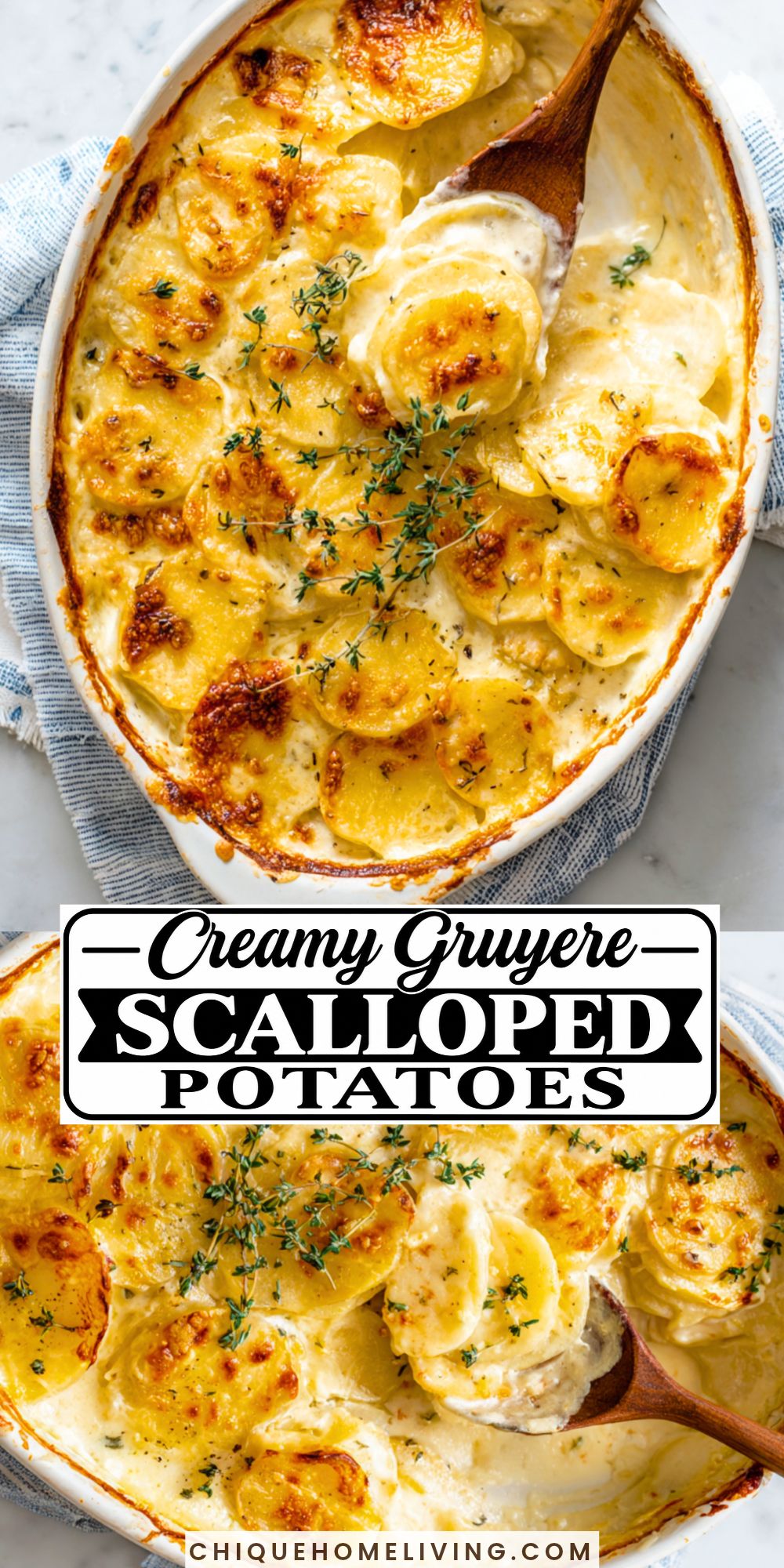
These creamy Gruyere scalloped potatoes are such a good choice when you want a comforting side dish that still feels a bit special.
The potatoes are sliced thin, layered in a creamy sauce and baked until soft, while the Gruyere melts through everything and gives the top that lovely golden finish.
Fresh thyme works really well here too and adds a little extra flavour without making the dish complicated.
It’s the kind of side that works with roast chicken, beef, pork or a big holiday dinner, and you can easily prepare it ahead if you’re cooking for a crowd.
Warm, cheesy and simple to serve, this is one of those potato dishes that always feels worth making.
What You’ll Need
- 1.2 kg potatoes
- 2 tablespoons butter, plus extra for greasing
- 3 garlic cloves, finely minced
- 400 ml double cream
- 200 ml whole milk
- 1 teaspoon fresh thyme leaves
- 1 teaspoon salt
- 1/2 teaspoon black pepper
- 180 g Gruyere cheese, grated
- 40 g parmesan, finely grated
- Extra fresh thyme, for finishing
Pick the Right Potatoes
You want potatoes that soften beautifully without completely falling apart.
Maris Piper, Yukon Gold or another good all-purpose potato works really well.
The most important thing is not actually the variety, though.
It is the slicing.
Keep the slices thin and even.
About 2 to 3 mm is perfect.
If some slices are paper-thin and others look like coasters, you are going to have a casserole where half the potatoes are tender and the other half are still negotiating.
A mandoline makes this easy.
A sharp knife works too.
Just take your time.
The Cream Sauce Should Taste Good Before It Touches a Potato
This sounds obvious, but it matters.
Warm the cream with garlic, thyme, salt and black pepper before assembling the dish.
Taste it.
If it tastes bland now, the potatoes are not going to magically fix it later.
Potatoes absorb seasoning enthusiastically.
That is one of their talents.
So the cream should taste slightly more seasoned than you think it needs to.
Not salty.
Just definitely not shy.
How to Make It
- Heat the oven to 190°C / 170°C fan / 375°F.
- Butter a large oval or rectangular baking dish generously.
- Peel the potatoes if you prefer them without skins.
- Slice them very thinly and evenly.
- Melt 2 tablespoons of butter in a saucepan over medium-low heat.
- Add the garlic.
- Cook for about 30 seconds until fragrant.
- Pour in the double cream and milk.
- Add the thyme, salt and black pepper.
- Warm gently for 3 to 4 minutes.
- Do not let it boil hard.
- Remove the pan from the heat.
- Arrange a layer of potato slices over the bottom of the baking dish, overlapping them slightly.
- Spoon over a little of the garlic cream mixture.
- Sprinkle over a small handful of Gruyere.
- Add another layer of potatoes.
- Continue layering potatoes, cream and Gruyere until everything is used.
- Press the potatoes down gently as you go so the cream can settle between the layers.
- Finish with the remaining Gruyere and parmesan over the top.
- Cover the dish tightly with foil.
- Bake for 45 minutes.
- Remove the foil.
- Return the potatoes to the oven for another 30 to 40 minutes.
- Bake until the potatoes are completely tender and the top is deeply golden.
- If the top needs more colour, place it under the grill for 2 to 3 minutes.
- Let the dish rest for 15 minutes before serving.
- Finish with fresh thyme.
Do Not Skip the Covered Baking Time
This is how you get creamy potatoes instead of beautifully browned raw potatoes.
The foil traps steam and helps those thin slices cook evenly.
Once the potatoes are tender, the foil comes off and the top gets its chance to brown properly.
If you uncover them too early, the cream can reduce before the potatoes have softened.
Then you end up adding more liquid halfway through and getting annoyed.
I have been there.
It is unnecessary stress.
You Want the Sauce Thick, But Still Silky
When the scalloped potatoes come out of the oven, the cream should be bubbling around the edges.
It may look slightly loose at first.
That is fine.
This is why the resting time matters.
As the dish sits, the sauce thickens around the potatoes and everything settles.
Serve it immediately and you risk a small cream flood across the plate.
Give it 15 minutes and it behaves beautifully.
Also, nobody needs to burn the roof of their mouth because they were too impatient to wait.
Gruyere Is Doing a Lot of Work Here
Gruyere melts beautifully, but more importantly, it actually tastes like something.
It is nutty, savoury and slightly sweet, which works really well with cream, garlic and potatoes.
The parmesan adds a little extra saltiness and helps the top brown.
I would not overload every layer with cheese.
You still want visible potatoes and creamy sauce.
This should taste rich and cheesy, not like someone hid a block of Gruyere under a potato blanket.
How to Get Those Golden Edges
Make sure the cream comes quite close to the top of the potatoes without completely submerging them.
Then leave the dish uncovered for the final part of baking.
The exposed potato slices and cheese will colour first.
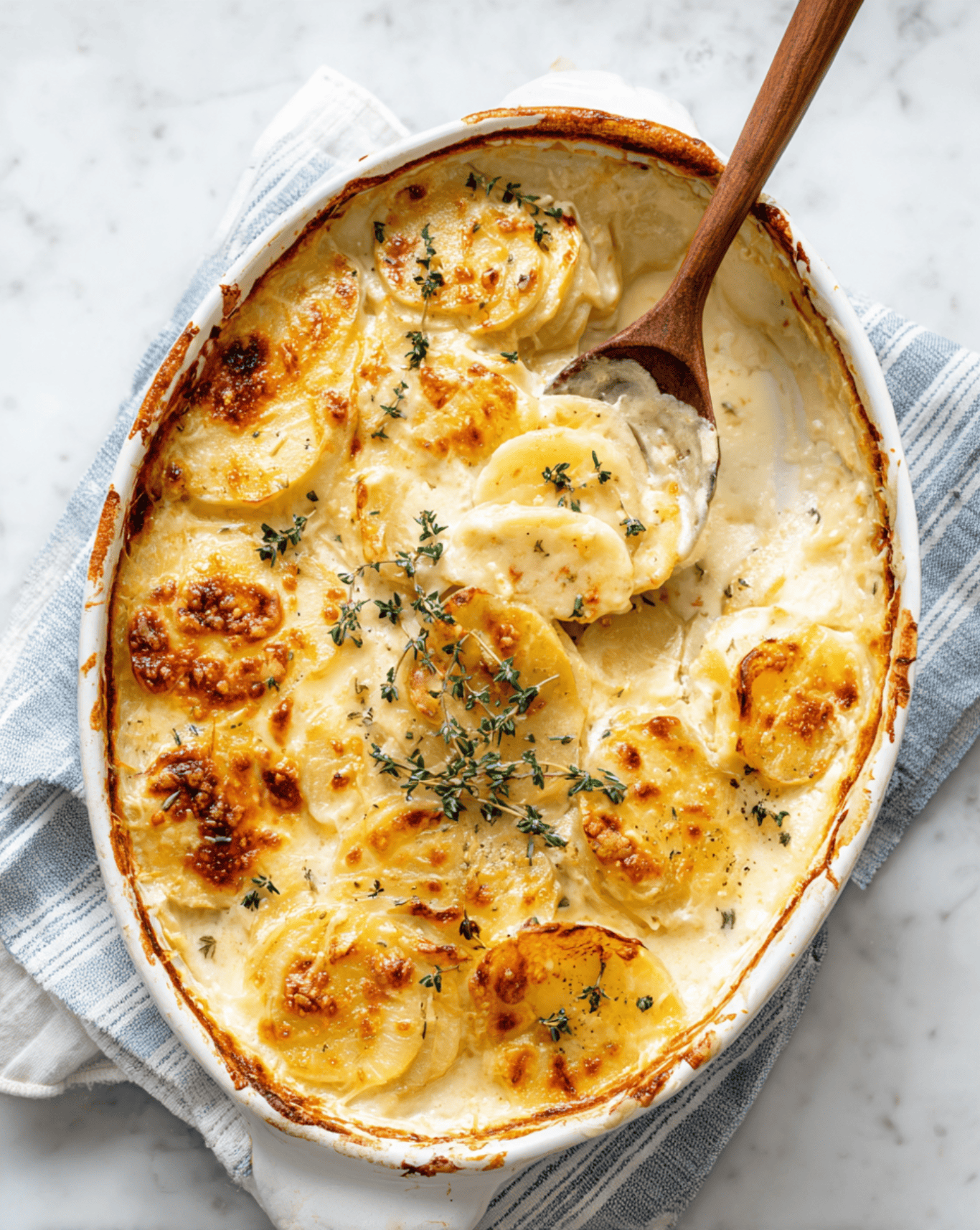
You get little browned bubbles around the edge of the dish, golden patches across the top and those darker caramelised spots that are absolutely worth fighting over.
If your oven is being stubborn, use the grill at the end.
Just stay there.
Do not wander off.
Gruyere can go from “perfectly golden” to “what have I done?” surprisingly quickly.
Fresh Thyme Makes Sense Here
Thyme is lovely with creamy potatoes because it adds flavour without trying to become the main event.
You only need a little in the sauce.
Then scatter some fresh leaves over the top after baking.
That gives you a fresher herbal flavour and looks much better than cooking all the thyme until it turns dark.
Rosemary would be stronger.
Sage would take it in a different direction.
For this version, thyme is exactly right.
Can You Make These Ahead?
Yes, and that is one reason I love this dish for bigger dinners.
Assemble the potatoes completely, cover the dish and refrigerate for up to 24 hours.
Take it out of the fridge about 30 minutes before baking.
Then bake as usual, adding another 10 minutes or so if it is still quite cold in the middle.
You can also bake the entire dish ahead of time and reheat it.
Cover with foil and warm at 180°C / 160°C fan / 350°F until hot through.
Remove the foil near the end so the top can crisp up again.
What to Serve With Scalloped Potatoes
These work with almost any roast dinner.
They are especially good with:
- Roast turkey
- Glazed ham
- Roast chicken
- Beef tenderloin
- Roast beef
- Pork tenderloin
- Green beans
- Roasted carrots
- Tenderstem broccoli
Because the potatoes are rich, I like pairing them with something green or something slightly sharp.
A simple green vegetable balances the creaminess beautifully.
Storage
Let leftovers cool completely.
Store them in an airtight container in the fridge for up to 3 days.
Reheat in the oven if you can.
That keeps the top much nicer than the microwave.
If using the microwave, heat individual portions gently rather than blasting them on full power.
The sauce can separate if it gets too hot too quickly.
Q&A
Are scalloped potatoes the same as potato gratin?
They are very similar.
A gratin usually contains cheese and develops a browned top, while traditional scalloped potatoes can be made without cheese.
This version absolutely leans into the cheesy gratin side of things.
Can I use cheddar instead of Gruyere?
Yes.
A mature cheddar works well, although the flavour will be sharper and less nutty.
Can I use single cream?
You can, but the sauce will be lighter.
Double cream gives the richest, silkiest result.
Do I need to peel the potatoes?
No.
If the skins are thin and clean, you can leave them on.
For a smoother, more classic texture, peel them.
Why are my potatoes still hard?
They may have been sliced too thickly, or the dish may need longer covered in the oven.
Cover it again and continue baking until a knife slides through easily.
Why did my cream sauce split?
The oven may have been too hot, or the cream may have boiled aggressively before baking.
Keep the heat moderate and warm the sauce gently.
Can I make this without garlic?
Yes.
You will lose some depth, but the potatoes will still be delicious with thyme, cream and Gruyere.
Can I add onions?
Yes.
Very thinly sliced onion can be layered between the potatoes.
Keep it light so the onion does not dominate.
Can I freeze scalloped potatoes?
You can, although the cream sauce may change slightly in texture after thawing.
For the best result, I prefer making them fresh or one day ahead.
How do I know when they are done?
Push a thin knife into the centre.
It should slide through the potato layers easily with almost no resistance.
The top should also be deeply golden and the cream should be bubbling around the edges.