Garlic Herb Prime Rib Roast
Planning a special dinner and want something that really feels worth putting in the centre of the table?
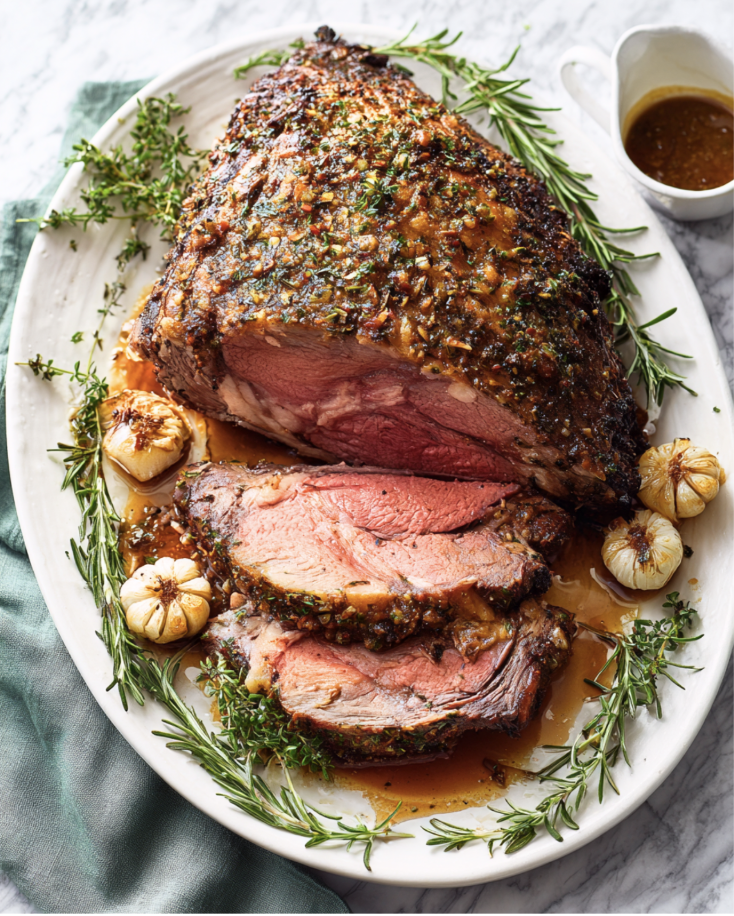
This garlic herb prime rib roast is juicy, deeply browned and packed with plenty of garlic, rosemary and thyme.
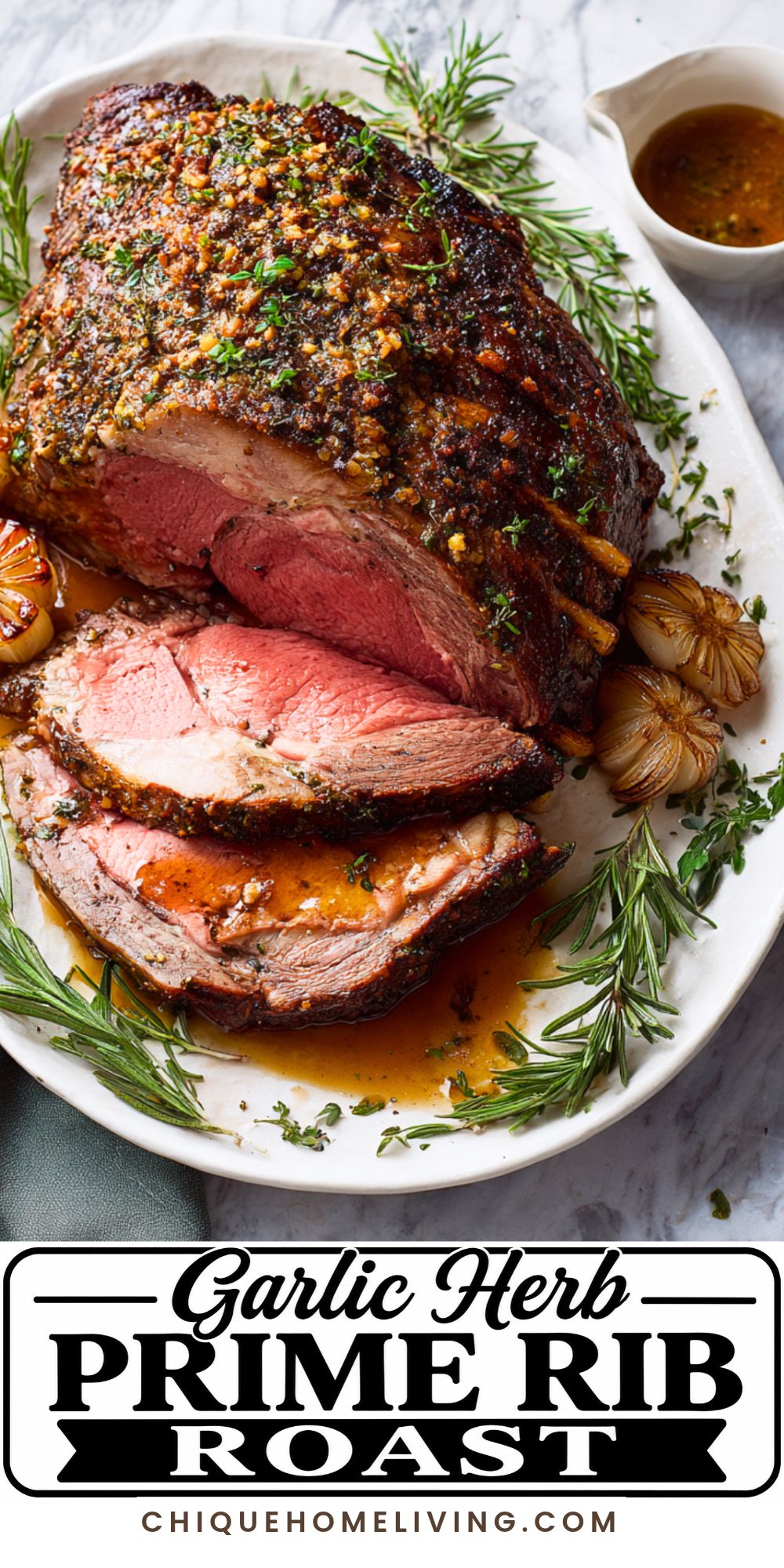
This garlic herb prime rib roast is a great choice when you want dinner to feel a little more special without making the whole meal complicated.
The outside gets a dark, savoury crust from the garlic and herbs, while the inside stays tender and beautifully pink.
I like serving it sliced thick with plenty of the pan juices spooned over the top.
Roasted garlic on the side adds even more flavour, and fresh rosemary and thyme make the whole thing feel perfect for Christmas, Sunday dinner or any occasion when you’re feeding a crowd.
Add roast potatoes, vegetables and gravy and you’ve got a proper centrepiece meal that looks impressive but is still straightforward to serve.
Why You’ll Want to Try this Roast
Prime rib already has loads going for it because it has beautiful marbling and plenty of natural flavour.
All it really needs is enough seasoning, a hot enough oven to build colour, and the good sense not to overcook it.
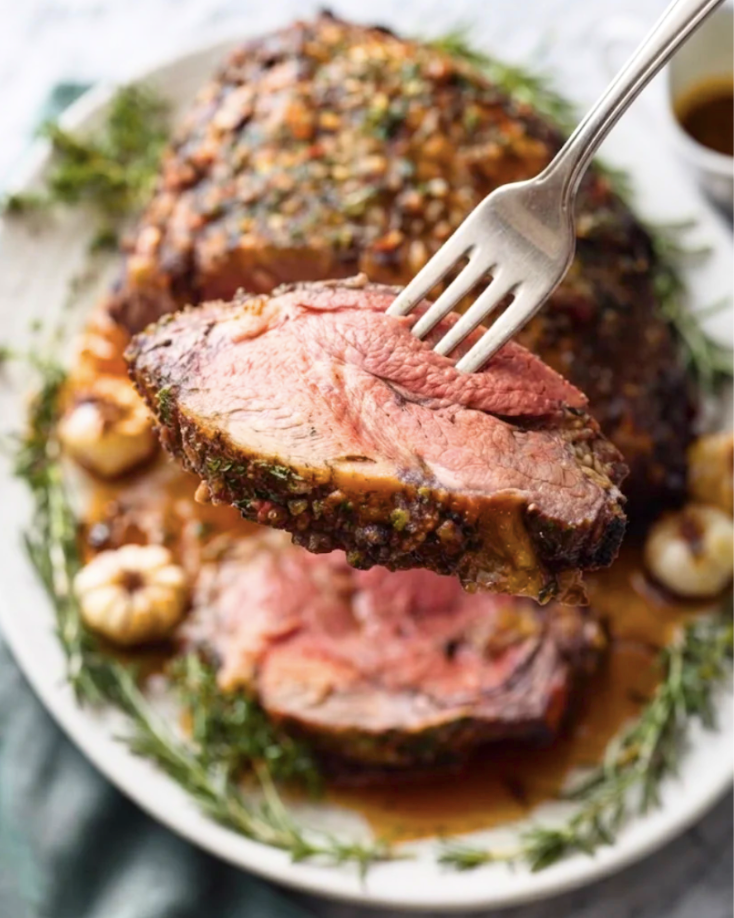
The garlic herb crust gives you that dark, savoury outer layer that tastes incredible with the juicy beef inside.
The butter helps everything cling to the meat and encourages browning.
The fresh rosemary and thyme keep it classic.
And the roasted garlic in the pan softens into something sweet and mellow that works perfectly with the richer beef.
You also get lovely pan juices from the roast.
That means you can spoon the glossy juices over the carved slices or pour them into a little jug at the table and let everyone help themselves like civilised people.
What You’ll Need
- 1 bone-in prime rib roast, about 3.5 to 4.5 kg
- 2 tablespoons olive oil
- 100 g unsalted butter, softened
- 8 garlic cloves, finely minced
- 2 teaspoons sea salt
- 1 1/2 teaspoons black pepper
- 1 tablespoon chopped fresh rosemary
- 1 tablespoon chopped fresh thyme
- 1 teaspoon Dijon mustard
- 2 whole heads garlic, halved crosswise
- A few extra rosemary sprigs
- A few extra thyme sprigs
- 250 ml beef stock
- 1 tablespoon plain flour, optional, if you want a slightly thicker jus
- Salt and pepper, to taste
A Few Important Ingredient Notes
Buy a good prime rib if you can.
Because this roast is so simple, the quality of the beef really comes through.
Bone-in gives you great flavour and makes the whole thing look even more impressive on the serving platter.
Let the roast sit out at room temperature for about 1 1/2 to 2 hours before cooking.
That helps it roast more evenly and gives you a much better chance of landing that medium-rare centre without the outside overcooking.
Do not skip the salt.
A big roast needs proper seasoning.
Underseasoned beef is always disappointing, and no amount of gravy can fully rescue it.
Fresh herbs are best here.
Dried herbs can work in a pinch, but fresh rosemary and thyme give the crust a much cleaner, brighter flavour.
How to Make It
- Take the prime rib out of the fridge 1 1/2 to 2 hours before roasting.
- Pat it very dry with kitchen paper.
- Preheat the oven to 230°C / 210°C fan / 450°F.
- In a bowl, mix the softened butter, olive oil, minced garlic, salt, black pepper, chopped rosemary, chopped thyme and Dijon mustard.
- Put the roast in a large roasting tin or oven-safe dish, fat side up.
- Rub the garlic herb mixture all over the roast, pressing it well onto the surface.
- Tuck the halved garlic heads and extra rosemary and thyme sprigs around the meat.
- Roast at the high temperature for 20 minutes to start building that dark crust.
- Lower the oven temperature to 180°C / 160°C fan / 350°F.
- Continue roasting for about 1 hour 20 minutes to 1 hour 50 minutes, depending on the size of the roast.
- For medium rare, cook until the thickest part reaches 52 to 54°C / 125 to 130°F on a meat thermometer.
- Start checking the temperature early because prime rib is far too expensive for guesswork.
- Once it reaches the right temperature, remove the roast from the oven.
- Transfer it to a board or platter.
- Cover it loosely with foil.
- Let it rest for at least 25 to 30 minutes before carving.
- While it rests, make the jus.
- Spoon off excess fat from the roasting tin, leaving the browned bits and juices behind.
- Place the tin over low heat on the hob if possible, or scrape everything into a saucepan.
- Add the beef stock.
- Stir and scrape up all the caramelised bits from the bottom.
- Simmer for 5 to 8 minutes.
- If you want it slightly thicker, whisk the flour with a little cold water first, then stir it into the jus and simmer until lightly thickened.
- Taste and adjust with salt and pepper if needed.
- Carve the roast into thick slices.
- Serve with the roasted garlic cloves, rosemary sprigs and the warm jus.
How to Get the Perfect Medium-Rare Centre
This is the bit everybody gets nervous about, and fair enough.
A big roast can feel high stakes.
The good news is that medium rare is much easier to hit when you stop relying on timing alone and use a thermometer.
That is the whole game.
You want the centre to stay rosy and juicy, with slices that look tender and rich rather than dry.
Pull the roast when it reads 52 to 54°C.
It will continue rising a little as it rests, which should land you right where you want to be.
And please let it rest properly.
I know cutting early is tempting.
It smells incredible, the crust looks gorgeous, and patience feels unreasonable.
But if you carve too soon, the juices end up on the board instead of in the meat.
That is a tragedy no roast deserves.
About That Garlic Herb Crust
The crust should be properly dark and savoury, not pale and timid.
The high heat at the beginning helps with that.
The butter, garlic and herbs do the rest.
As the roast cooks, the garlic on the surface turns fragrant and slightly toasty, while the herbs crisp up and settle into the fat.
That is what gives the outer edge of each slice so much flavour.
Every roast needs contrast.
The middle is all about tenderness and juicy beef.
The outside is where the punchier flavour lives.
Together, they are exactly why prime rib is worth making.
The Roasted Garlic Cloves Are Worth Keeping
The whole garlic heads roasting beside the meat soften beautifully.
Once they are cool enough to handle, you can squeeze the cloves right out of their skins.
They turn sweet, mellow and almost buttery.
You can serve them on the platter, smear them onto slices of beef, or even whisk a few into the warm jus for extra flavour.
That little extra touch makes the whole roast feel even more special without creating more work.
Which, frankly, is my favourite kind of cooking trick.
Serving Ideas
This roast works brilliantly with classic sides.
A few especially good options are:
- Creamy mashed potatoes
- Scalloped potatoes
- Roast potatoes
- Yorkshire puddings
- Green beans
- Tenderstem broccoli
- Honey roasted carrots
- Brussels sprouts
- Green bean casserole
- Cornbread dressing
- Cranberry sauce if you are doing a festive spread
If I were putting together a full holiday table, I would absolutely add something creamy, something crisp and something green.
The roast is rich enough that it likes a bit of balance around it.
That said, if you hand me a thick slice of prime rib, a spoonful of pan juices and a pile of potatoes, I am not about to complain.
Make-Ahead Tips
You can mix the garlic herb butter a day ahead and keep it in the fridge.
Just let it soften a bit before using.
You can also season and rub the roast a few hours in advance, then keep it chilled until about 2 hours before roasting.
The jus can be made while the meat rests, which is ideal because it gives you something useful to do instead of pacing around the kitchen pretending not to stare at the roast.
Storing and Reheating
Leftover prime rib keeps well in the fridge for up to 3 days.
Wrap it tightly or store it in an airtight container.
For the best texture, reheat slices gently with a little jus or stock.
Low heat is your friend here.
Microwaving it until it gives up on life is not.
Cold slices are also excellent tucked into sandwiches with a bit of horseradish or mustard, which is one of the more satisfying ways to deal with leftovers.
Q&A
What cut of beef is prime rib?
Prime rib is a standing rib roast cut from the rib section of the cow.
It is well marbled, full of flavour and ideal for roasting.
Can I make this boneless?
Yes.
A boneless rib roast works well too.
Just keep an eye on the temperature because cooking time may vary slightly.
How much prime rib should I buy per person?
A bone-in roast usually feeds about 2 people per rib, depending on appetite and what else is on the table.
For generous portions, aim for about 450 to 500 g per person before cooking.
Do I need a meat thermometer?
Yes, honestly.
For a roast like this, it makes life much easier and gives you far better results.
Can I cook it more than medium rare?
You can.
If you want medium, roast until the centre reaches about 57 to 60°C / 135 to 140°F.
Just know that prime rib is at its best when it stays a little pink.
What should I do with the roasted garlic?
Serve it right on the platter.
People can squeeze it out and spread it onto the carved beef or stir it into the jus.
Can I use dried herbs?
Yes, but fresh herbs taste better here.
If using dried, use smaller amounts because the flavour is more concentrated.
Why do I need to rest the roast?
Resting lets the juices settle back into the meat.
If you slice too early, a lot of that moisture runs out.
Can I make the jus thicker?
Yes.
Add a little flour slurry or cornflour slurry if you prefer it less runny.
You can also leave it thinner and serve it more like a light gravy or pan jus.
What do I serve with prime rib?
Potatoes, green vegetables and something with a little freshness all work well.
Scalloped potatoes and green beans are particularly good with it.
Final Thoughts
This is a proper centrepiece roast.
It has the dark garlic herb crust, the juicy pink middle, those thick carved slices, and all the glossy pan juices you want spooned over the top.
It feels special without needing a hundred ingredients or a complicated method.
And when a roast looks this good and tastes this good, that is really all you need.