Lemon Rosemary Butter Roast Turkey
Looking for a roast turkey that’s easy to make but still feels special enough for the holidays?
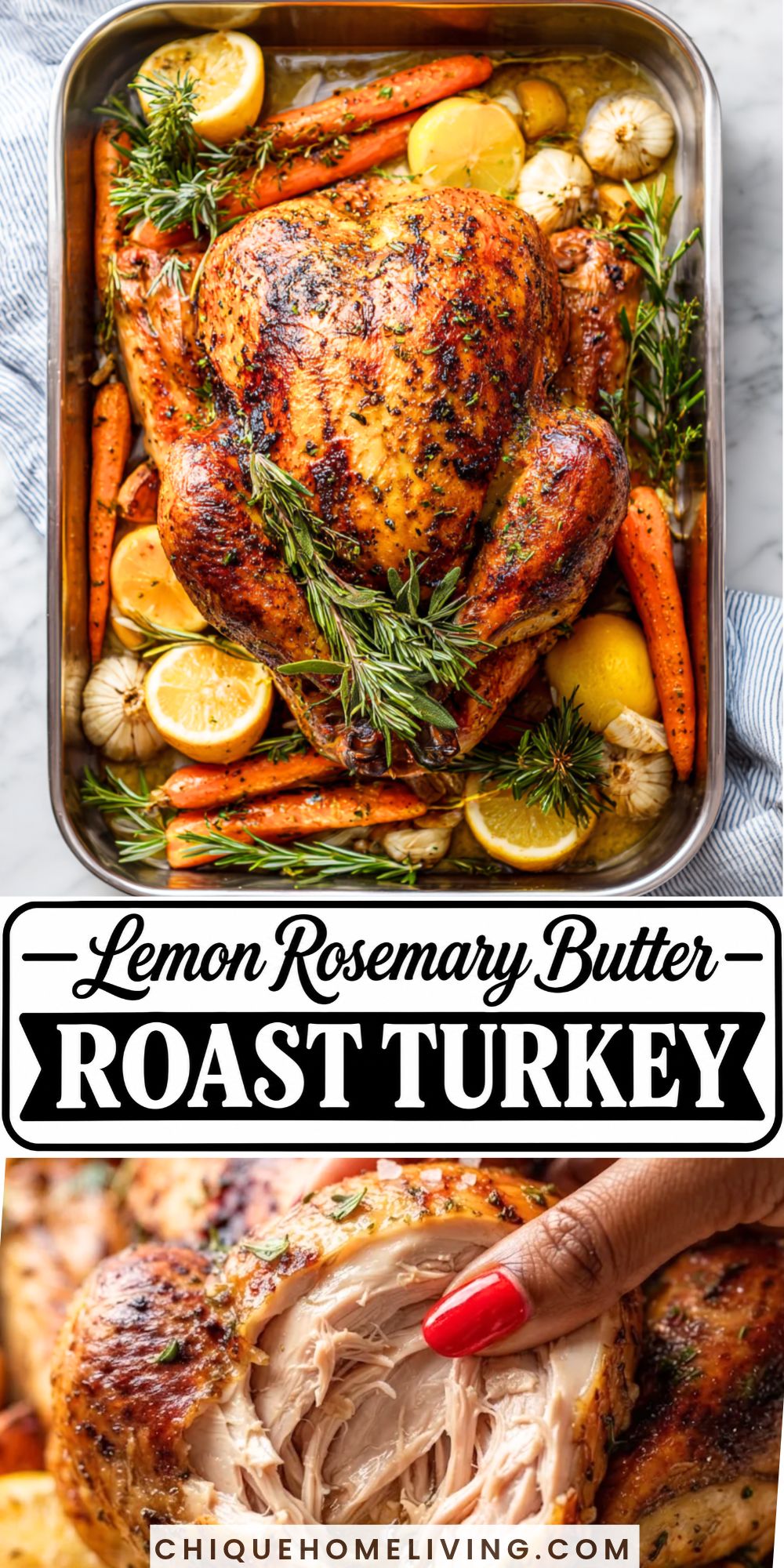
This lemon rosemary butter turkey is golden, juicy and packed with fresh garlic, herbs and citrus flavour.
If you want a roast turkey that feels festive without making the recipe complicated, this one is a great choice.
The turkey is rubbed with butter, lemon, garlic and rosemary before roasting, which gives the skin plenty of colour and keeps the meat juicy.
I like adding carrots, whole garlic bulbs and extra lemon around the pan too, because they cook in all those buttery juices and make the whole tray smell amazing.
The rosemary gives it that classic roast dinner flavour, while the lemon keeps everything tasting fresh.
Serve it with roast potatoes, stuffing, vegetables and gravy for Christmas, Thanksgiving or any big family meal.
Simple, flavourful and perfect when you want a proper roast without overcomplicating it.
What You’ll Need
For the turkey
- 1 whole turkey, around 5.5 to 6.5 kg
- 150 g unsalted butter, softened
- 5 garlic cloves, finely grated or minced
- Zest of 2 lemons
- 2 tablespoons fresh lemon juice
- 2 tablespoons finely chopped fresh rosemary
- 1 tablespoon fresh thyme leaves
- 2 teaspoons salt
- 1 1/2 teaspoons freshly ground black pepper
- 1 teaspoon onion powder
- 1 tablespoon olive oil
For the roasting pan
- 500 g baby carrots
- 3 whole garlic bulbs, halved across the middle
- 3 lemons, halved
- 5 to 6 fresh rosemary sprigs
- 4 fresh thyme sprigs
- 300 ml chicken stock
For finishing
- Extra fresh rosemary
- Pan juices from the roast
- Salt and black pepper, if needed
Make the Butter Taste Strong Before It Goes Anywhere Near the Turkey
There is a lot of turkey here.
A timid herb butter is not going to cut it.
Mix the softened butter with garlic, lemon zest, lemon juice, rosemary, thyme, salt, black pepper and onion powder.
Taste a tiny bit.
It should seem quite punchy.
That is exactly what you want because once it is spread over a whole bird, the flavour becomes much more subtle.
The lemon zest is especially important.
Juice gives acidity.
Zest gives actual lemon flavour.
That distinction matters.
How to Make It
- Take the turkey out of the fridge about 1 hour before roasting.
- Remove any giblets from the cavity.
- Pat the turkey very dry all over with kitchen paper.
- Heat the oven to 180°C / 160°C fan / 350°F.
- In a bowl, mix the softened butter, garlic, lemon zest, lemon juice, chopped rosemary, thyme, salt, black pepper and onion powder.
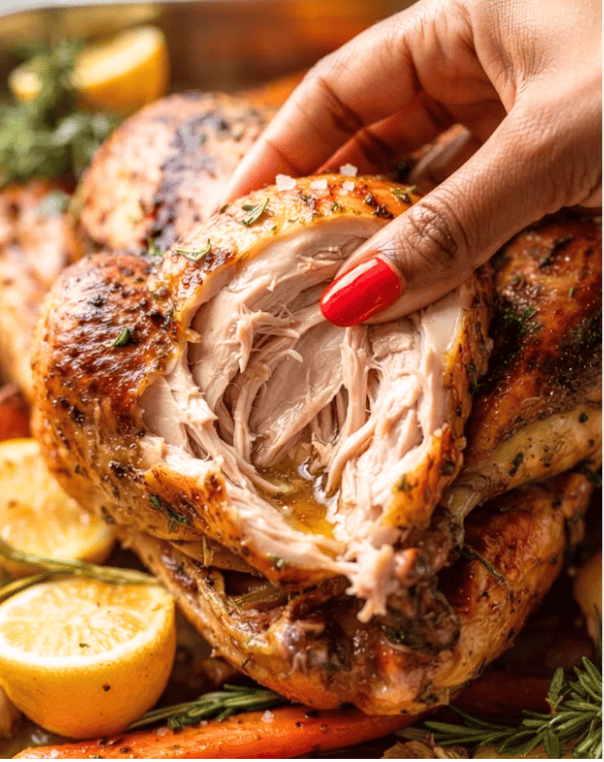
- Gently loosen the skin over the turkey breast with your fingers.
- Spread about one-third of the herb butter underneath the skin directly over the breast meat.
- Rub the remaining butter generously over the outside of the turkey, including the legs and wings.
- Drizzle over the olive oil and rub it lightly across the skin.
- Arrange the turkey breast-side up in a large roasting pan.
- Scatter the baby carrots around the bird.
- Add the halved garlic bulbs, lemon halves, rosemary sprigs and thyme.
- Pour the chicken stock into the bottom of the pan, avoiding the top of the turkey so you do not wash off the butter.
- Roast uncovered.
- Baste the turkey with the pan juices every 40 to 45 minutes.
- If the breast is getting too dark before the rest of the turkey is cooked, cover it loosely with foil.
- Continue roasting until the turkey is fully cooked and the skin is deep golden brown.
- The thickest parts of the breast and thigh should reach 74°C / 165°F.
- Remove the turkey from the oven.
- Transfer it carefully to a large board or serving platter.
- Rest for at least 30 minutes before carving.
- While it rests, spoon some of the pan juices over the carrots and garlic.
- Serve the turkey surrounded by the roasted carrots, garlic, lemon and fresh rosemary.
- Spoon the warm roasting juices over the carved meat.
The Skin Needs to Be Properly Dry
This is one of those boring little steps that makes a huge difference.
Butter on damp skin does not brown nearly as well.
It slides around, and the surface starts steaming before it starts roasting.
Pat the bird dry thoroughly.
Especially around the legs and underneath the wings.
Those areas hold more moisture than you think.
If you have time, you can even leave the uncovered turkey in the fridge overnight before roasting.
That dries the skin further and helps it crisp beautifully.
Put Some Butter Under the Skin
This is not me trying to make your life difficult.
It genuinely helps.
Turkey breast is lean, which means it dries out faster than the darker leg meat.
Putting herb butter directly against the breast gives you flavour exactly where you need it and adds a little protection while everything roasts.
Go slowly when loosening the skin.
You want to create a pocket, not rip the whole thing open.
Once the butter is underneath, smooth it gently from the outside so it spreads evenly.
Do Not Drown the Pan
There should be liquid underneath the turkey, but not so much that the bird is sitting in a bath.
A moderate amount of stock catches the drippings and stops them burning while creating a rich roasting juice.
The carrots, garlic and lemon will also release moisture.
By the end, the bottom of the pan should have deeply flavoured juices mixed with turkey fat, butter, herbs and roasted garlic.
Very good things are happening down there.
Why the Garlic Bulbs Stay Whole
Roasting garlic whole changes it completely.
The cloves become soft, sweet and mellow.
No harsh raw-garlic bite.
Once roasted, you can squeeze the soft cloves straight out of the skins.
I like serving the garlic right alongside the turkey.
People can mash a little onto their plate or stir it into the pan juices.
It is one of those extras that looks fancy but required almost no effort whatsoever.
Excellent arrangement.
The Carrots Roast in the Turkey Juices
The carrots are not just sitting there for decoration.
They roast alongside the turkey and soak up butter, herbs and savoury juices from the pan.
That gives them a glossy surface and much more flavour than roasting them separately with plain oil.
Leave baby carrots whole if they are slender.
If they are thick, split them lengthways so they cook at roughly the same pace.
By the time the turkey is ready, the carrots should be tender with caramelised edges rather than soft and waterlogged.
What the Lemon Is Doing
There is lemon in the butter and lemon in the roasting pan, but this should not taste like lemon chicken scaled up to turkey size.
The lemon is there to brighten all the butter and roasted meat.
The halves in the pan caramelise as they cook and release a softer citrus flavour.
You can squeeze a little roasted lemon over the carved turkey if you want.
Just a little.
The turkey should still taste savoury first.
Let the Turkey Rest
This is the cruelest part because the bird is finally cooked, the kitchen smells ridiculous, and everyone wants to start carving.
Wait.
A whole turkey needs time for the juices to settle.
Give it at least 30 minutes.
For a particularly large bird, 40 minutes is completely reasonable.
Cover it loosely with foil, not tightly.
You do not want to trap loads of steam and soften that beautiful skin you spent hours creating.
Turn the Pan Juices Into Something Worth Pouring
The roasting juices are already packed with flavour.
You can simply strain them and serve them as they are.
If there is a lot of fat floating on top, spoon some off first.
For a slightly richer finish, squeeze one or two roasted garlic cloves into the juices and whisk them through.
If you want more of a gravy consistency, pour the juices into a saucepan and simmer for a few minutes.
You can thicken them with a small cornflour slurry if you like.
I usually leave them fairly loose.
That glossy spoonable consistency works beautifully over sliced turkey.
What to Serve With It
This turkey works with all the classic roast sides.
Especially:
- Creamy mashed potatoes
- Gruyere scalloped potatoes
- Green bean casserole
- Cornbread dressing
- Roasted Brussels sprouts
- Honey glazed carrots
- Roast potatoes
- Cranberry sauce
- Sausage stuffing
- Steamed green beans
You have carrots already in the pan, so technically the vegetable situation is handled.
Whether anyone considers four roasted carrots enough vegetables at a celebration is between them and their conscience.
Make-Ahead Tips
The herb butter can be made up to 3 days ahead.
Keep it covered in the fridge, then let it soften before rubbing it onto the turkey.
You can also prepare the carrots, halve the garlic and chop the herbs the day before.
If you want to get really organised, season the turkey the night before and leave it uncovered in the fridge.
That helps season the meat and dry the skin at the same time.
Very efficient.
Almost suspiciously organised.
Leftovers
Cool leftover turkey and refrigerate it in an airtight container for up to 3 days.
Keep some of the pan juices too.
When reheating, spoon a little of the juice over the turkey first.
That helps stop it drying out.
Warm gently rather than absolutely blasting it in the microwave until every bit of moisture has left the building.
Leftover turkey is also excellent in sandwiches, creamy pasta, pies, soup or toasted wraps.
Q&A
Can I use salted butter?
Yes.
Reduce the additional salt slightly and taste the herb butter before using it.
Can I use dried rosemary?
You can, although fresh rosemary works much better here.
Use about one-third as much dried rosemary because the flavour is more concentrated.
Can I use turkey crown instead?
Yes.
The herb butter works beautifully on a turkey crown.
The cooking time will be considerably shorter, so use a thermometer rather than relying on the timing for a whole bird.
Why isn’t my turkey skin browning?
The surface may have been too wet, the oven may be running cool, or the turkey may have been covered too early.
Pat it dry before roasting and keep it uncovered for as much of the cooking time as possible.
Can I add potatoes to the roasting pan?
You can, but a very crowded pan makes it harder for everything to roast properly.
If you want crispy potatoes, I prefer cooking them separately.
Do I need to baste the turkey?
It helps keep the outside glossy and adds more flavour from the pan juices.
Every 40 to 45 minutes is enough.
There is no need to open the oven every ten minutes and lose all the heat.
Can I prepare the turkey the night before?
Yes.
Rub the herb butter under and over the skin, place the turkey uncovered in the fridge and roast it the next day.
How do I know when the turkey is cooked?
Use a meat thermometer in the thickest part of the breast and thigh, avoiding the bone.
Both should reach 74°C / 165°F.
Why should I roast the garlic with the turkey?
The cloves become soft and sweet and absorb some of the buttery roasting juices.
They are delicious served alongside the meat.
Can I make this for Christmas?
Absolutely.
The lemon, rosemary, garlic and golden roasted vegetables work beautifully for Christmas dinner without making the recipe specific to only one holiday.