
Lobster Bisque
Have you ever ordered lobster bisque and immediately wondered why you don’t make it at home more often?
It’s rich, creamy, a little indulgent, and somehow feels far more impressive than the actual amount of work involved.
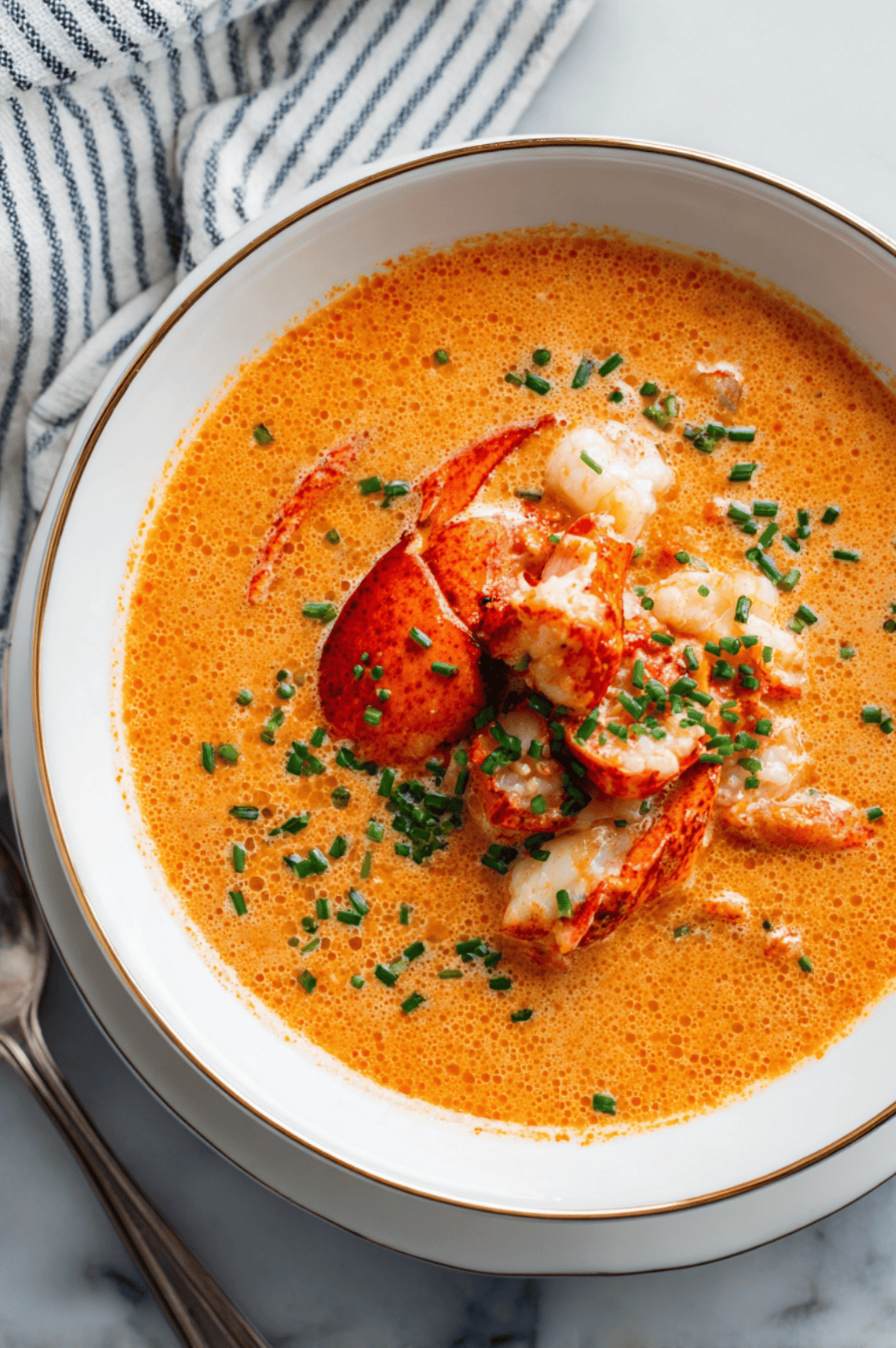
Lobster bisque always sounds like something you should be eating in a fancy restaurant, but it really doesn’t have to be that serious.
Once the base is going, most of the flavour comes from letting the stock, tomato, garlic, and seasonings cook together properly before the cream goes in.
The lobster gets added near the end so it stays tender instead of turning chewy.
I like the soup smooth, but not ridiculously thick.
You still want it to feel like soup, not sauce in a bowl.
A little extra lobster on top makes it feel special, and crusty bread is definitely useful for the last bit at the bottom.
It’s cosy, rich, and very good when you want something a little nicer than your usual soup night.
Ingredients
- 2 cooked lobster tails, meat removed and chopped into bite-sized chunks
- 1 lobster claw or extra cooked lobster meat, for garnish if you have it
- 3 tablespoons unsalted butter
- 1 tablespoon olive oil
- 1 small onion, finely chopped
- 1 small shallot, finely chopped
- 1 small celery stalk, finely chopped
- 3 garlic cloves, minced
- 2 tablespoons tomato paste
- 1 teaspoon sweet paprika
- 1/4 teaspoon cayenne pepper, optional
- 2 tablespoons plain flour
- 1/4 cup brandy or dry white wine
- 3 cups seafood stock
- 1 cup double cream
- 1/2 cup whole milk
- 1 teaspoon Worcestershire sauce
- 1 teaspoon lemon juice
- salt, to taste
- black pepper, to taste
- 1 tablespoon chopped fresh chives, plus more for garnish
A few ingredient notes
Lobster meat matters here, obviously.
If you have whole cooked lobster, even better.
If you only have cooked tails, that works beautifully too.
You want nice visible chunks for serving, not tiny shredded bits that vanish the second they hit the bowl.
Tomato paste does a lot of heavy lifting.
It gives the bisque its warm orange-red base and adds that savoury depth that stops the cream from tasting flat.
Use double cream if you can.
This is bisque, not the time for restraint.
Chives are worth keeping.
Parsley would be fine, but chives make more sense with the sweet lobster and buttery finish.
How to make Lobster Bisque
- Melt the butter with the olive oil in a medium pot over medium heat.
- Add the onion, shallot, and celery, then cook for 6 to 8 minutes until softened and lightly golden.
- Stir in the garlic and cook for about 30 seconds, just until fragrant.
- Add the tomato paste, paprika, and cayenne if using, then cook for 1 to 2 minutes so the tomato paste darkens slightly and loses that raw edge.
- Sprinkle in the flour and stir well for about 1 minute to coat everything.
- Pour in the brandy or white wine and scrape the bottom of the pot to lift all the flavour.
- Let it bubble for 1 to 2 minutes so the alcohol cooks off a little.
- Add the seafood stock and whisk or stir until smooth.
- Bring the soup to a gentle simmer, then cook for 15 minutes.
- Use a blender to blend the soup until completely smooth.
- Return the blended soup to the pot over low heat.
- Stir in the cream, milk, Worcestershire sauce, and lemon juice.
- Taste and season with salt and black pepper.
- Add about half of the chopped lobster meat to the soup and let it warm through gently for 2 to 3 minutes.
- Keep the remaining lobster chunks aside for topping each bowl so you still get those generous pieces on top.
- Stir in the chopped chives right at the end.
- Ladle into bowls and finish with the reserved lobster meat and extra chives.
Helpful tips before you start
Do not boil the bisque after adding the cream.
A gentle heat is enough.
If you let it go wild on the hob, the texture can turn a bit rough, and lobster deserves better than that.
Blend it thoroughly.
A good bisque should look smooth and glossy, not grainy.
If your blender is not the strongest thing in the world, blend a little longer than you think you need.
Hold back some lobster for the top.
That small move makes a big difference.
It gives the bowl that restaurant-style look and also means every serving gets obvious, satisfying pieces of lobster instead of the meat disappearing into the soup.
If it feels too thick, loosen it with a splash of stock or milk.
If it feels too thin, let it simmer gently for a few more minutes before adding the lobster garnish.
Serving ideas
This soup can absolutely stand on its own.
It is rich enough to carry the moment.
Still, I would not argue with a warm hunk of bread on the side.
Something crusty is ideal.
Garlic bread would be lovely too, though now we are edging into slightly dangerous levels of indulgence.
A light green salad also works if you want to pretend balance is part of the plan.
For a dinner-party situation, serve smaller bowls as a starter.
For a stay-home-and-feel-fancy night, serve bigger bowls and let everyone mop the edges clean with bread like decent people do.
Easy swaps
If you do not want to use brandy, use dry white wine.
If you do not want alcohol at all, use a splash of extra stock with a tiny squeeze of lemon.
If you cannot find seafood stock, use fish stock.
In a pinch, vegetable stock can work, though the lobster flavour will not feel quite as deep.
If you want a touch more heat, add a pinch more cayenne.
If you want it slightly sweeter and rounder, a tiny extra spoon of cream will do the trick.
Storage
Let the bisque cool, then store it in an airtight container in the fridge for up to 2 days.
Reheat it gently on the hob over low heat.
Do not let it boil.
If it thickens in the fridge, loosen it with a splash of stock, milk, or cream while reheating.
If possible, keep the garnish lobster separate and add it when serving.
That way it stays tender and does not overcook.
Q&A
Can I make lobster bisque ahead of time?
Yes.
In fact, the base tastes even better after a few hours because the flavours settle nicely.
Just reheat it gently and add the lobster garnish at the end.
Can I use frozen lobster?
Yes, as long as it is fully thawed and well drained.
Pat it dry before adding it so you do not water down the bisque.
Why is my bisque not as orange as expected?
Usually that comes down to the tomato paste and the richness of the stock.
A good tomato paste and a creamy finish help create that deep orange colour.
Paprika also helps.
Can I make it thicker?
Yes.
Let it simmer a little longer before adding the final lobster meat, or use a touch less stock next time.
It should be thick enough to feel luxurious but still pour easily into the bowl.
What is the difference between bisque and chowder?
Bisque is smooth, blended, and cream-based.
Chowder is chunkier and usually has larger pieces of vegetables throughout.
If your spoon keeps discovering potatoes, you have left bisque territory.
Do I have to blend it?
For a proper bisque, yes.
That smooth texture is part of the whole point.
It is what gives the soup that velvety finish instead of tasting like a regular seafood soup with better marketing.
Can I add extra lobster on top?
Absolutely.
I encourage that kind of behaviour.